Indicative South African price: R5,400
Artist Unknown, In the manner of Kano Naonobu (1607–1650)
Edo period, likely 19th century
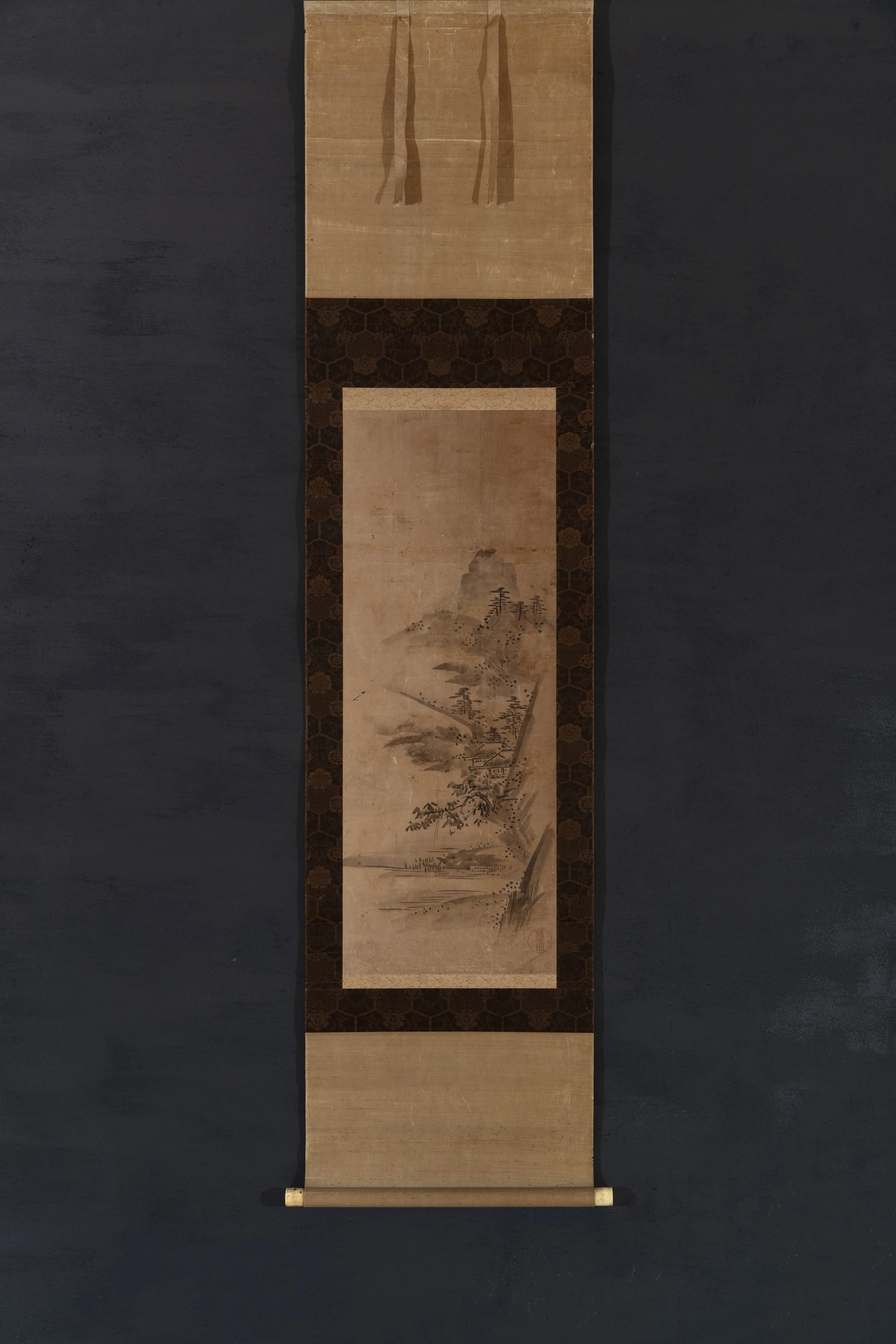
Pair of hanging scrolls, ink on paper
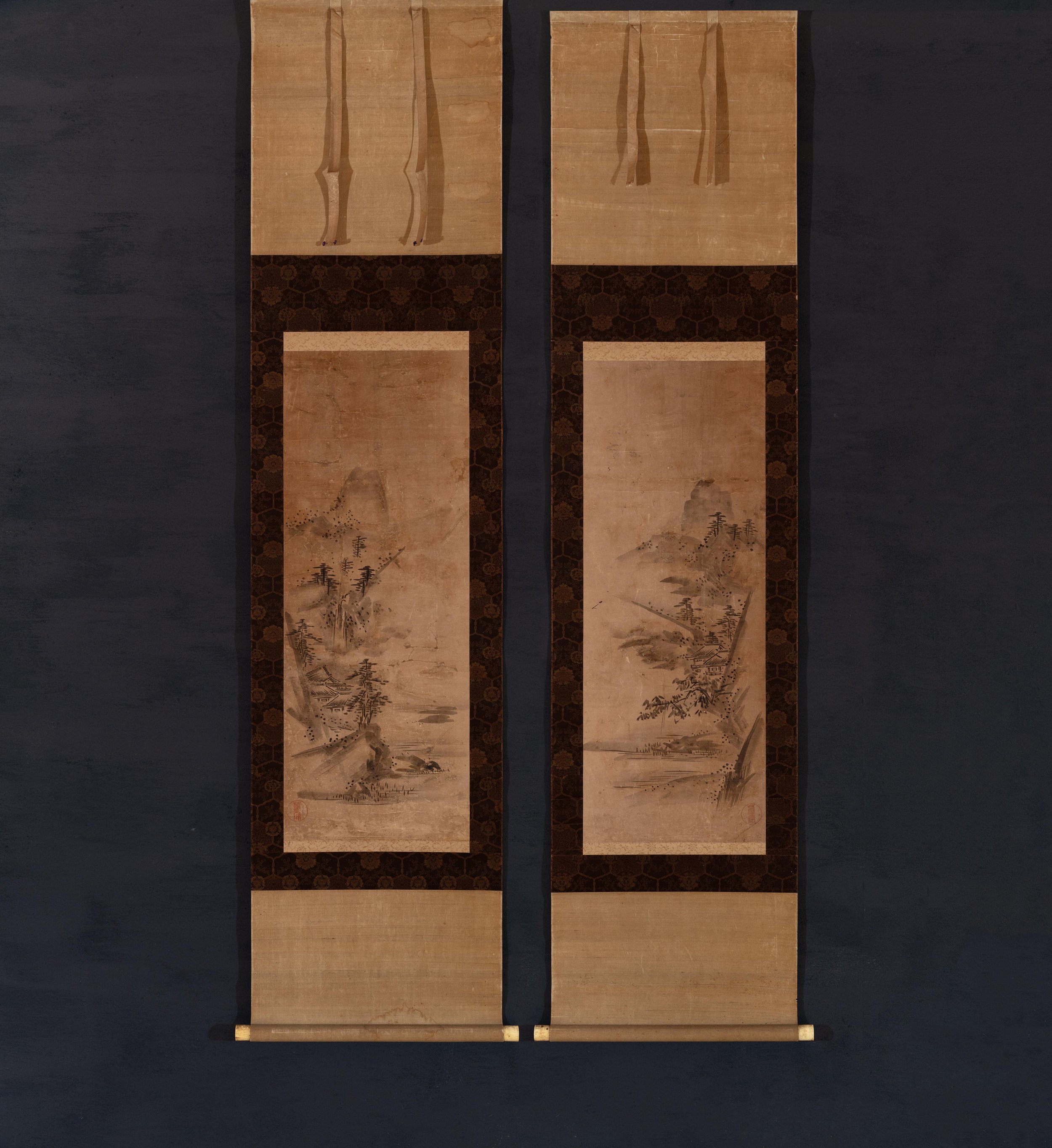
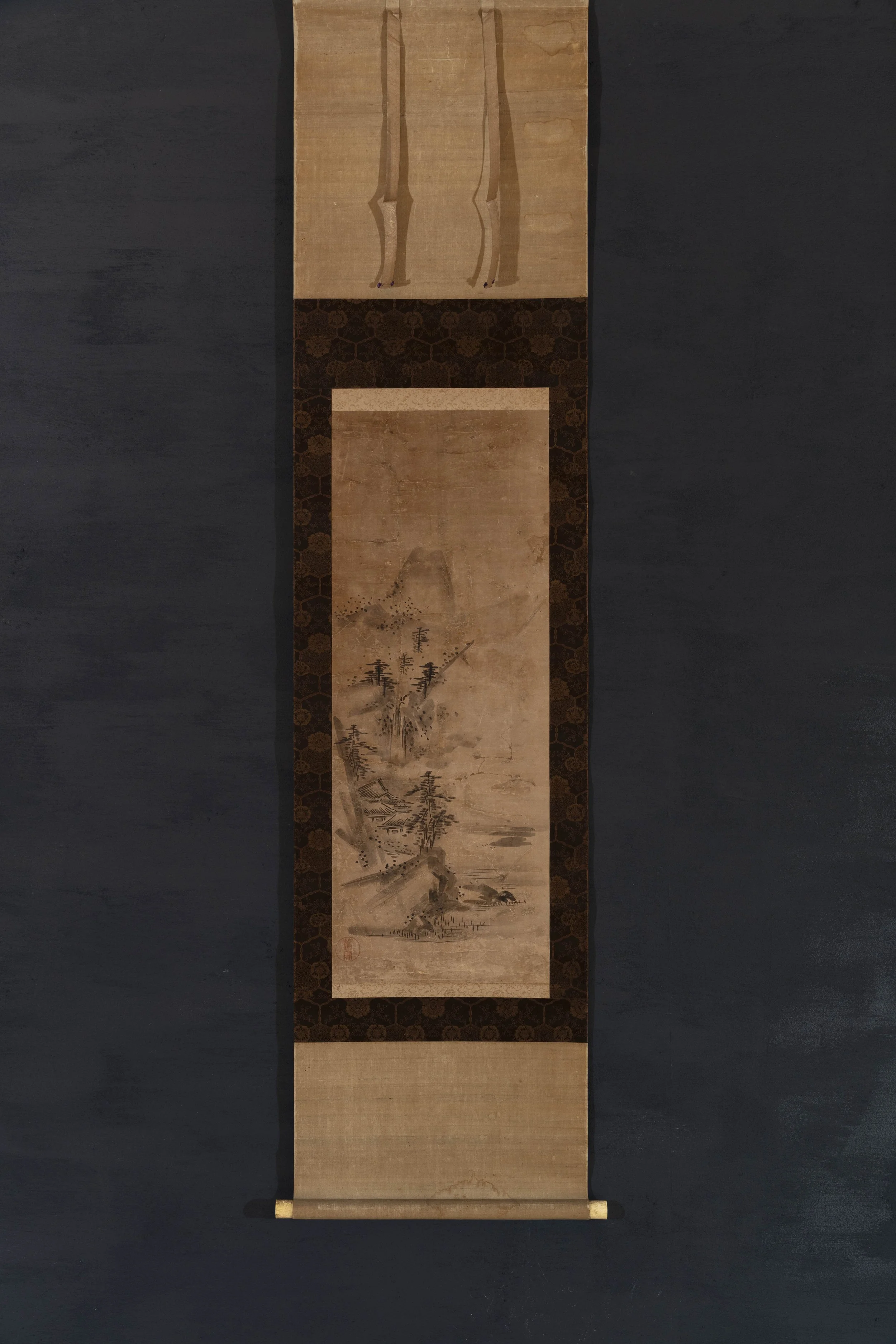
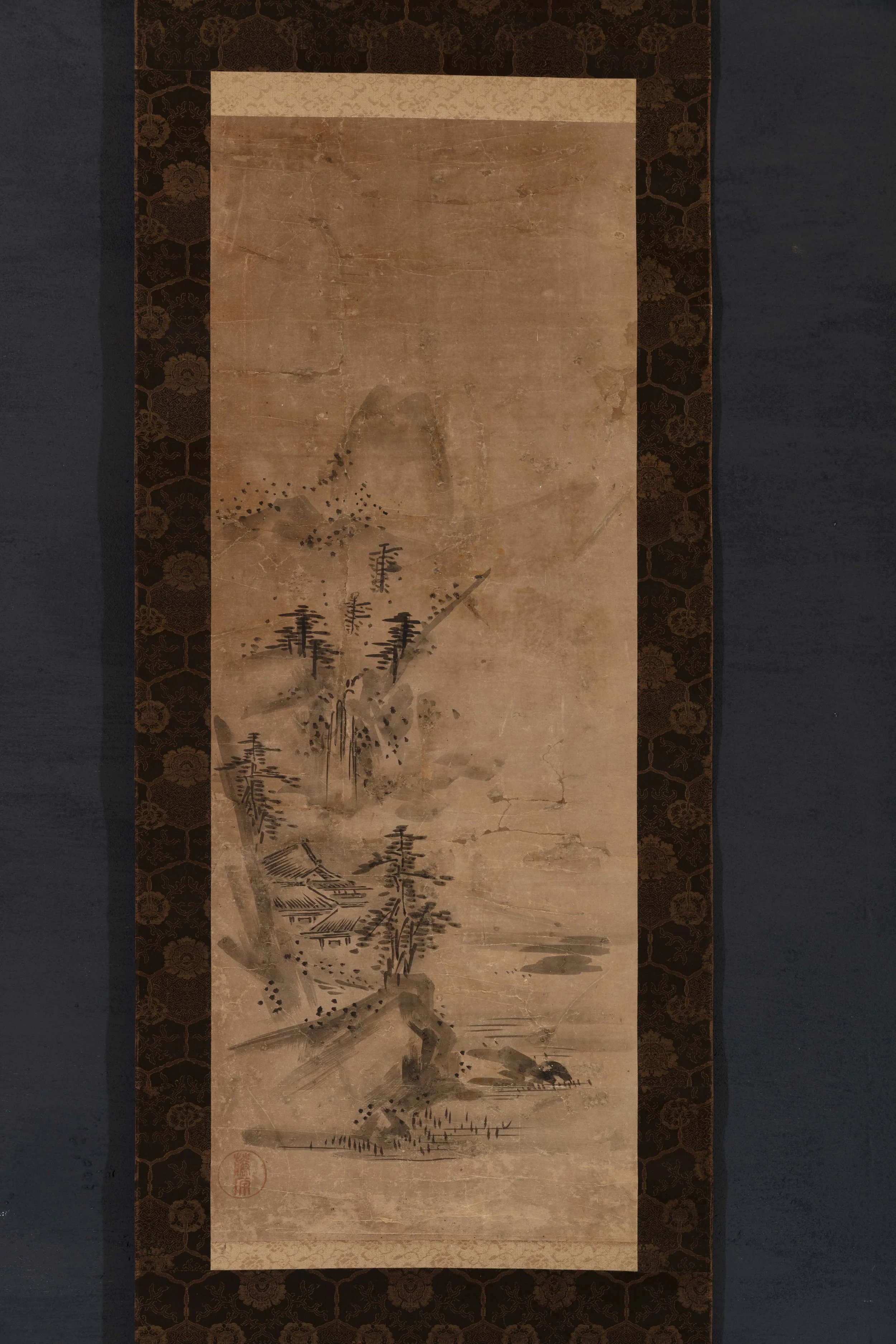
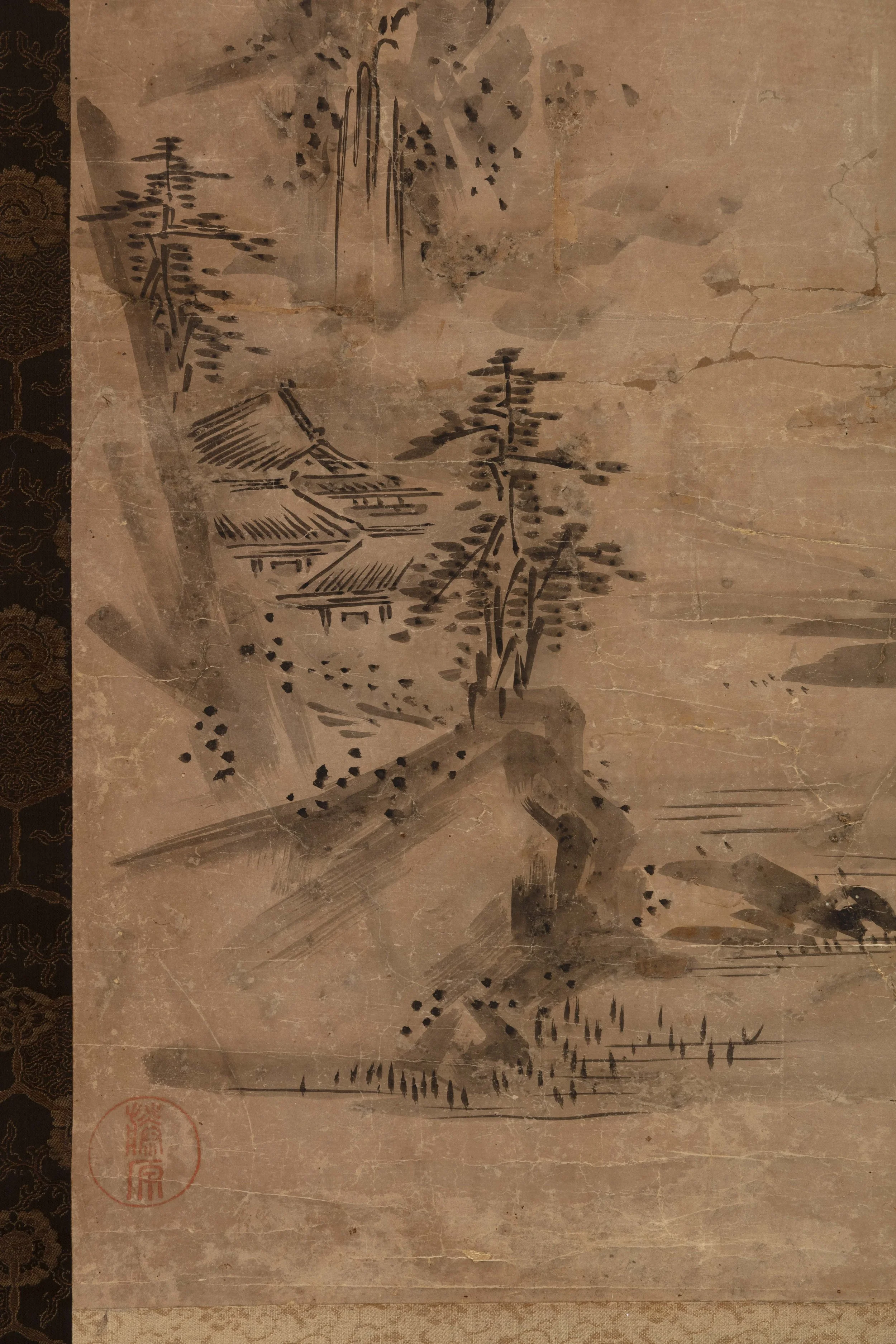
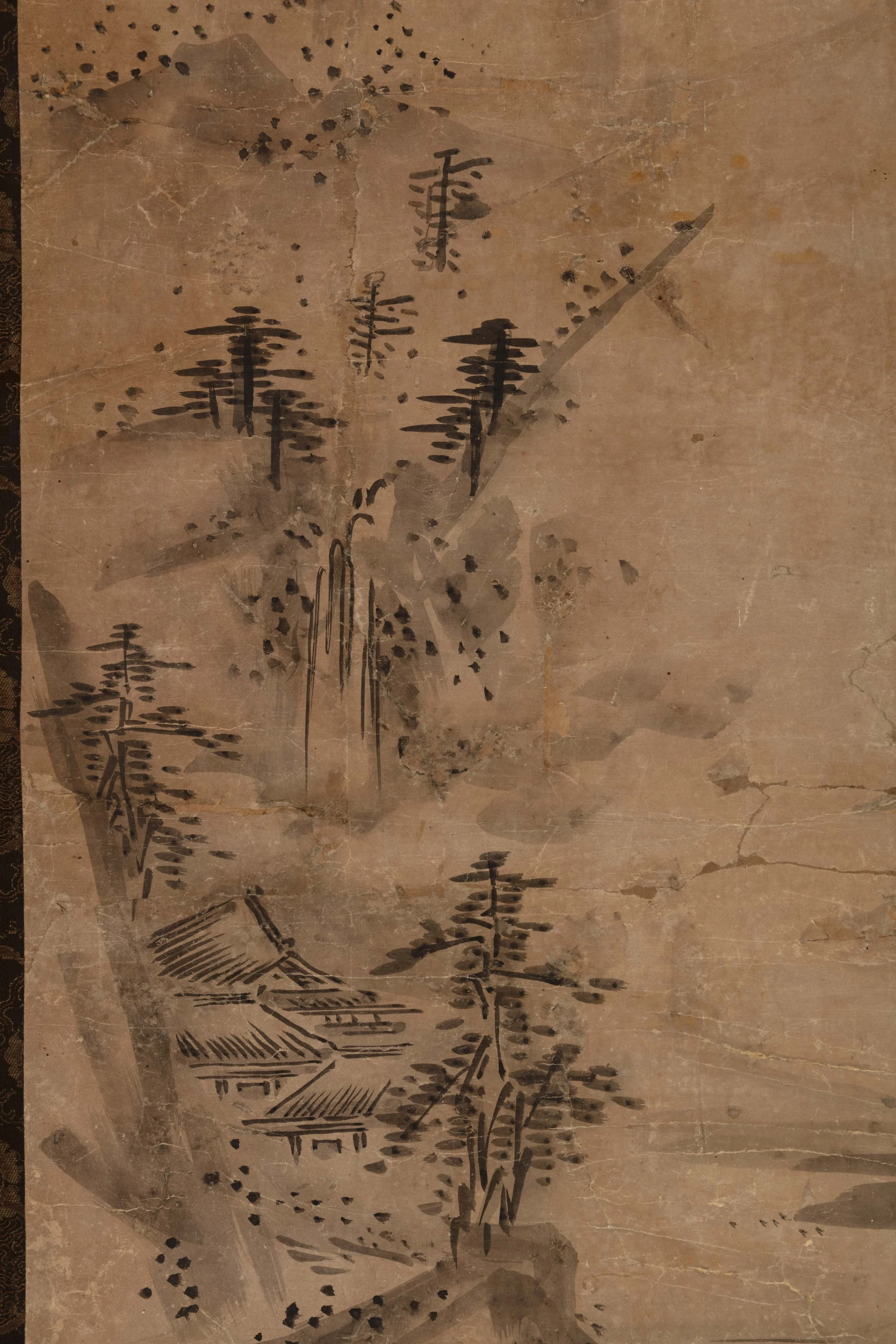
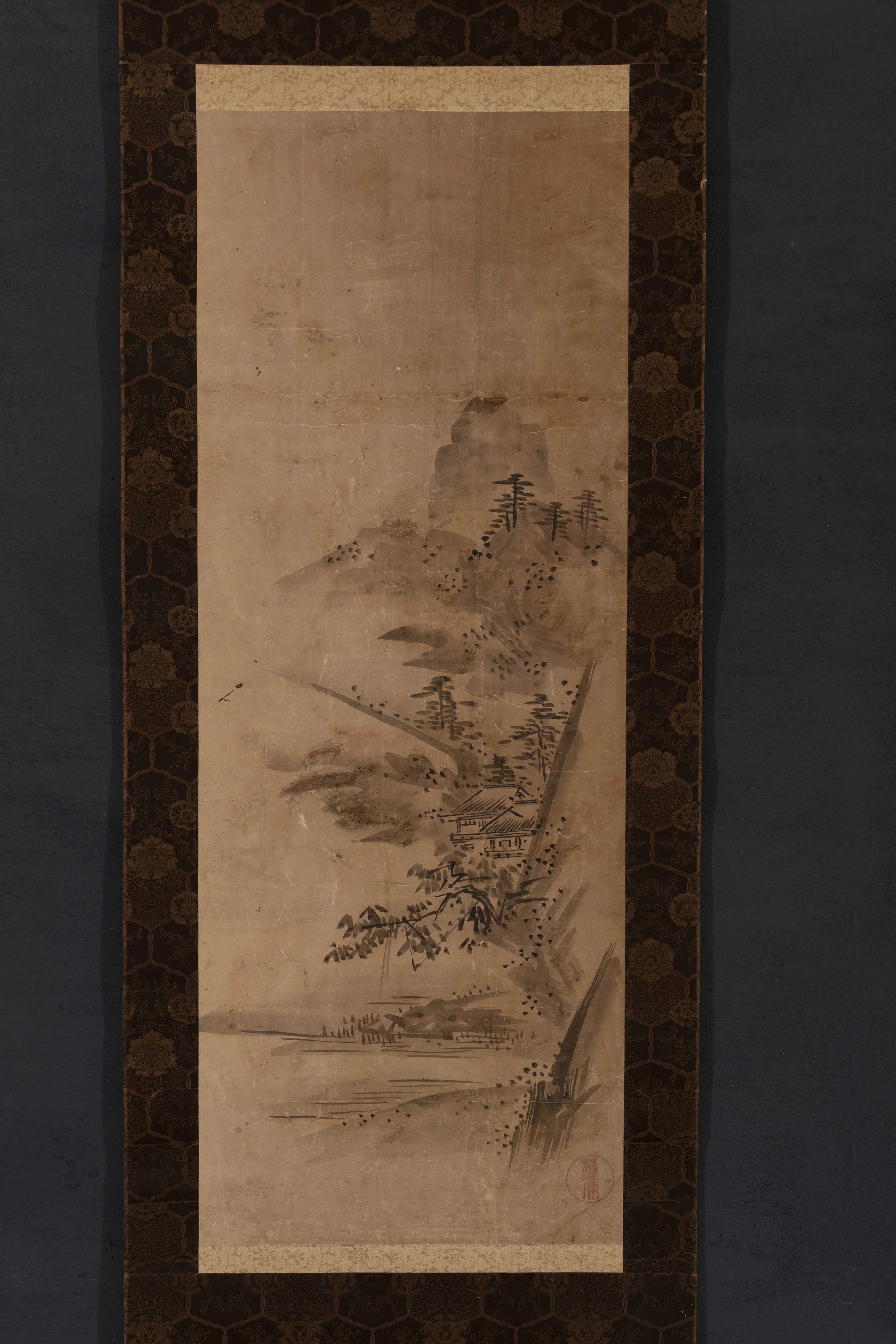
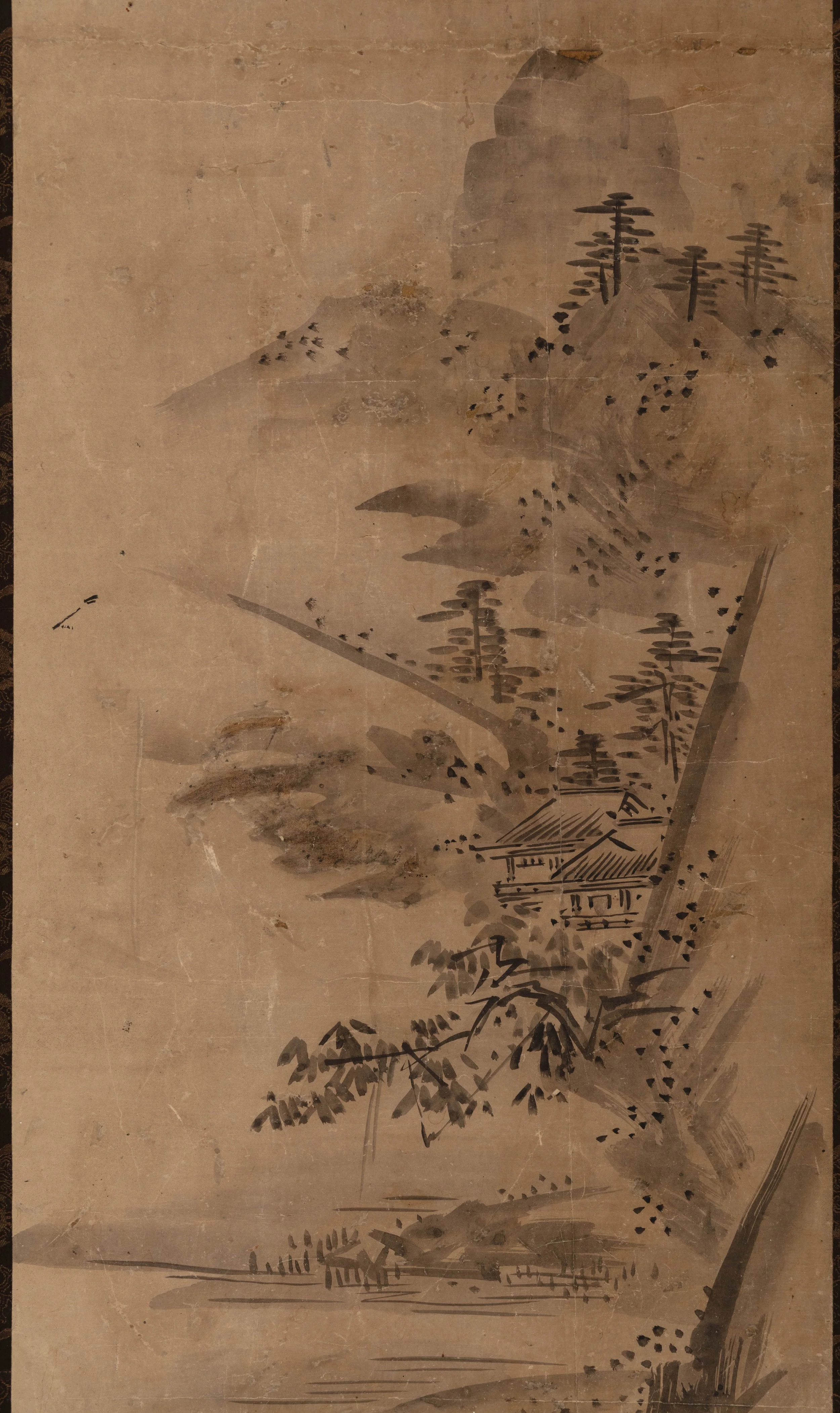
Two vertical landscapes unfold in quiet correspondence, each structured around riverside architecture nestled among pines and rising slopes. Dwellings sit partially obscured by foliage, their sharply angled rooflines articulated in dark, calligraphic strokes against softly modulated ink washes.
The compositions rely on diagonal movement — from low architectural forms through clustered pine trunks toward mist-veiled peaks. Spatial depth is achieved through tonal restraint rather than dramatic contrast. The ink handling alternates between controlled linear definition and diluted atmospheric washes, producing a contemplative rather than theatrical mood.
The style reflects Kano-school training: abbreviated pine clusters, angular rock formations, and disciplined compositional geometry. While associated with Kano Naonobu, the work more likely represents a later Edo-period interpretation of early Kano landscape models — retaining structural clarity while softening the assertive authority characteristic of 17th-century masterworks.
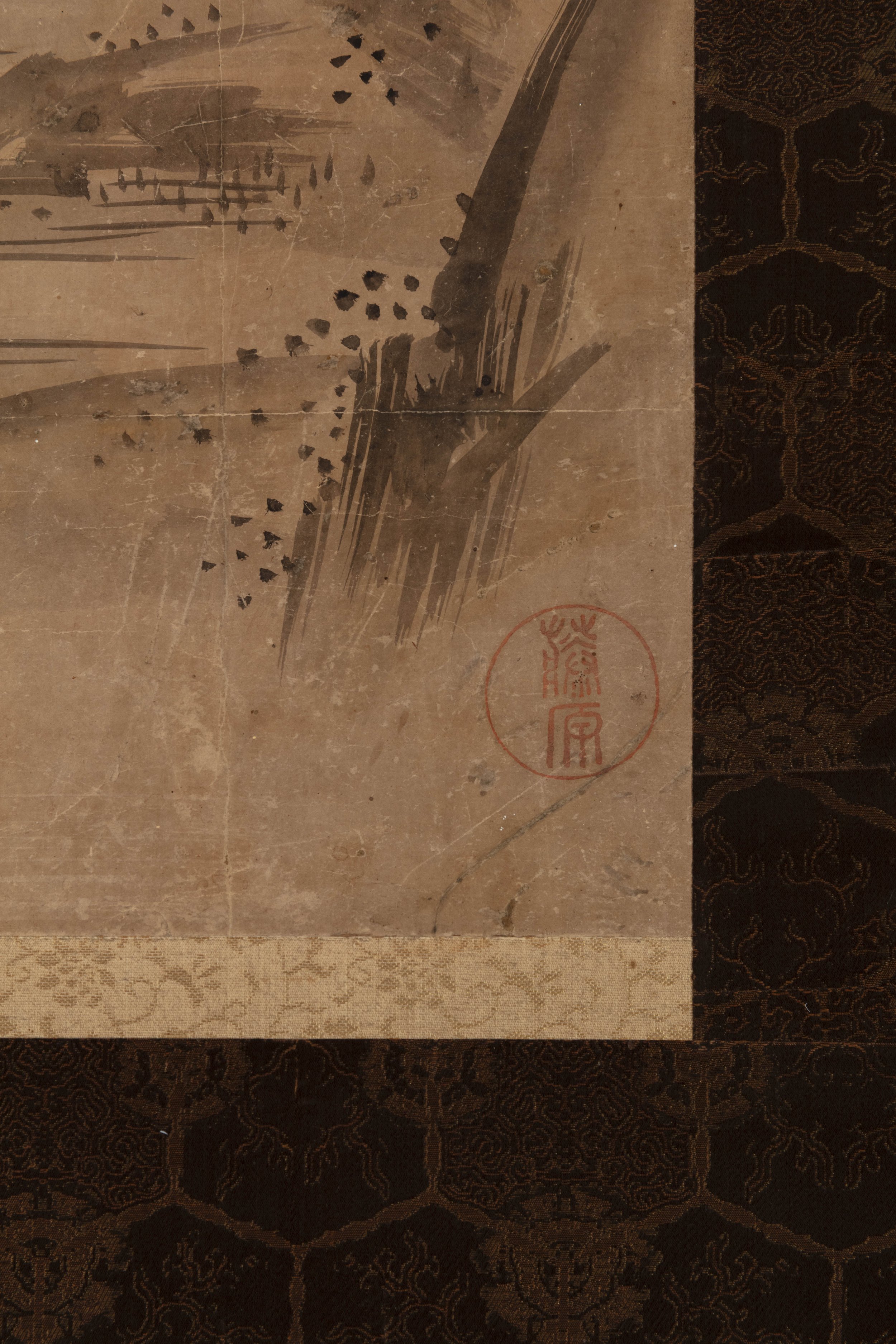
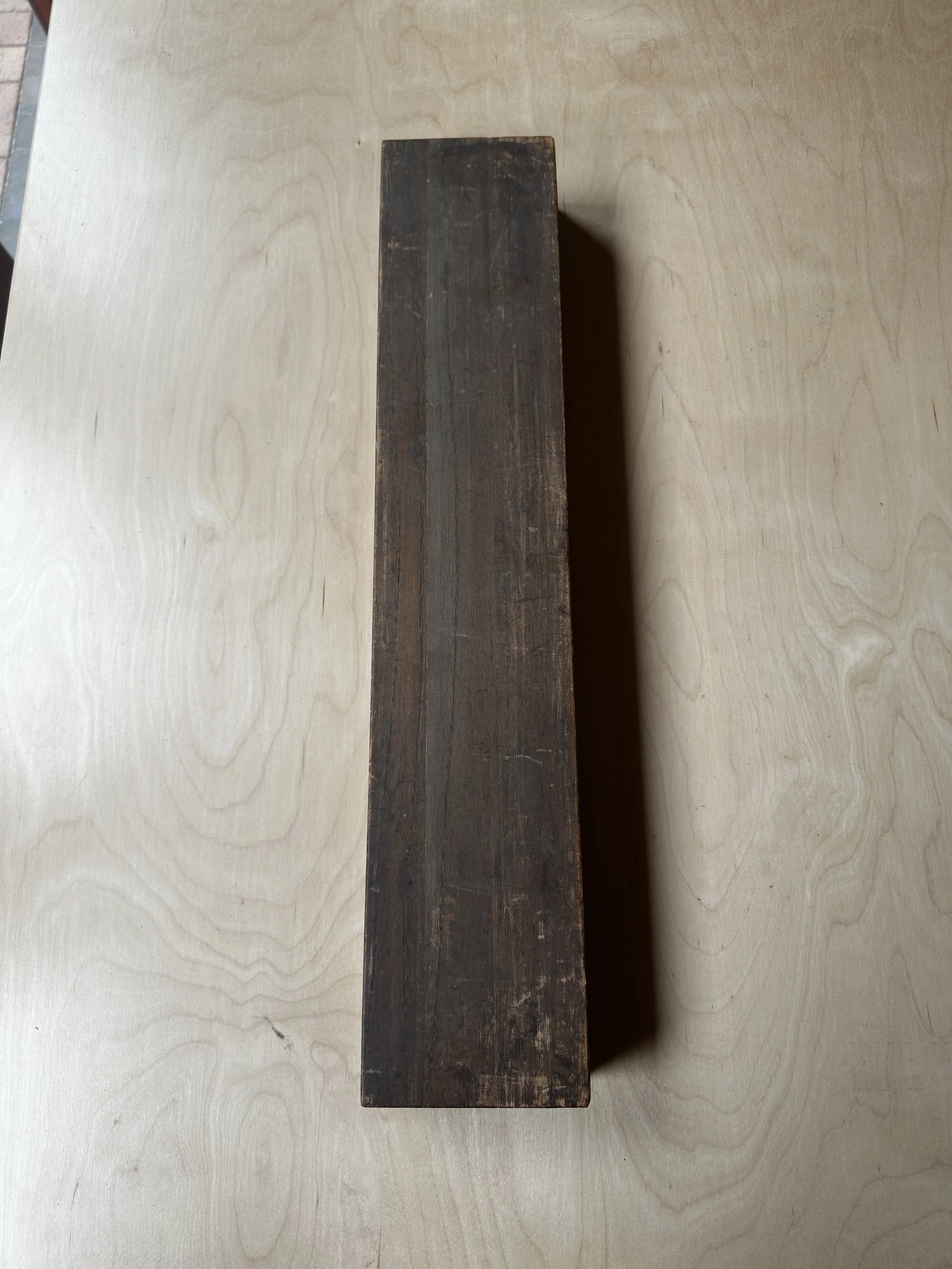
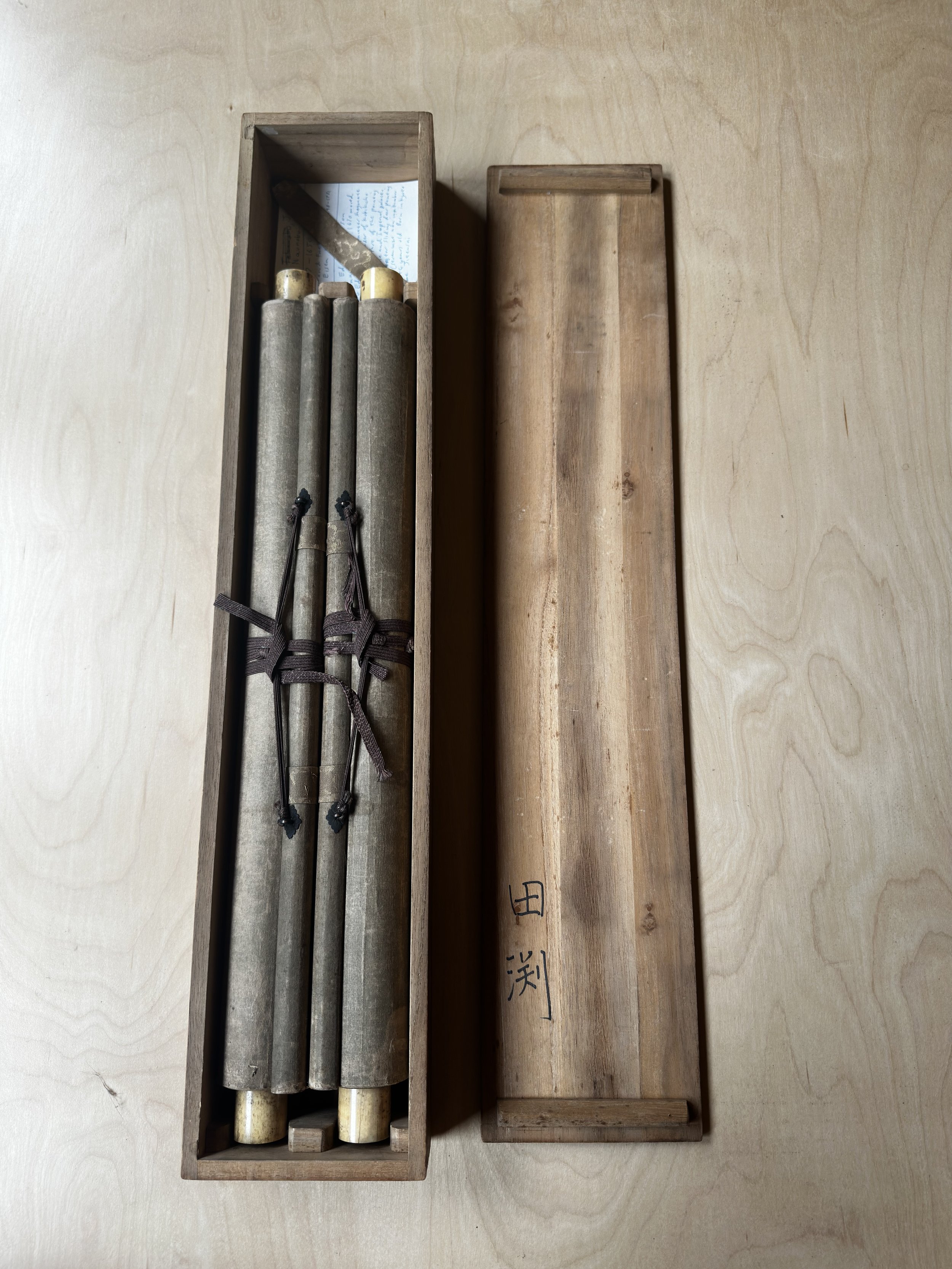
The pair retains its silk mountings and wooden storage box. Age-related creasing, surface wear, and paper thinning are visible, consistent with Edo-period material.
Dimensions
Overall (including mounting):
Approximately 183 cm (height) × 44 cm (width) each
Main painted area (honshi):
Approximately 86 cm × 32.5 cm each
Artist Biography
Kano Naonobu (1607–1650)
Kano Naonobu was the second son of Kano Takanobu and a central figure in the early Edo reorganisation of the Kano school. Active during the consolidation of Tokugawa authority, he helped establish the Edo-based Kano lineage that would dominate official painting for centuries.
In 1630 he moved to Edo and became a painter in service to the shogunate, participating in major architectural decorative programs. His role in forming the Kobikichō Kano branch ensured the school’s institutional continuity within the new political capital.
Although the Kano school is often associated with large-scale gold-ground screens and assertive decorative imagery, Naonobu’s oeuvre also includes more restrained ink landscapes rooted in Chinese literati models. These works demonstrate disciplined brush economy, compositional clarity, and architectural precision — qualities that defined Kano training and workshop practice.
Naonobu’s position within the Kano genealogy places him at a pivotal generational transition: from Kyoto courtly tradition to Edo bureaucratic authority. His paintings reflect that shift — structurally composed, measured, and quietly authoritative.
Indicative South African price: R5,400
Artist Unknown, In the manner of Kano Naonobu (1607–1650)
Edo period, likely 19th century
Pair of hanging scrolls, ink on paper
Two vertical landscapes unfold in quiet correspondence, each structured around riverside architecture nestled among pines and rising slopes. Dwellings sit partially obscured by foliage, their sharply angled rooflines articulated in dark, calligraphic strokes against softly modulated ink washes.
The compositions rely on diagonal movement — from low architectural forms through clustered pine trunks toward mist-veiled peaks. Spatial depth is achieved through tonal restraint rather than dramatic contrast. The ink handling alternates between controlled linear definition and diluted atmospheric washes, producing a contemplative rather than theatrical mood.
The style reflects Kano-school training: abbreviated pine clusters, angular rock formations, and disciplined compositional geometry. While associated with Kano Naonobu, the work more likely represents a later Edo-period interpretation of early Kano landscape models — retaining structural clarity while softening the assertive authority characteristic of 17th-century masterworks.
The pair retains its silk mountings and wooden storage box. Age-related creasing, surface wear, and paper thinning are visible, consistent with Edo-period material.
Dimensions
Overall (including mounting):
Approximately 183 cm (height) × 44 cm (width) each
Main painted area (honshi):
Approximately 86 cm × 32.5 cm each
Artist Biography
Kano Naonobu (1607–1650)
Kano Naonobu was the second son of Kano Takanobu and a central figure in the early Edo reorganisation of the Kano school. Active during the consolidation of Tokugawa authority, he helped establish the Edo-based Kano lineage that would dominate official painting for centuries.
In 1630 he moved to Edo and became a painter in service to the shogunate, participating in major architectural decorative programs. His role in forming the Kobikichō Kano branch ensured the school’s institutional continuity within the new political capital.
Although the Kano school is often associated with large-scale gold-ground screens and assertive decorative imagery, Naonobu’s oeuvre also includes more restrained ink landscapes rooted in Chinese literati models. These works demonstrate disciplined brush economy, compositional clarity, and architectural precision — qualities that defined Kano training and workshop practice.
Naonobu’s position within the Kano genealogy places him at a pivotal generational transition: from Kyoto courtly tradition to Edo bureaucratic authority. His paintings reflect that shift — structurally composed, measured, and quietly authoritative.