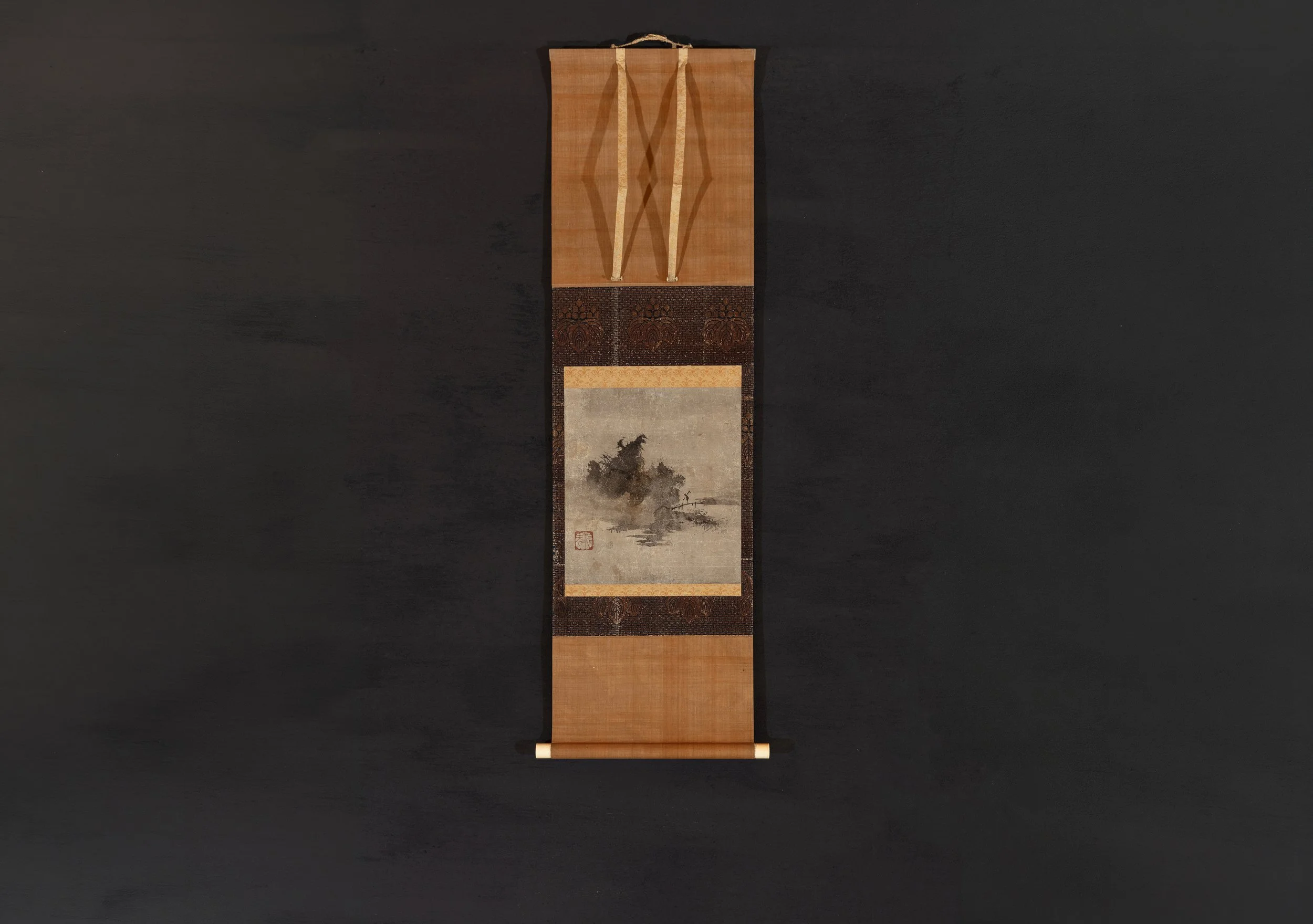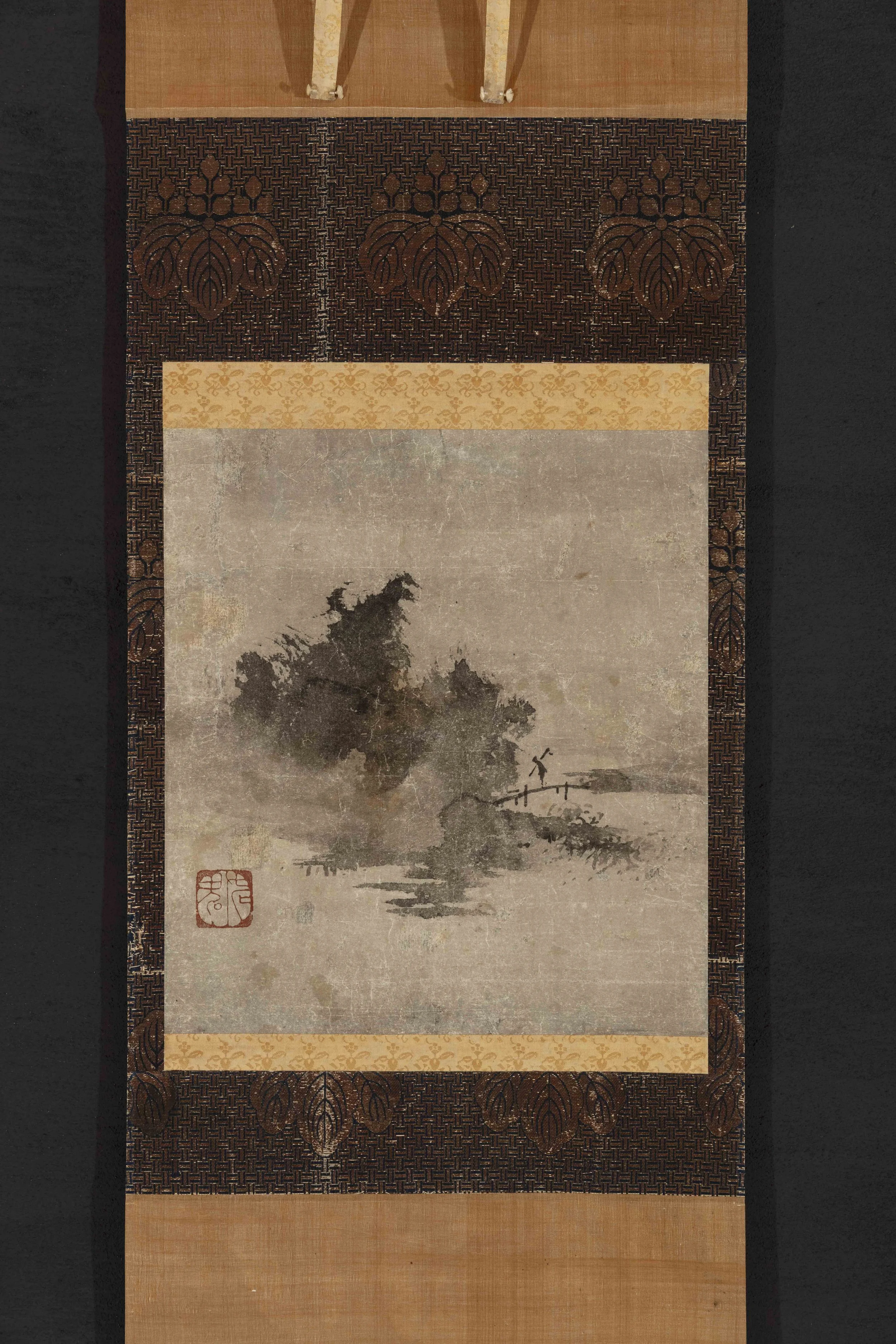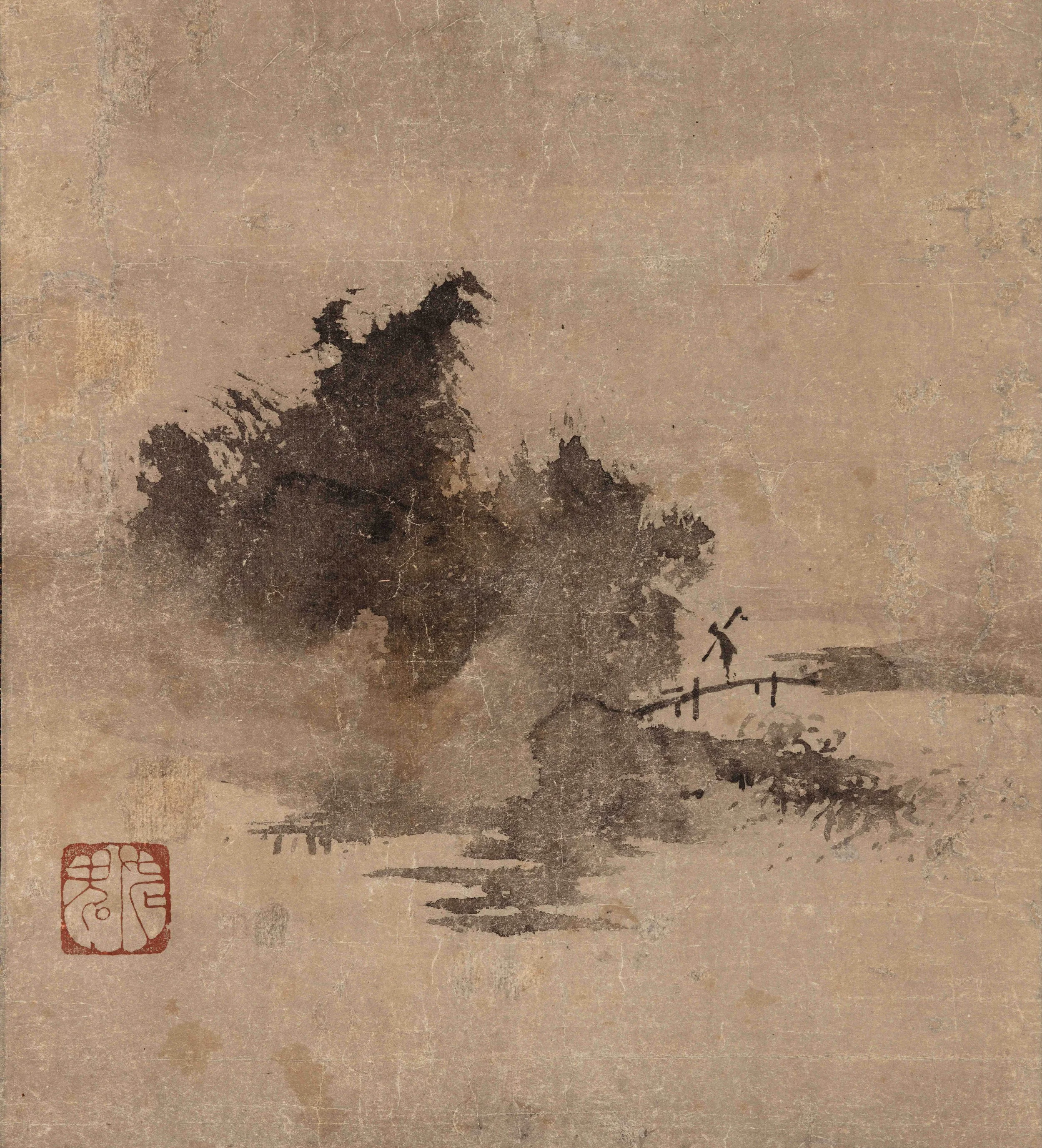
Traveler crossing a Bridge
Attributed to Soga Shōhaku (1730–1781)
Ink on paper; silk-brocade mounting with black lacquer box
Date uncertain; possibly Edo period or later
Bearing a Shōhaku seal and accompanied by a nineteenth-century attribution slip
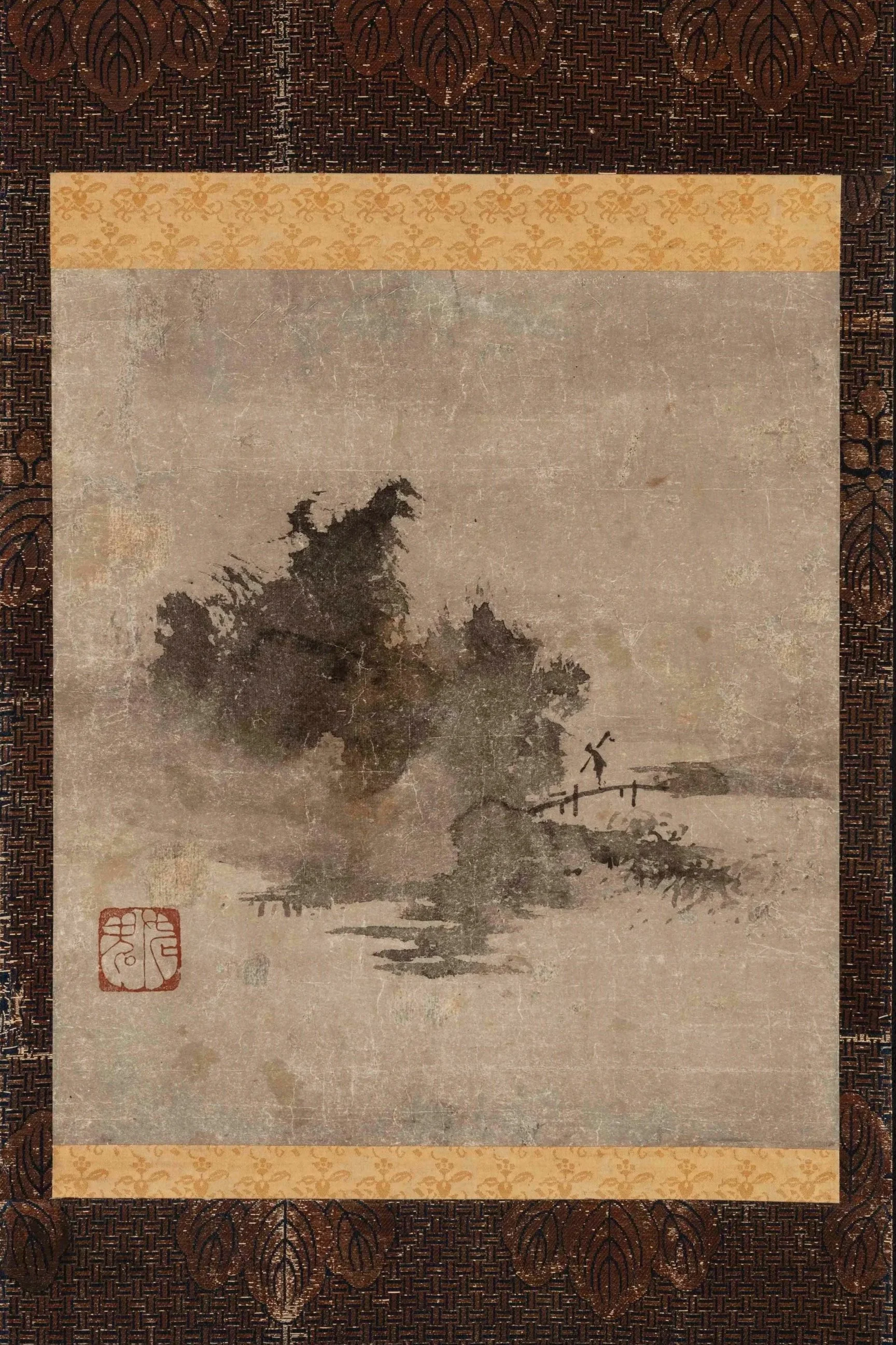
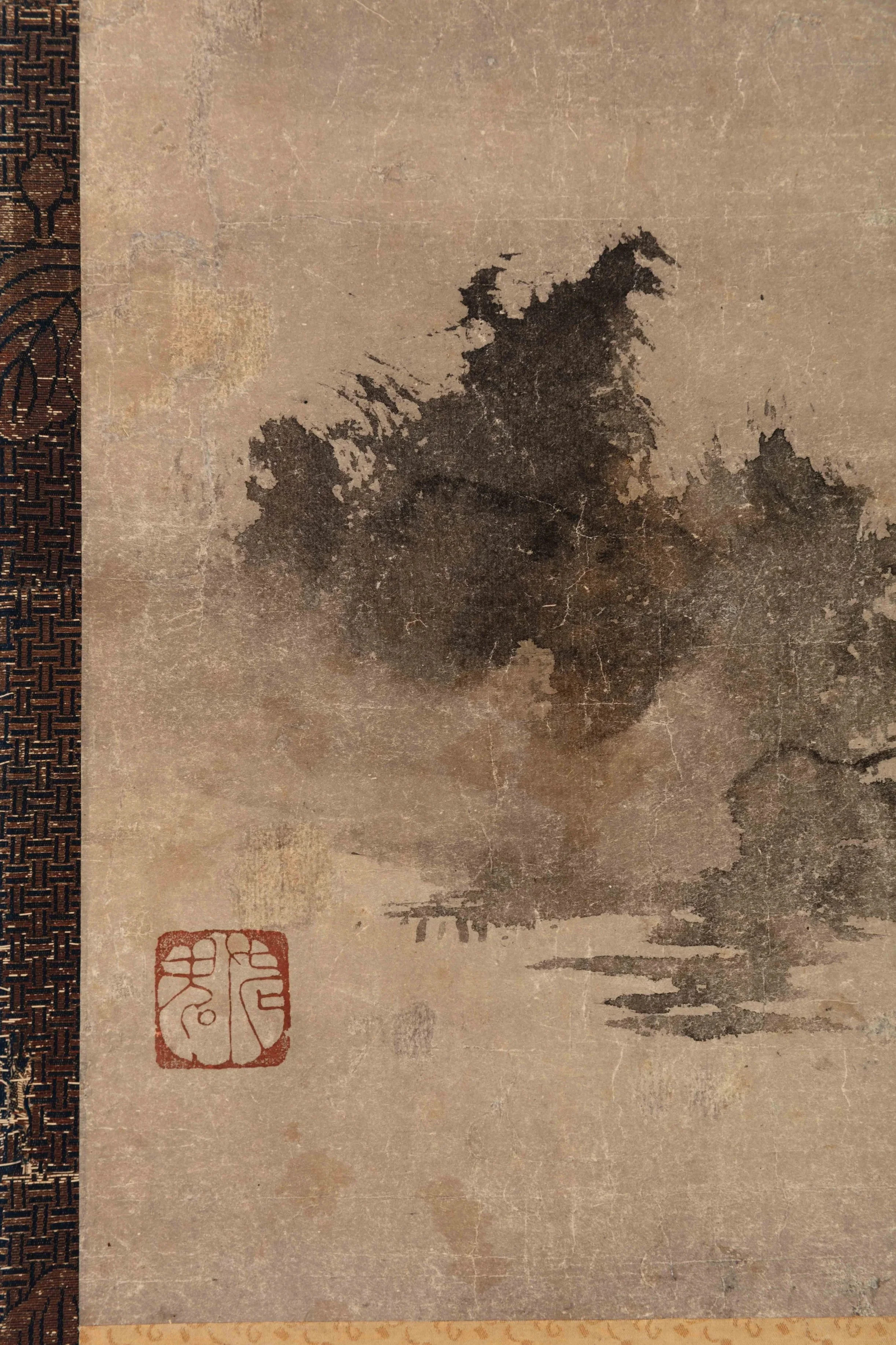
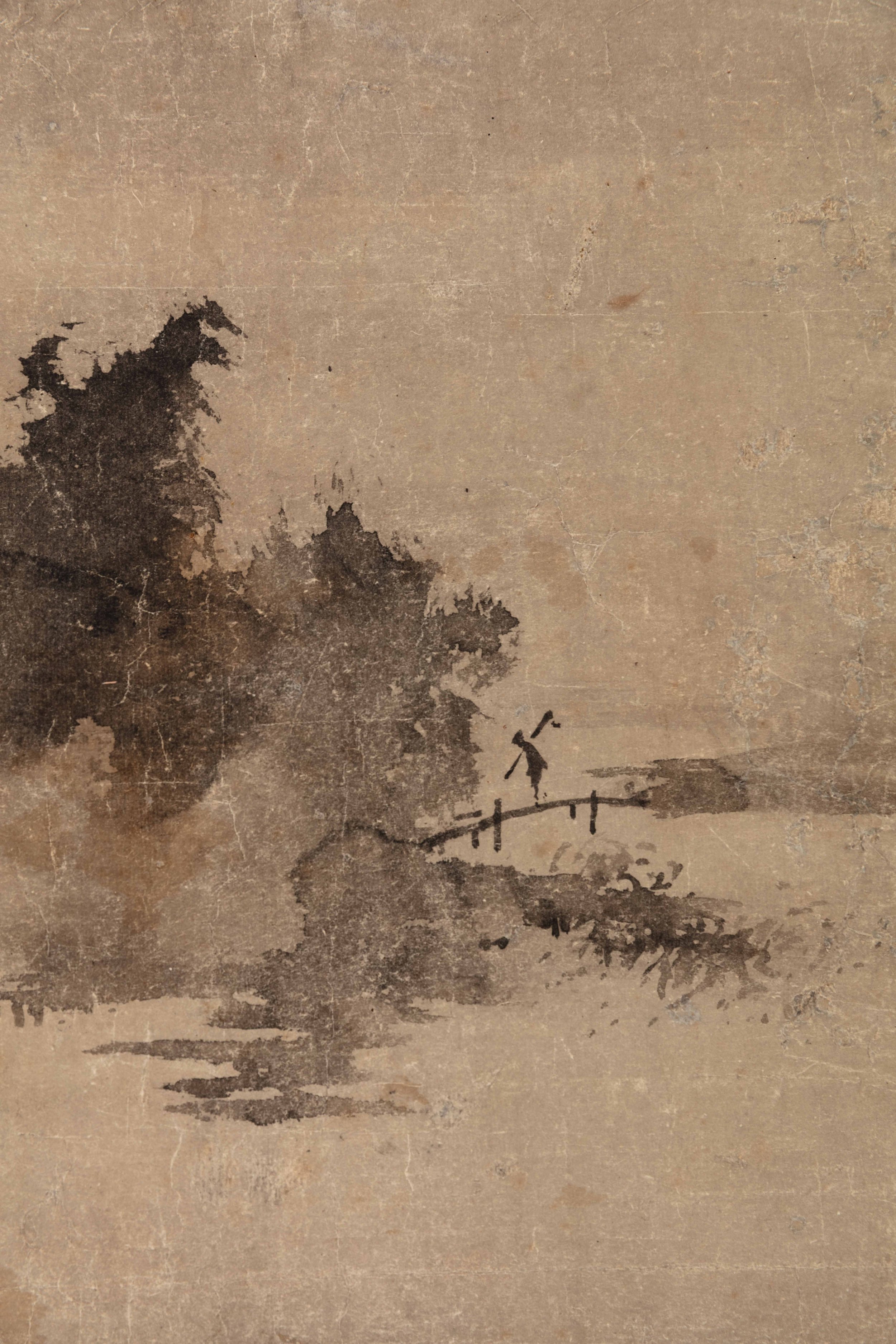
This landscape scroll belongs to a long tradition of Japanese ink painting that looks back to the radical visual language of Muromachi masters—most notably Sesshū—and was revived and reinterpreted by later painters, including Soga Shōhaku. Executed in a splashed-ink (haboku) manner, the composition is reduced to a few essential elements: a dark, concentrated mass of bamboo rising from a small island; a narrow plank bridge spanning mist-laden water; and a lone figure crossing toward the island through an expanse of haze. The scene is evocative rather than descriptive, relying on imbalance, restraint, and broad areas of unpainted paper to create atmosphere and spatial ambiguity.
The handling of ink is forceful yet measured. Broad, saturated washes dissolve into dry, broken strokes, allowing forms to emerge and recede at once. This oscillation between assertion and disappearance lies at the heart of the work’s effect. The solitary figure, rendered with only a handful of strokes, functions less as a narrative subject than as a quiet measure of scale and isolation within the landscape. Attention is directed away from anecdote and toward presence—an approach closely aligned with Zen-inflected traditions of painting and viewing.
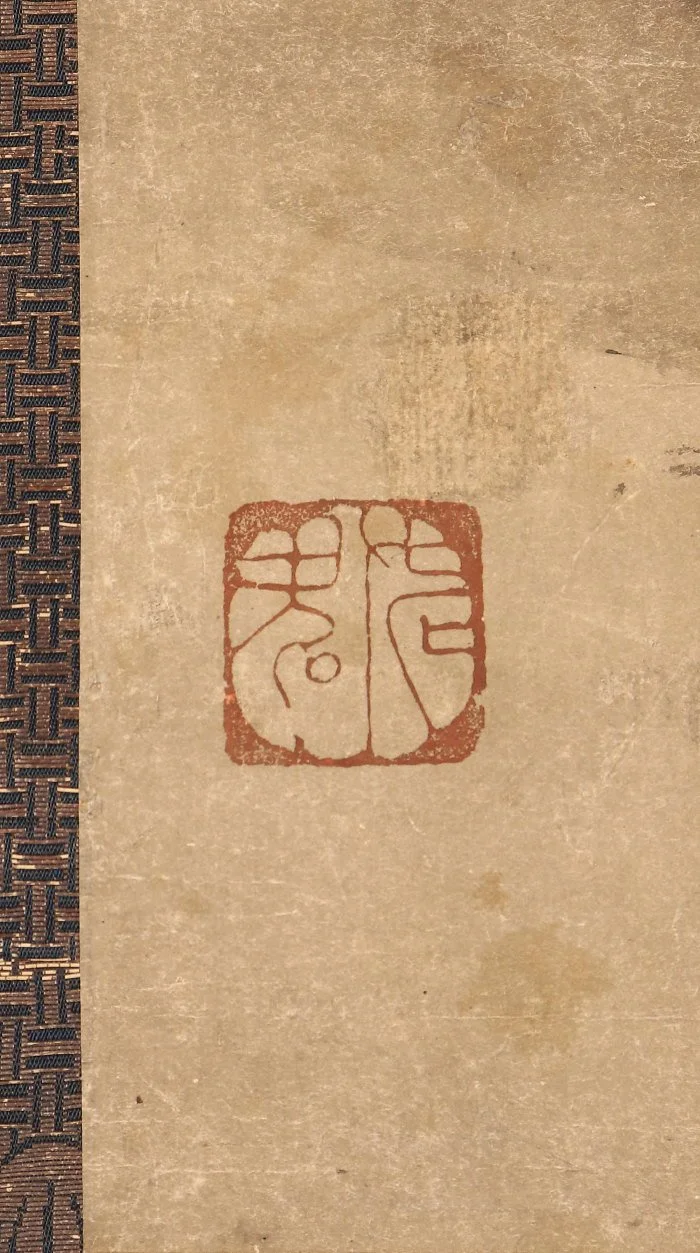
The scroll bears a seal reading Shōhaku. Its placement and appearance invite comparison with seals associated with Soga Shōhaku, but a seal alone cannot establish authorship: seals were sometimes copied, reused, or added to works by later hands. Until the impression, brushwork, paper, and mounting can be compared directly with securely documented examples, the attribution should therefore be regarded as traditional rather than definitive.
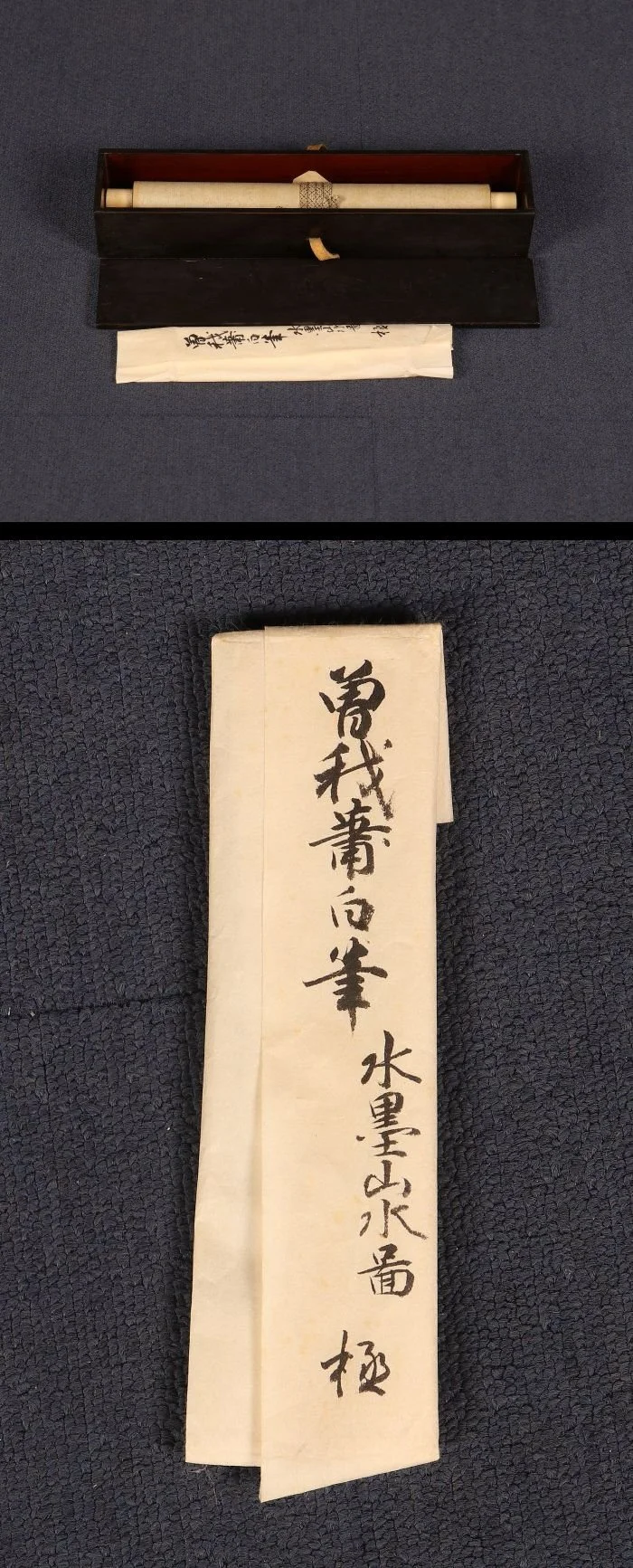
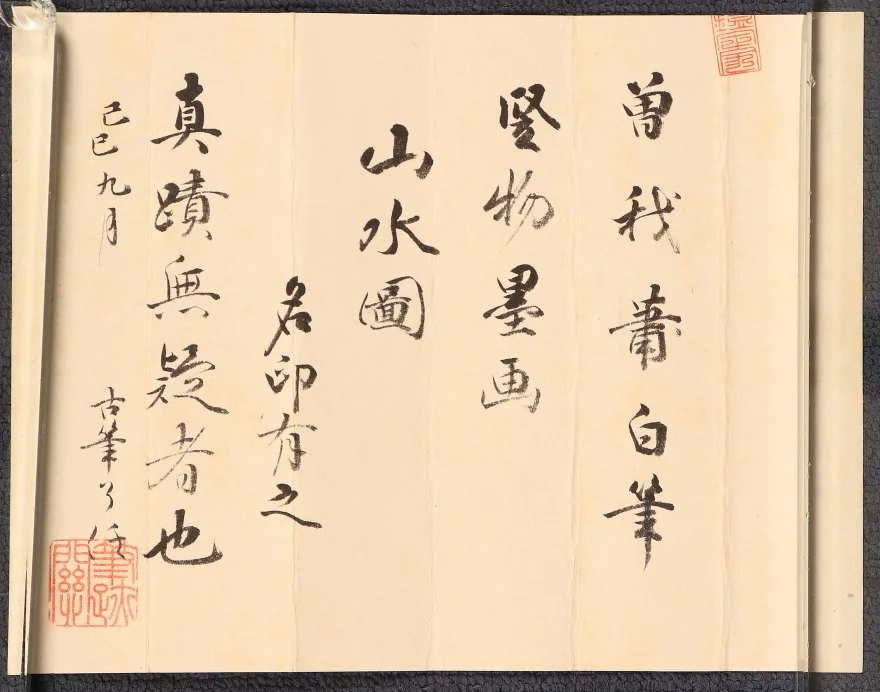
The painting is also accompanied by a nineteenth-century connoisseur’s attribution slip. The inscription assigns the work to Soga Shōhaku and describes it as shinseki—a genuine work—while referring approvingly to its “old brush.” The note appears to be dated to the ninth month of a kishi year, possibly 1849, and is signed 古筆了 (Kohitsu Ryō), a name or sobriquet associated with traditional connoisseurial practice. These details merit further study, particularly to establish the precise reading, date, and authorship of the inscription.
Such a document is an important part of the scroll’s history, but it should not be treated as equivalent to a modern certificate of authenticity. Its principal value is as evidence that, by the nineteenth century—or at least at the time the slip was written—the painting was being presented and understood as a work by Shōhaku. Whether that attribution would be upheld by current scholarship remains an open question.
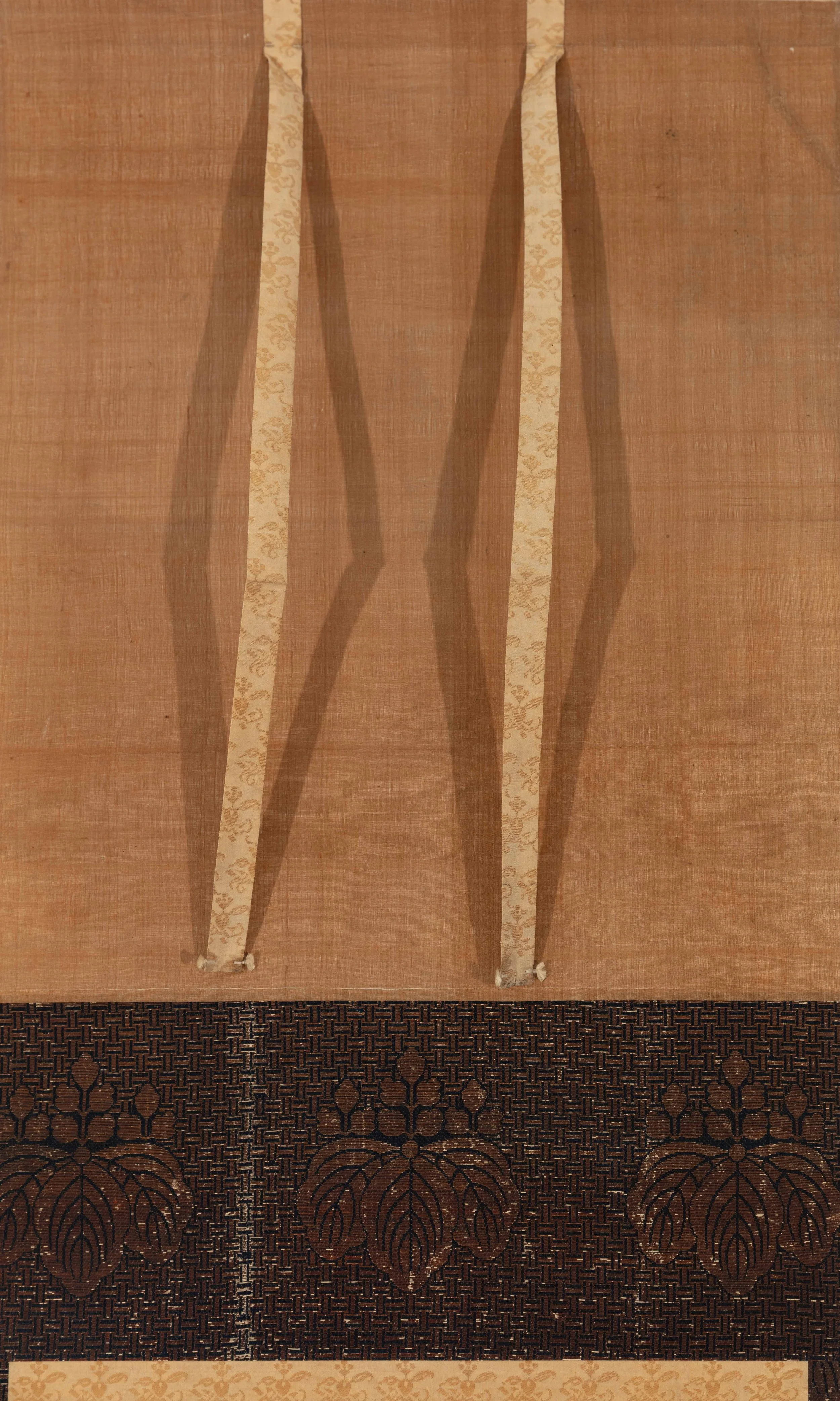
The brocade mounting, which bears a five–three paulownia crest, adds further historical interest. This motif was associated with shogunal, institutional, and elite contexts, although its presence does not by itself establish the work’s original ownership or date. The mounting may preserve evidence of an earlier collecting history, but both the textile and its relationship to the painting would require specialist examination before firmer conclusions could be drawn.
Regardless of its eventual attribution, the painting sustains attention through reduction and discipline. Its strength lies in what is withheld as much as in what is shown. Within the Myōan Collection, it offers a compelling example of the continuing life of earlier ink-painting traditions—whether as an original work, a later interpretation, or a carefully made copy—and of the ways attribution and connoisseurship have shaped how Japanese paintings are understood and valued over time.