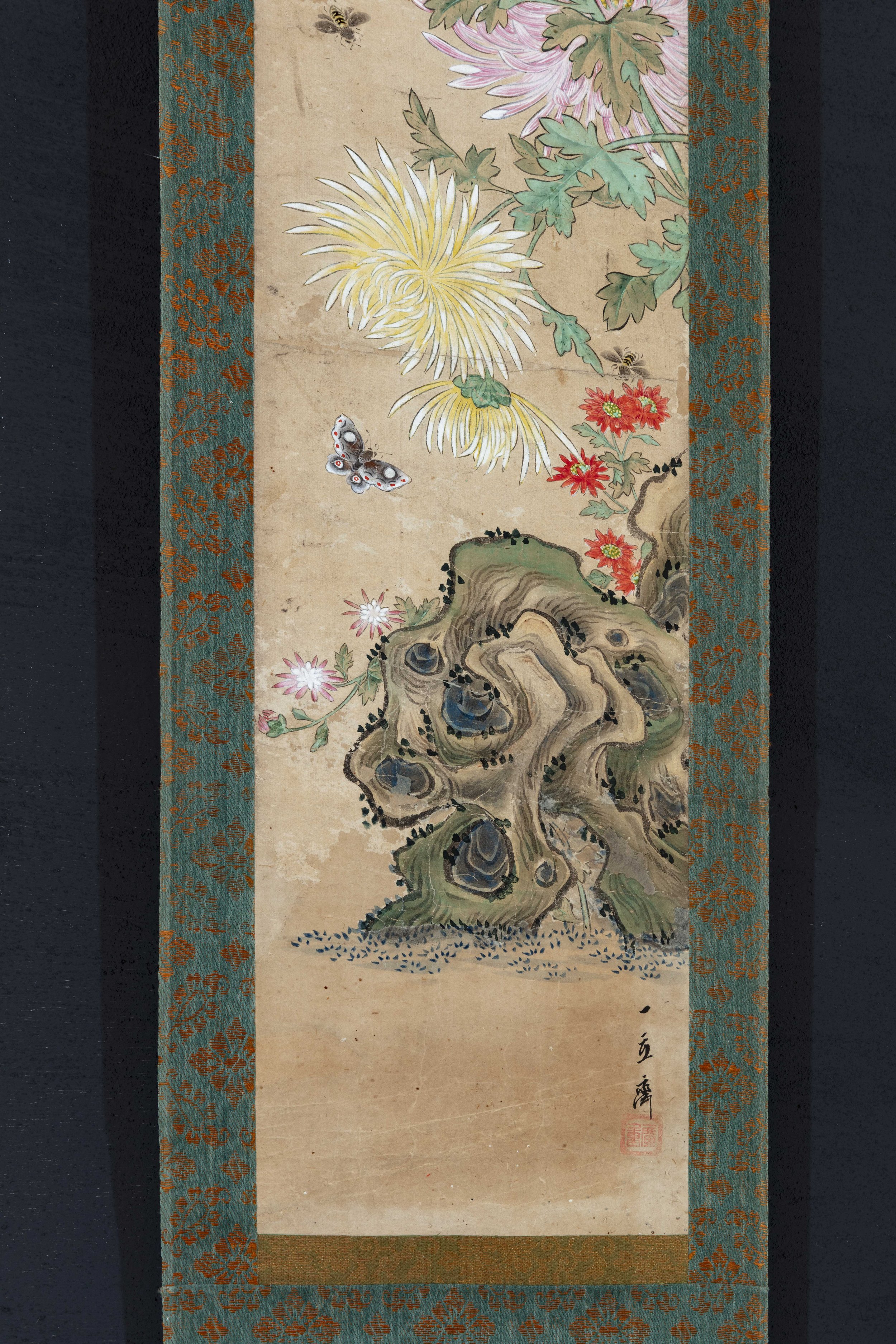
Chrysanthemums and Butterflies
In the manner of Utagawa Hiroshige I (1797–1858)
Ink and colour on paper; silk mount
Mid- to late 19th century
148 × 22 cm
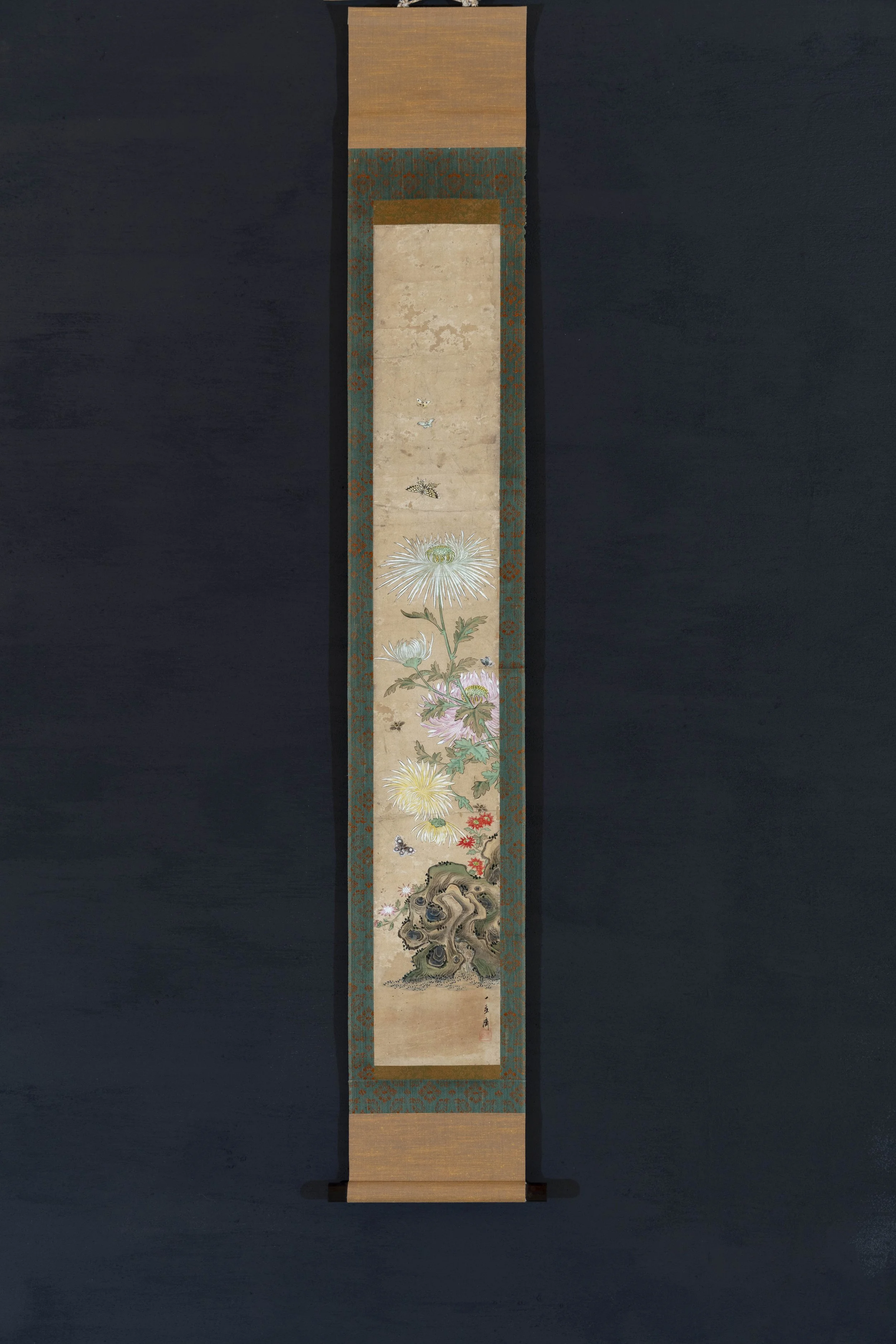
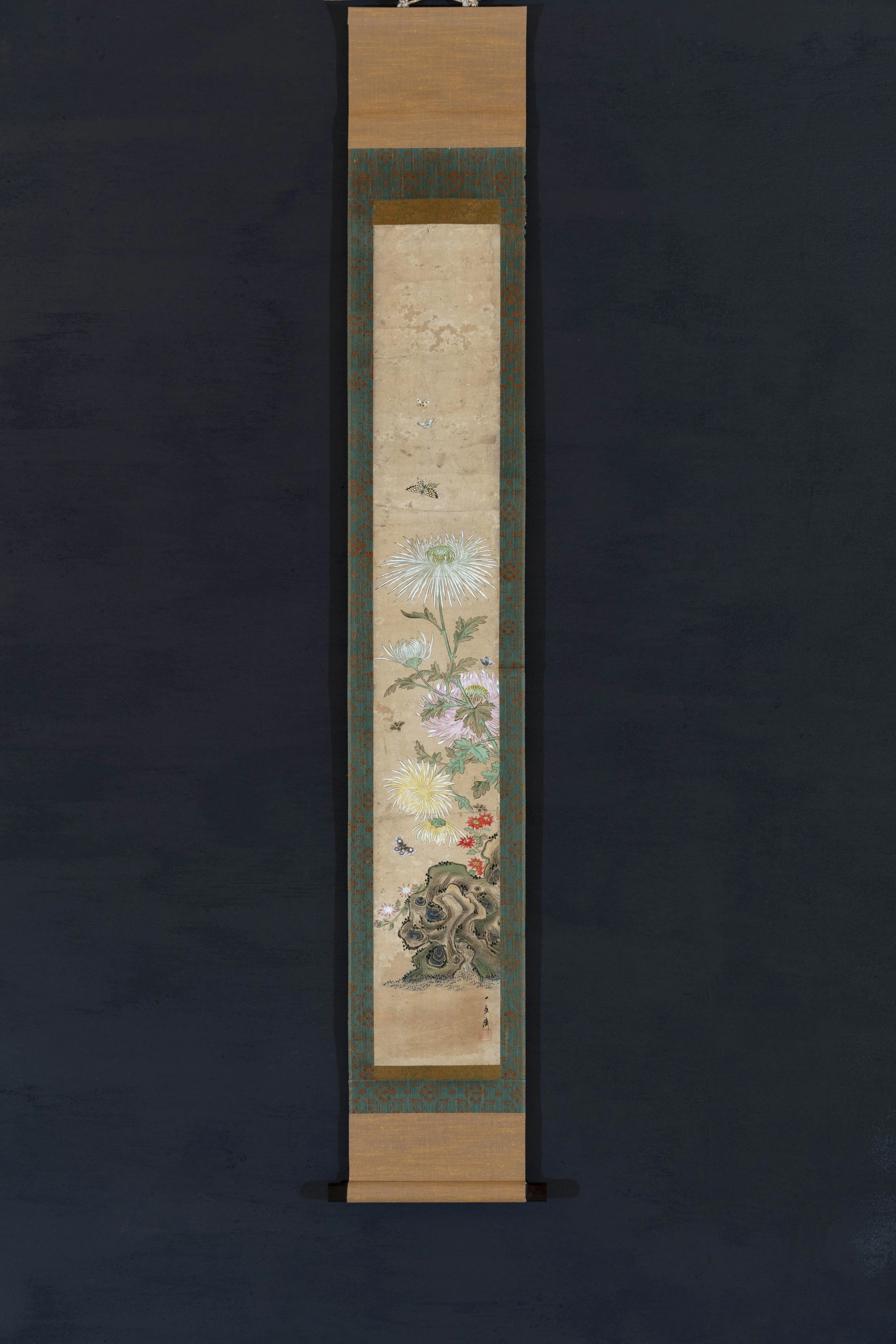
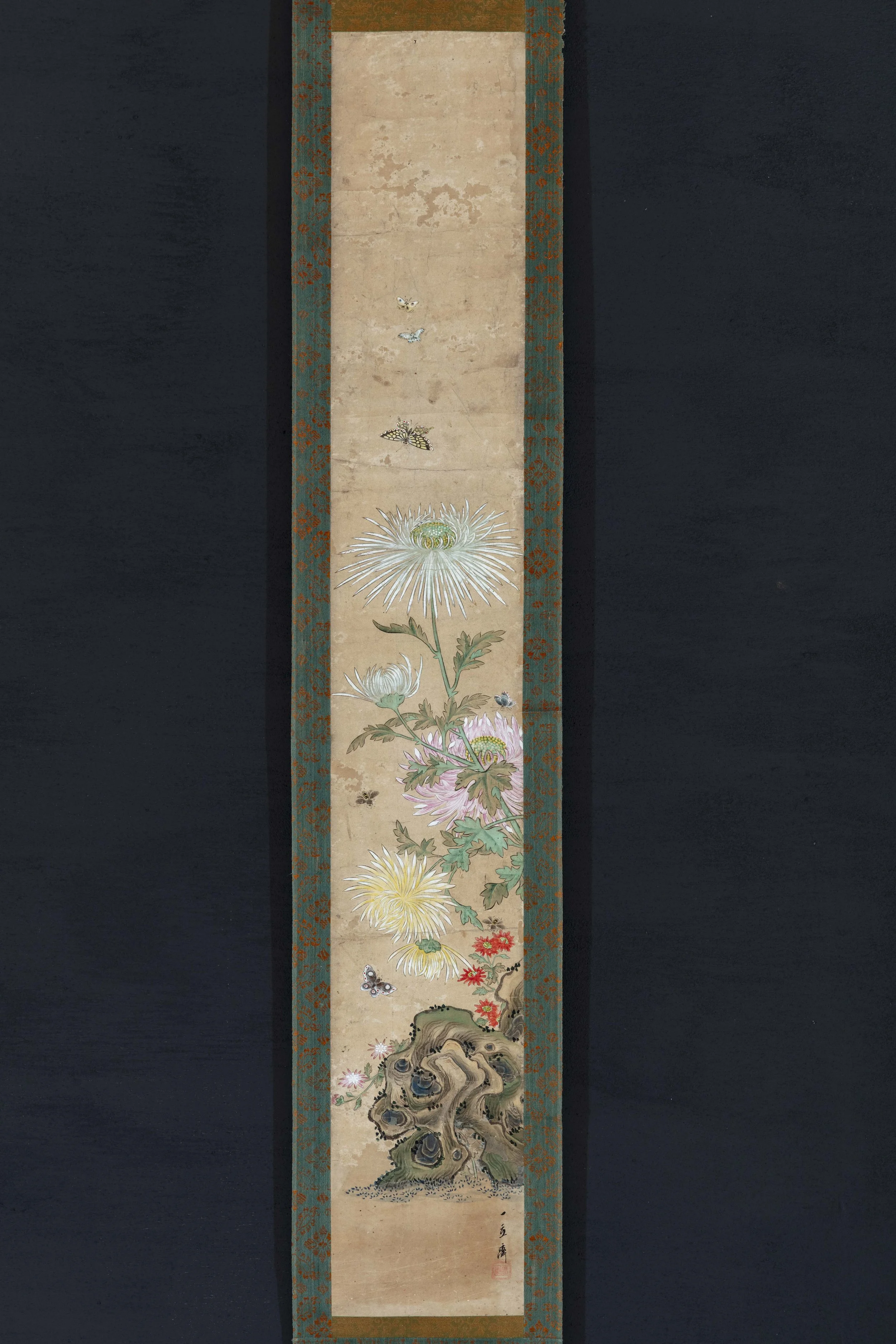
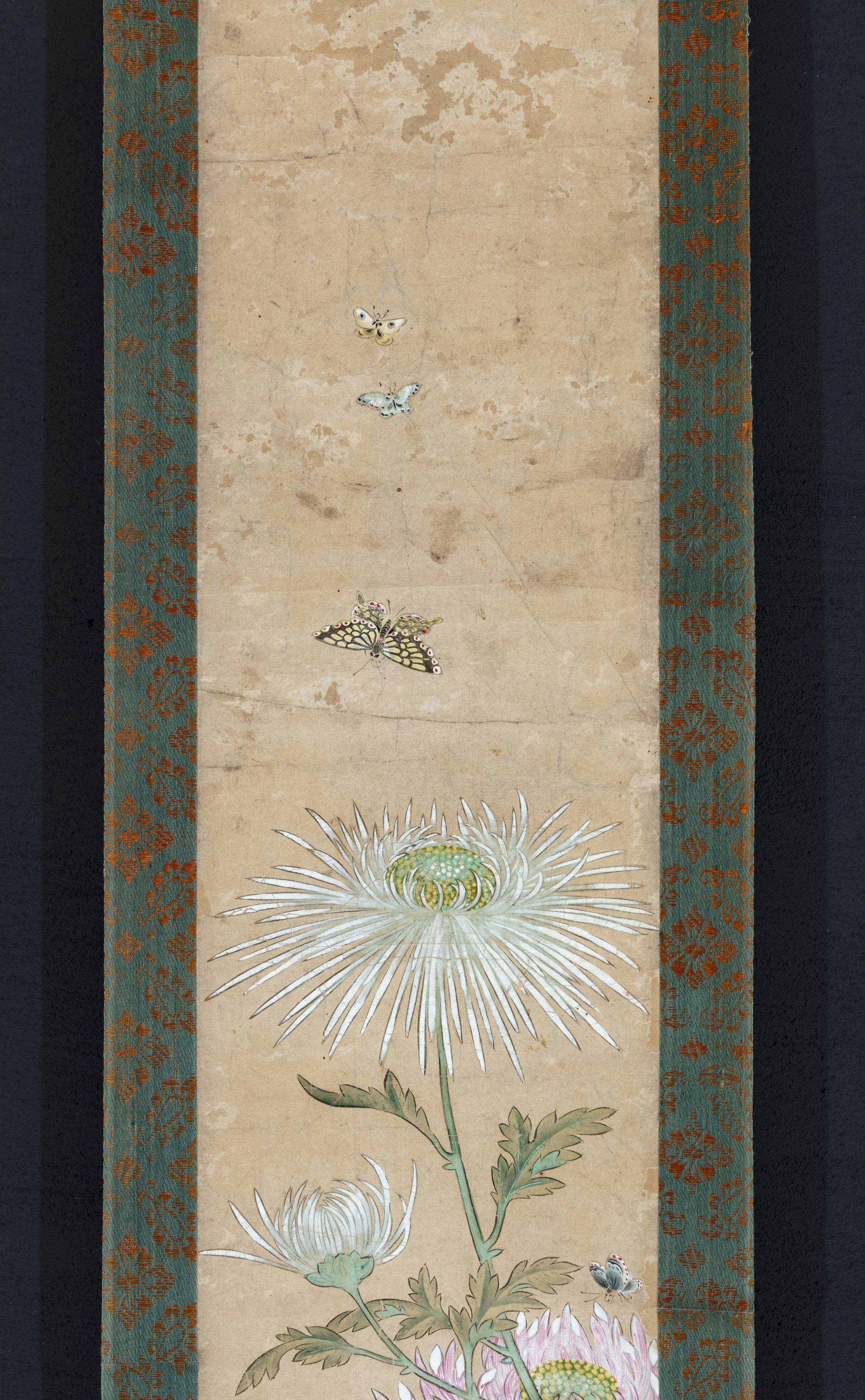
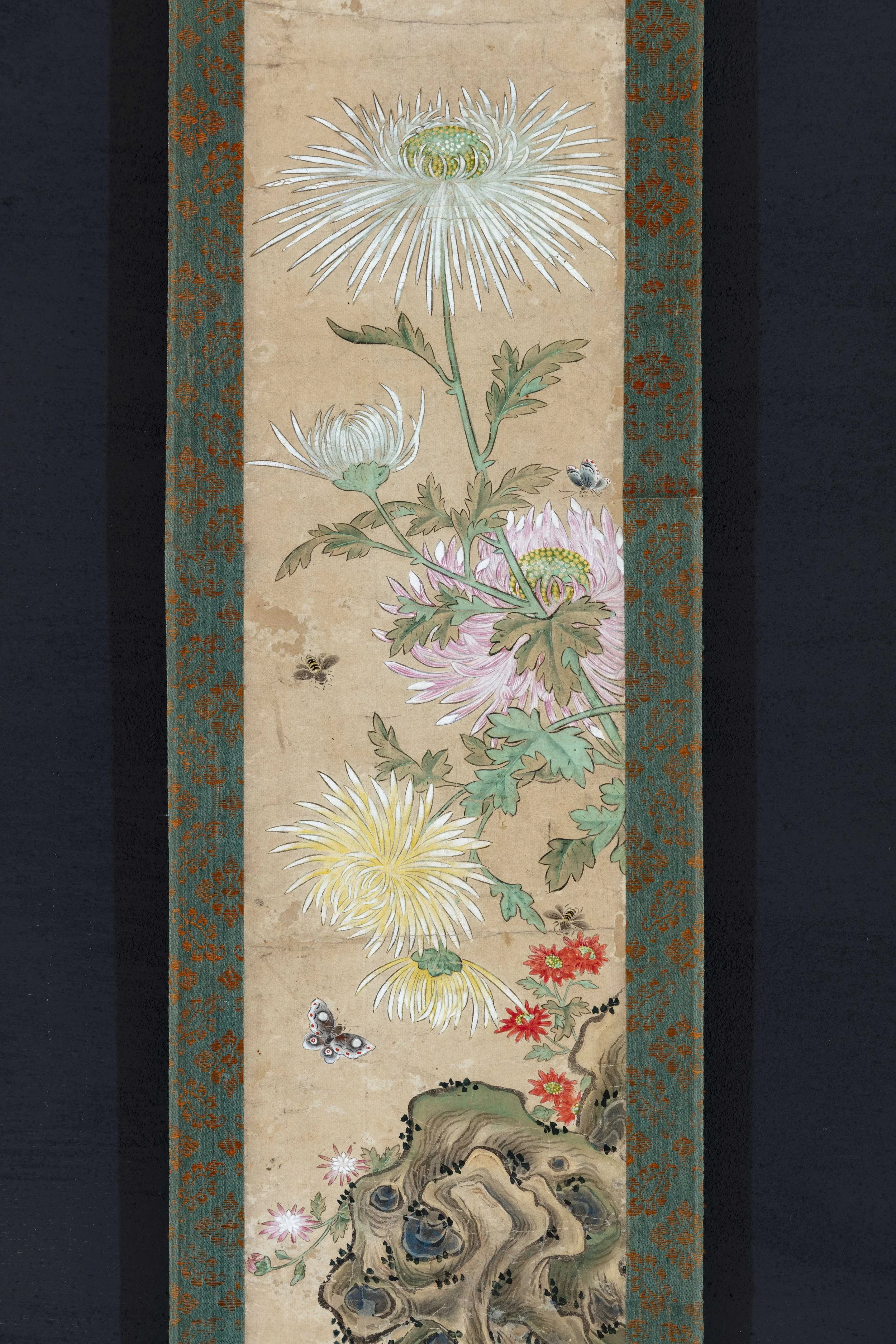
A quietly refined study of late autumn flora, this vertical composition centres on the chrysanthemum—long associated with longevity, elegance, and the cultivated sensibility of Edo-period culture. Rather than isolating the flower as an emblem, the artist situates it within a modest, lived environment: rising from a weathered garden stone, accompanied by smaller blossoms and animated by drifting butterflies. The result is a gentle softening of hierarchy, where symbolic weight yields to observation and seasonal presence.
The chrysanthemums themselves are rendered with controlled delicacy. Their fine, tapering petals radiate outward in measured rhythms, built through pale washes and restrained line that avoid theatrical contrast. Forms emerge gradually from the warm ground, suggesting a painter attuned not to spectacle, but to the quiet unfolding of natural structure. This sensitivity extends to the insects, whose minute detailing introduces a note of fleeting movement—an ephemeral counterpoint to the rooted stillness of the flowers.
The signature and seal, adopting the name Ichiritsusai, echo those of Hiroshige with evident reverence. Yet the work’s spirit lies less in replication than in continuation: it belongs to a broader lineage of artists working within and around Hiroshige’s idiom, particularly in the transition from late Edo into early Meiji, when such compositions were sustained, adapted, and gently reinterpreted.
What endures is the painting’s atmosphere. Its quiet tonal harmony and unforced composition create a sense of calm attentiveness—a moment held between growth and decline, where the season lingers, and the smallest movements carry meaning.