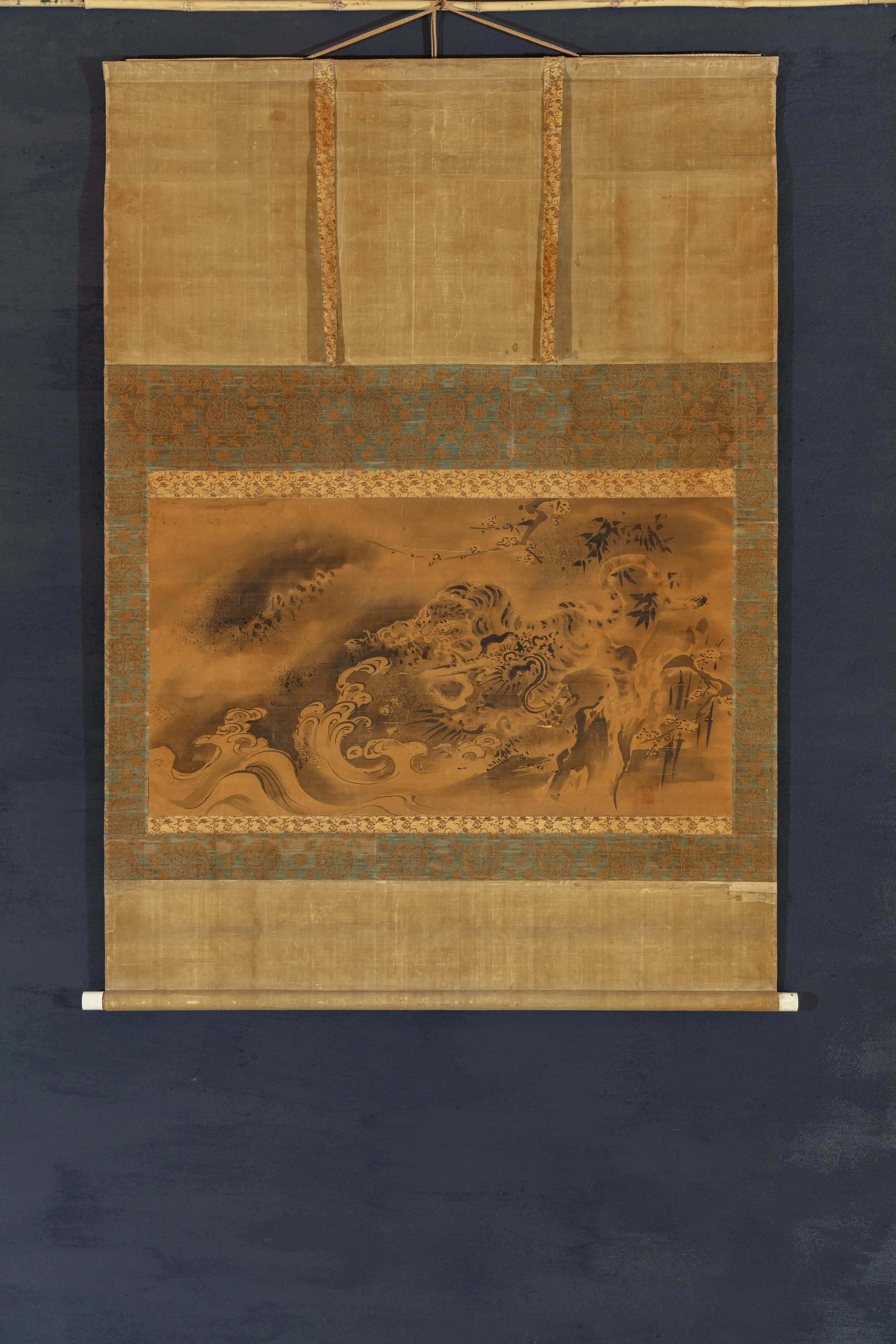
Dragon and Tiger with Plum and Bamboo
Kano-school workshop, Kyoto–Ōsaka circle
Ink with light colour on silk; original green-and-gold karahana brocade mounting
Mid- to late Edo period, c. 1740–1800
130 × 92.5 cm
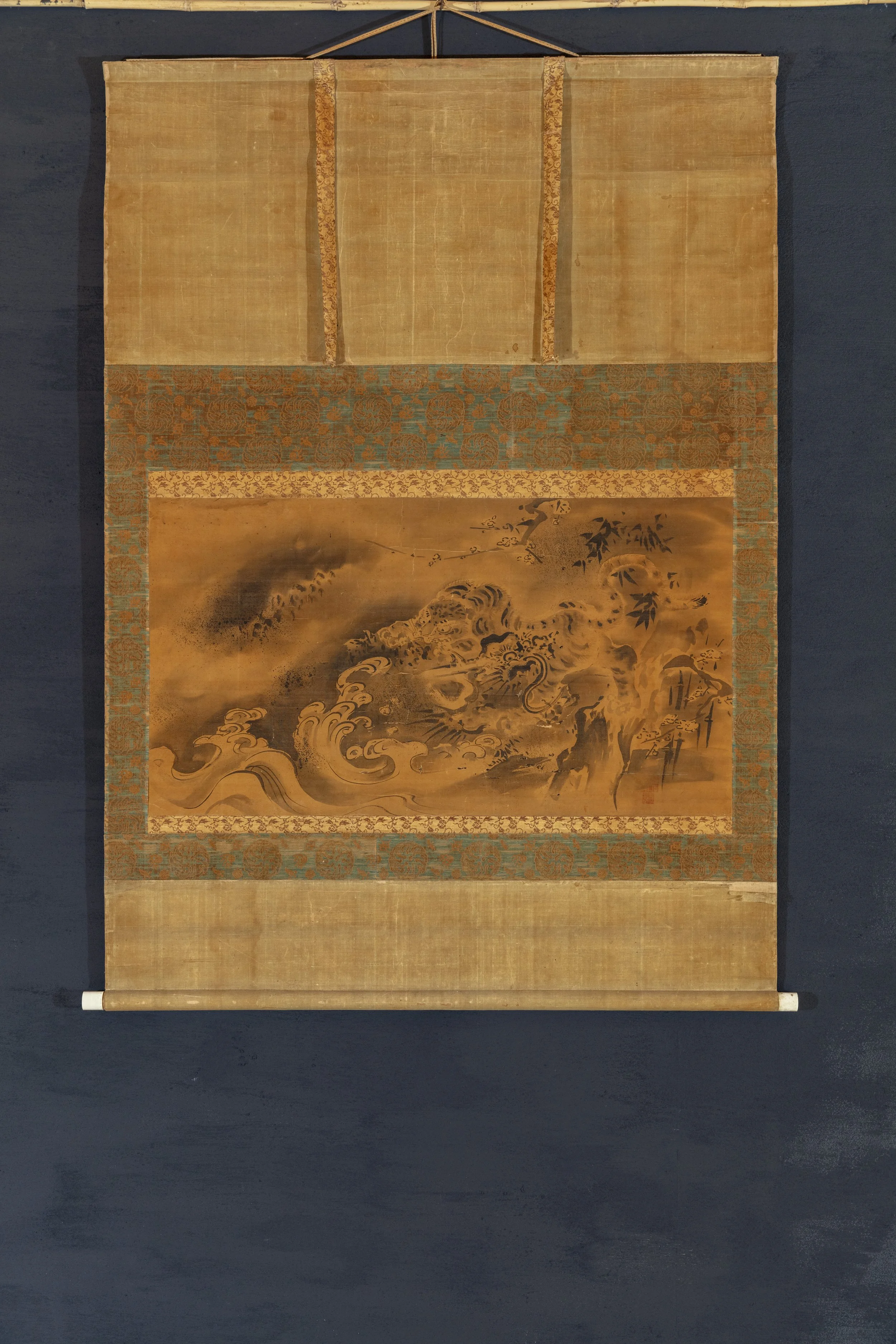
Among the most enduring subjects in Japanese painting, the confrontation between the dragon and the tiger embodies the meeting of two elemental forces. The dragon belongs to the heavens, the clouds and the waters, while the tiger rules the mountains and the earth. Rather than representing simple conflict, the pairing expresses a dynamic balance between opposing powers, a visual counterpart to the complementary principles of yin and yang. It is a subject that occupied generations of Kano painters, each workshop preserving and refining established compositions while allowing individual artists to breathe fresh life into familiar themes.
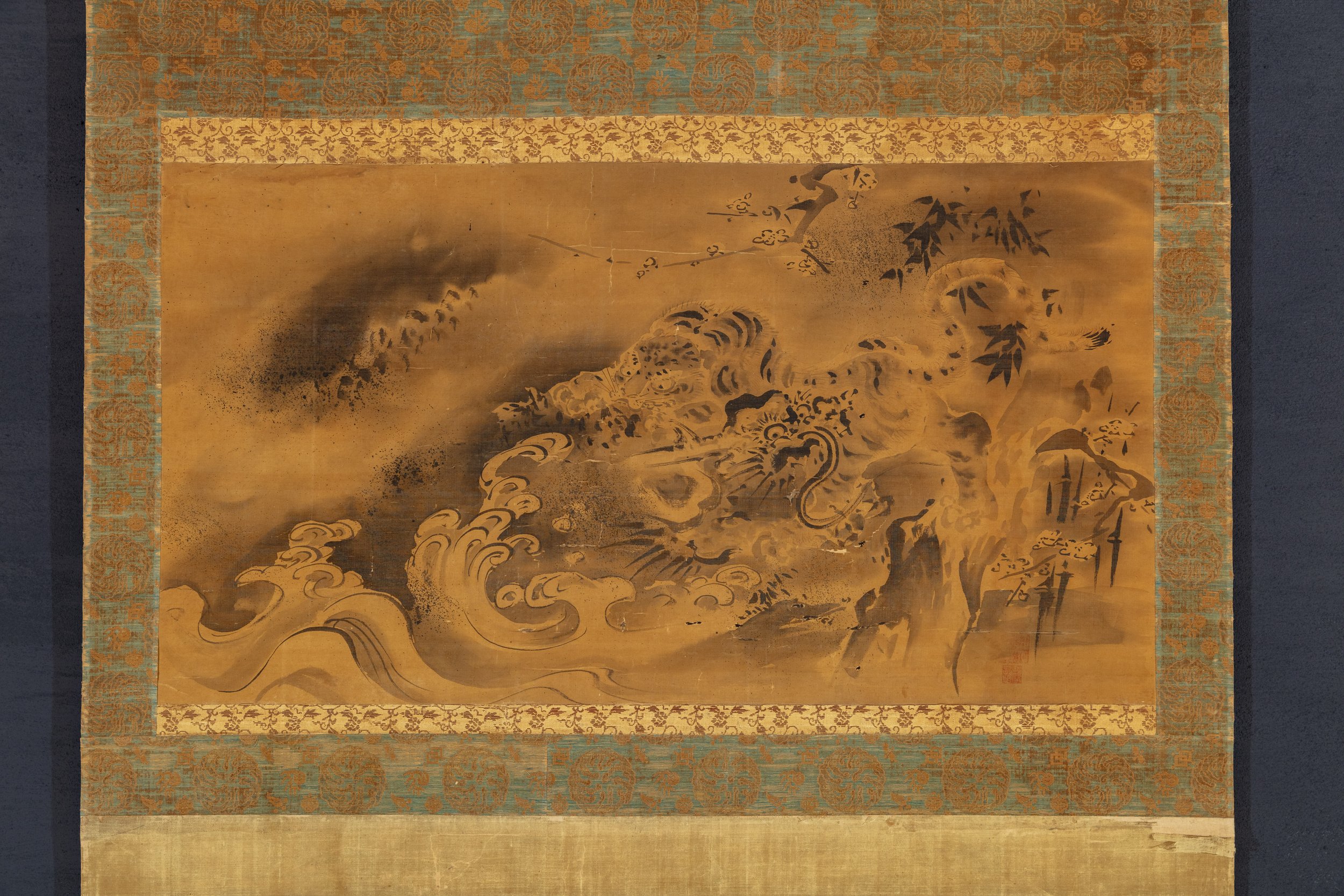
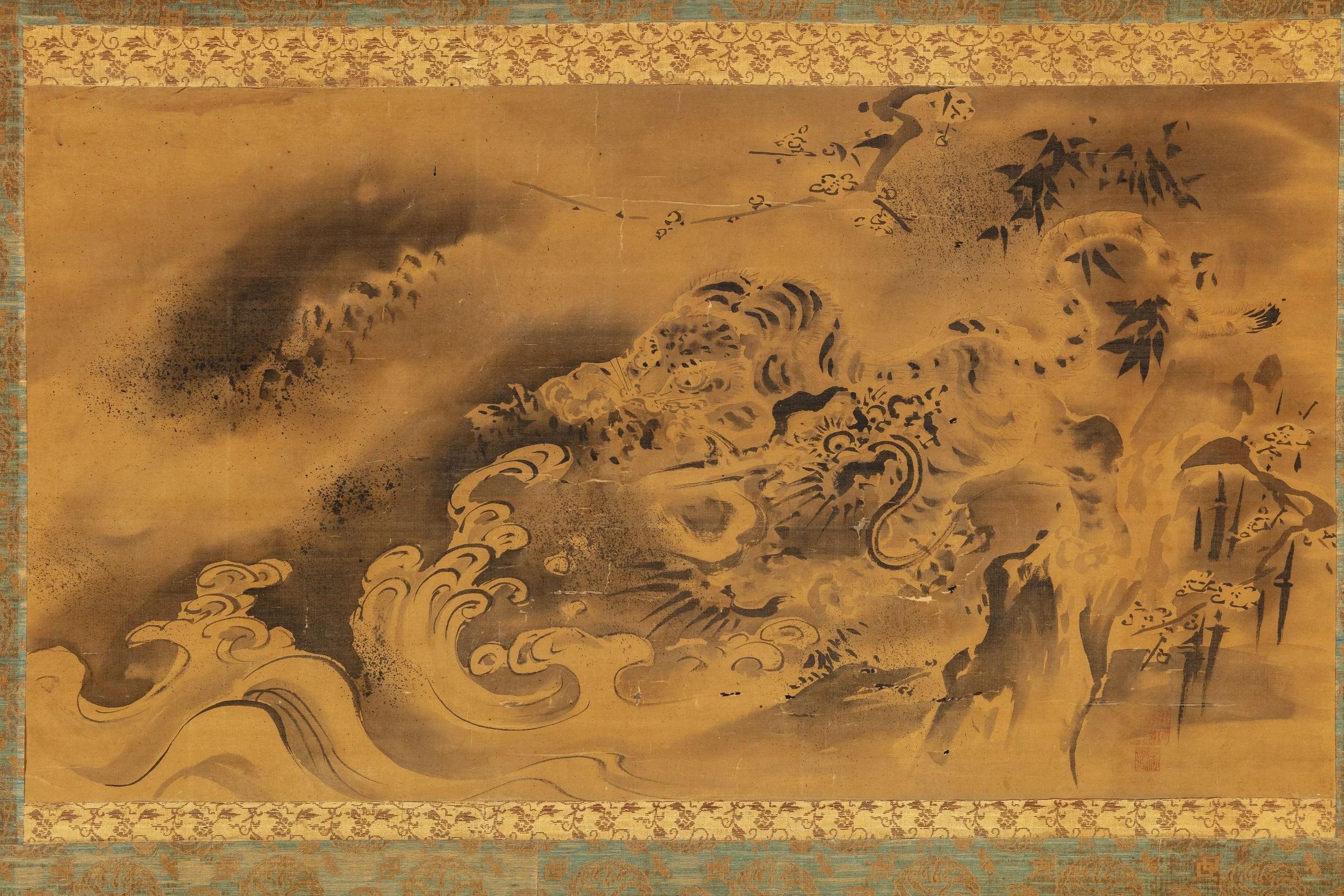
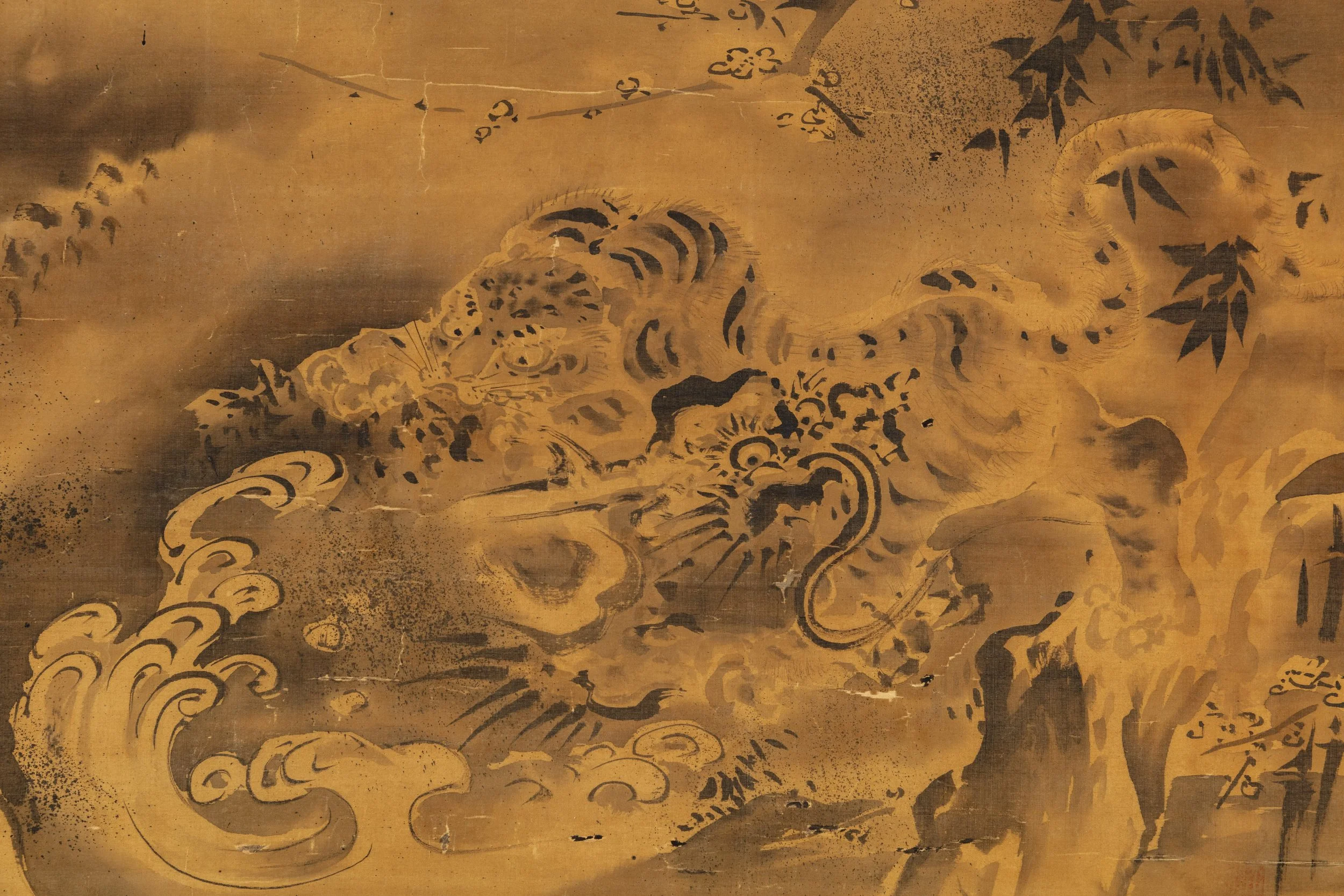
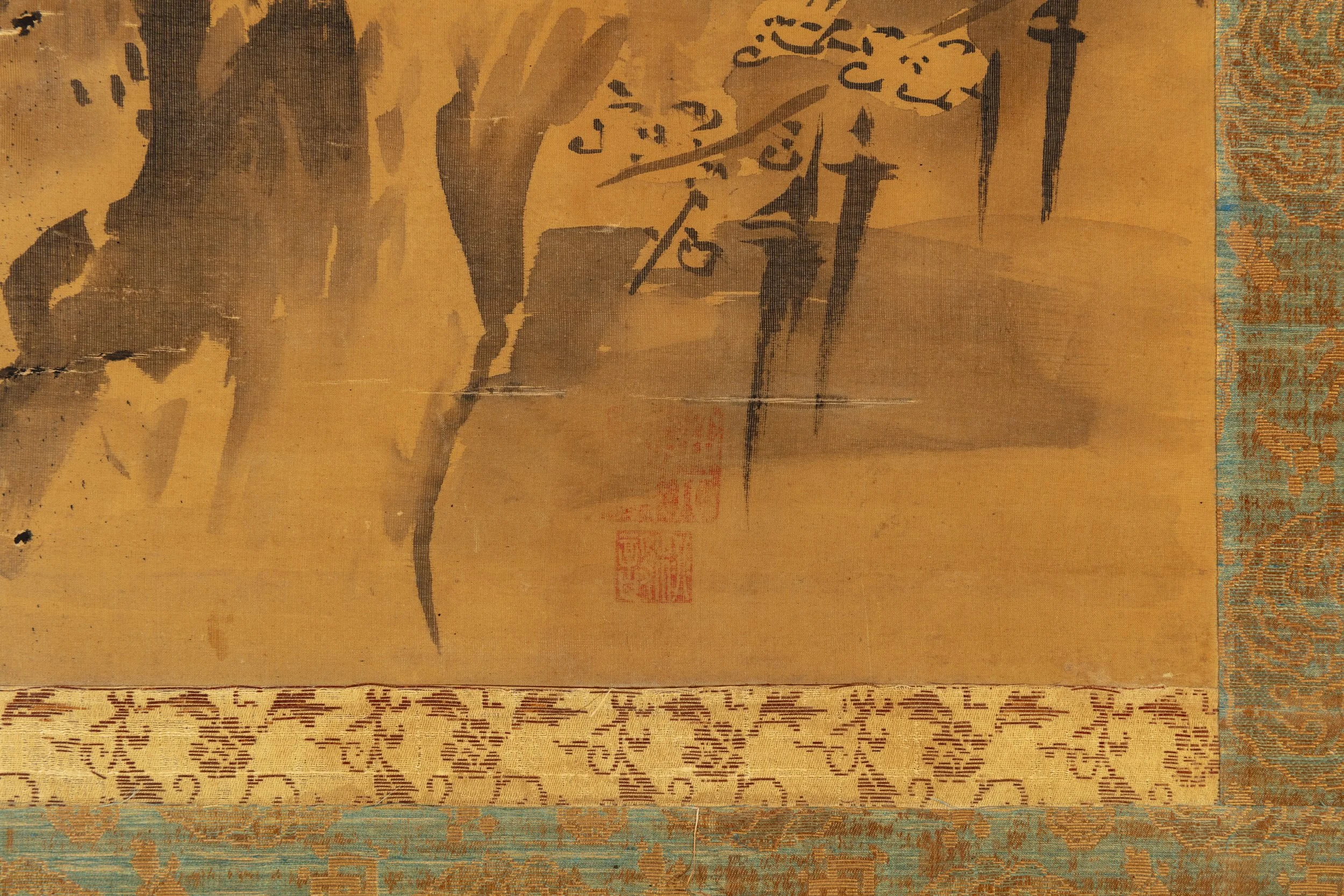
Here, the painter has created a wonderfully animated encounter. The dragon coils through swirling banks of storm cloud, its sinuous body appearing and disappearing as if formed from the mist itself. The head emerges with extraordinary vitality, eyes wide, whiskers flowing, and jaws opening as it rides the gathering storm. Opposing it, the tiger surges forward with tremendous energy, its body twisting as it appears to leap from beneath the shelter of a flowering plum tree. The expressive face, taut musculature and rhythmic striping reveal the assured hand of a trained Kano painter working within a highly accomplished workshop tradition.
The composition is beautifully orchestrated. Great curling waves rise across the lower left, their elegant arabesques echoing the coils of the dragon above. Broad washes of softly graded ink create an atmosphere heavy with rain and cloud, while delicate tarashikomi effects lend remarkable depth and movement to the gathering storm. Every element contributes to the sense that wind, water and living creatures are bound together in a single unfolding moment.
The quieter passages are equally compelling. At the right, slender bamboo stalks dissolve into the mist with remarkable economy of brushwork, each leaf placed with confidence yet never overstated. Their restrained elegance provides a moment of calm amidst the surrounding drama. Above them, the flowering plum introduces the first signs of spring, its blossoms contrasting with the evergreen resilience of the bamboo. Together these motifs deepen the symbolic richness of the painting, tempering martial power with renewal, endurance and refinement.
Particularly striking is the artist's command of negative space. The dragon is never fully described, instead emerging from veils of cloud that invite the viewer's imagination to complete the form. This sophisticated restraint is characteristic of the finest Kano paintings, where suggestion often carries greater expressive force than exhaustive detail.
The painting is further enhanced by an exceptionally handsome Edo-period mounting. The wide green-and-gold karahana brocade possesses a rich, mellow patina acquired over centuries, complementing the warm tones of the aged silk and framing the composition with quiet dignity. Such original mountings are increasingly uncommon, and this example survives with remarkable presence, becoming an integral part of the aesthetic experience rather than merely a support for the painting.
The overall impression is one of controlled energy and refined confidence. While rooted firmly within the Kano school's disciplined studio tradition, the work possesses a freshness and vitality that suggest an accomplished Kansai workshop, perhaps in Kyoto or Ōsaka, where a slightly softer and more lyrical interpretation of classical Kano subjects often prevailed. It is a painting that rewards prolonged contemplation, revealing ever subtler relationships between cloud and wave, strength and elegance, movement and stillness.