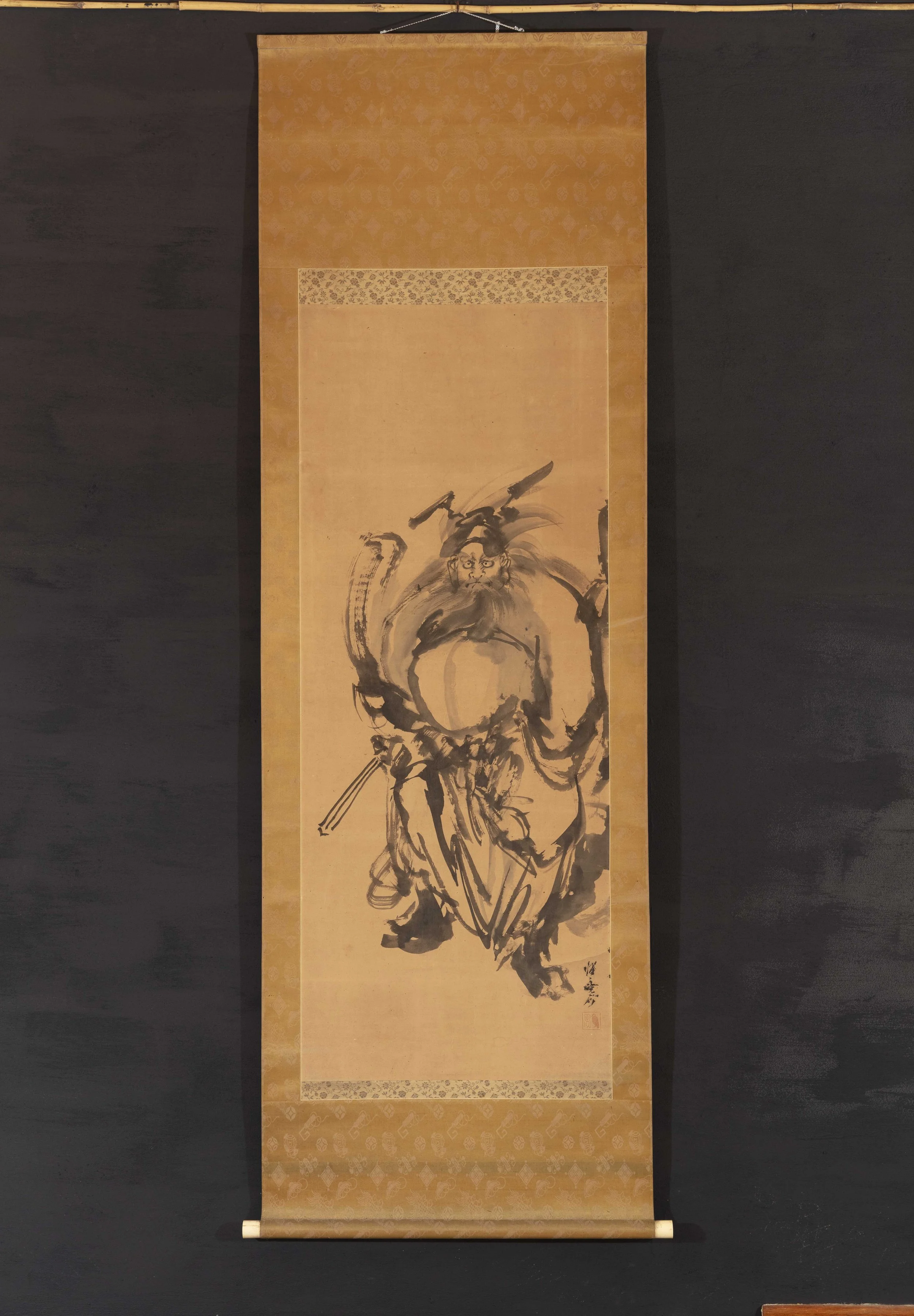
Kawanabe Kyōsai (1831–1889)
Shōki the Demon-Queller
Ink on paper hanging scroll, late Edo–Meiji period
136 × 54 cm (image)
209 × 68 cm (overall mounting)
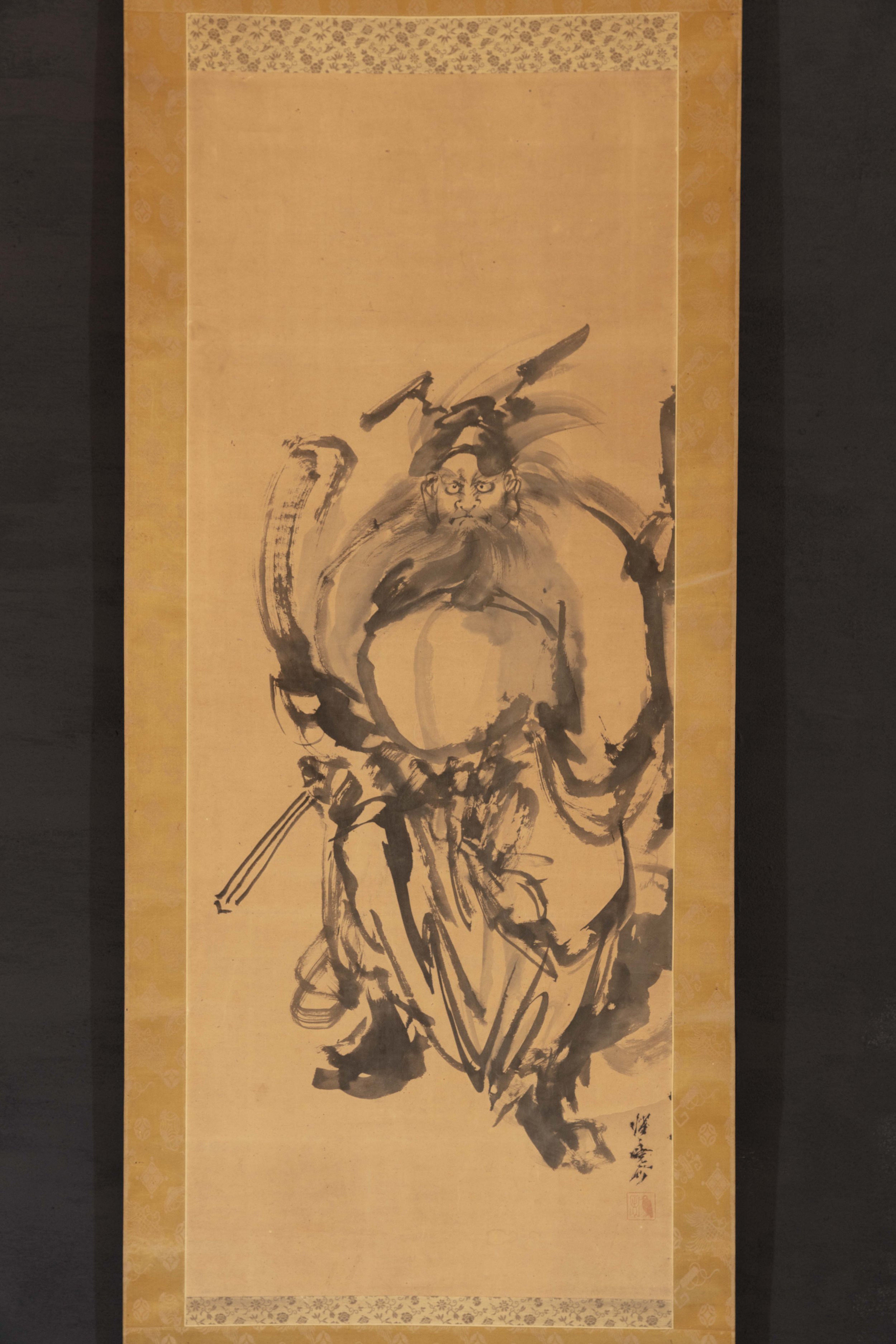
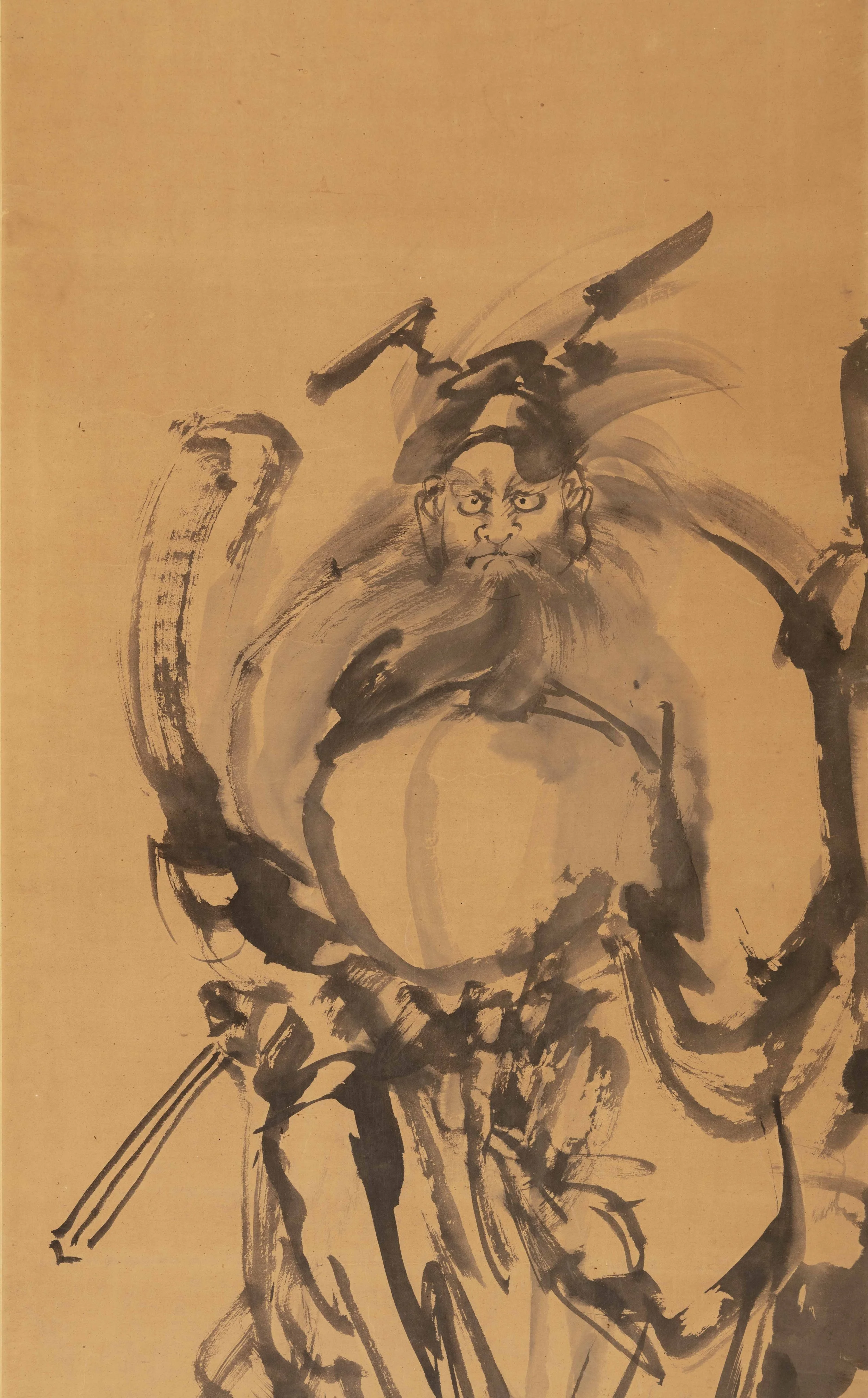
This large hanging scroll depicts Shōki, the demon-quelling figure traditionally invoked as a guardian against illness, misfortune, and malignant forces. Executed in sweeping monochrome ink, the painting exemplifies Kawanabe Kyōsai’s mature approach to figural representation, in which force, humour, and precision coexist within a single, highly compressed image.
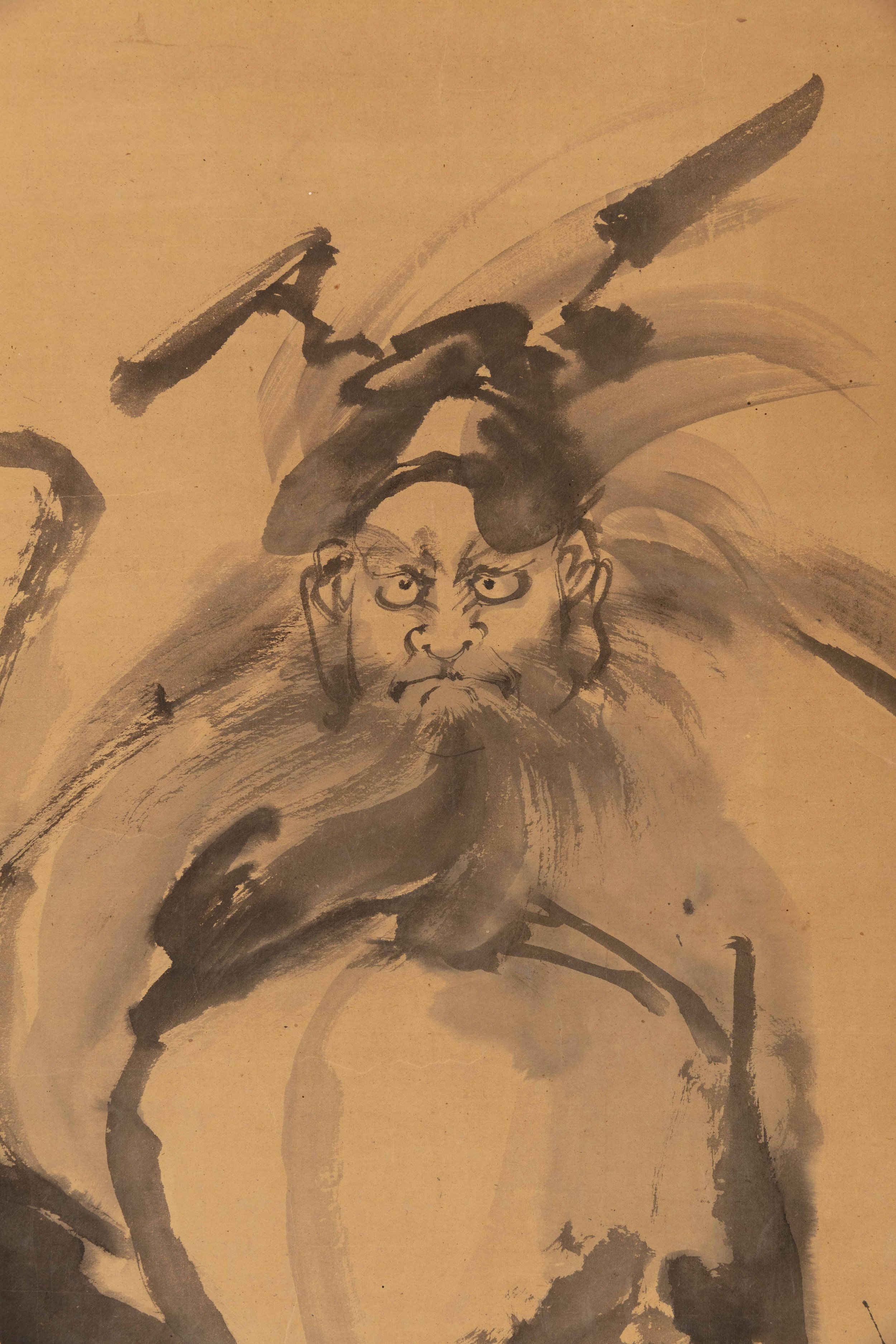
The figure is constructed through a small number of decisive actions rather than descriptive detail. A broad arc of ink establishes the body in one commanding movement, while the beard, hat, and robes are articulated through dry, slashing strokes that retain the speed and volatility of their making. Kyōsai’s mastery lies not in refinement for its own sake, but in control exercised at the moment of maximum freedom. The result is a figure that feels simultaneously monumental and animated, capable of holding space across a room while rewarding close inspection.
Shōki’s expression—alert, severe, and faintly sardonic—is rendered with remarkable economy. A few strokes suffice to suggest vigilance and latent violence, qualities essential to the figure’s protective role. As in Kyōsai’s strongest works, caricature and seriousness are not opposites but parallel modes of truth-telling. The image asserts authority without solemnity, energy without chaos.
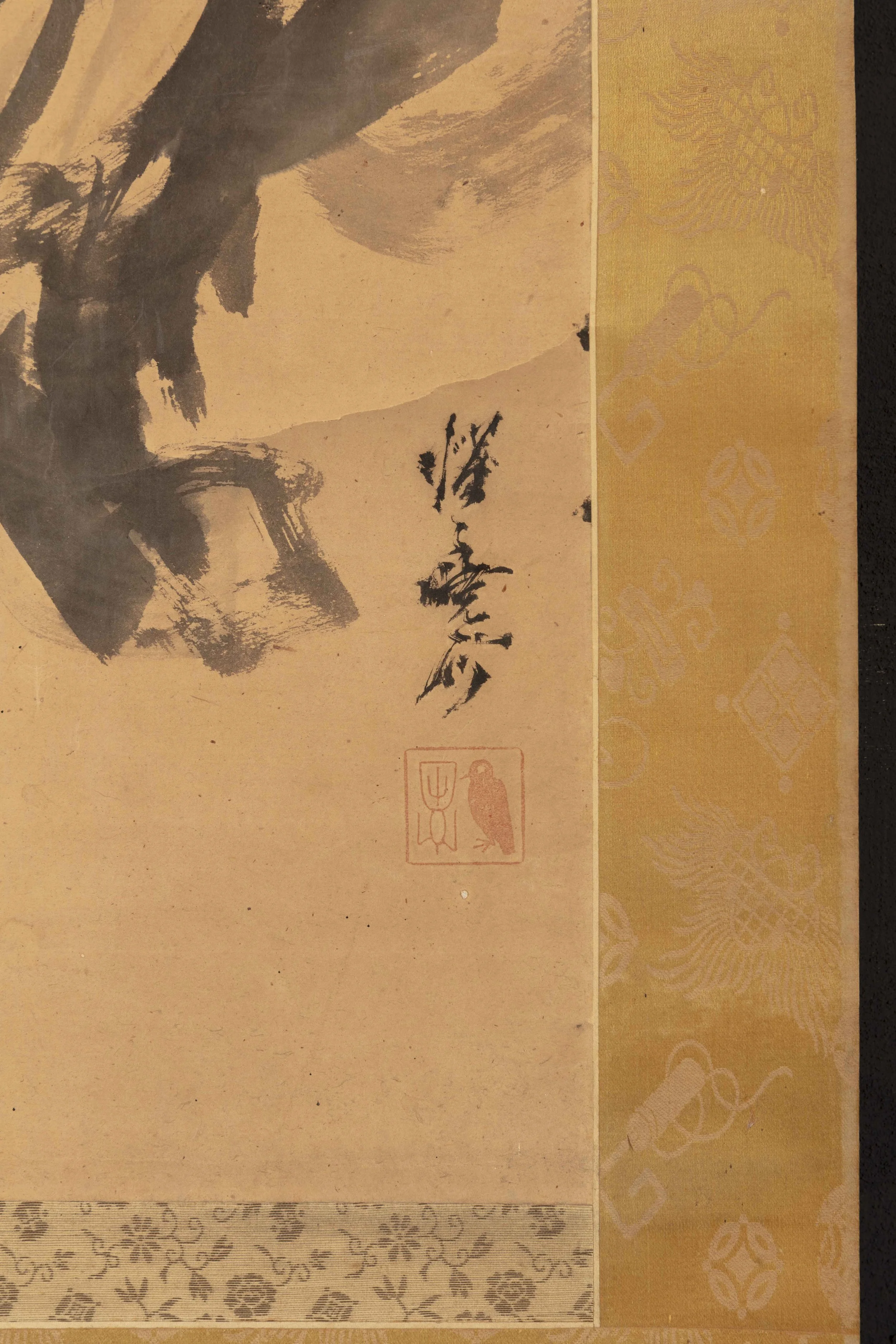
The scroll bears Kyōsai’s signature and a square vermilion seal incorporating a crow motif, one of the artist’s playful late emblems. Both are consistent in placement, scale, and character with authenticated examples of Kyōsai’s work, and sit naturally within the composition rather than functioning as later additions.
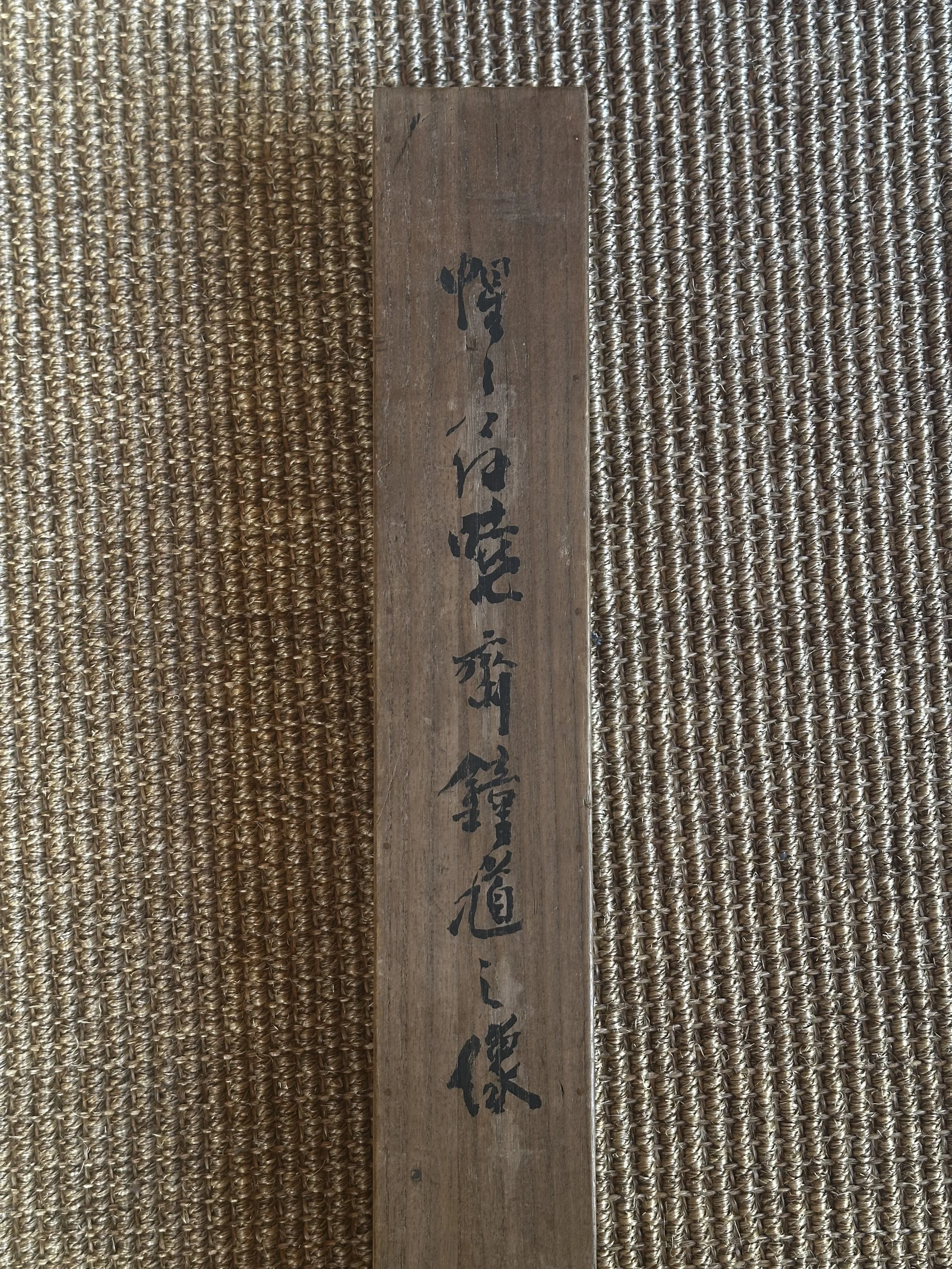
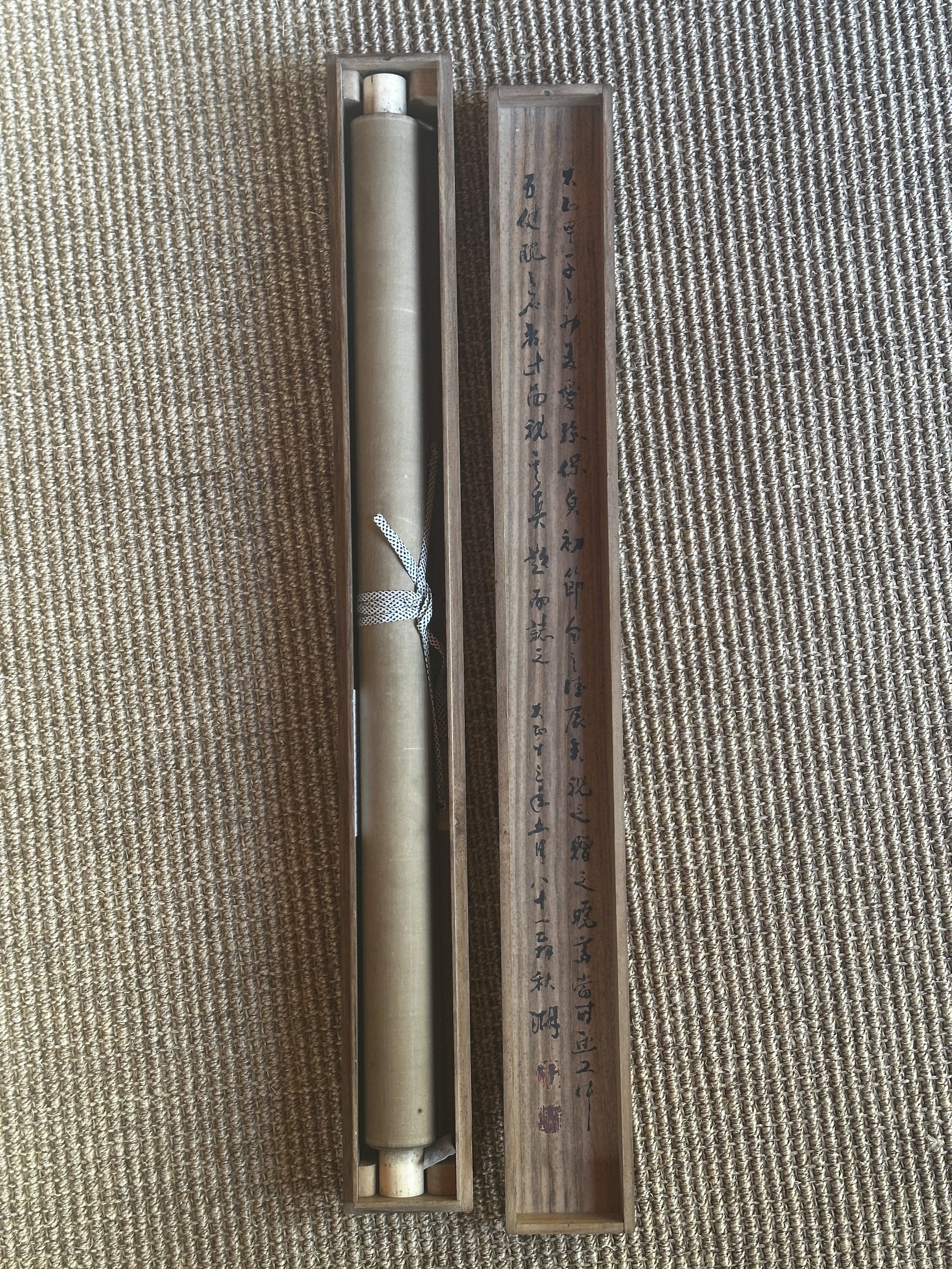
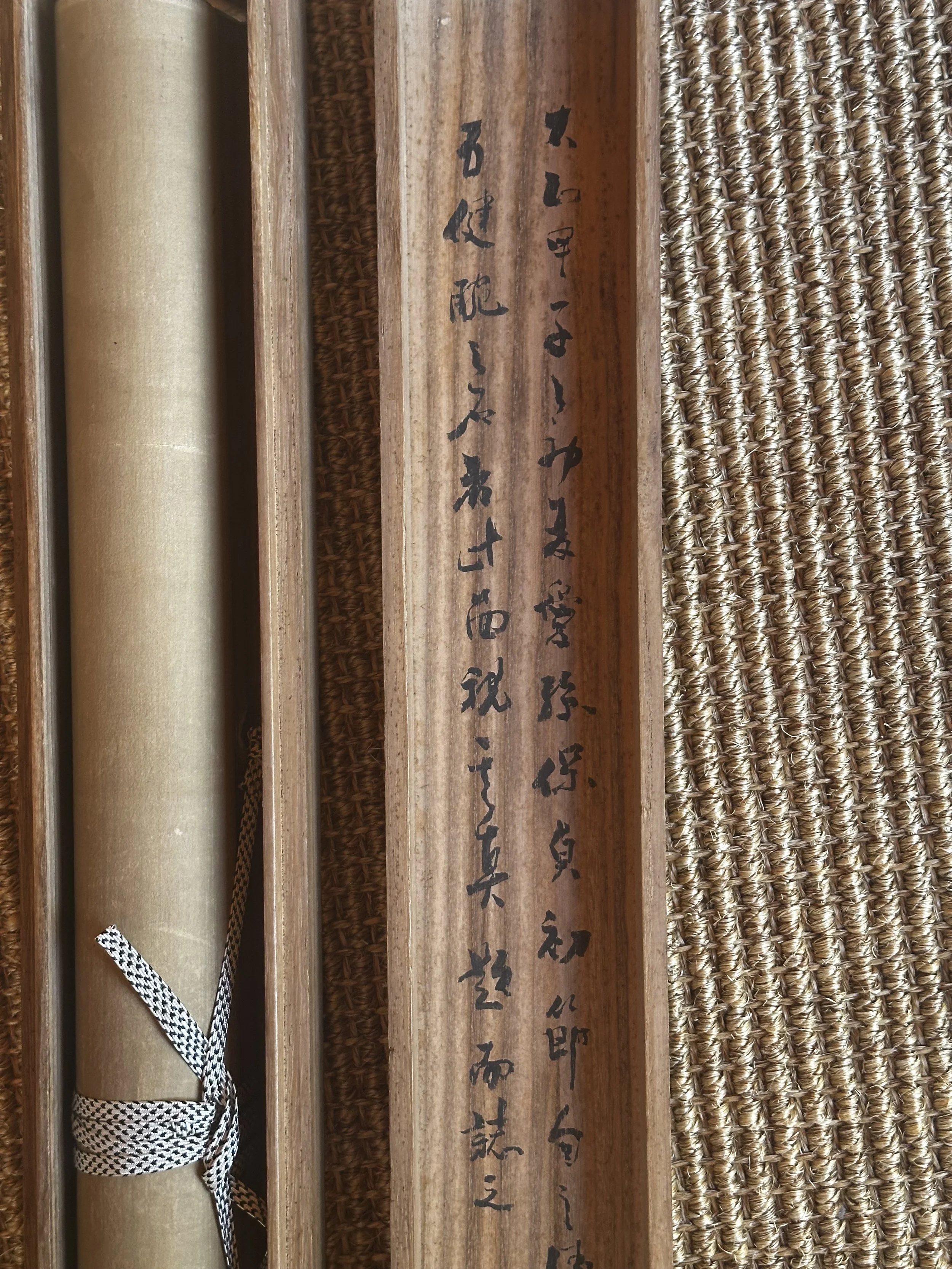
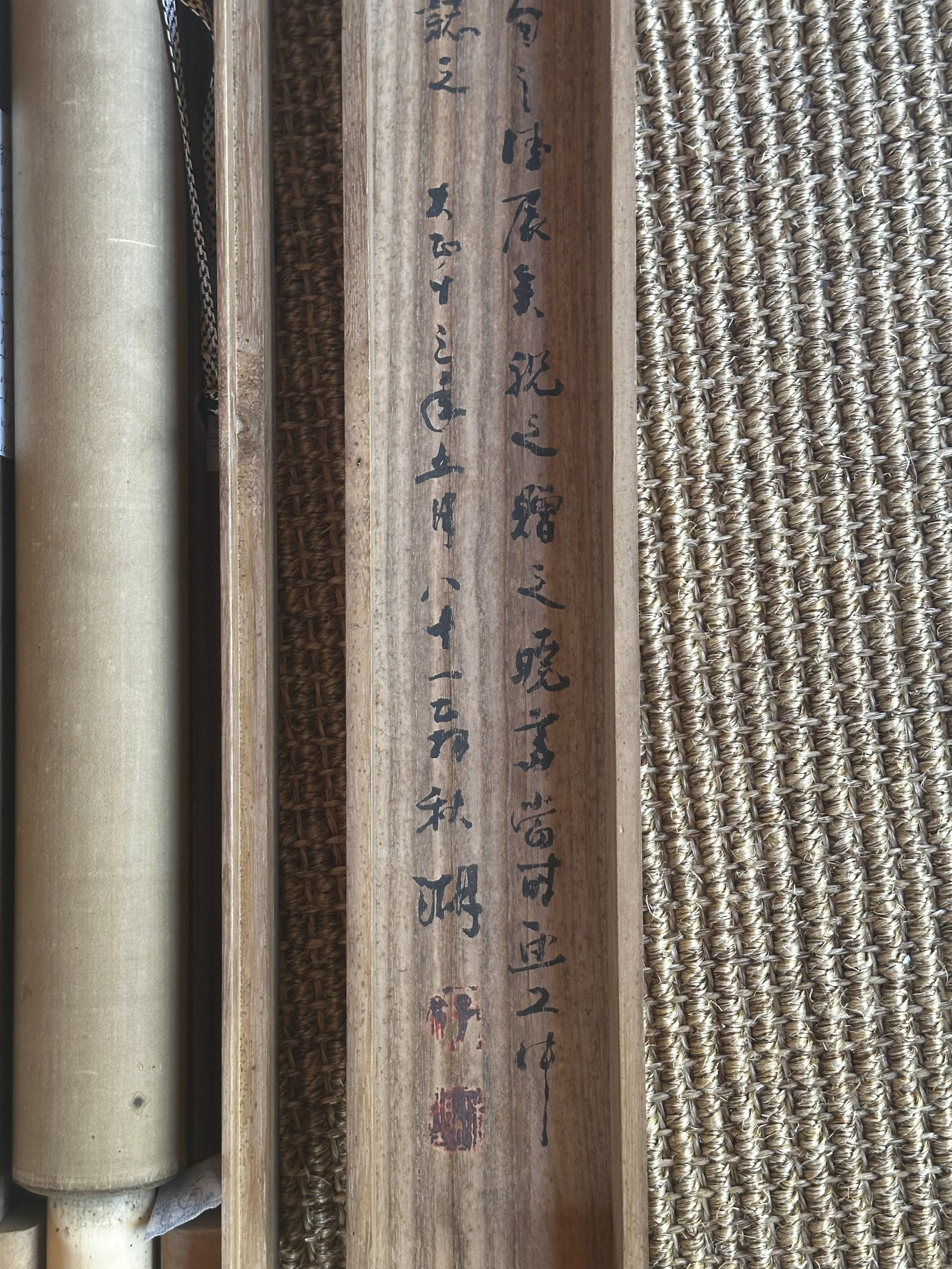
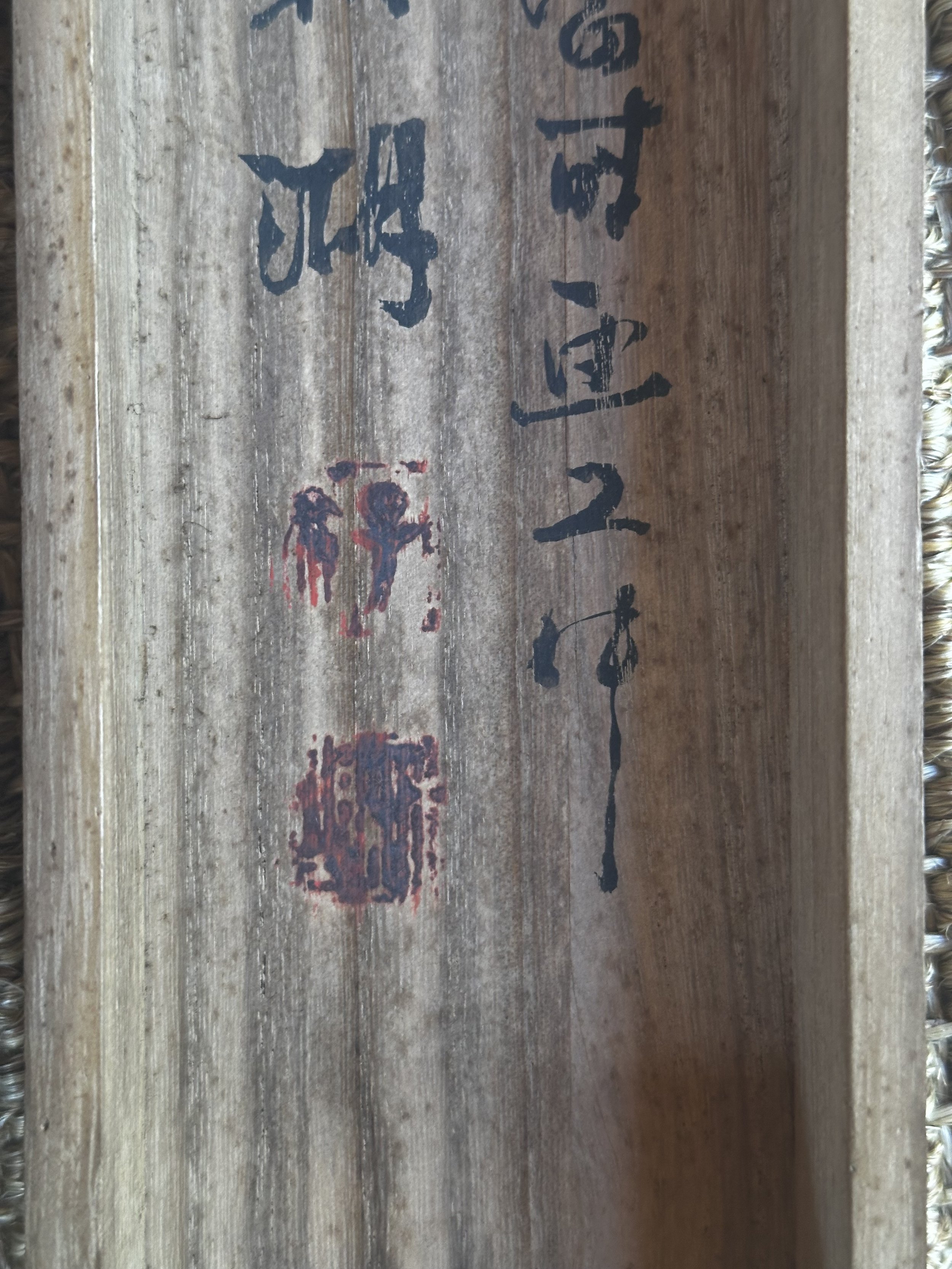
Of particular significance is the accompanying inscribed storage box, which records that in 1924 (Taishō 13) the work was presented by Shūkō (秋湖) to Kyōsai’s grandson Yasusada on the occasion of his first Boys’ Festival. Shūkō was himself a painter, active in the late Meiji and Taishō periods, trained in traditional modes and deeply engaged with historical painting and Buddhist subjects. While not a connoisseur in the modern scholarly sense, he belonged to a generation still closely connected to nineteenth-century artistic lineages and modes of transmission. His inscription should therefore be understood not as a certificate of authentication, but as a record of lived cultural continuity: evidence that this painting was already recognised, valued, and ceremonially transmitted within a circle that retained direct memory of Kyōsai’s era and familial legacy.
Within the Ki-no-an Collection, this work represents a strand of Zen-adjacent painting concerned less with contemplation than with protection, force, and moral clarity. It reminds us that restraint and ferocity are not mutually exclusive, and that disciplined brushwork can carry humour, threat, and vitality at once. Shōki stands here not as a decorative image, but as an active presence—one intended to guard a space, to be lived with, and to remain alert long after the moment of its making.