Hiroto Koshū II (湖秀二代, 1766–1820)
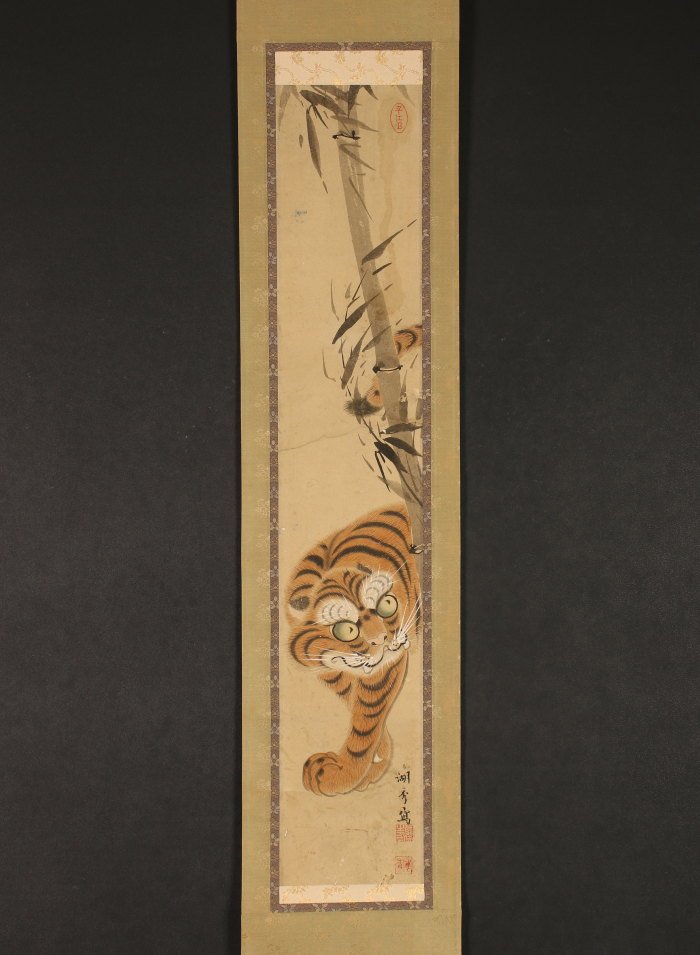
Tiger and Bamboo | 虎と竹図
Late Edo period, c. 1810–1818
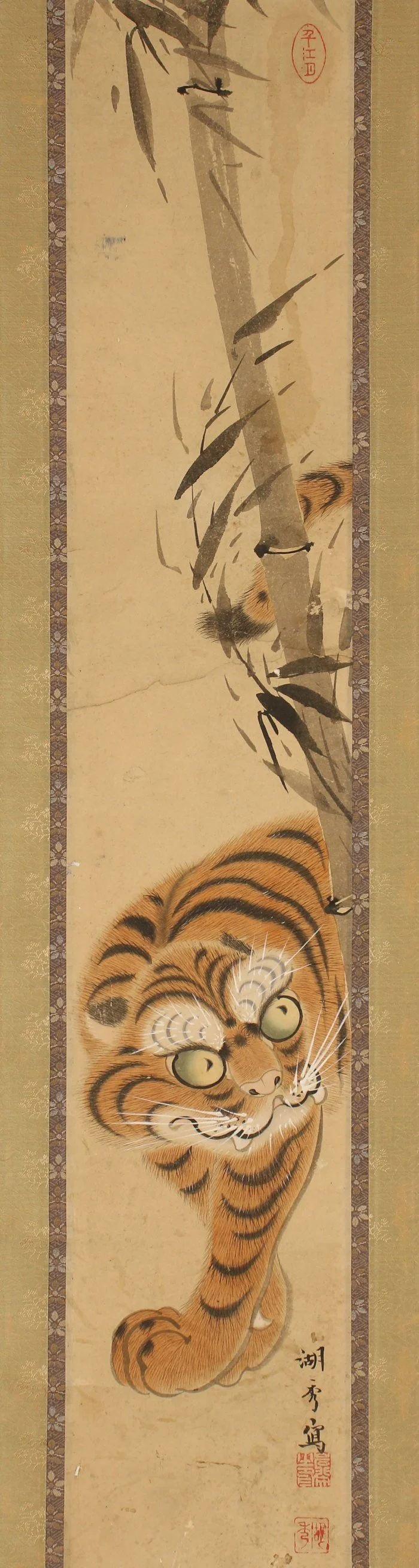
This narrow hanging scroll presents a tiger emerging from a stand of bamboo, rendered with a balance of alertness and quiet wit that is characteristic of late Edo interpretations of Chinese-derived animal painting. The composition is deliberately vertical and intimate, suggesting a work intended not for public display but for repeated, close viewing within a domestic or scholarly setting.
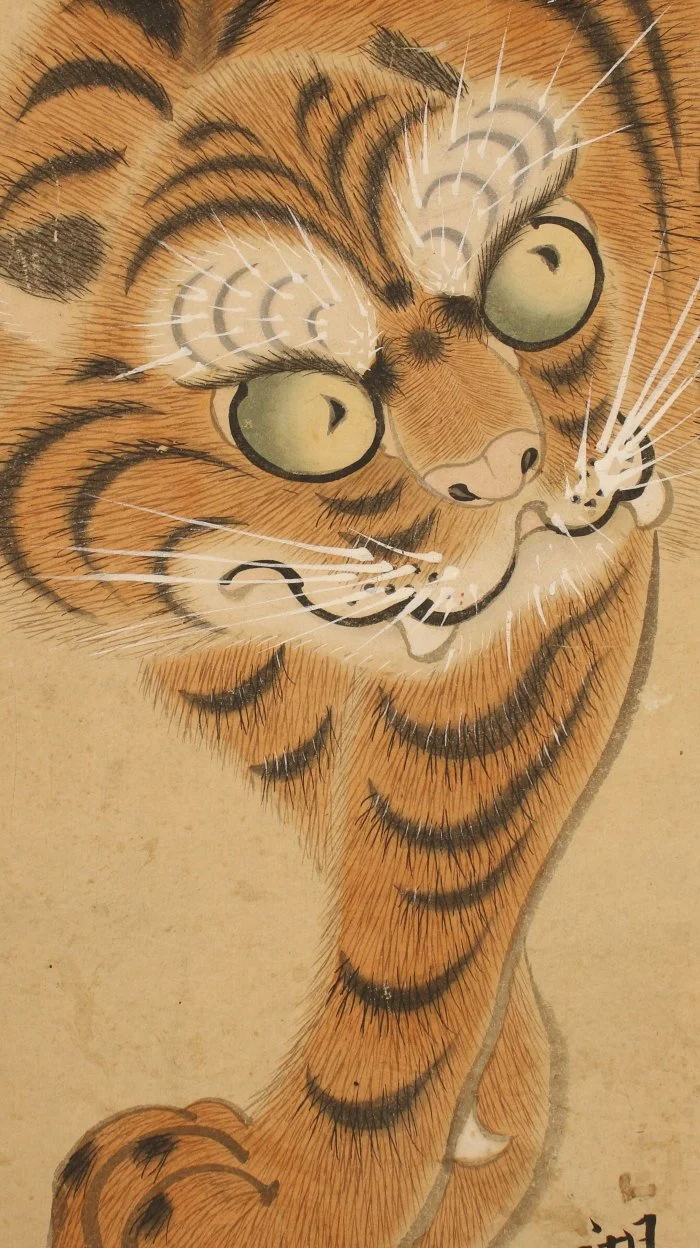
The painting belongs convincingly within the lineage of artists working under the name Koshū, specifically the second-generation painter active in the late eighteenth and early nineteenth centuries. The handling of bamboo—executed with brisk, dry strokes that skip and taper—reflects a Kara-e inheritance mediated through Nagasaki painting traditions, while the tiger itself is treated with patient attention: layered hair strokes, restrained coloration, and subtle white highlights animating the brows and whiskers. The contrast between speed and deliberation is central to the work’s appeal.
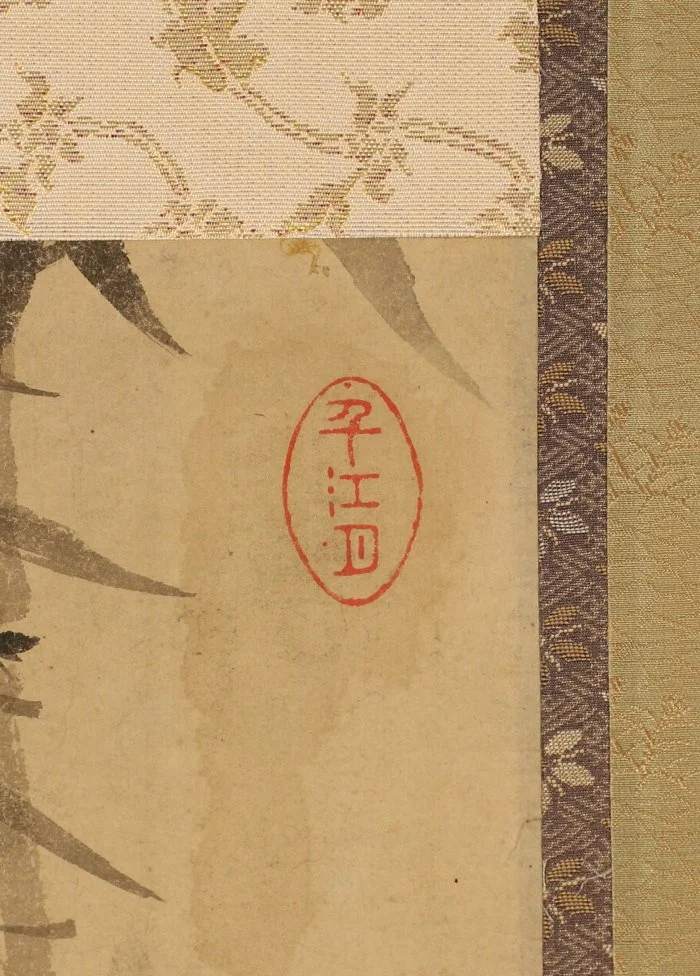
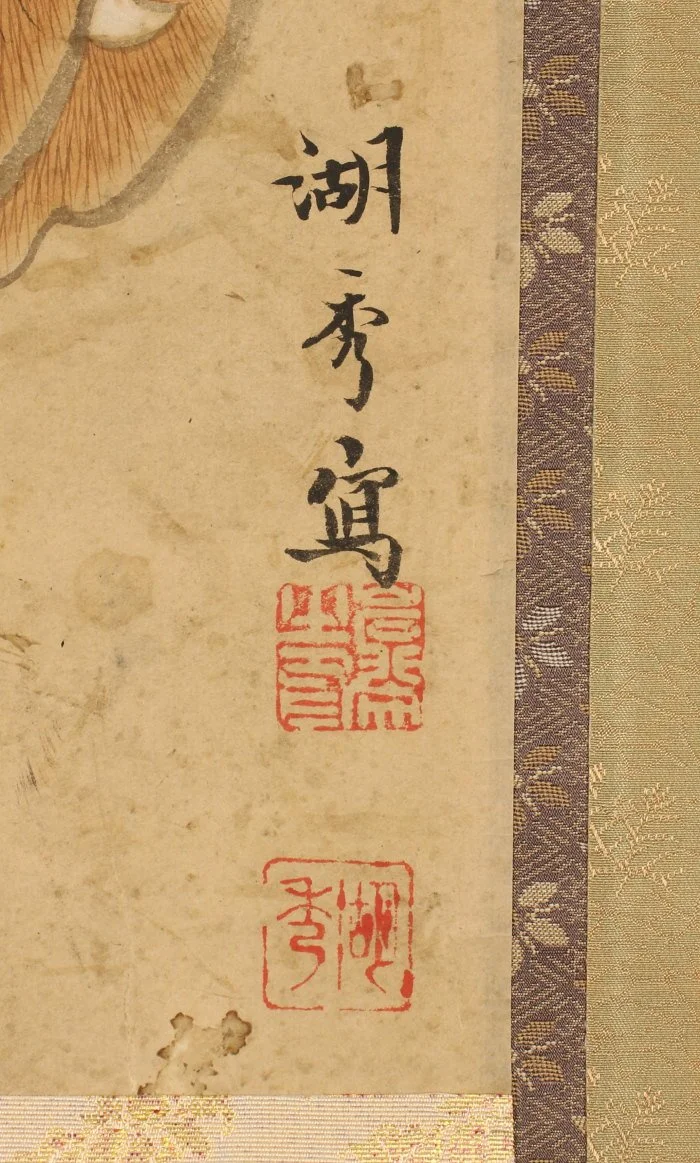
The inscription simply reads “Painted by Koshū,” and the accompanying seals form a coherent group consistent with those associated with Hiroto Koshū II. An oval Koshū seal appears above, followed by two square seals below, commonly read as variants connected to Hiroto’s personal and studio identities. While seal usage alone is never conclusive, the carving style, placement, and relationship between inscription and image align comfortably with authenticated works attributed to this painter.
Iconographically, the pairing of tiger and bamboo is traditional: bamboo stands for resilience, uprightness, and moral clarity, while the tiger functions as a protective force, capable of warding off malign influences. Here, however, the tiger is not ferocious. Its expression is alert and almost playful, its presence more watchful than threatening. This tonal softening is very much in keeping with late Edo sensibilities, where symbolic power is tempered by humor and psychological nuance.
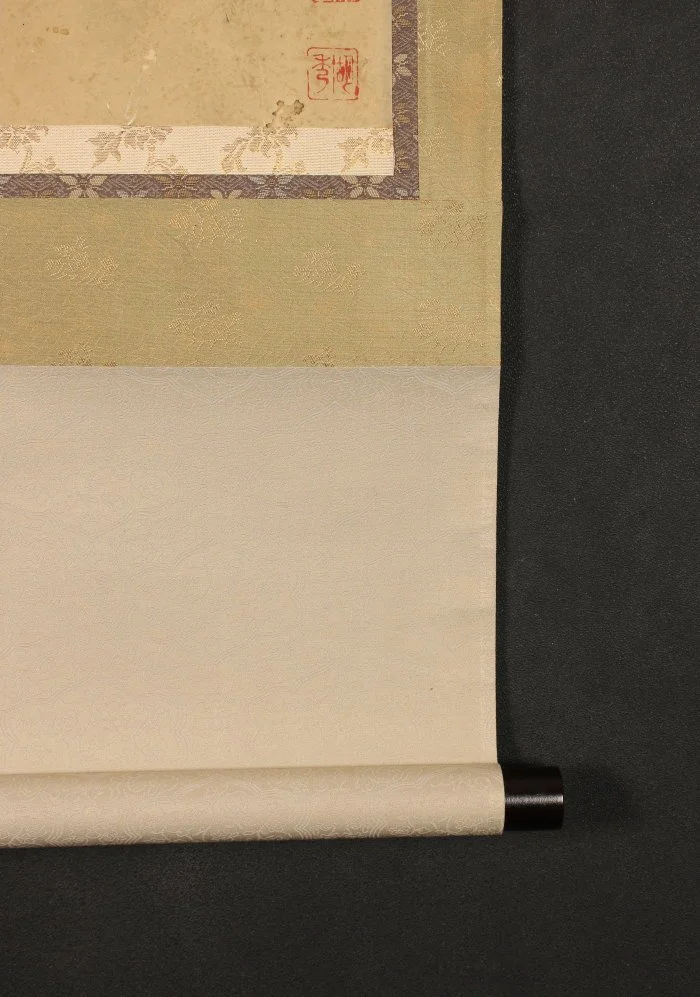
The condition of the painting supports an early nineteenth-century origin. The paper shows natural age-toning, light foxing, and gentle creasing consistent with long use, while the mounting appears to be a later remount—likely twentieth century—undertaken to stabilize and preserve an already valued image. Such treatment reflects continuity of care rather than modern manufacture.
Taken together, the stylistic evidence, seal set, materials, and pictorial language support an attribution to Hiroto Koshū II with a high degree of confidence, while remaining within the bounds of responsible connoisseurship. The work exemplifies a mode of Edo-period painting that privileges liveliness, restraint, and intimacy over monumentality—qualities that make it particularly well suited to long-term custodianship within a private collection.