Daien (大円), 423rd Jimu-Kengyō Hōin of Kongōbu-ji
Serpent Rising Toward the Siddham Seed-Syllable
Taishō–early Shōwa period, circa 1920s. 192 × 40 cm
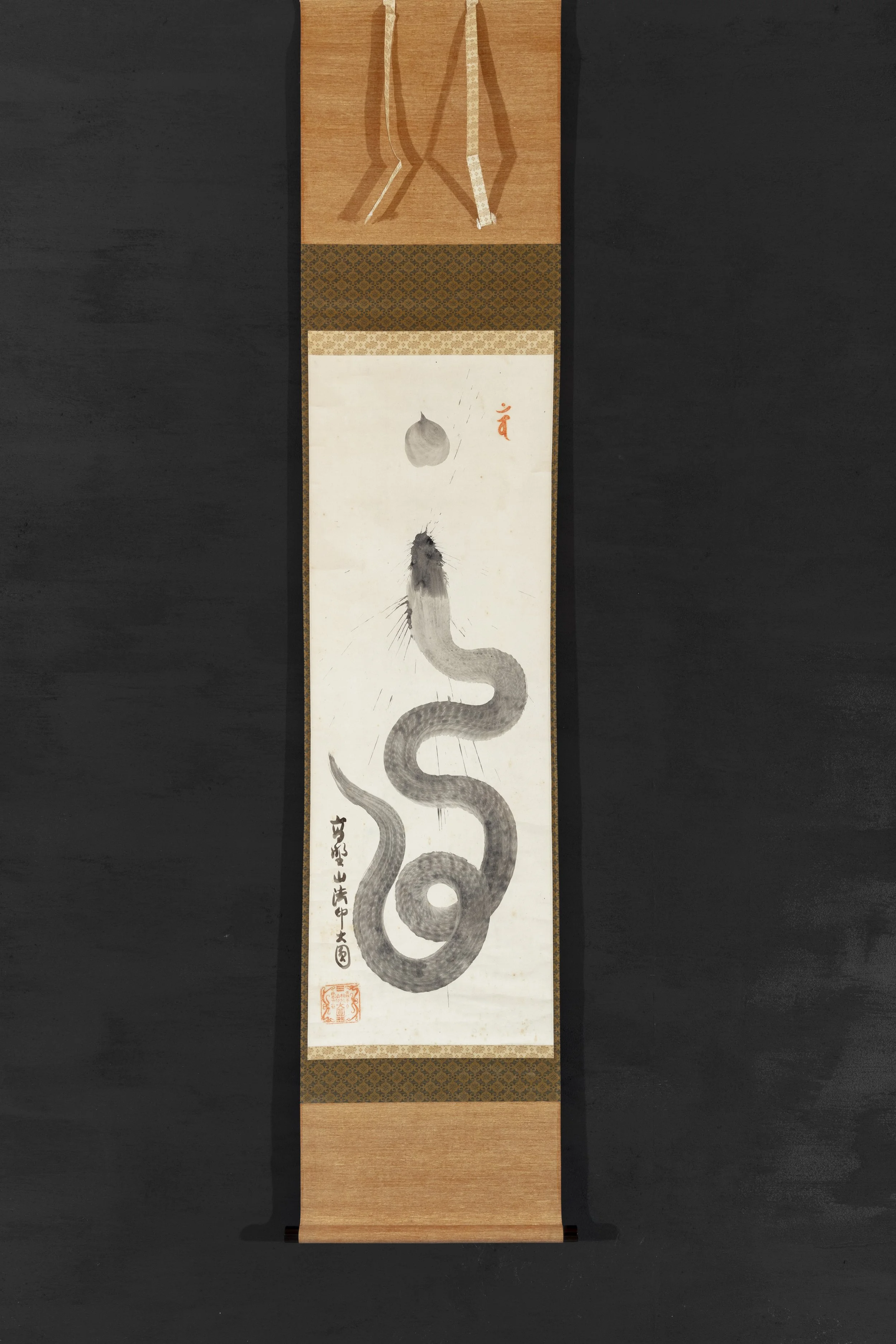
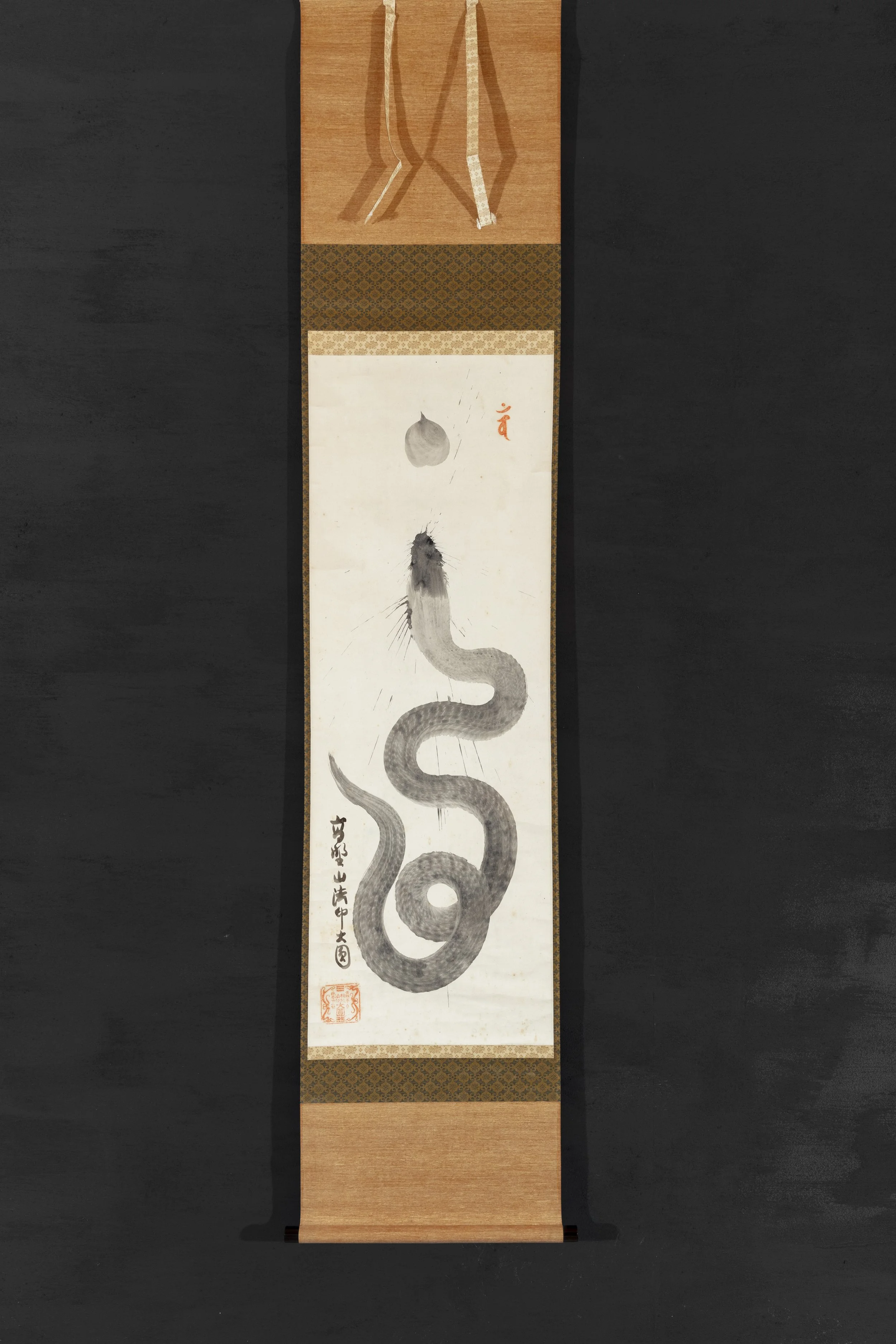
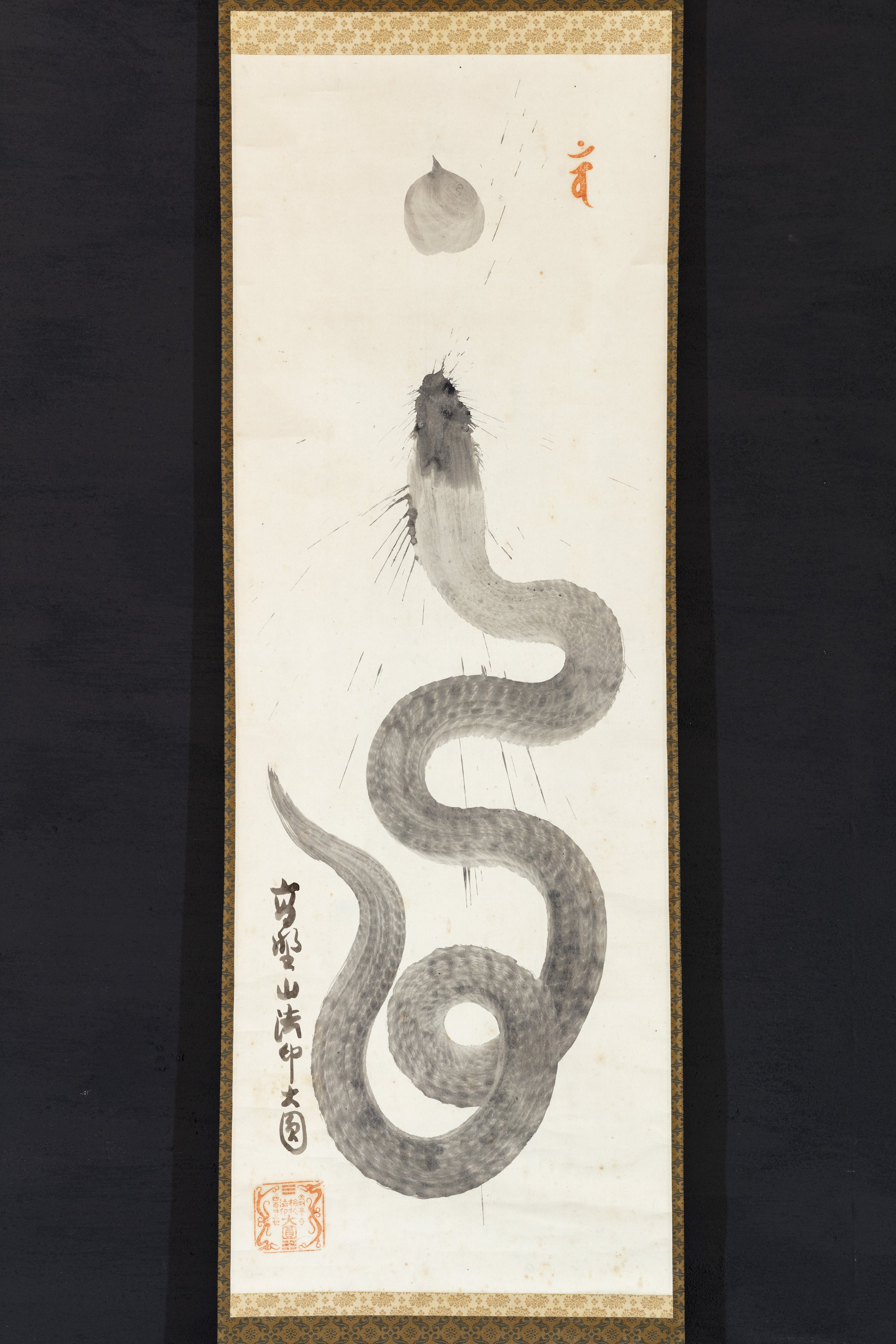
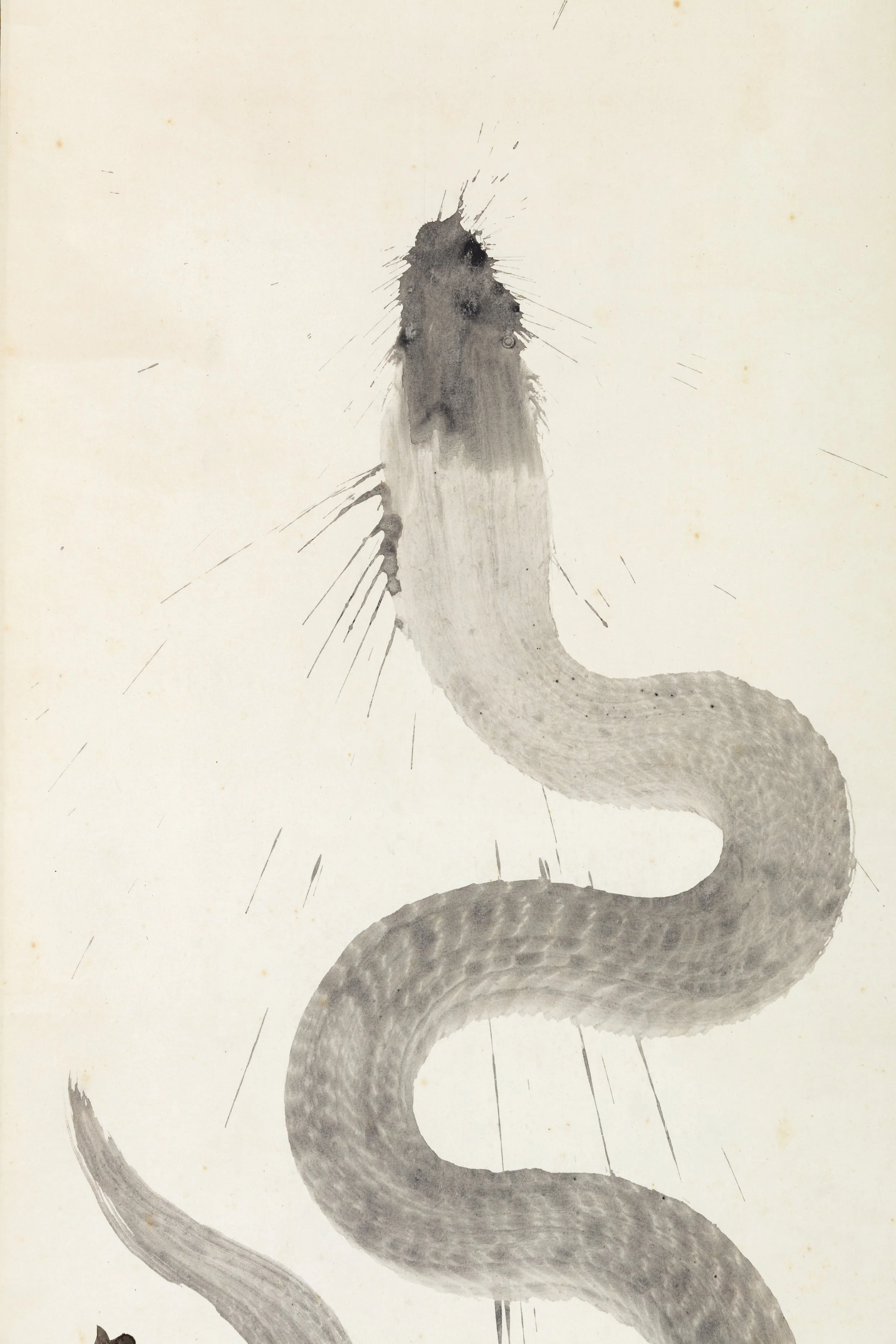
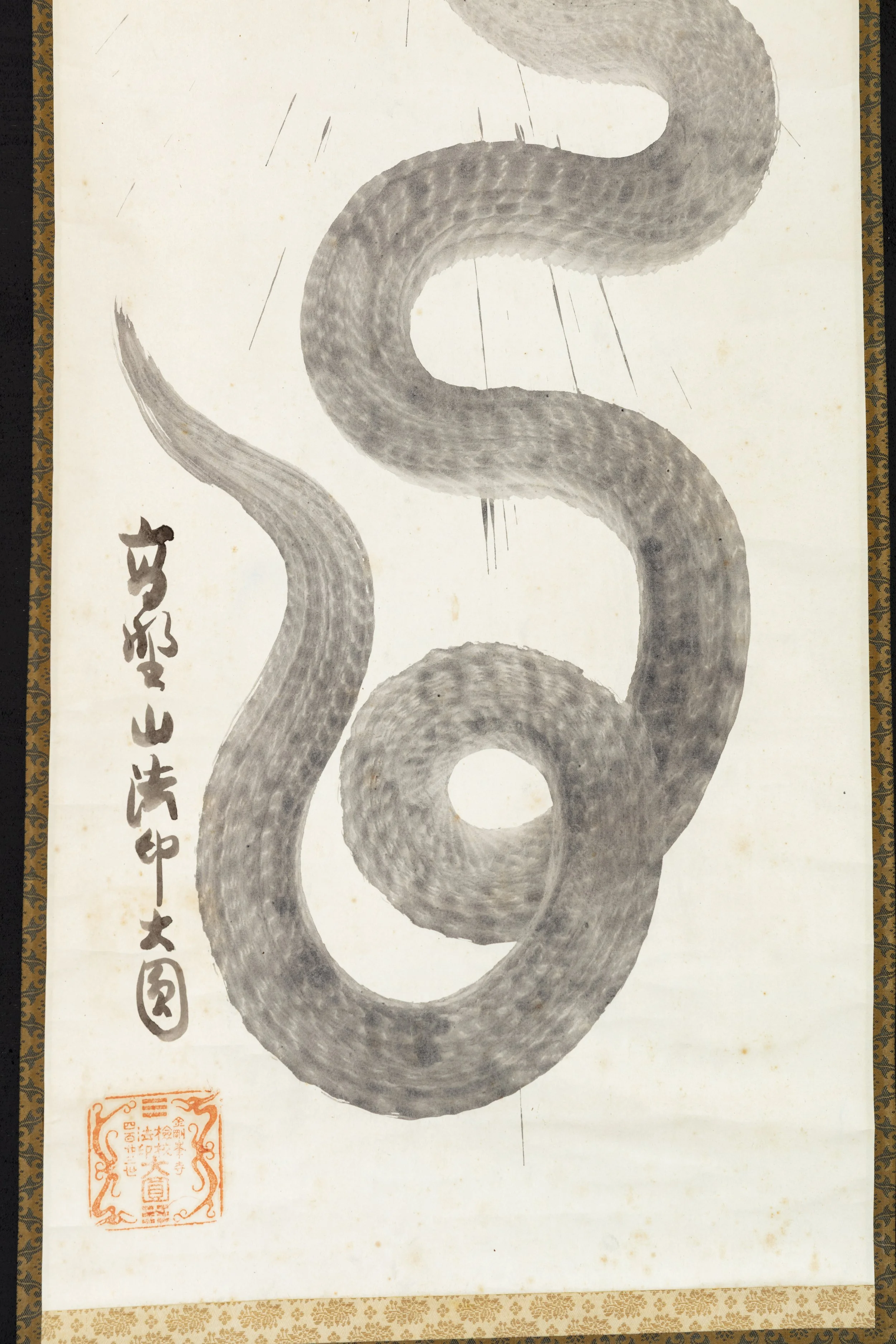
This scroll presents a serpent rising in a single continuous brushstroke. Its body forms a long S-curve whose coherence depends on breath, timing and sustained concentration. The surrounding emptiness is part of the composition, allowing the duration of the gesture to remain visible.
Daien was a senior Shingon monk associated with Kongōbu-ji on Mount Kōya. He held the rank of Hōin and served as Temple Affairs Inspector. In this context, the one-stroke image is better understood as a disciplined act grounded in ritual training than as casual improvisation. Shingon practices of mantra, mudra and visualisation similarly cultivate unity of mind, body and attention.
A large, heavily charged brush forms the serpent’s head, where the ink pools with particular density. The body then continues through controlled changes of width, dryness and tone without the brush fully leaving the paper. These modulations record shifts in pressure and speed while preserving the stroke’s overall unity.
Above the serpent is a faint rounded form accompanied by a small vermilion Siddham seed syllable. In Shingon esoteric Buddhism, such seed letters embody the essence of a Buddha and are often associated with Dainichi Nyorai. The serpent’s movement toward this sign turns a creature linked with instinct and cyclical existence into an image of spiritual transformation.
The restrained brocade, warm paper tone and wooden roller ends are consistent with an early 20th-century temple mounting. A large vermilion institutional seal beneath the inscription remains crisp and supports the work’s connection with an established Shingon setting.
The scroll’s force lies in the unity of image and execution. Rather than describing enlightenment through narrative, it presents a sustained gesture in which concentration, form and awareness become briefly inseparable.