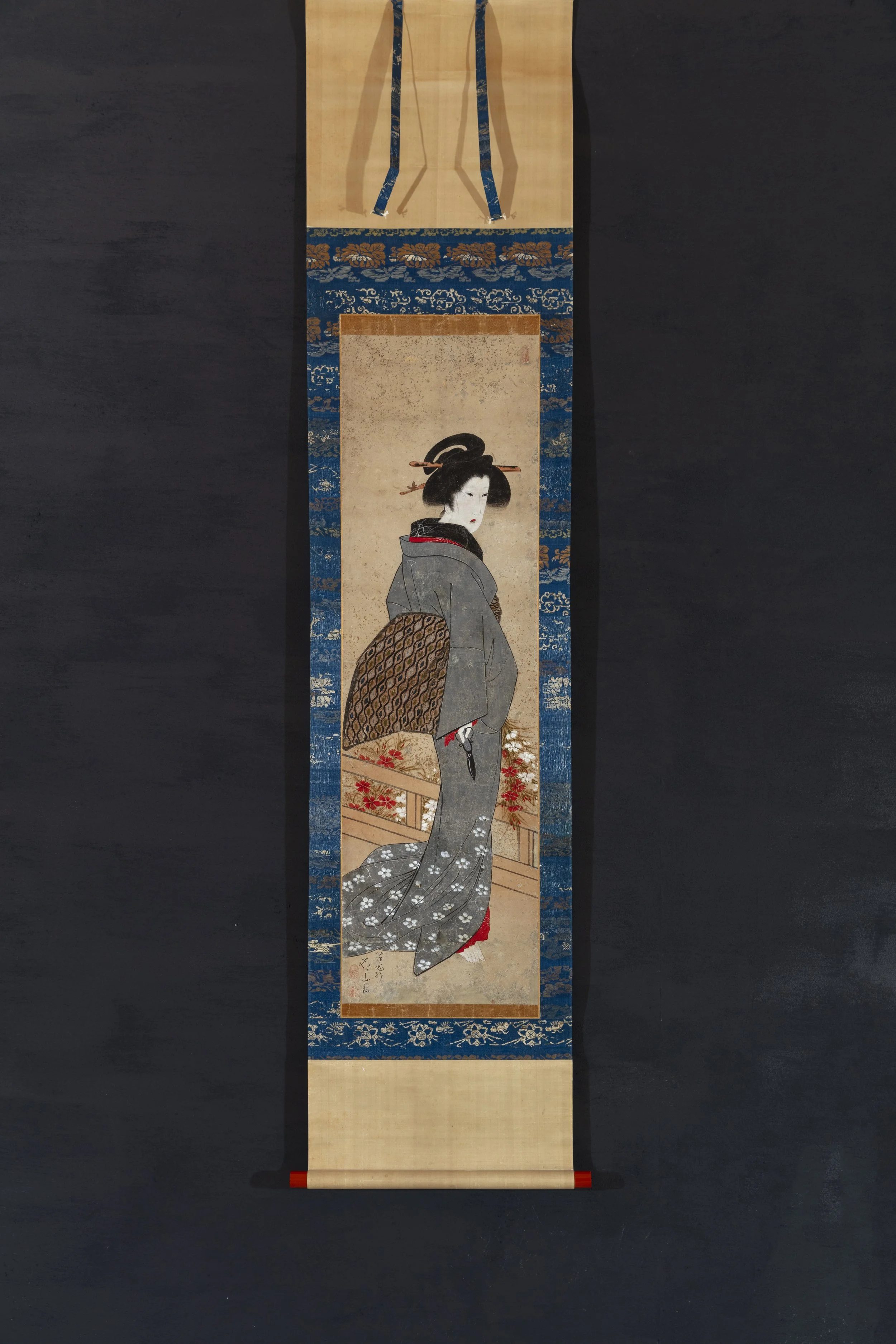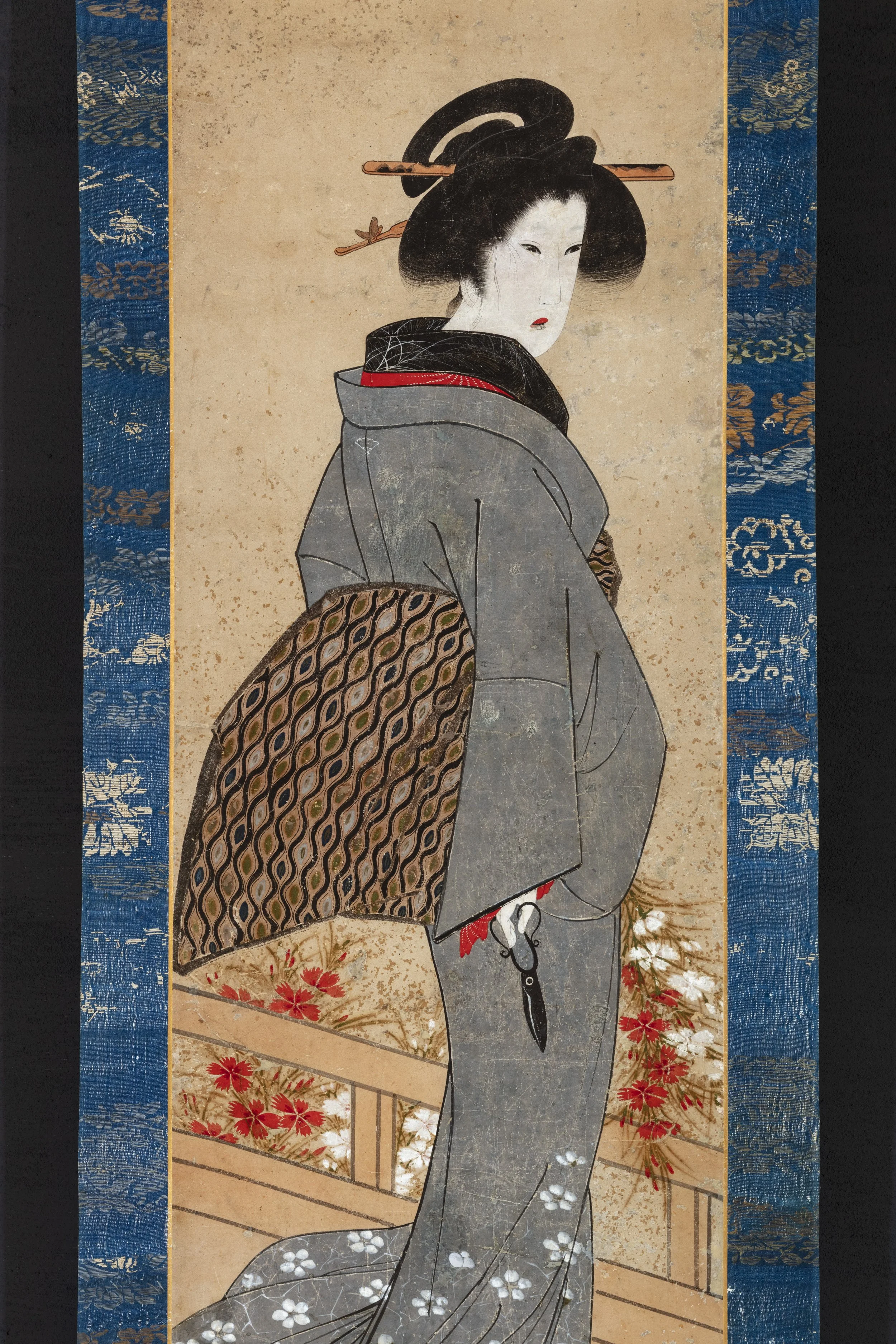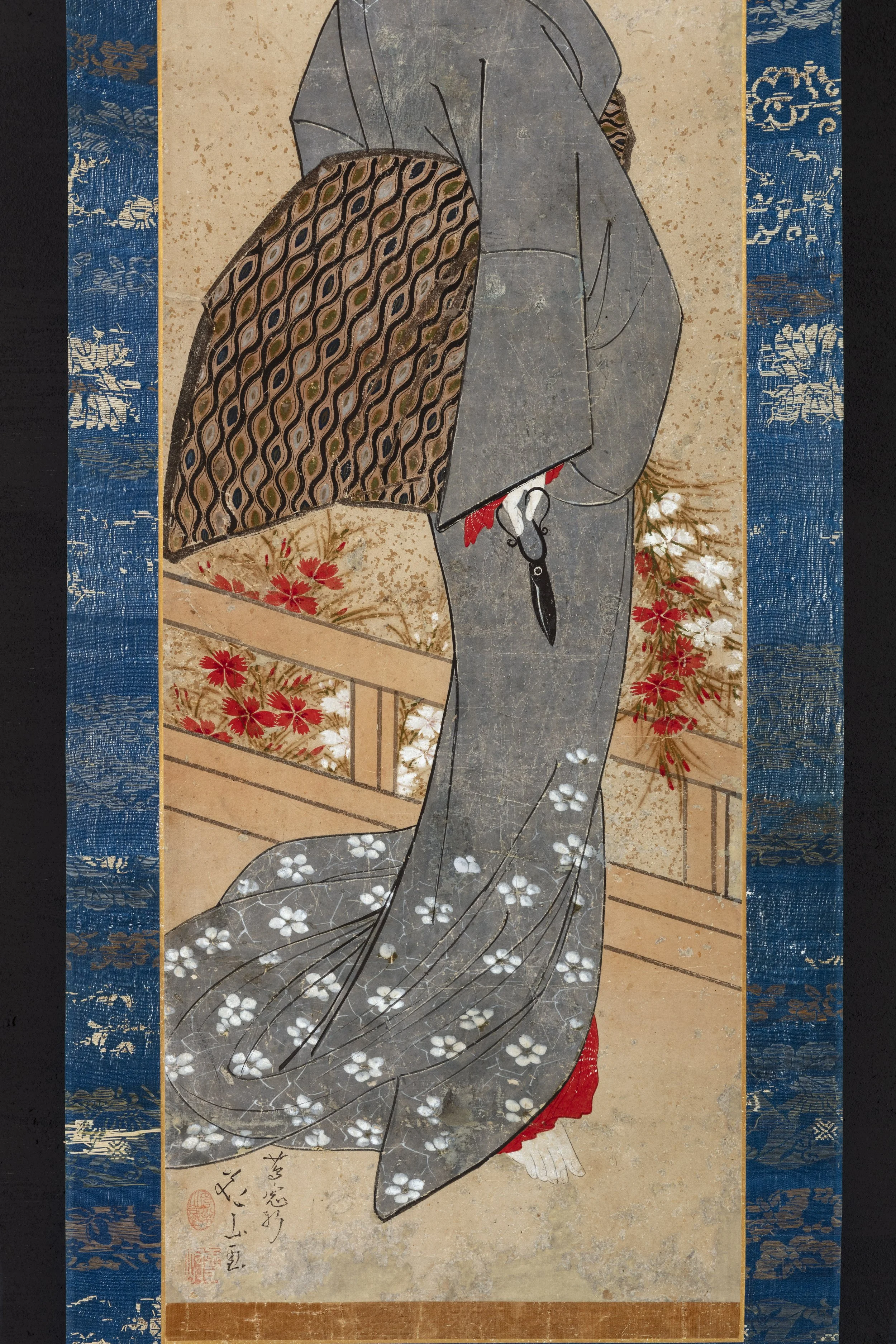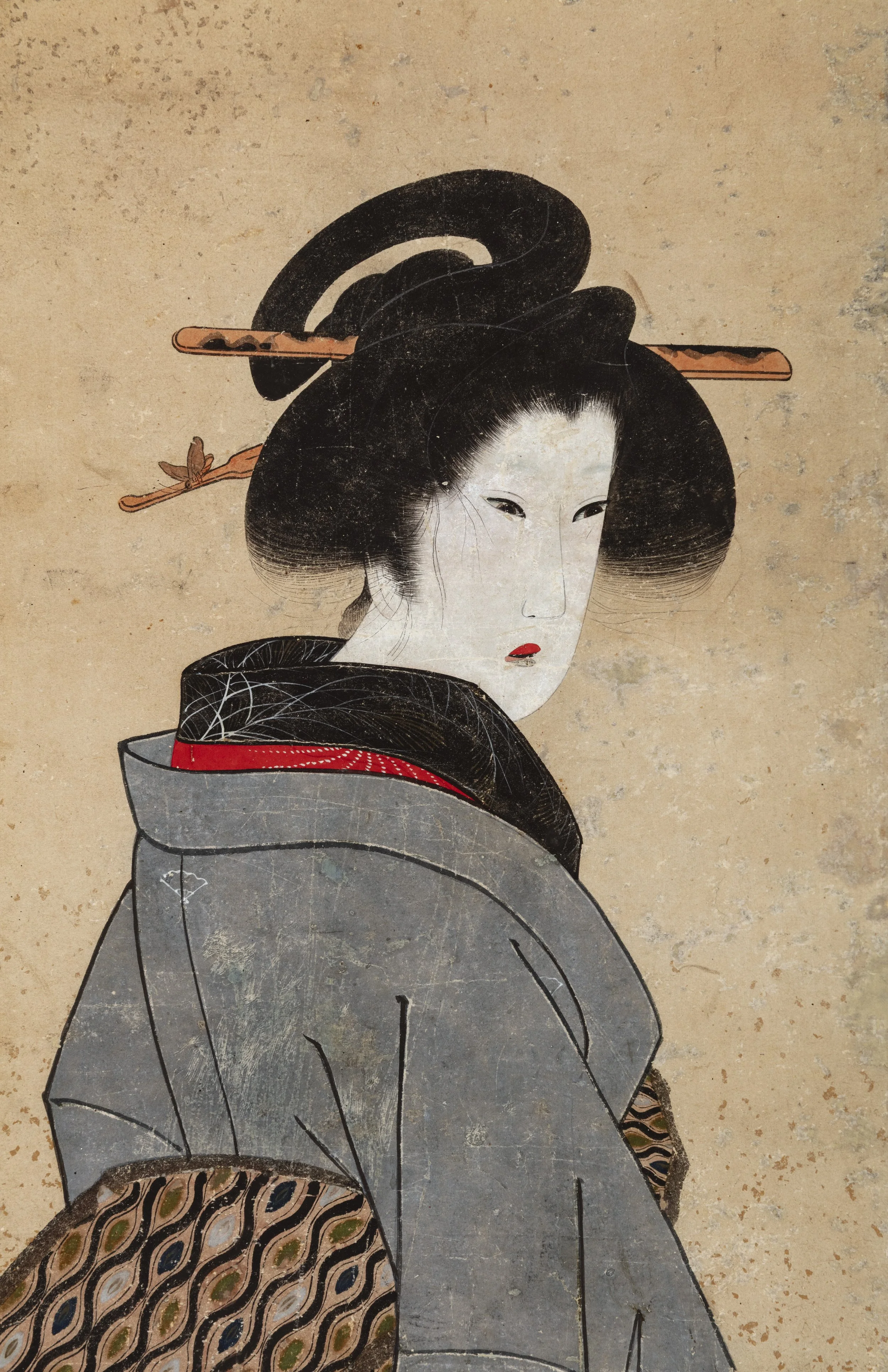
Standing Beauty with Scissors (Bijin with Nadeshiko)
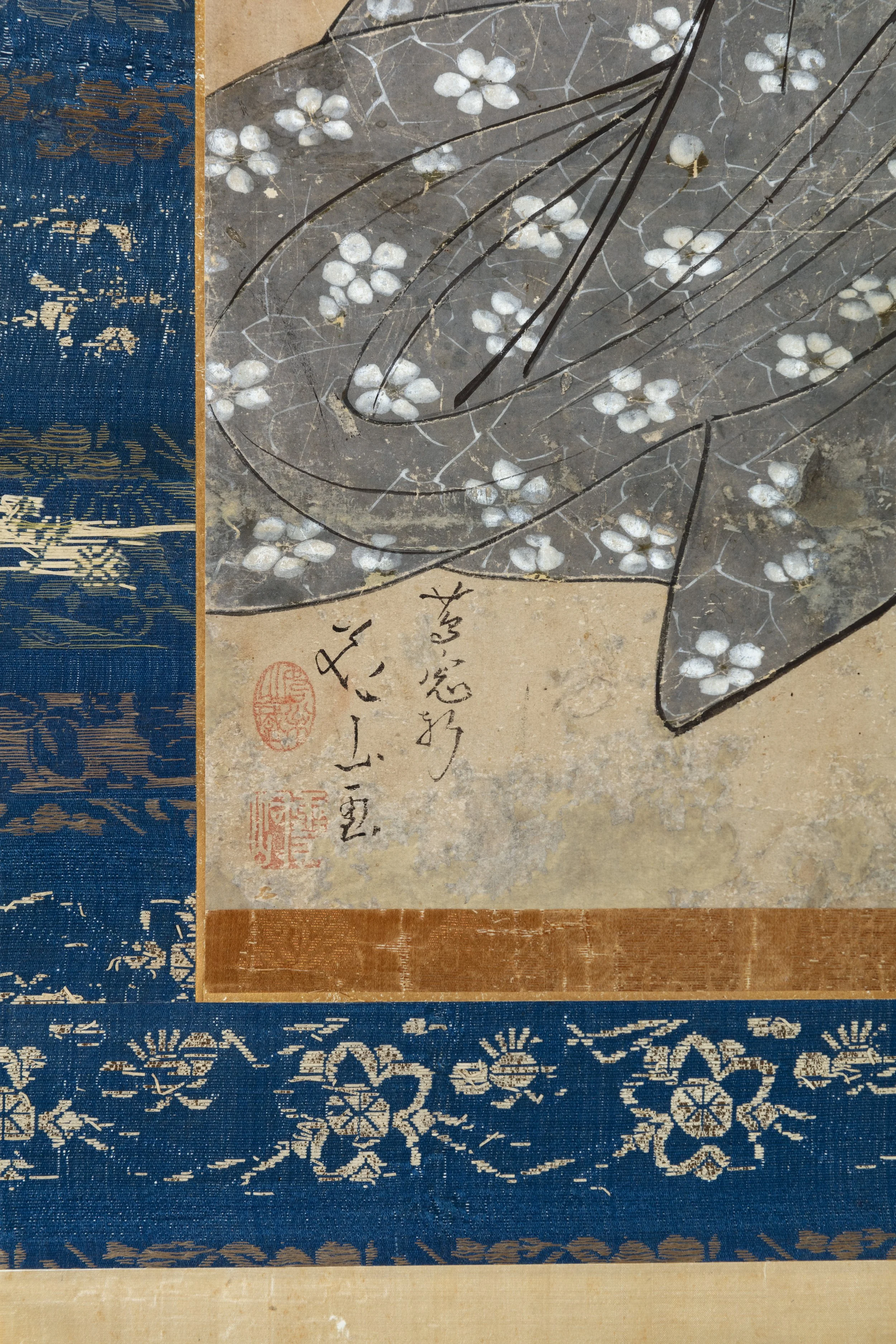
Signed “Kazan” (apocryphal; not by Watanabe Kazan)
Japan, late Edo period, probably Kyoto–Osaka (Kamigata) workshop, c. 1820–1840
Ink, colour, gofun, and likely mica (kirazuri) on paper with gold-flecked ground (sunago);
embroidered silk mounting
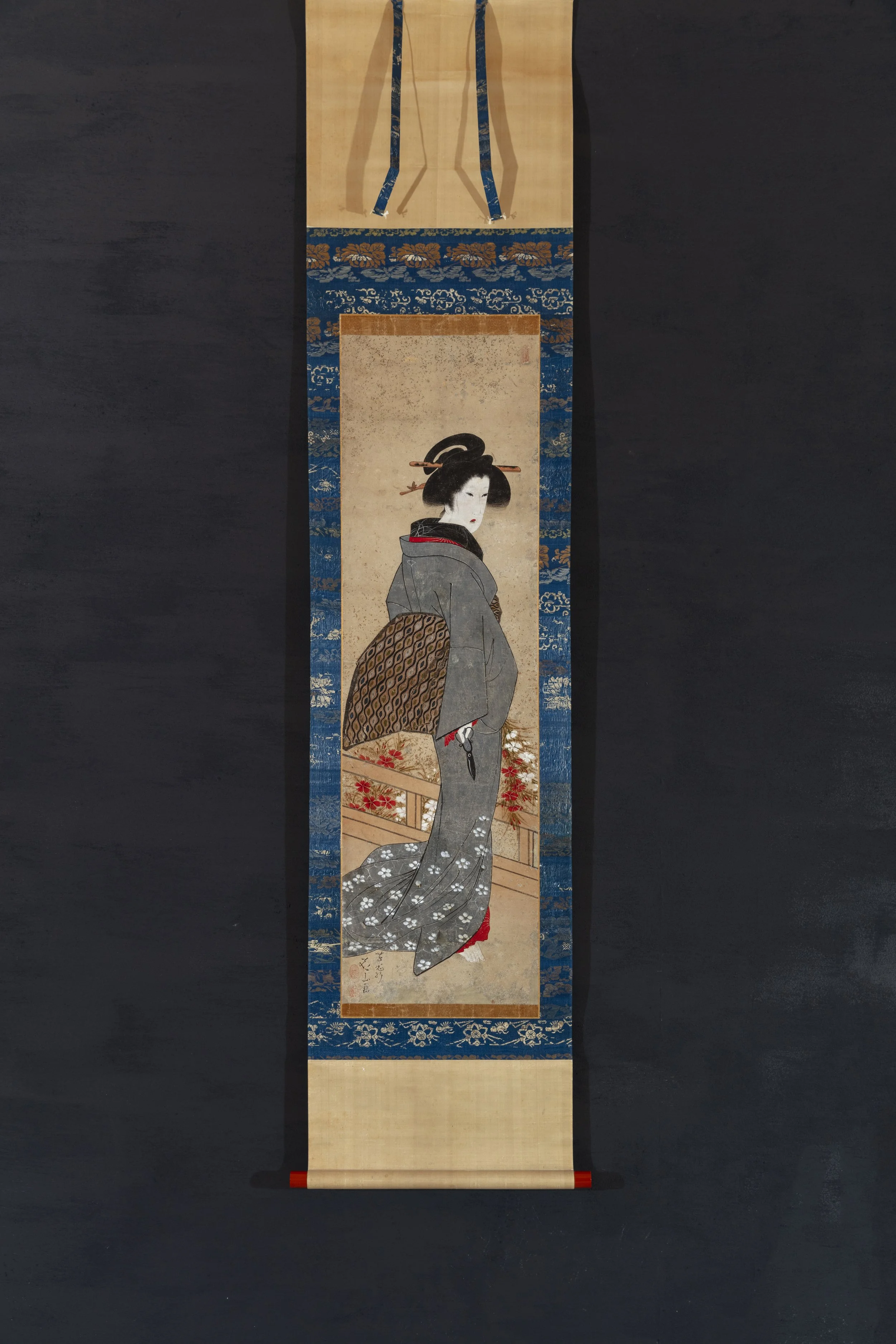
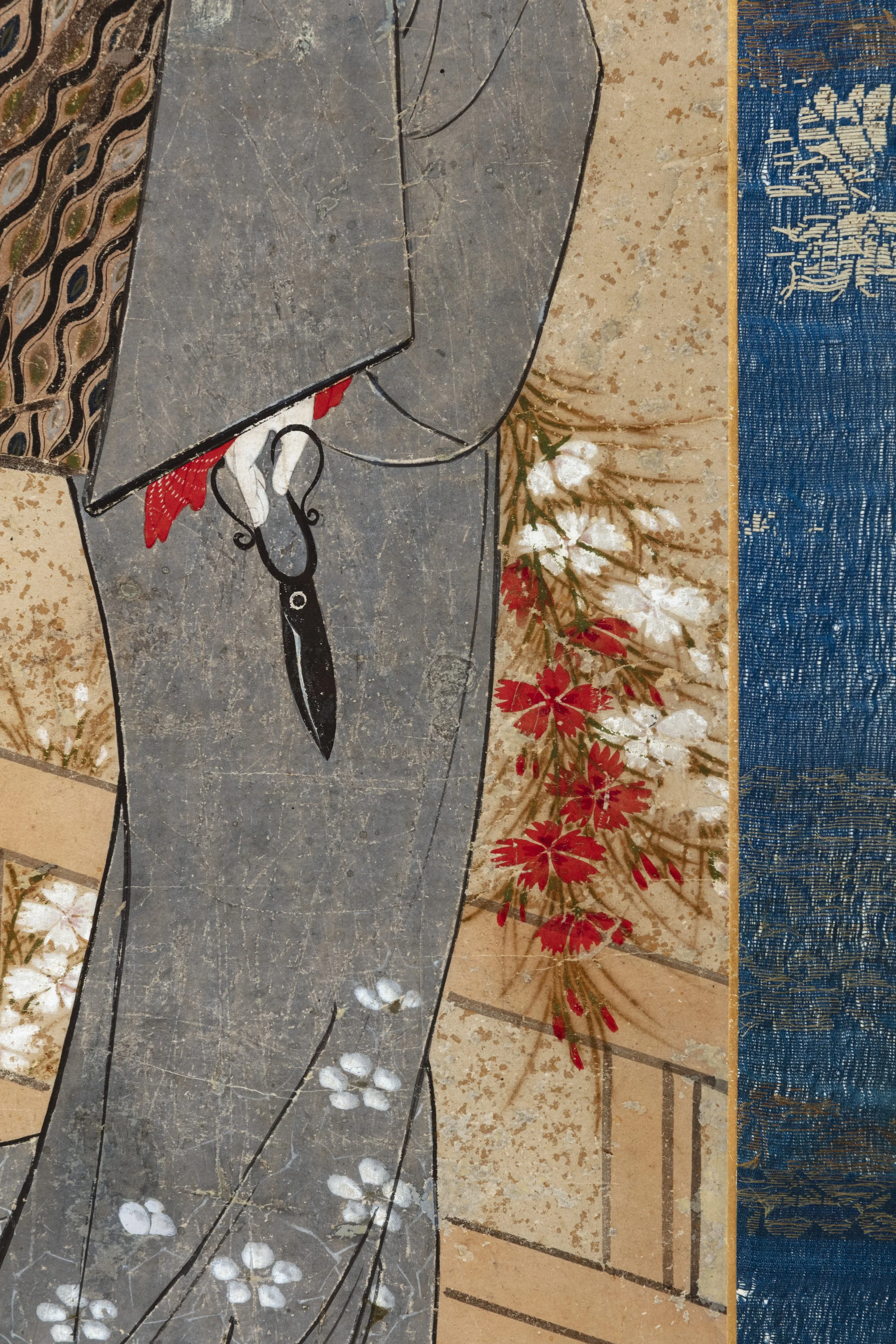
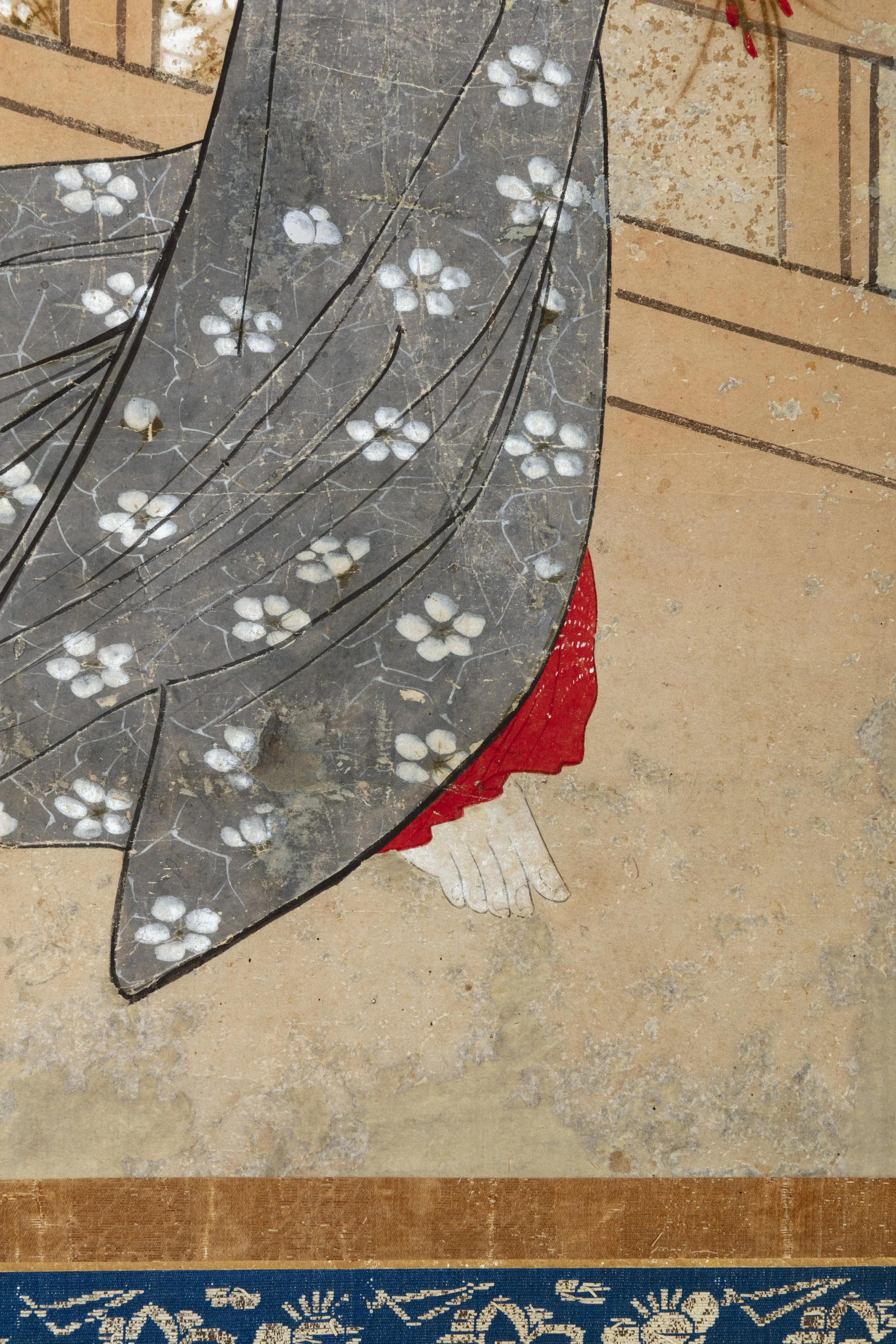
A poised beauty turns on a veranda, scissors cupped discreetly within her sleeve as red nadeshiko (pinks) trail beyond the railing. The grey kimono—its surface catching light with a soft metallic bloom suggestive of mica—falls in supple, calligraphic folds, while the patterned obi rises behind her in a measured, rhythmic wave. Details are rendered with particular sensitivity: the fine follicles at the hairline, the weight of the coiffure secured with paired hairpins, and the averted, faintly enigmatic gaze that resists direct engagement.
The upper ground is lightly sprinkled with gold, characteristic of sunago paper traditionally associated with waka manuscripts and luxury stationery. This restrained shimmer animates the otherwise muted palette, lending the scene a quiet courtly refinement without disturbing its inward tone.
The signature reads “Kazan,” but it is apocryphal. The painting’s style belongs not to the literati master Watanabe Kazan—known for nanga landscapes and Western-inflected portraiture—but to the professional bijinga workshops active in the late Edo period. Such apocryphal signatures were a familiar strategy within the urban art market, invoking cultural authority and prestige for an aspirational audience of townspeople rather than asserting authorship in a modern sense.
Stylistic elements including the soft grey palette, the use of luxurious materials (mica and an embroidered mounting), the floral vignette, and the tender modeling of the face align closely with the refined sensibility of the Kyoto–Osaka cultural sphere—the Kamigata region, often described as embodying “Old Capital” taste—though Edo ateliers produced comparable works. Whatever its precise workshop origin, the scroll beautifully crystallizes an early nineteenth-century urban ideal: artisanal grace, fashionable textiles, and a whisper of private interiority held delicately at the edge of view.