After Hakuin Ekaku (1686–1768)
Shakyamuni Coming Down from the Mountain
Japan, Edo period
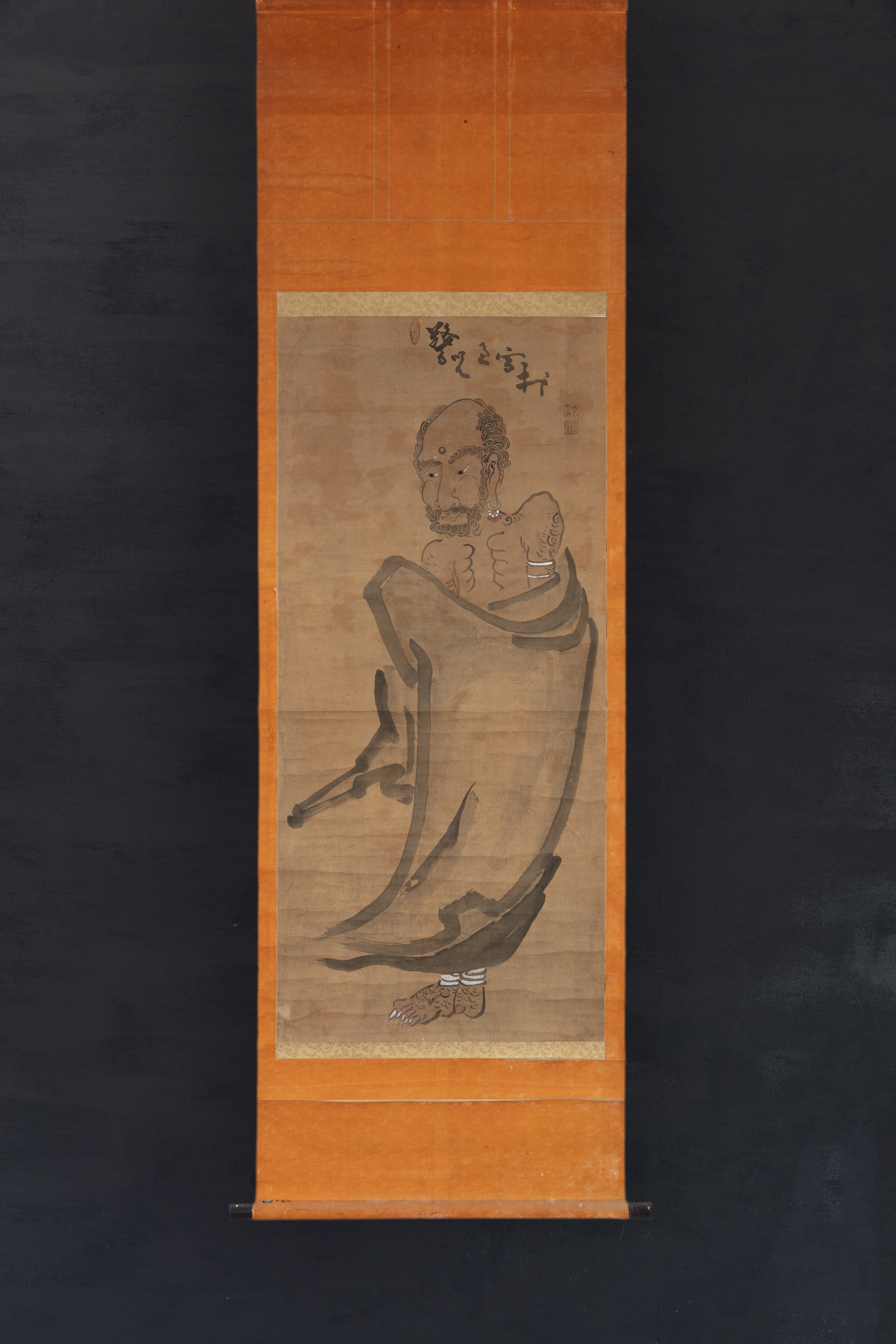
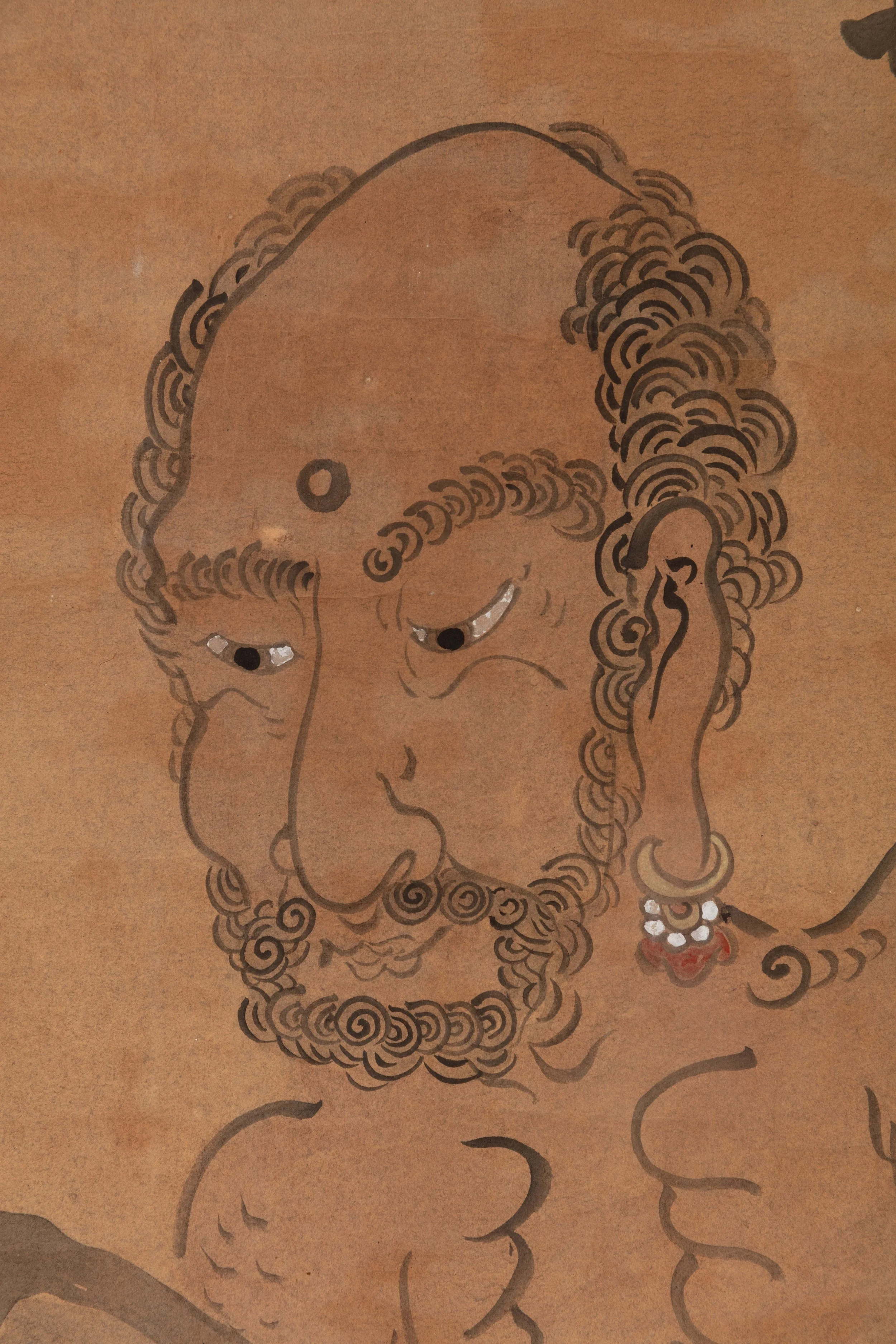
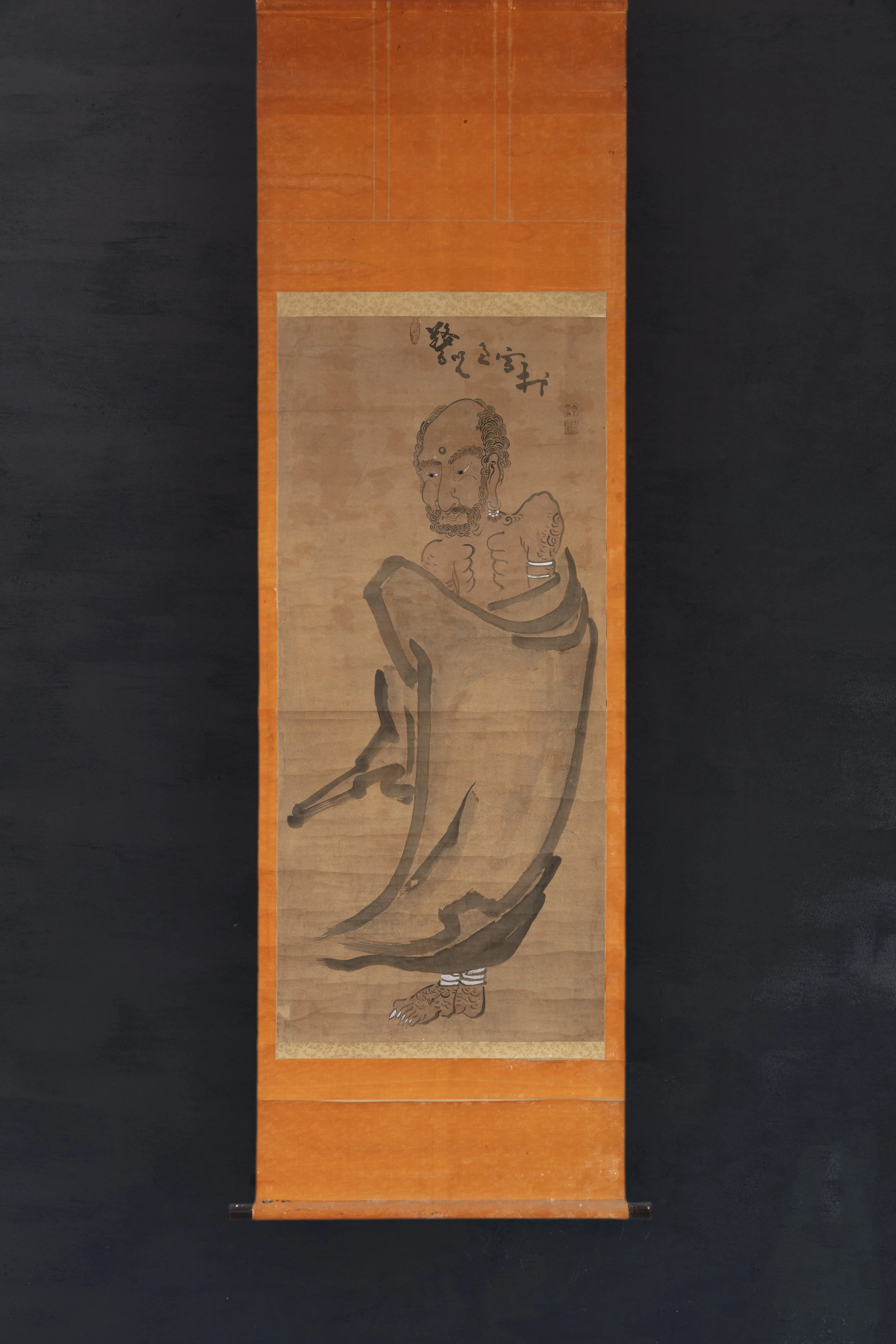
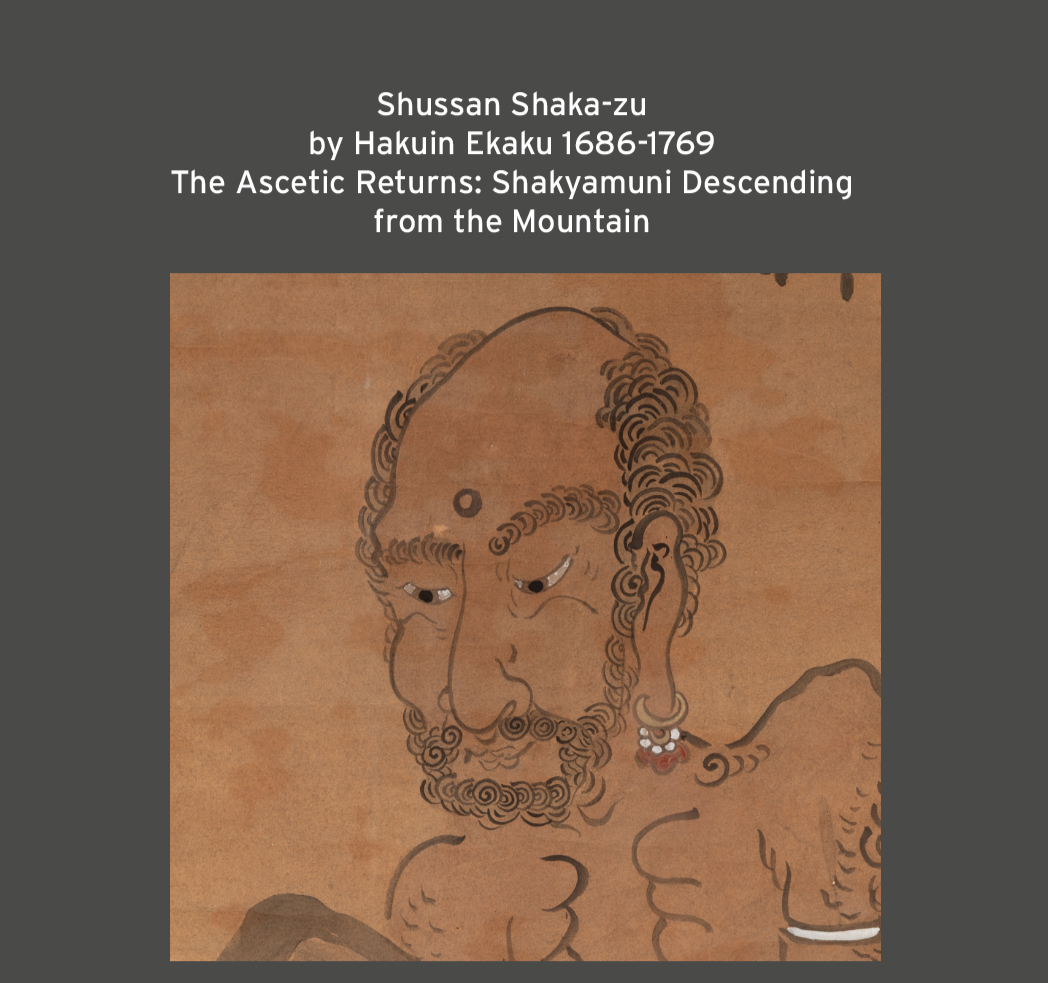
This powerful painting presents Shakyamuni at the moment of return: not the Buddha enthroned, preaching, or transfigured, but the solitary seeker emerging again into the world after prolonged mountain austerities. In earlier Chinese precedents, especially those descending from Southern Song models such as Liang Kai, the subject often becomes a study in emaciation itself, the body reduced almost to collapse through the visible burden of ascetic discipline. The present work shifts emphasis elsewhere. Rather than dwelling upon bodily extremity alone, the image concentrates its force around the head, gaze, and sweeping enclosure of the robe, directing attention toward inward clarity and psychological presence.
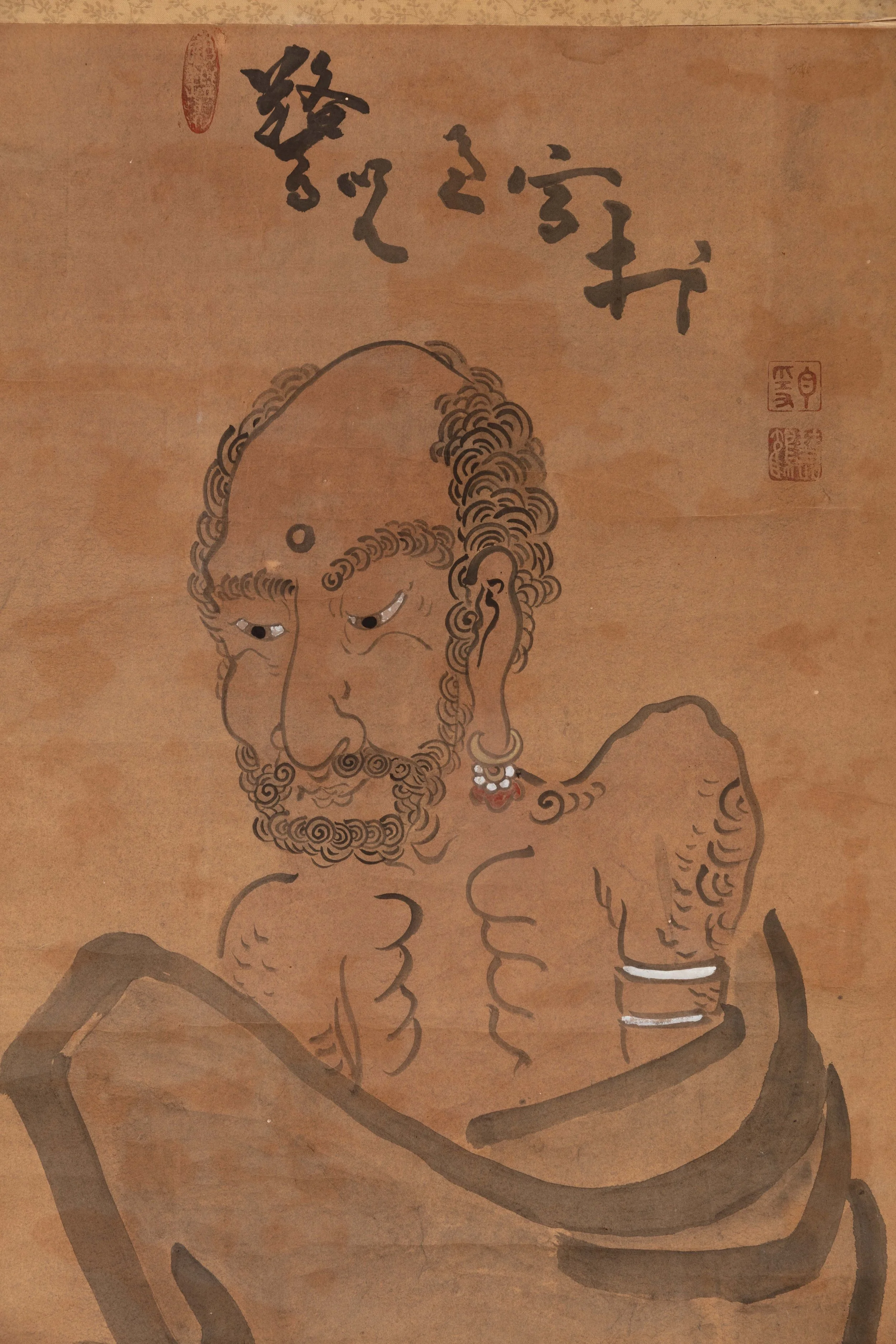
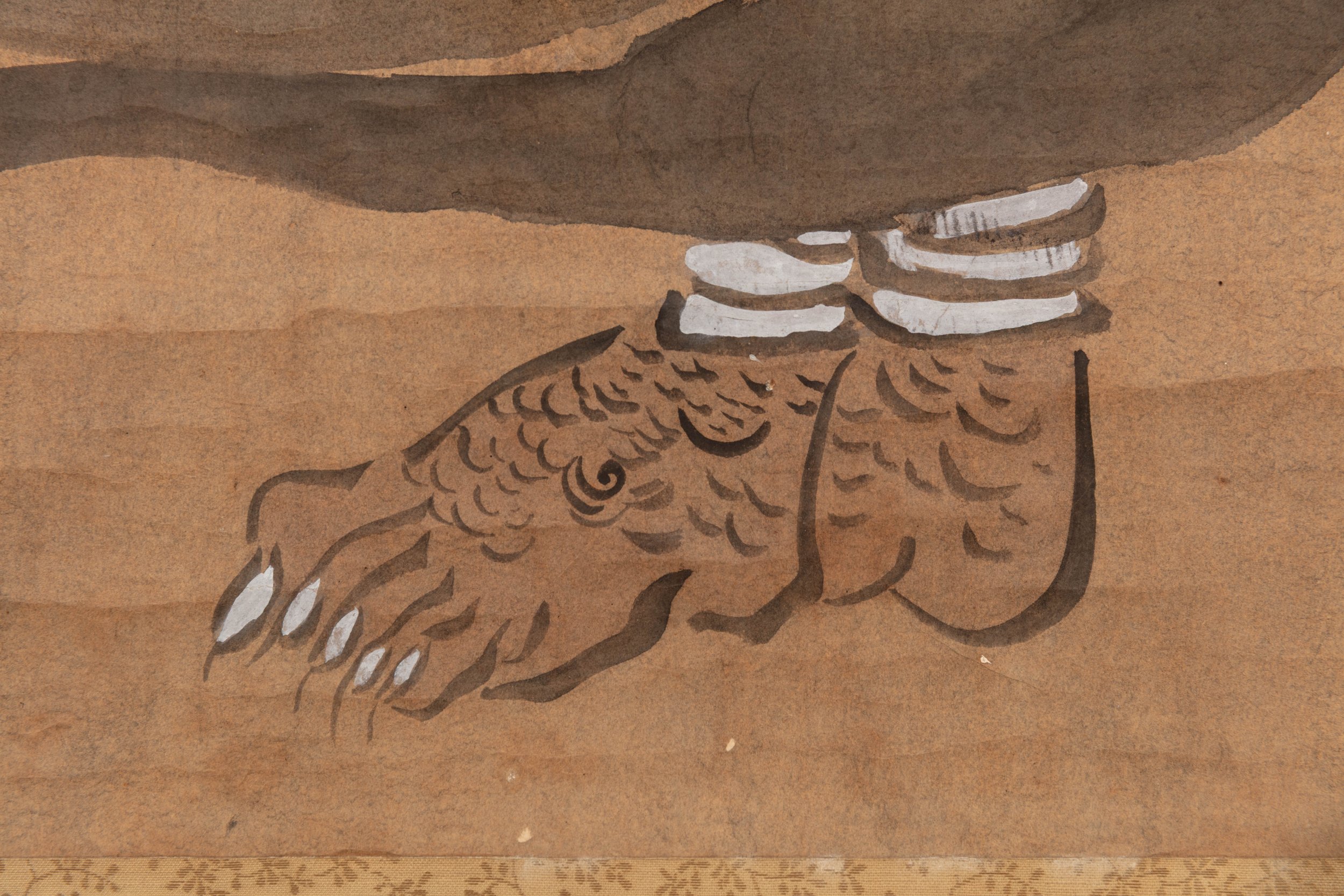
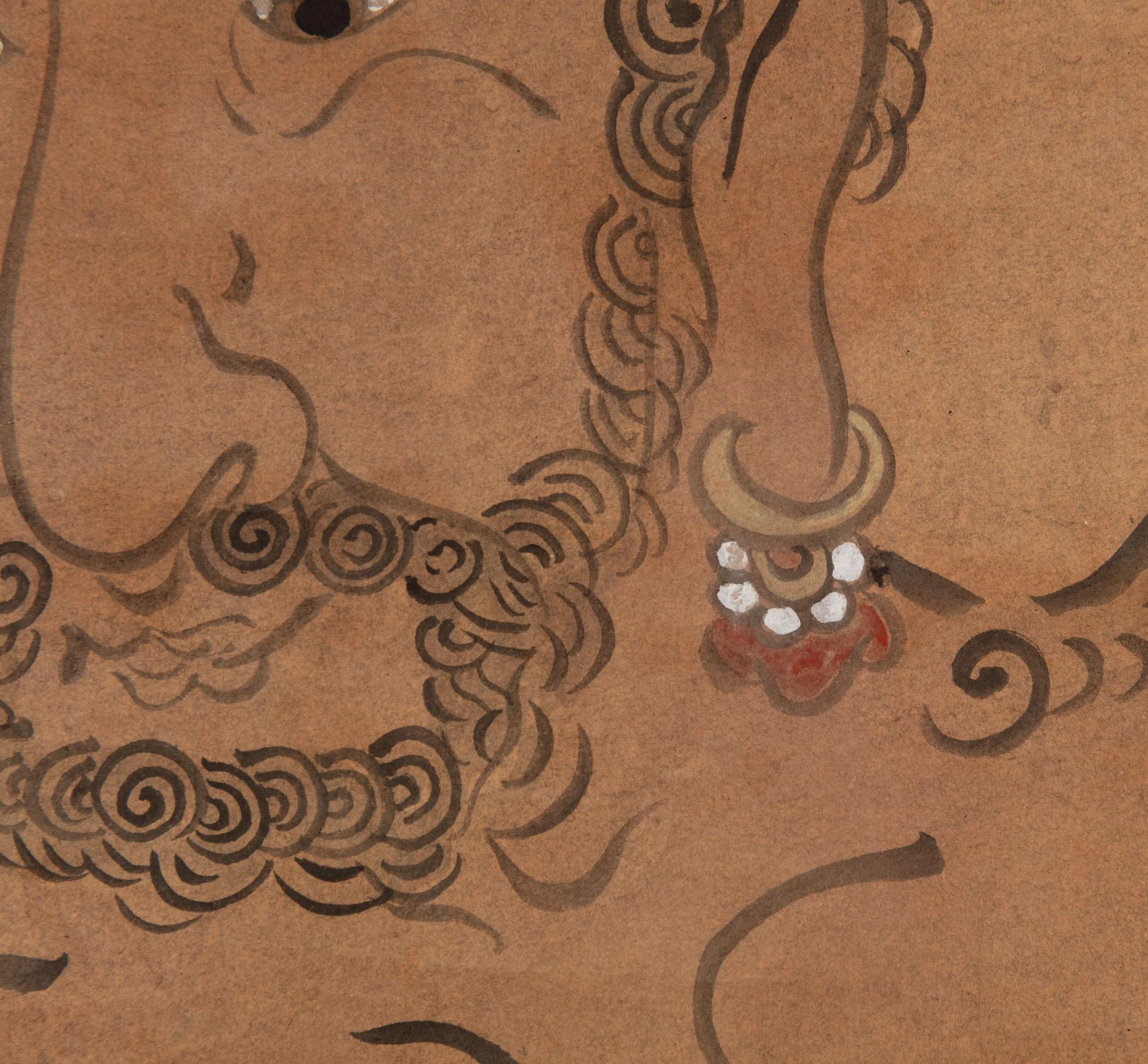
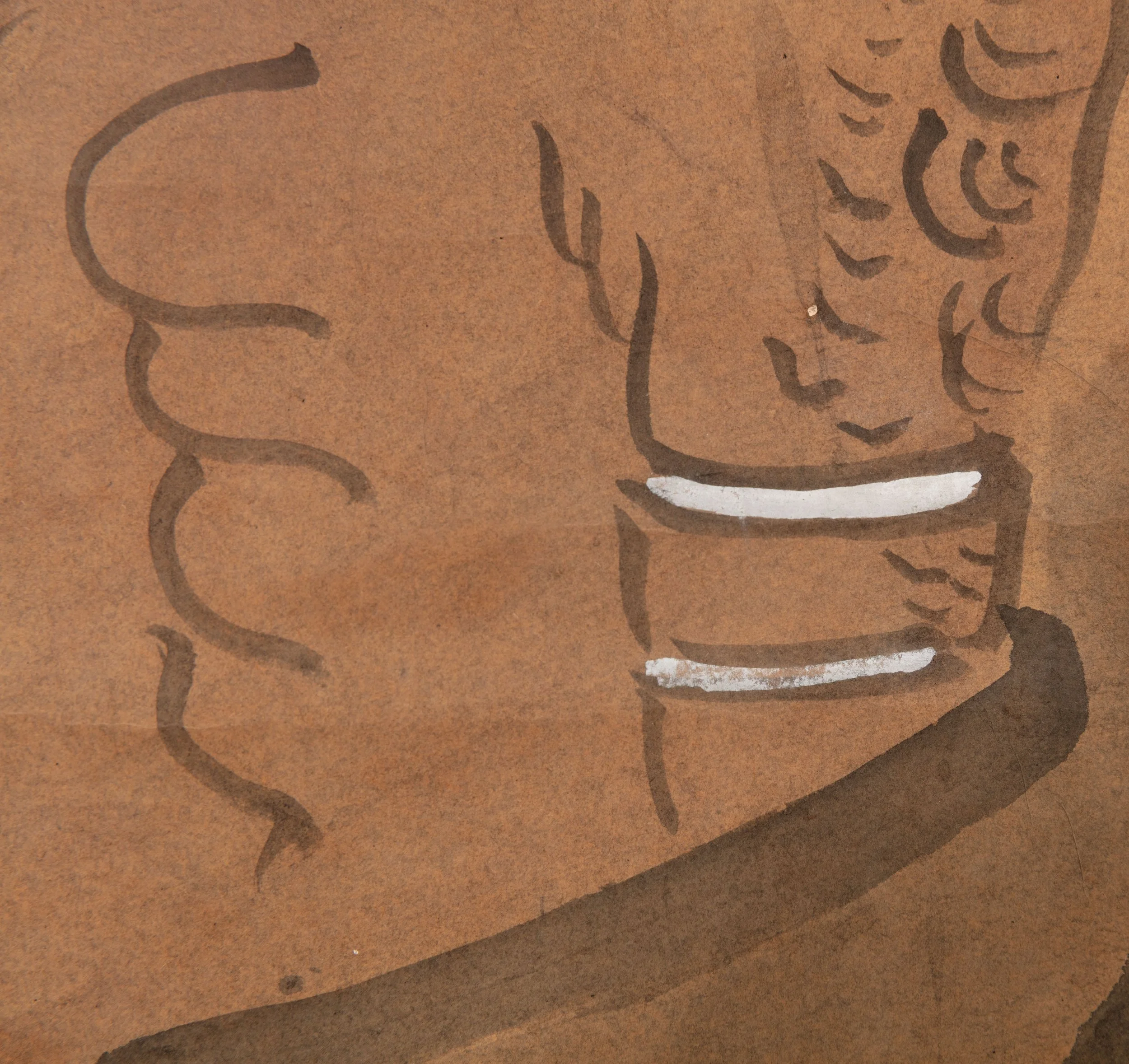
The figure is gaunt but not broken. The torso is spare, the ribs lightly indicated, the hands folded quietly beneath the robe. The face remains composed rather than theatrical. Heavy-lidded eyes, a firm cheek structure, and the restrained handling of brow and mouth give the image its emotional centre. As in a number of paintings associated with Hakuin’s mature Zen manner, the head is subtly enlarged in relation to the body, allowing expression and psychological concentration to carry greater weight than anatomical description. The emaciated body recedes into the robe’s enveloping structure, so that the painting becomes less an image of physical collapse than of consciousness passing through ordeal into stillness.
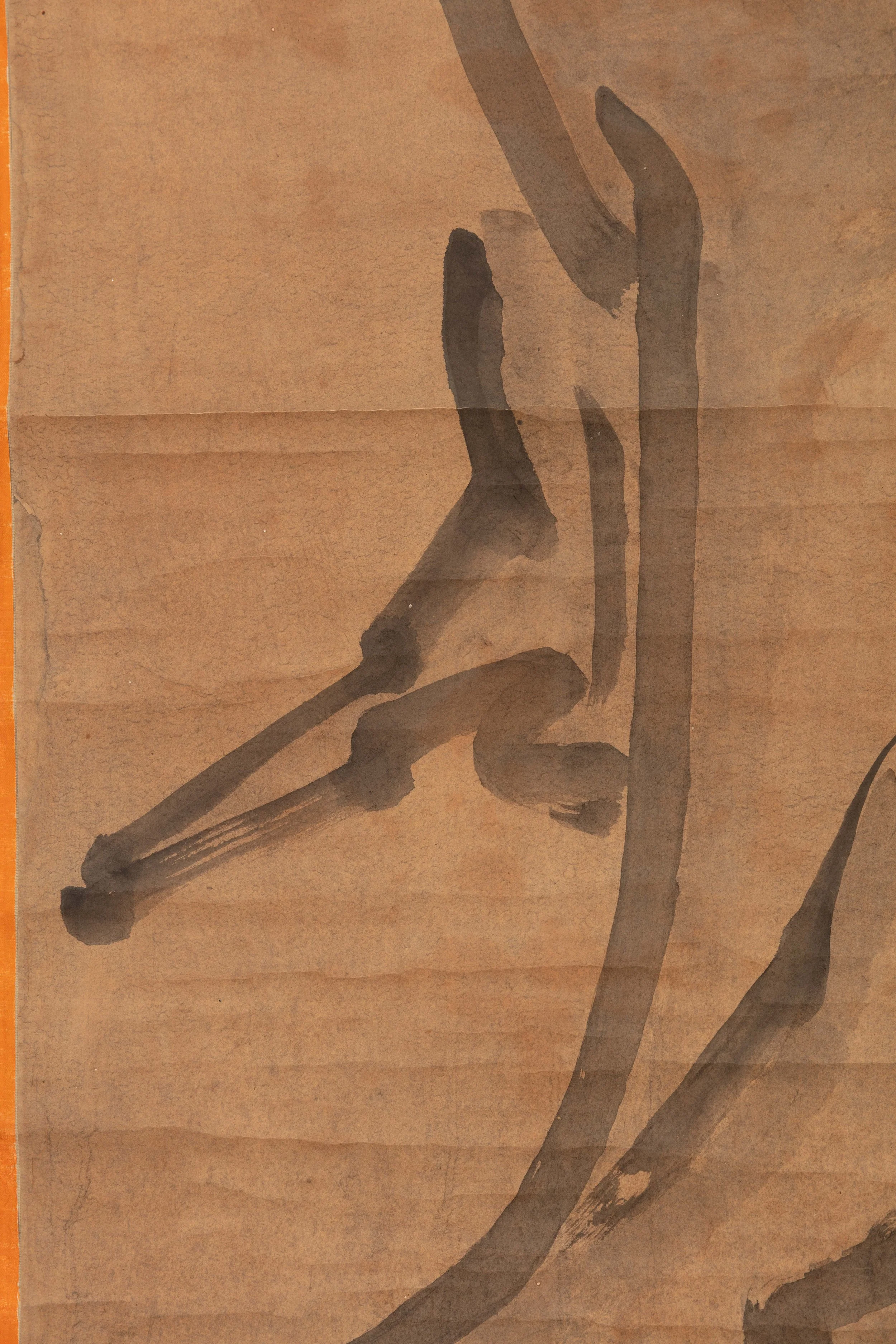
The brushwork is central to the painting’s authority. Brow, cheek, beard, shoulder, and robe are rendered with direct, uninterrupted movements of the brush that preserve both speed and decisiveness. The robe itself unfolds in broad looping strokes of dark ink alternating between dry abrasion and fuller saturated passages, creating a surface that feels simultaneously material and atmospheric. The large black arc anchoring the lower half of the composition gives the figure gravity and stability, while the lighter upper passages create a subtle sense of movement, as though the descent from the mountain has only just begun. Sparse touches of pale colour within the eyes and ornaments quietly intensify the sensation that the image occupies a threshold between exhaustion and awakening.
The inscription corresponds closely to a related composition reproduced in a Hanazono University catalogue of Hakuin paintings, where a similar text appears in the upper left. In that context, the inscription has been interpreted as A lone wanderer passes through a snowy village, the wanderer understood to refer to Shakyamuni himself returning from retreat. The text shifts the painting away from straightforward iconographic declaration toward a more poetic and atmospheric register, emphasizing passage, solitude, and return.
Hakuin returned repeatedly to the theme of Shakyamuni descending from the mountain throughout his career, and numerous related examples survive in temple and private collections. Comparative material from Jōei-ji, Chōkō-ji, Zenshō-ji, Shōin-ji, Shinwa-an, and the Eisei Bunko Museum demonstrates the persistence of certain compositional solutions within this broader tradition: the bowed head, the enclosing robe structure, the emphasis on psychological inwardness over anatomical display. The present work participates clearly within that lineage.
At the same time, close comparison with related examples also reveals the complexities surrounding attribution within Hakuin painting. Certain recurring line structures, facial solutions, robe articulations, and compositional rhythms appear across multiple works associated with the theme, raising the possibility of repeated workshop patterns, later copies, or highly practiced reinterpretations within a transmitted visual vocabulary. Such repetitions do not necessarily diminish the power of the image, but they complicate straightforward distinctions between autograph work and historically proximate emulation.
The present painting is therefore best approached less as an isolated claim of singular authorship than as part of a broader Hakuin tradition of transmission, repetition, and reinterpretation. Whether executed directly by Hakuin, within his immediate circle, or by a highly accomplished later follower working from deeply internalised models, the painting nevertheless preserves many of the characteristics that continue to make these images compelling: directness of brushwork, psychological concentration, compositional economy, and the fusion of pictorial and calligraphic thinking.
The subject itself remained profoundly suited to Hakuin’s world. Shakyamuni descending from the mountain embodies the return from extremity into balance: the movement away from severe asceticism toward a more integrated realization grounded once again within human life. The restrained handling of the figure, the monumental black curve of the robe, and the solitary atmosphere of the inscription all contribute to an image that remains emotionally persuasive regardless of final questions of attribution. Its force lies not only in authorship, but in the continued vitality of a visual and spiritual language transmitted across generations of Zen painting practice.
Click on the image above to view a detailed report and analysis of this artwork. The essay reflects an earlier stage of research and attribution and is preserved here as part of the evolving process of study, comparison, and connoisseurial reassessment surrounding the painting.