Sengai Gibon (1750–1837)
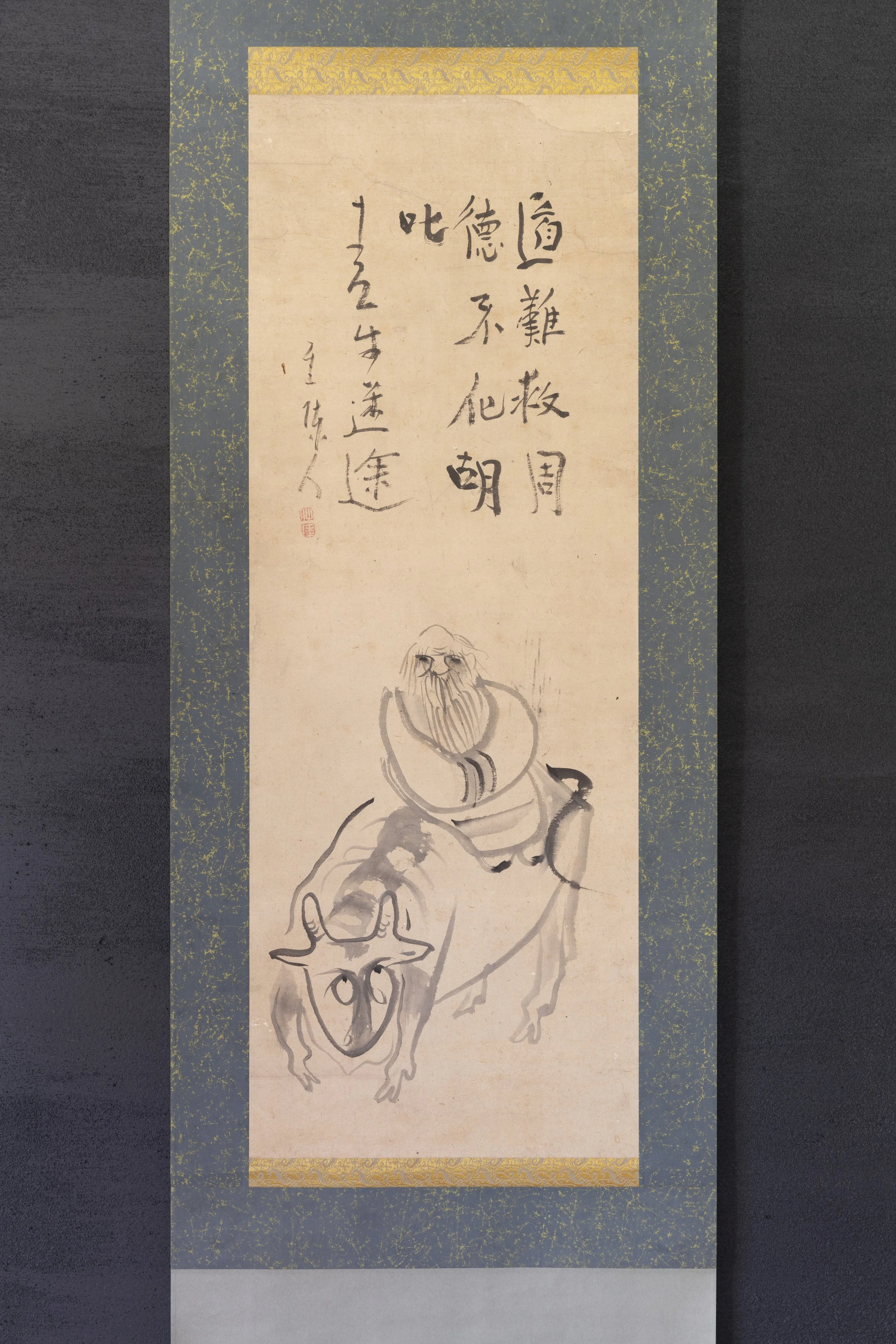
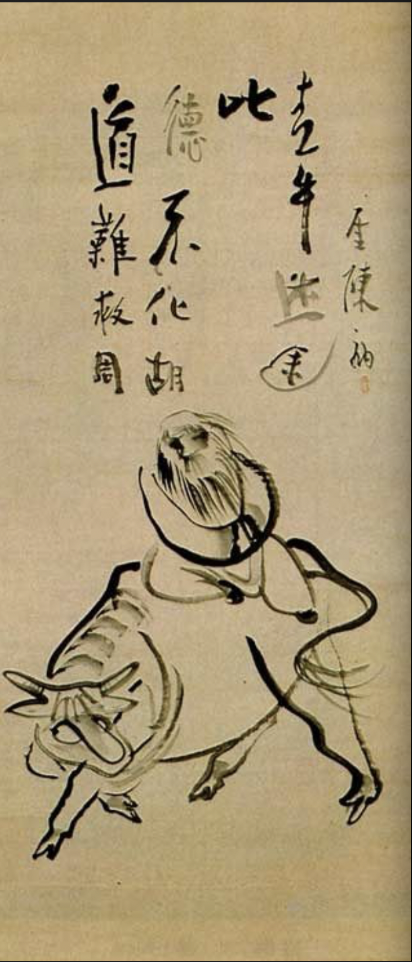
Laozi Riding an Ox
Edo period, early 19th century
Hanging scroll, ink on paper
Image size: 74 × 27 cm
Overall size: 155 × 38 cm
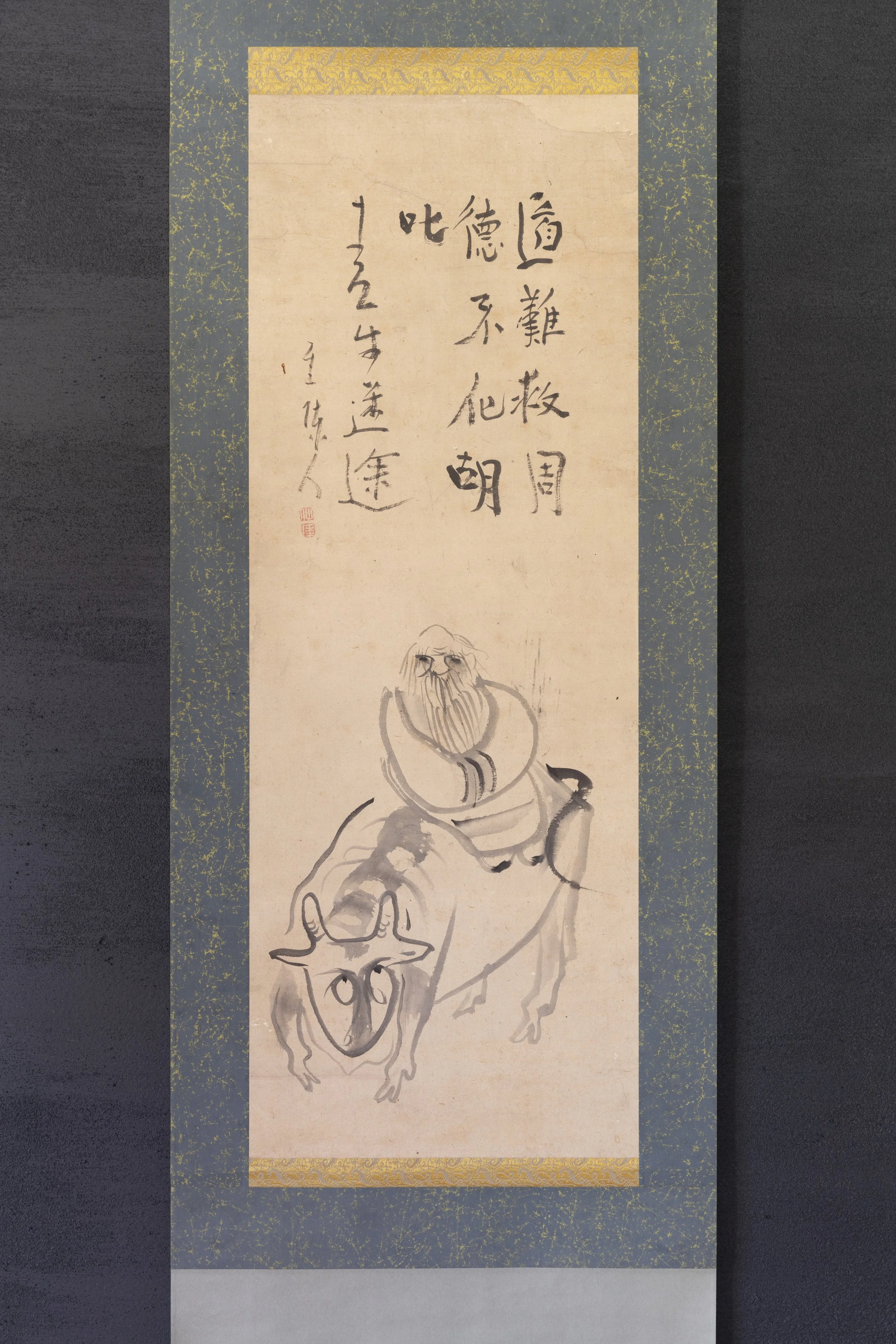
This painting represents the Chinese sage Laozi (Lao-tse) riding an ox as he departs the Zhou kingdom and withdraws from the world. According to tradition, Laozi served as an archivist at the Zhou court, but became disillusioned by political decline and moral disorder. He chose to leave civilisation behind and travel westward, riding on an ox. At the western frontier, a border guard recognised his wisdom and asked him to record his teachings before departing. Laozi then wrote the Dao De Jing (Tao Te Ching), after which he continued west and disappeared, becoming a symbol of withdrawal, simplicity, and the Dao itself. In Zen painting, this subject represents the idea that true wisdom often withdraws from a corrupt world rather than trying to reform it.
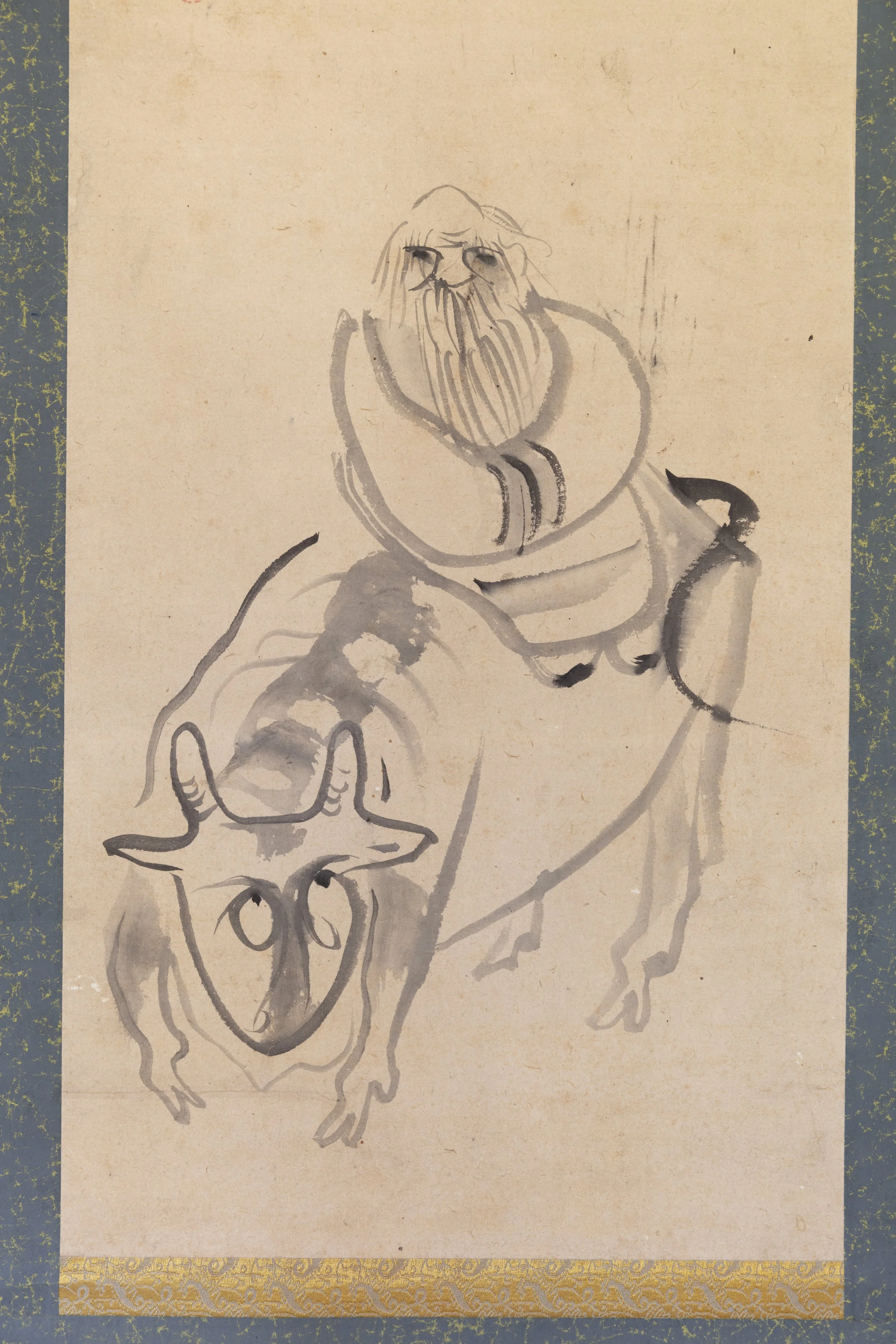
Sengai’s interpretation is characteristically humorous and profound at the same time. Laozi appears as a small, almost childlike figure with an exaggerated beard, seated high on an ox whose head is oversized and whose body is rendered with only a few abbreviated brushstrokes. The simplicity of the drawing reflects the Zen idea that great truths can be expressed with very little, and that humour can coexist with deep philosophical meaning.
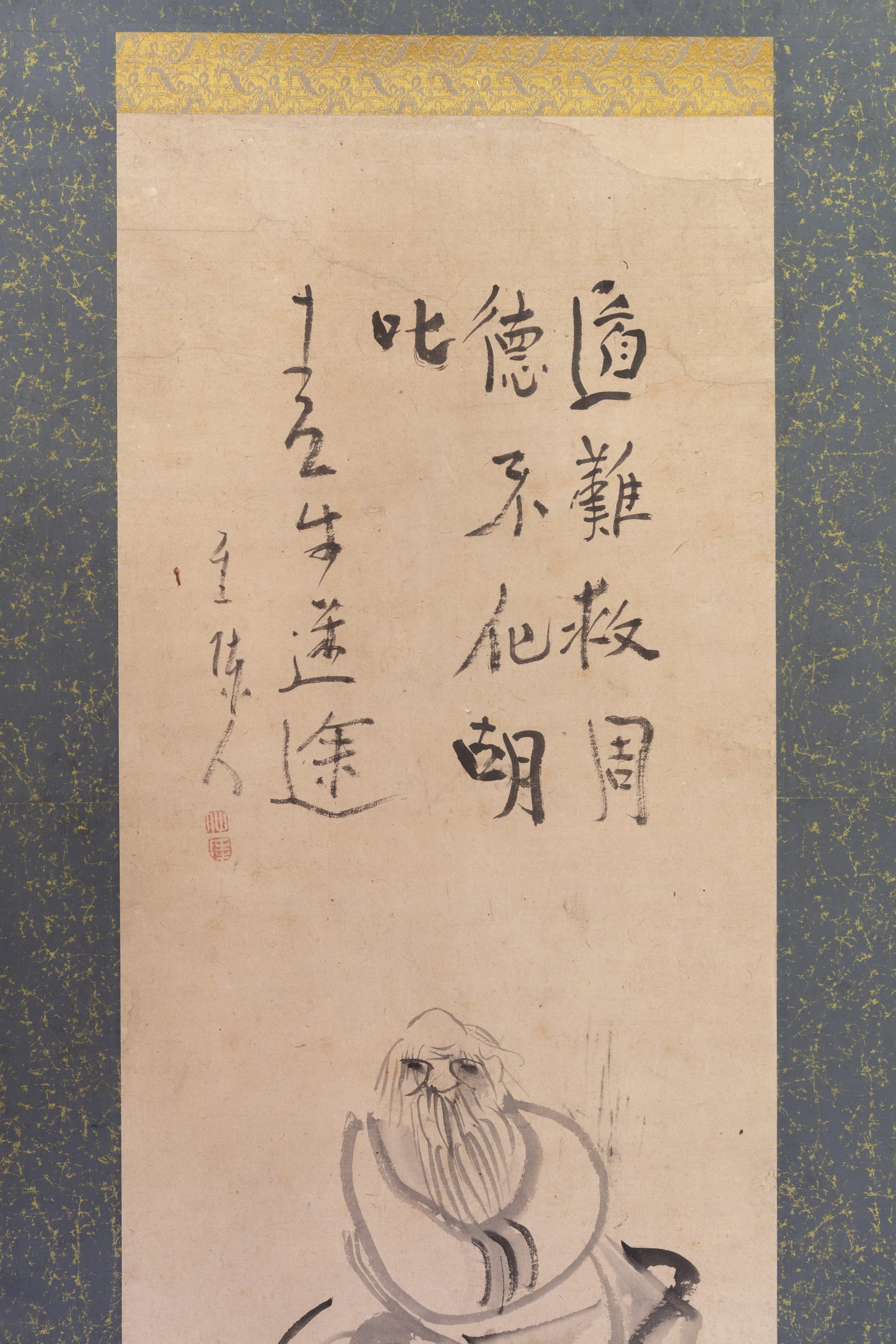
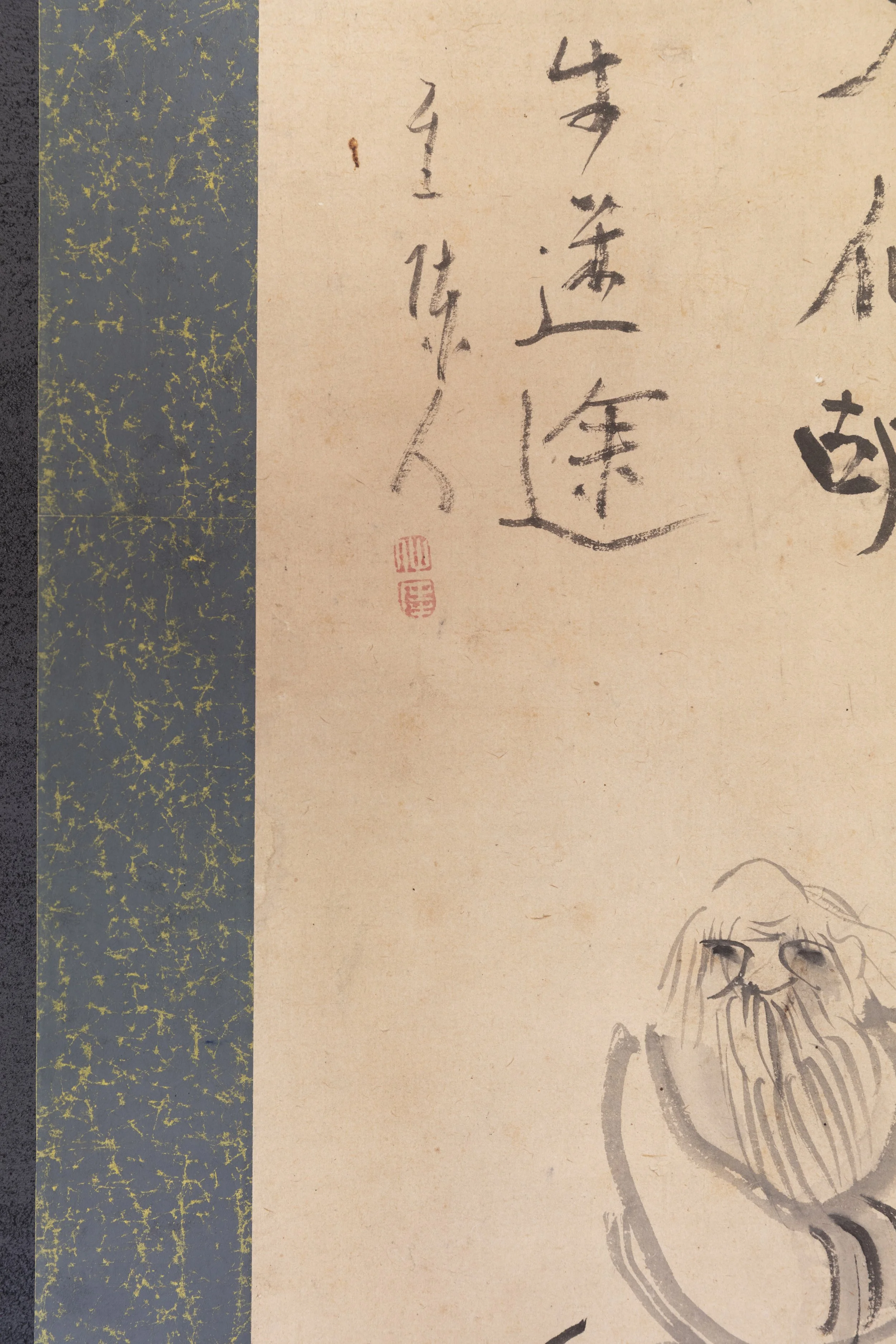
The inscription reinforces this meaning. It reads: “Perfect virtue cannot transform the world. When a great building is collapsing, a single piece of wood cannot support it.” This is a classical metaphor: when an age is in decline, even a great sage cannot save it alone. The inscription therefore explains why Laozi leaves the world. His departure is not a failure, but a philosophical choice. When the world no longer follows the Way, the wise man does not struggle for power or attempt to repair what cannot be repaired; instead, he withdraws, preserves the Way within himself, and leaves behind his teaching. Sengai’s painting is thus a meditation on the limits of virtue, the decline of societies, and the dignity of withdrawal.
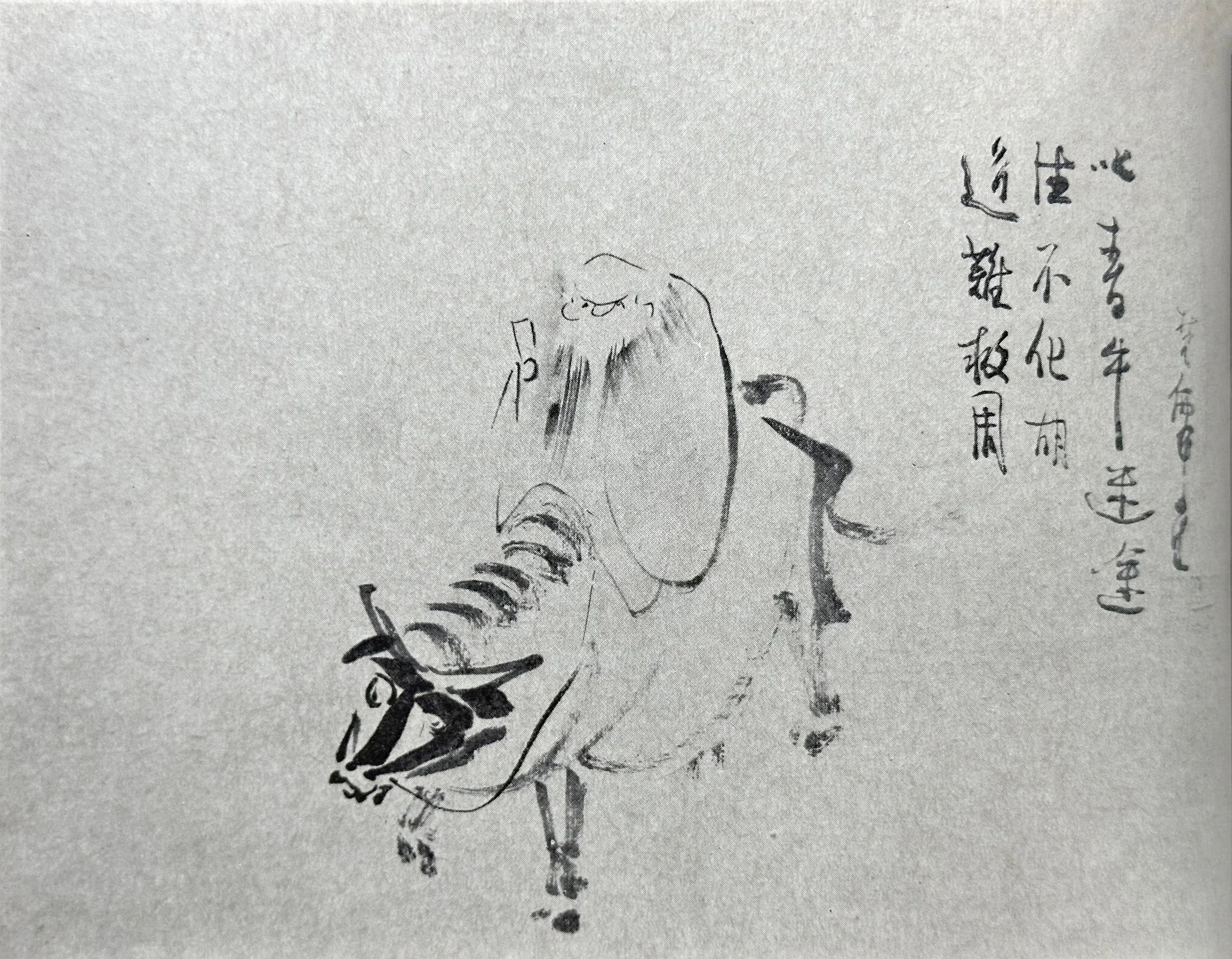
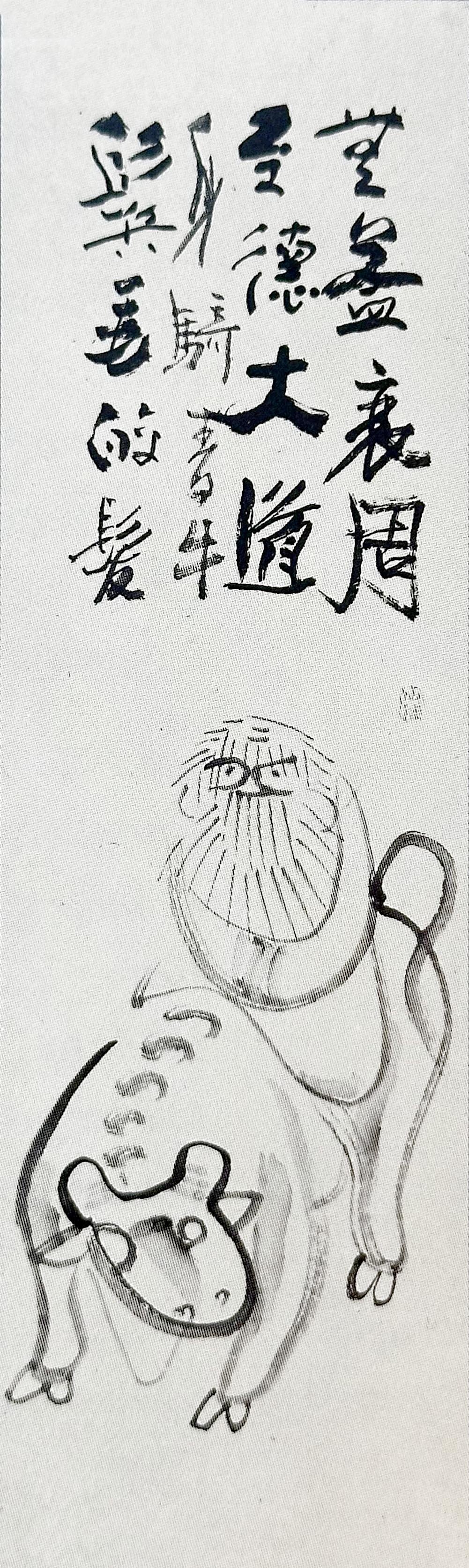
Sengai returned to this subject more than once, and closely related versions are known. A comparable composition is illustrated in Sengai, moine zen 1750–1837: Traces d’encre (Paris Musées, 1994), no. 283, where the subject is identified as Lao-Tseu and accompanied by a text describing his long hair and beard, his ox, and the decline of the Zhou country. Another related example appears in the European travelling exhibition catalogue Sengai: vandringsutställning i Europa 1961–1963 (Moderna Museets utställningskatalog, Stockholm, 1963) nr. 31, p. 22, where the subject is titled Lao-tse ridande på en oxe and is accompanied by a text explaining that Laozi left his country after becoming disillusioned with political conditions and recorded his teachings before departing.
These comparators show that Sengai treated the subject in a recognisable pictorial type: the small sage with flowing beard riding an exaggerated ox, accompanied by a short inscription reflecting on virtue, decline, and withdrawal from the world. The subject would have been understood by educated viewers as a reference to the Dao De Jing and to the idea that when the world falls into disorder, the wise withdraw rather than struggle for power.
In this way, the painting is not only an image of Laozi, but a Zen reflection on the nature of wisdom itself: quiet, detached, humorous, and free.
Comparata, left to right
Sengai Gibon — Lao-Tseu
Traces d’encre (Paris Musées, 1994), no. 283.
Sengai Gibon — Laozi Riding an Ox
Online visual comparator; source not yet identified.
Sengai Gibon — Lao-tse ridande på en oxe
Moderna Museet exhibition catalogue no. 31 (Stockholm, 1963), p. 22.