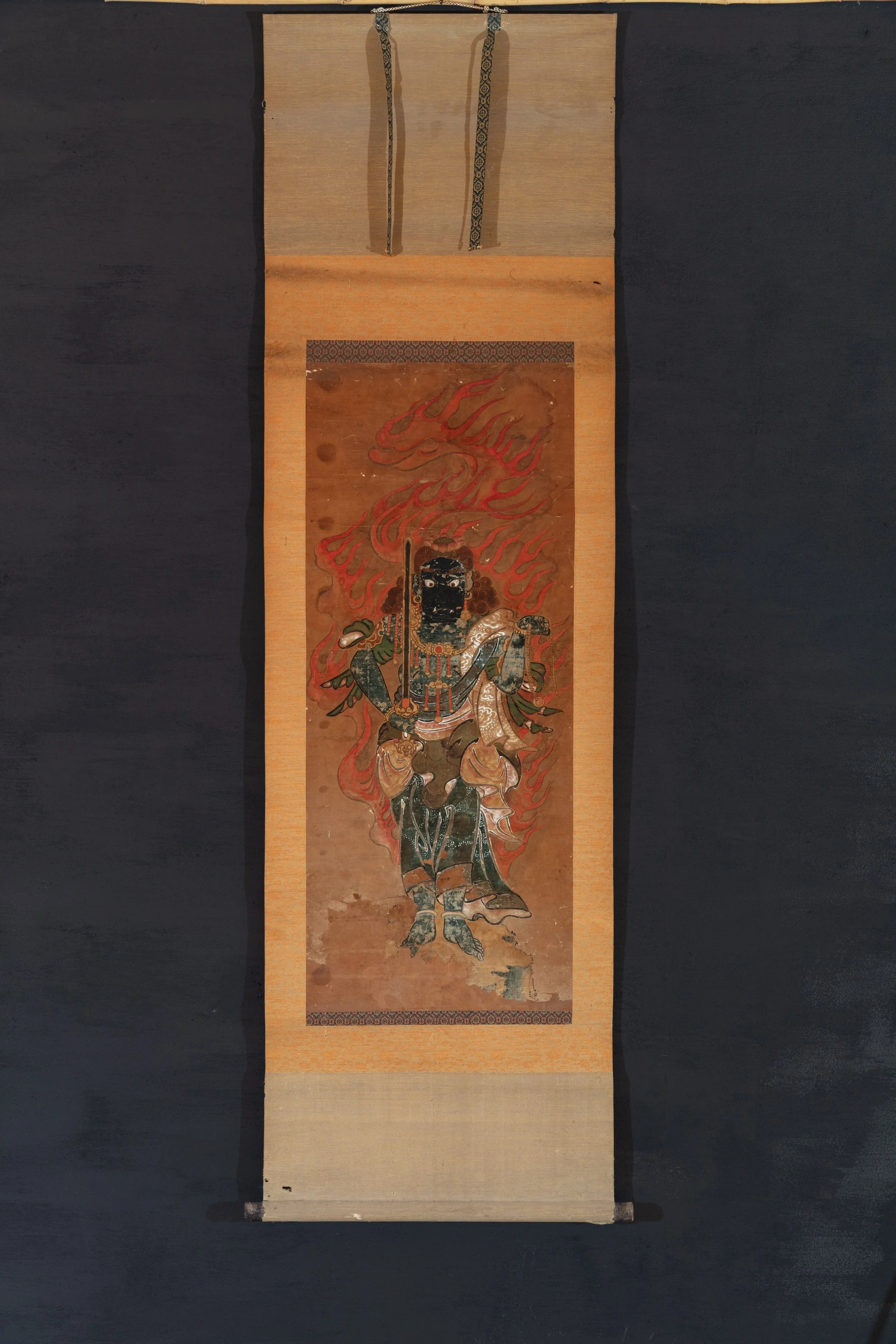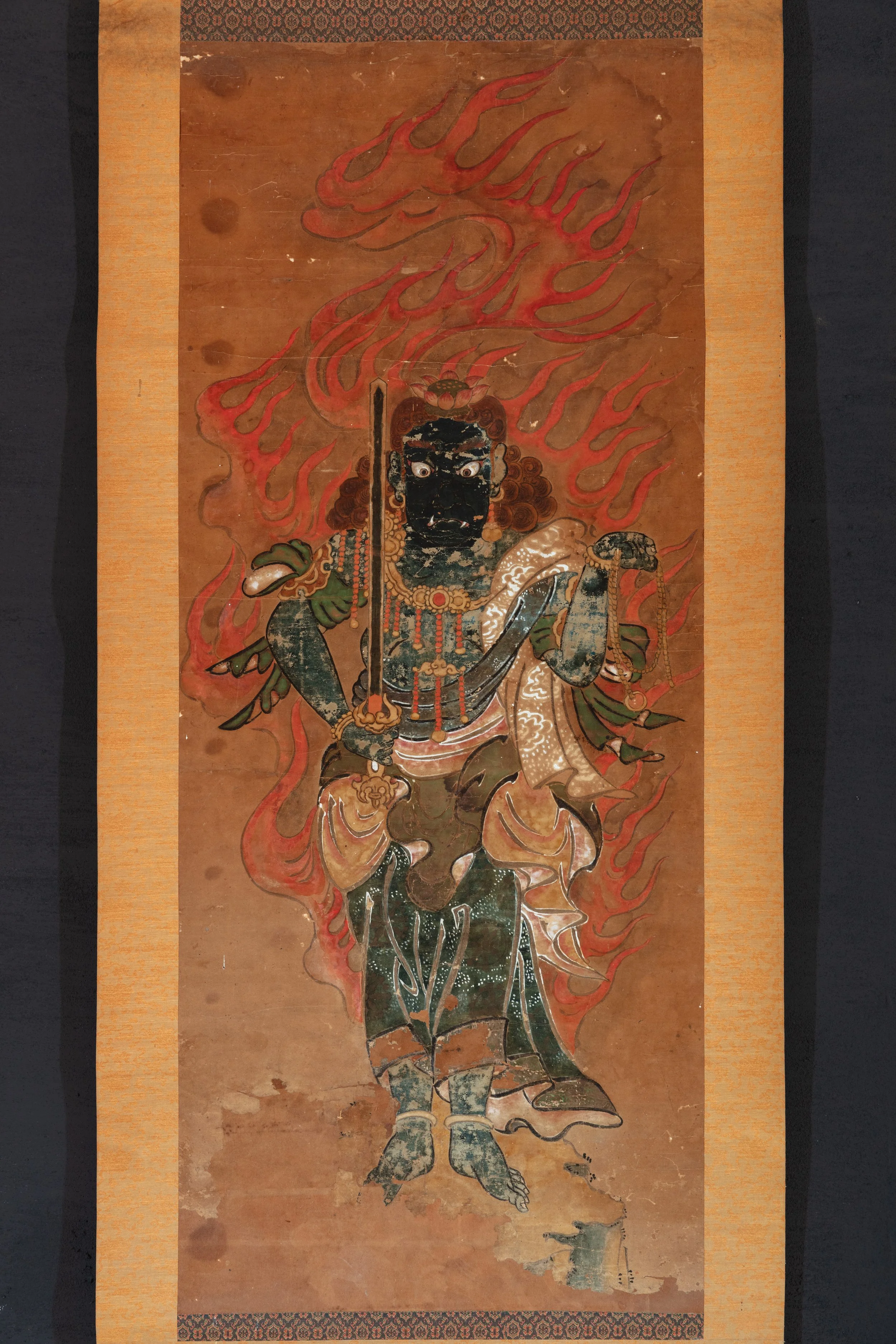
Fudō Myōō (Acala)
Japan, Chūgoku region (western Honshū), late 17th to early 18th century
Mineral pigments including malachite green, vermilion, and shell-white gofun on paper; hanging scroll with later mounting
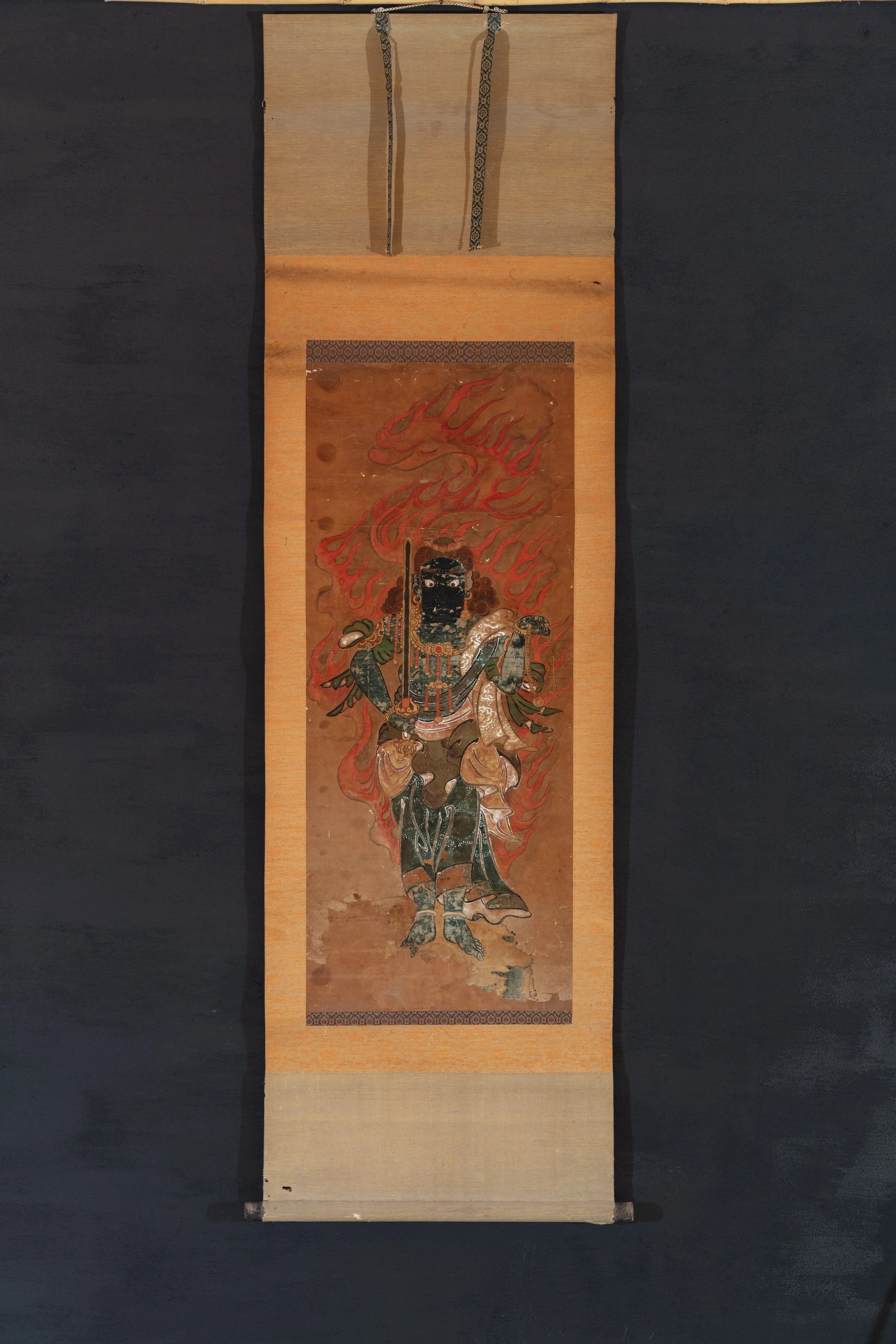
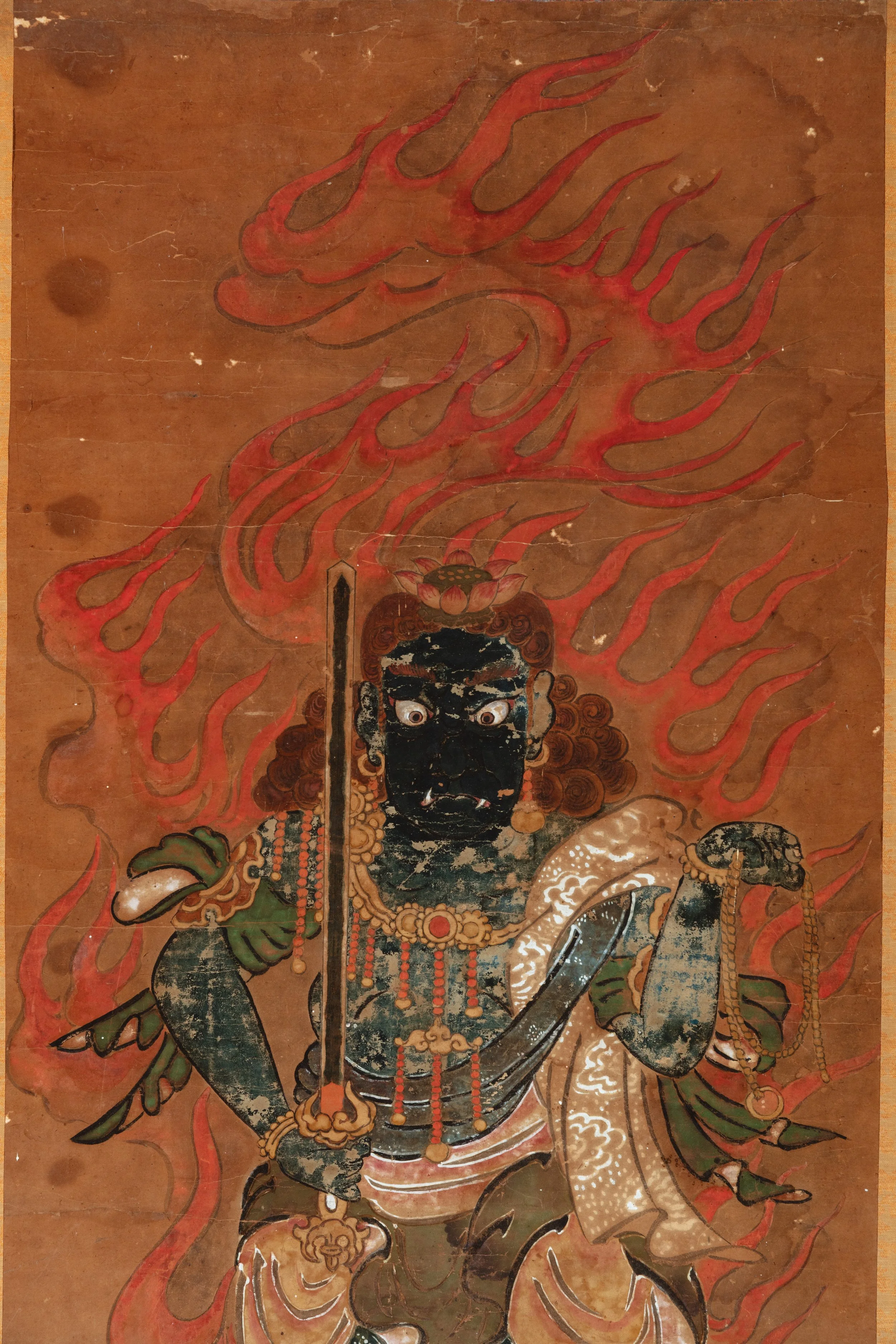
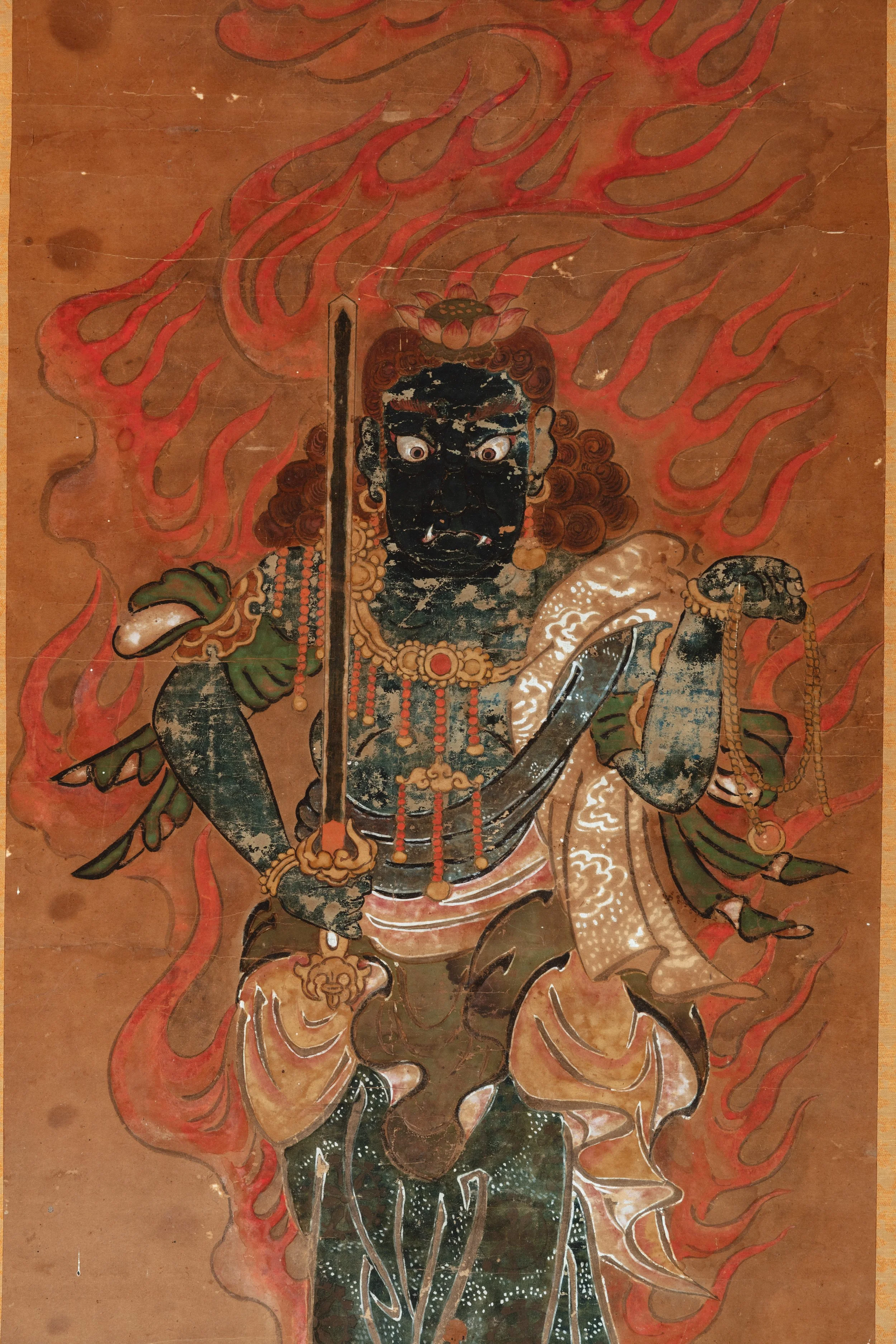
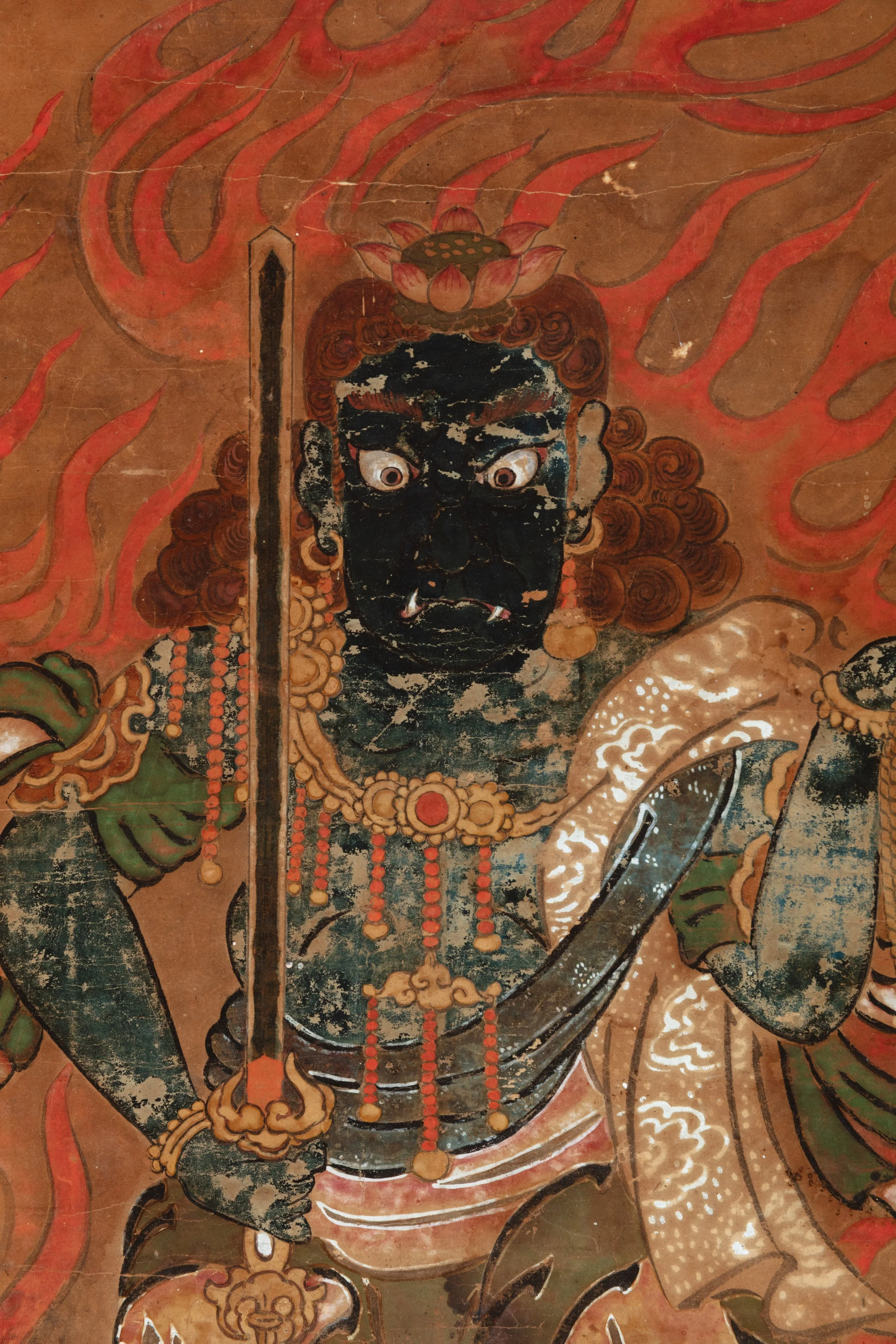
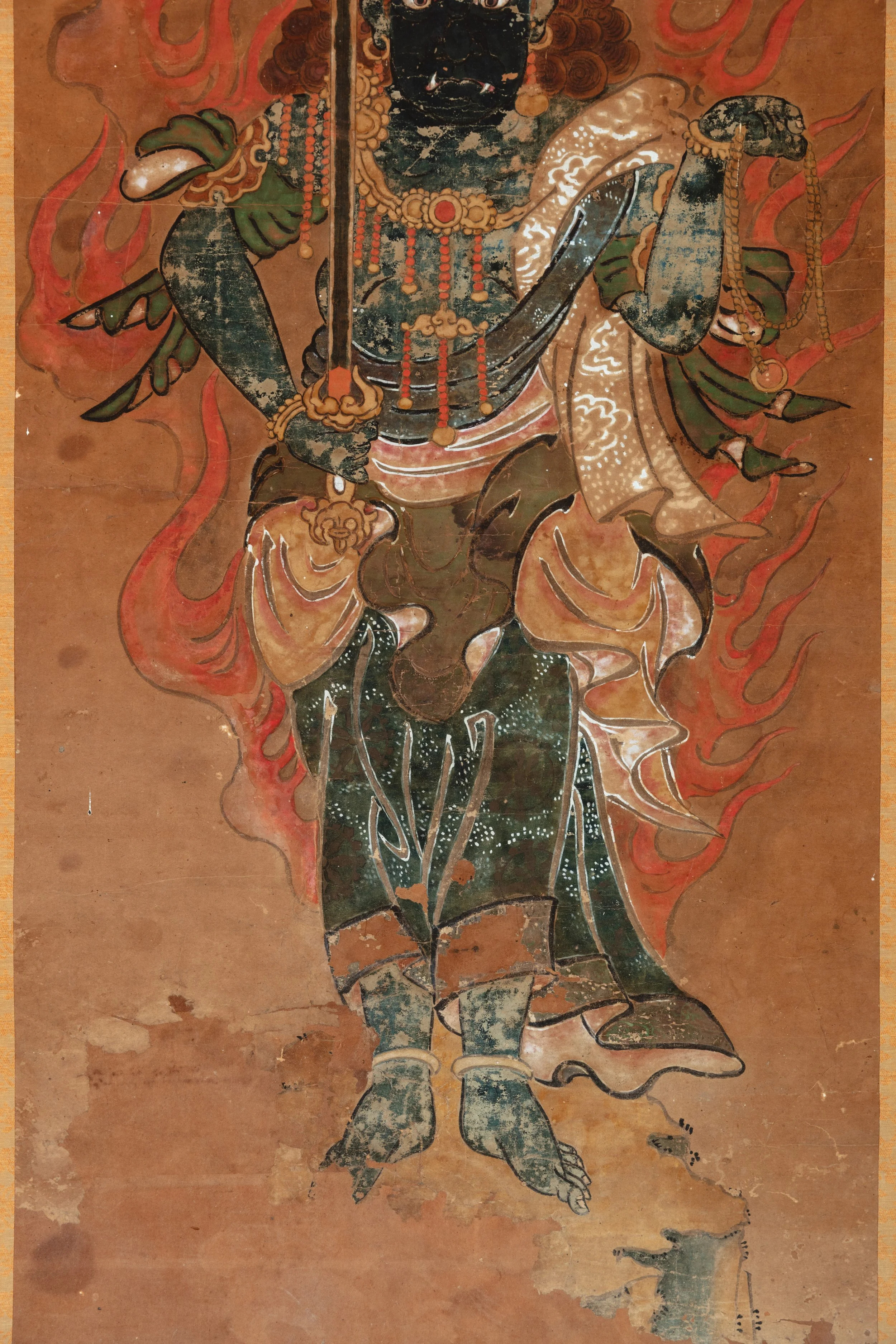
Within a furnace of red and orange flame stands Fudō Myōō—the Immovable One—his darkened body taut with controlled wrath. In his right hand he raises the straight kurikara sword, the blade that severs ignorance; in his left he grips the knotted kensaku lasso, binding delusion rather than destroying it. His fierce gaze, fixed and unyielding, is offset by a single lotus blooming above his tangled curls, a visual reminder of his identity as the wrathful emanation of the cosmic Buddha Dainichi (Mahāvairocana).
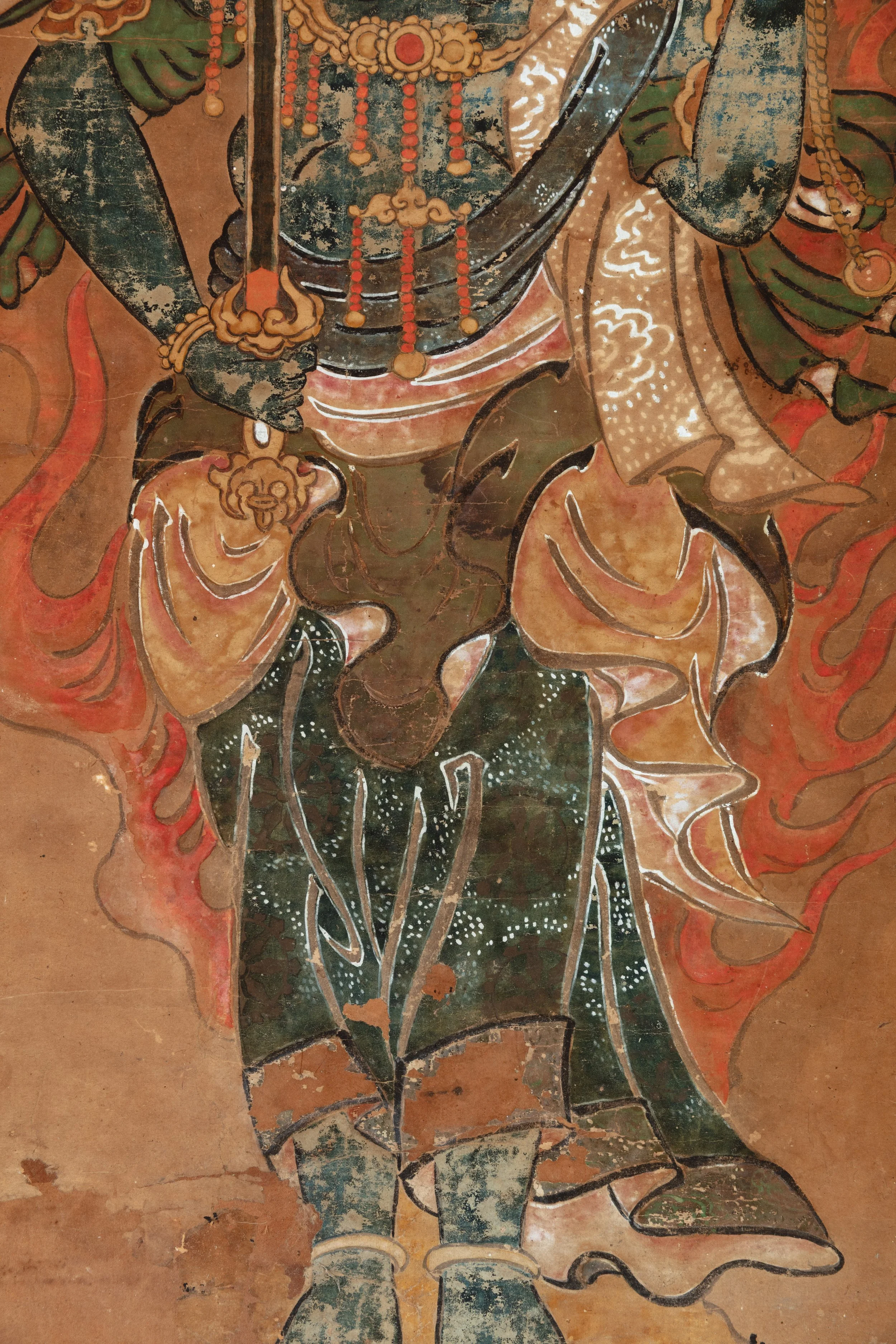
The figure is richly articulated despite evident age and wear. Cloud-shaped plaques strung with coral-red beads hang across his chest, while a white scarf—flecked and patterned with powdered shell—cuts a brilliant arc across his torso, functioning as a restrained substitute for gold brocade. Dense malachite greens, iron-rich reds, and opaque gofun highlights are layered pragmatically yet with conviction, allowing form and iconography to remain legible even where abrasion has softened the surface. Beneath his feet, the bare earth seems to glow with the reflected heat of the surrounding flames.
Stylistically, the work belongs to a provincial idiom associated with the Chūgoku region, where temple workshops serving Shingon and Tendai communities produced icons for both monastic and household devotion. Broad, comma-shaped tongues of flame, whorled hair curls, and the reliance on gofun stippling rather than refined kirikane point to local practice rather than capital ateliers. Lingering Ming-dynasty devotional influence—carried through the Inland Sea ports of Hiroshima, Onomichi, and Yamaguchi—remains visible in the jewelry forms and flame handling, filtered through an Edo-period sensibility.
Though modest in material means, the iconography is executed with doctrinal precision: every gesture, attribute, and proportion follows esoteric prescription. The absence of attendant figures heightens the image’s frontal authority, concentrating its force into a single, immovable presence. A rare survivor of regional Shingon devotion, this scroll preserves the heat and authority of the goma fire within the cool restraint of mineral pigment, embodying both discipline and compassion in equal measure.