Chūhō Sōyu (1760–1838) ●
Ensō (Circle of Emptiness)
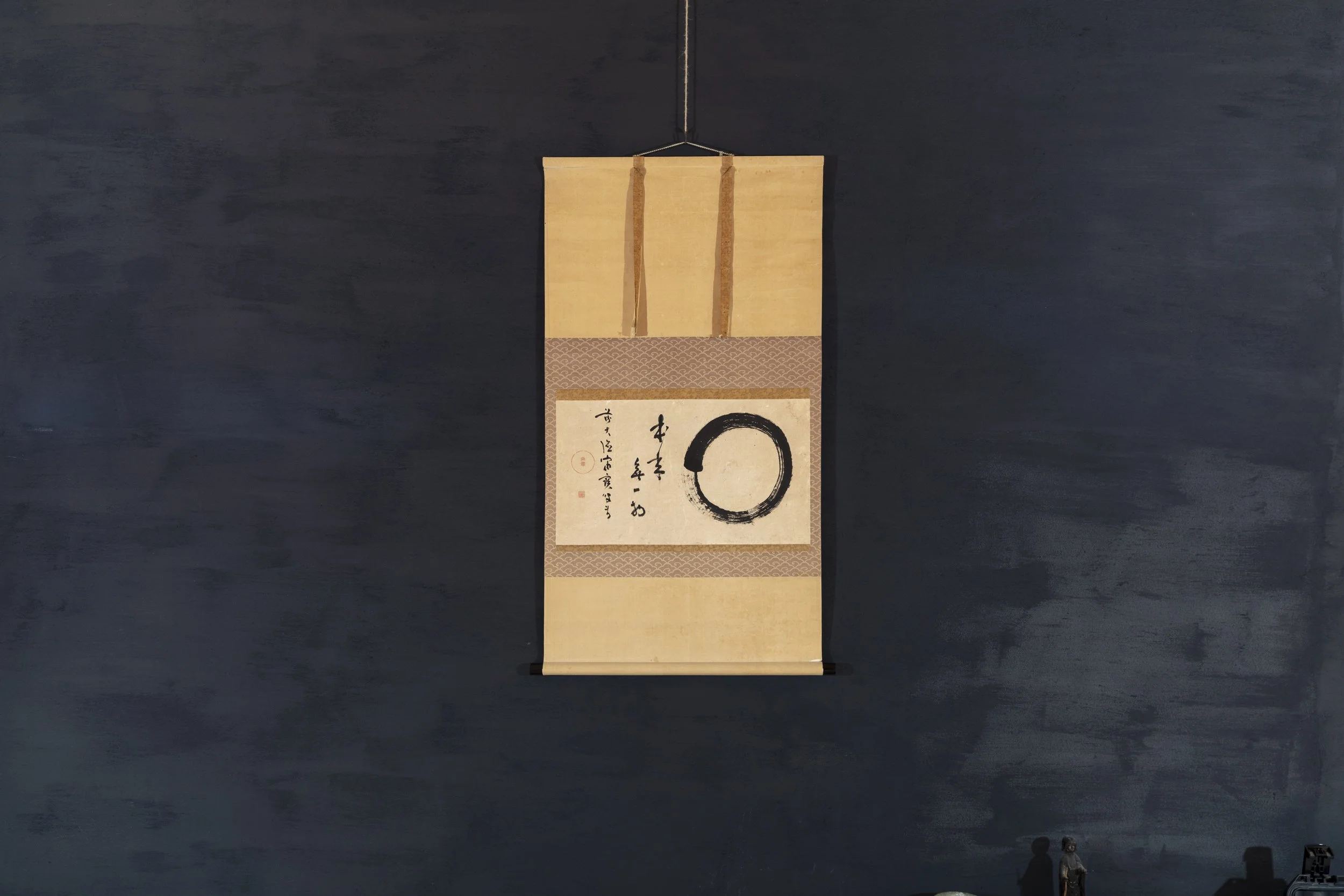
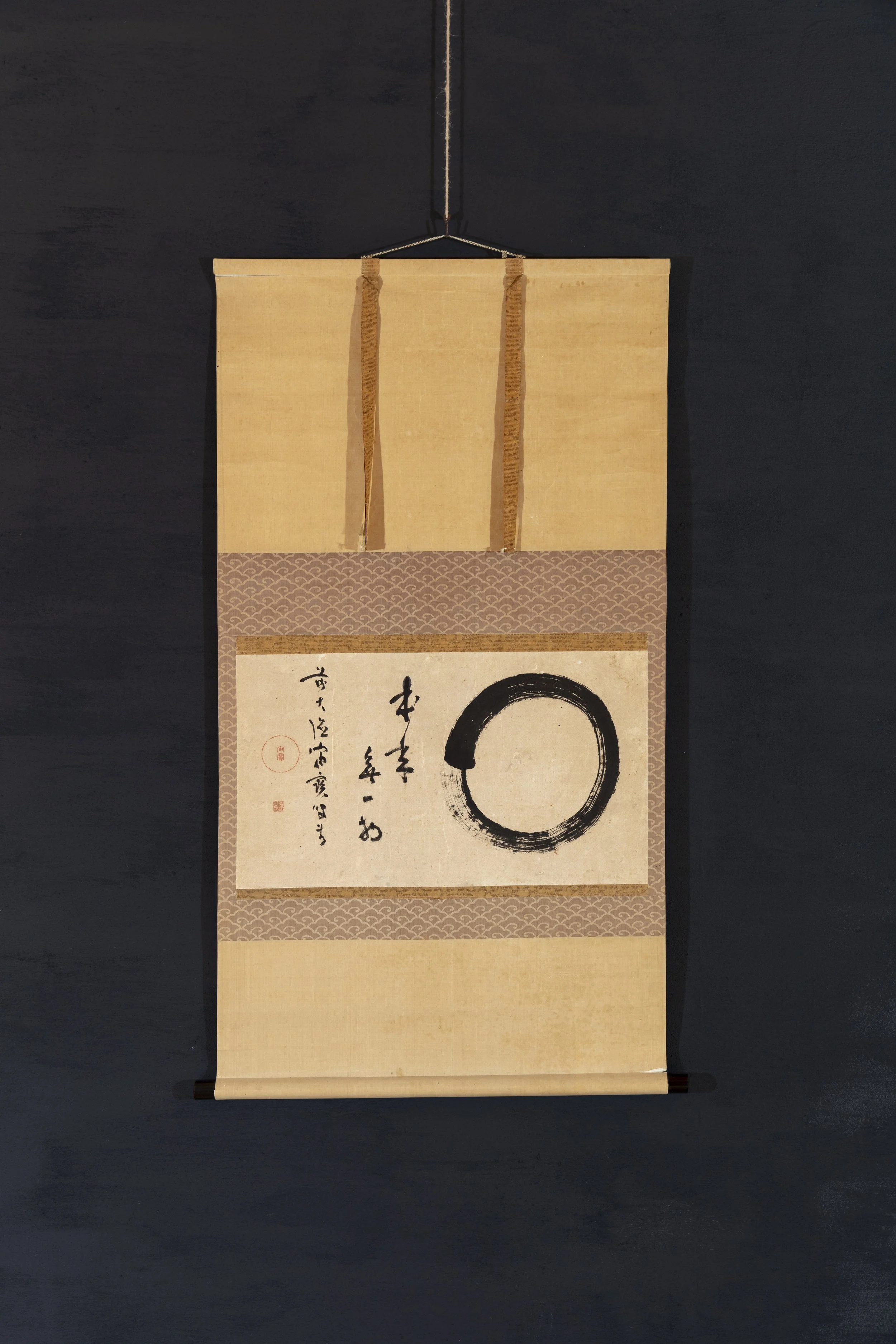
Ink on paper, mounted as a hanging scroll, c.1836–1837
Daitoku-ji, Kyoto
During his abbacy at Daitoku-ji in Kyoto, the Rinzai Zen master Chūhō Sōyu—also known by his art name Shōgetsu Rōjin—produced a body of deeply introspective calligraphic works, including ensō, single-line koans, and brief dedications for students and temple patrons. Installed in Bunka 4 (1807) as the 418th abbot of Daitoku-ji, Sōyu stood within one of the most rigorous Rinzai lineages. In Tenpō 6 (1835), he was granted the honorific title Daikō Shinshō Zenji, marking the culmination of a long spiritual career.
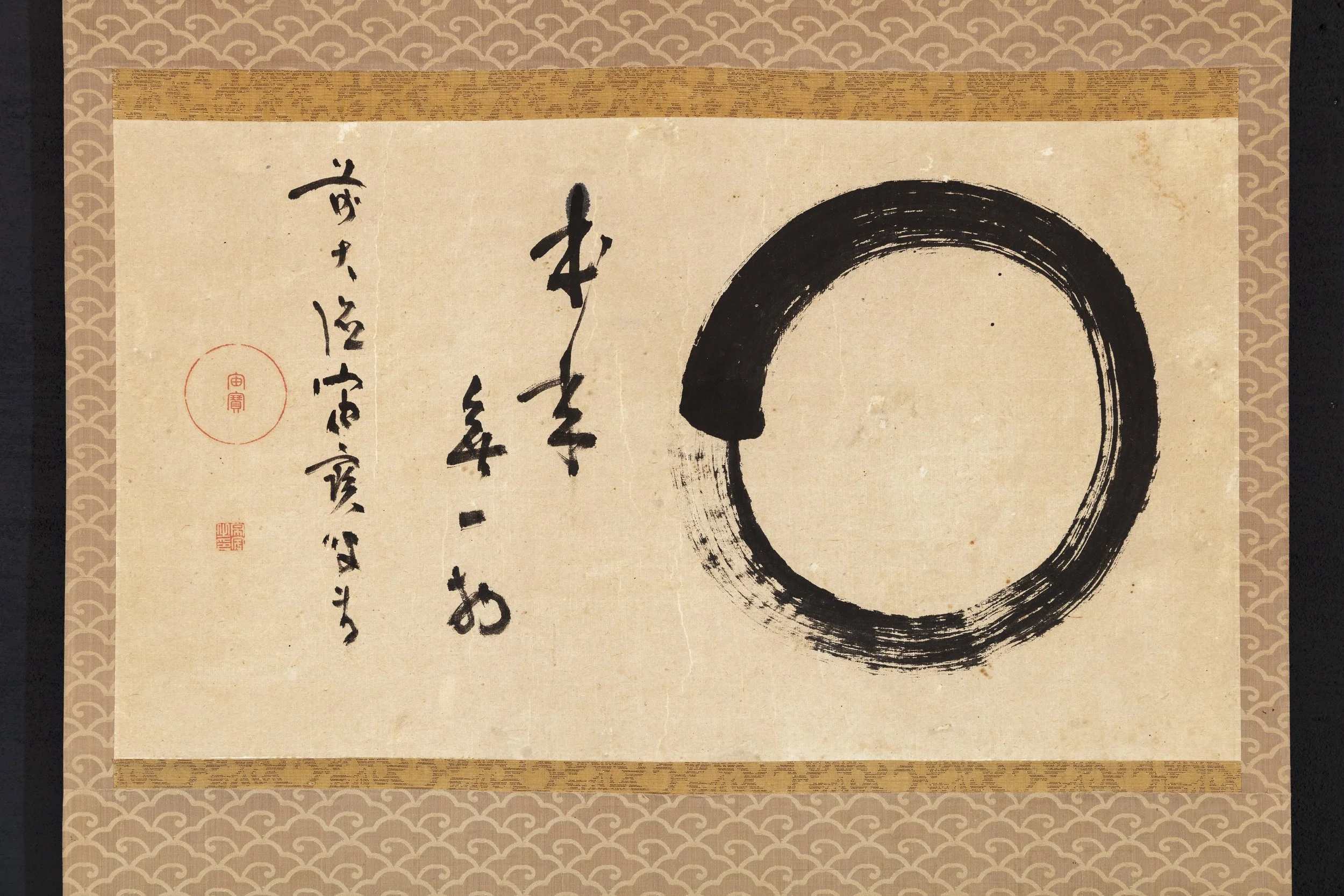
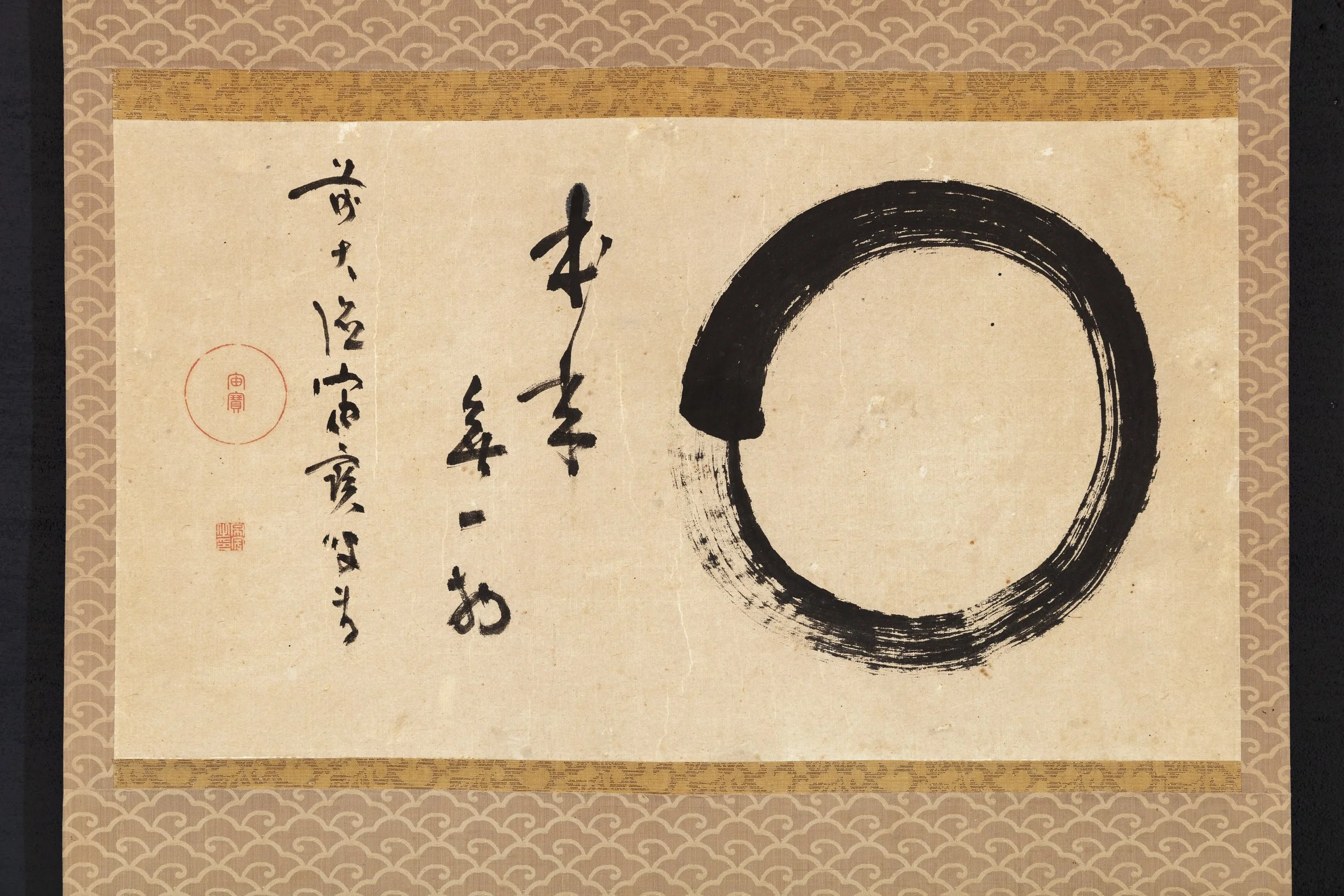
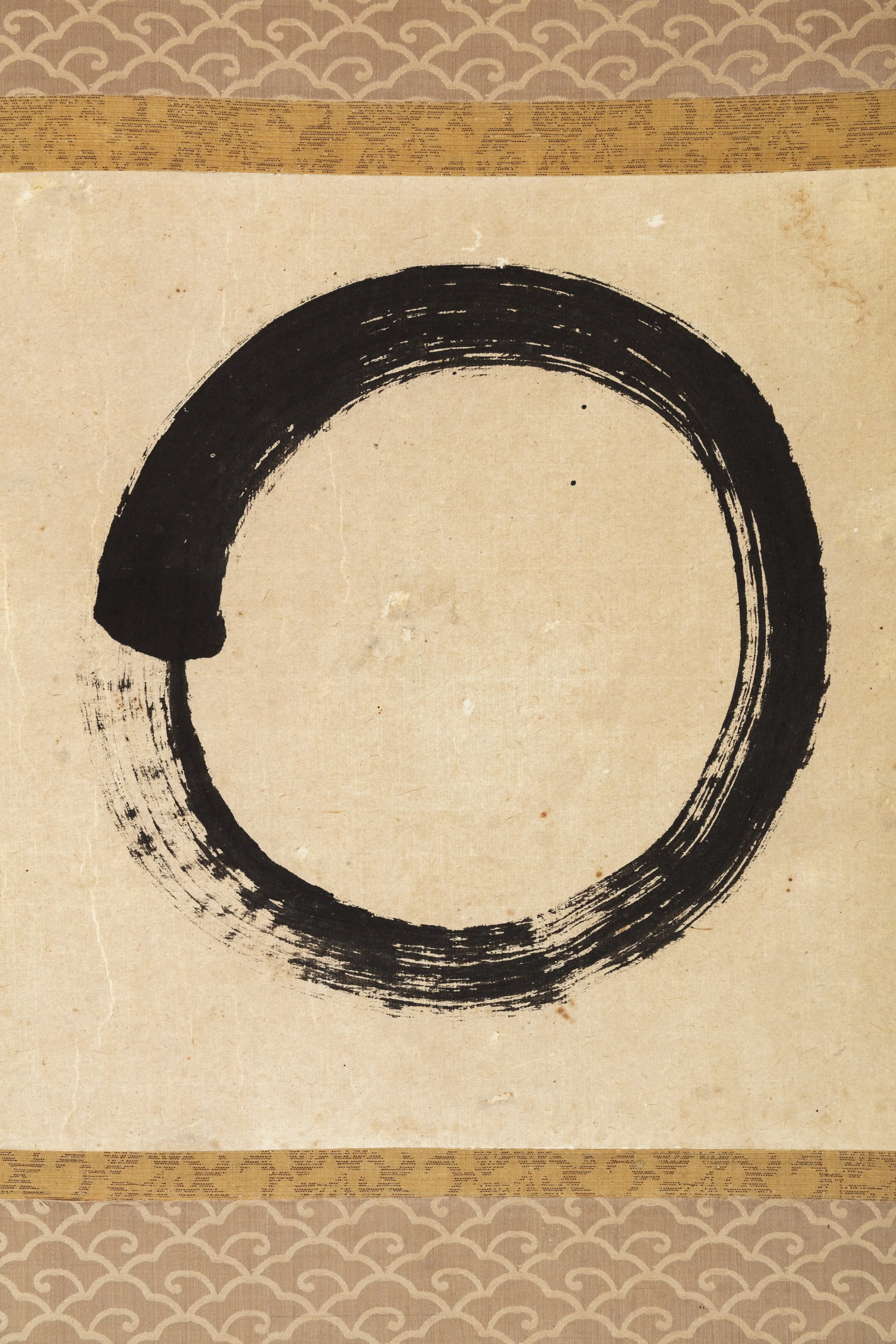
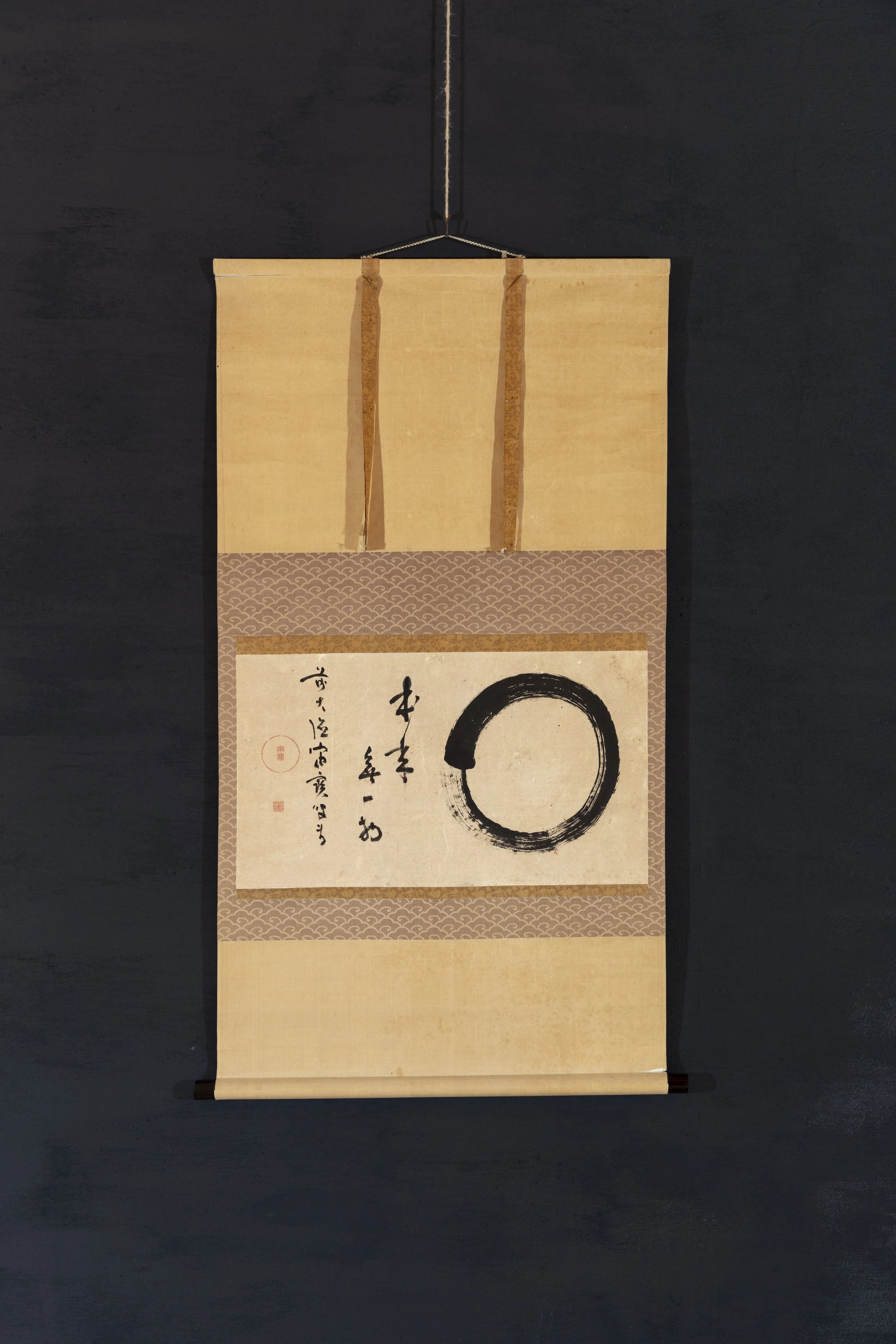
This ensō belongs to the final years of Sōyu’s life, when his brush had shed all excess and his work had settled into a quiet assurance. Drawn in a single breath, the circle is both immediate and resolute: a physical trace of disciplined practice rather than a symbolic illustration. It distills Zen teaching to its most economical form—where form and formlessness are not opposed, but coincide.
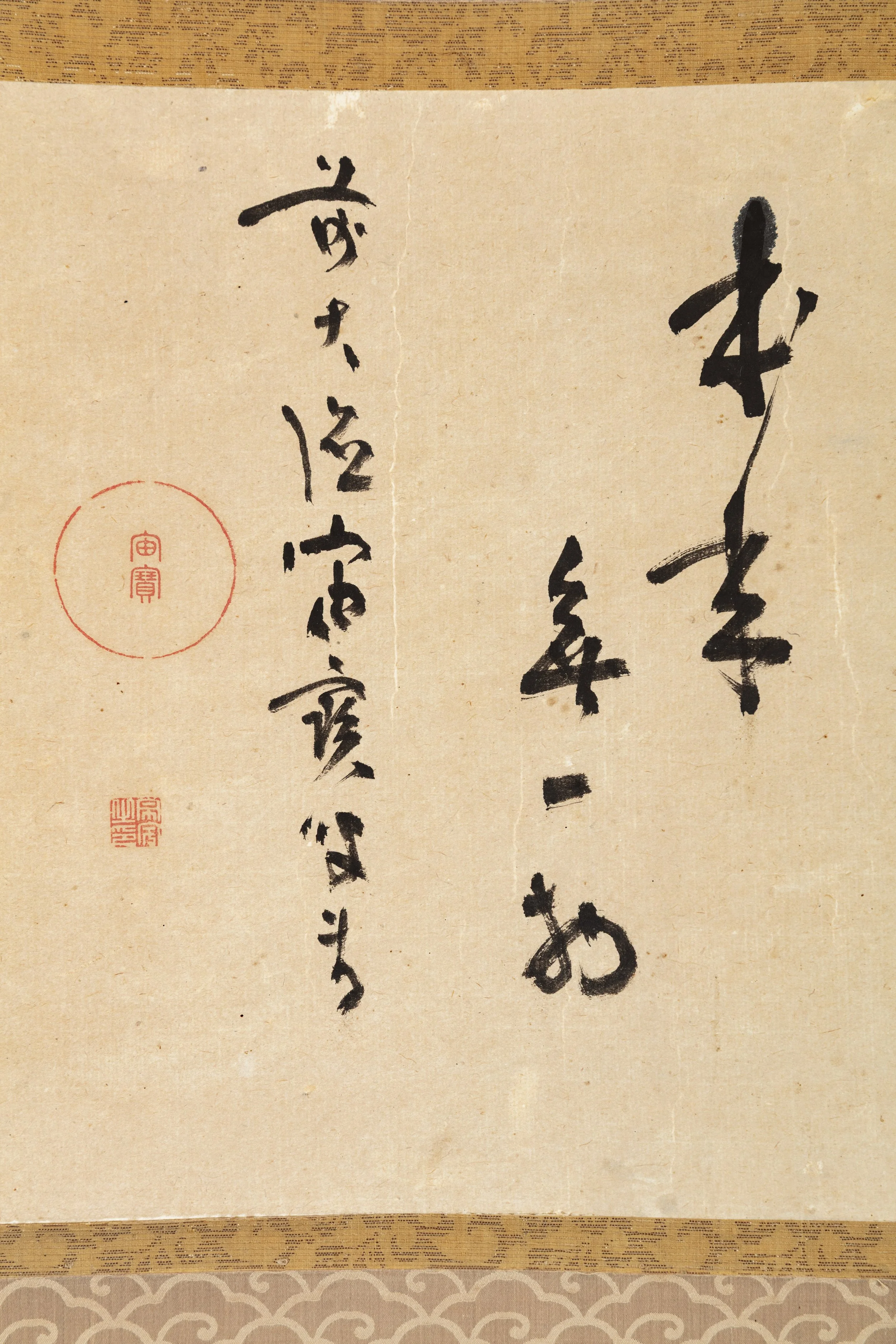
To the left of the circle, Sōyu added a brief inscription reading:
“Within the dream, nothing stirs; in stillness, all is silent. Written in my seventy-ninth year — Chūhō Sōyu.”
At nearly eighty, the abbot writes without rhetorical flourish. The line is at once personal and doctrinal, reflecting a stage of life in which ambition has long since fallen away. Awakening here does not rupture the dream of existence, but clarifies it into stillness.
The brushstroke itself begins heavily, pooling with dark ink before gathering speed along the arc, then lifting cleanly just before closure. Wet and dry passages coexist within the single stroke, preserving the rhythm of inhalation and release. The gesture is not decorative; it is experiential. Within it lies what Zen calls isshi—“one thusness”—the recognition of reality as it is, without division.
Sōyu’s hand exemplifies the Daitoku-ji tradition of clarity and restraint cultivated since the Muromachi period. The ensōis placed slightly to the right, balanced by the vertical inscription on the left—a refined asymmetry characteristic of Kyoto taste and a visual echo of inner equilibrium. Authority is conveyed not through force, but through precision and calm.
For Chūhō Sōyu, this act of painting was not performance but confirmation: a spontaneous record of realized mind. The empty space enclosed by the circle mirrors the space opened within the practitioner’s own awareness—ungraspable, limitless, and complete. Today, the scroll carries the stillness of that moment across nearly two centuries. Its mellowed paper and pale brocade mounting retain the warmth of temple light. What remains is exactly what Sōyu intended: nothing added, nothing missing—the brush, the breath, the boundless.