After Hakuin Ekaku (白隠慧鶴, 1685–1768)
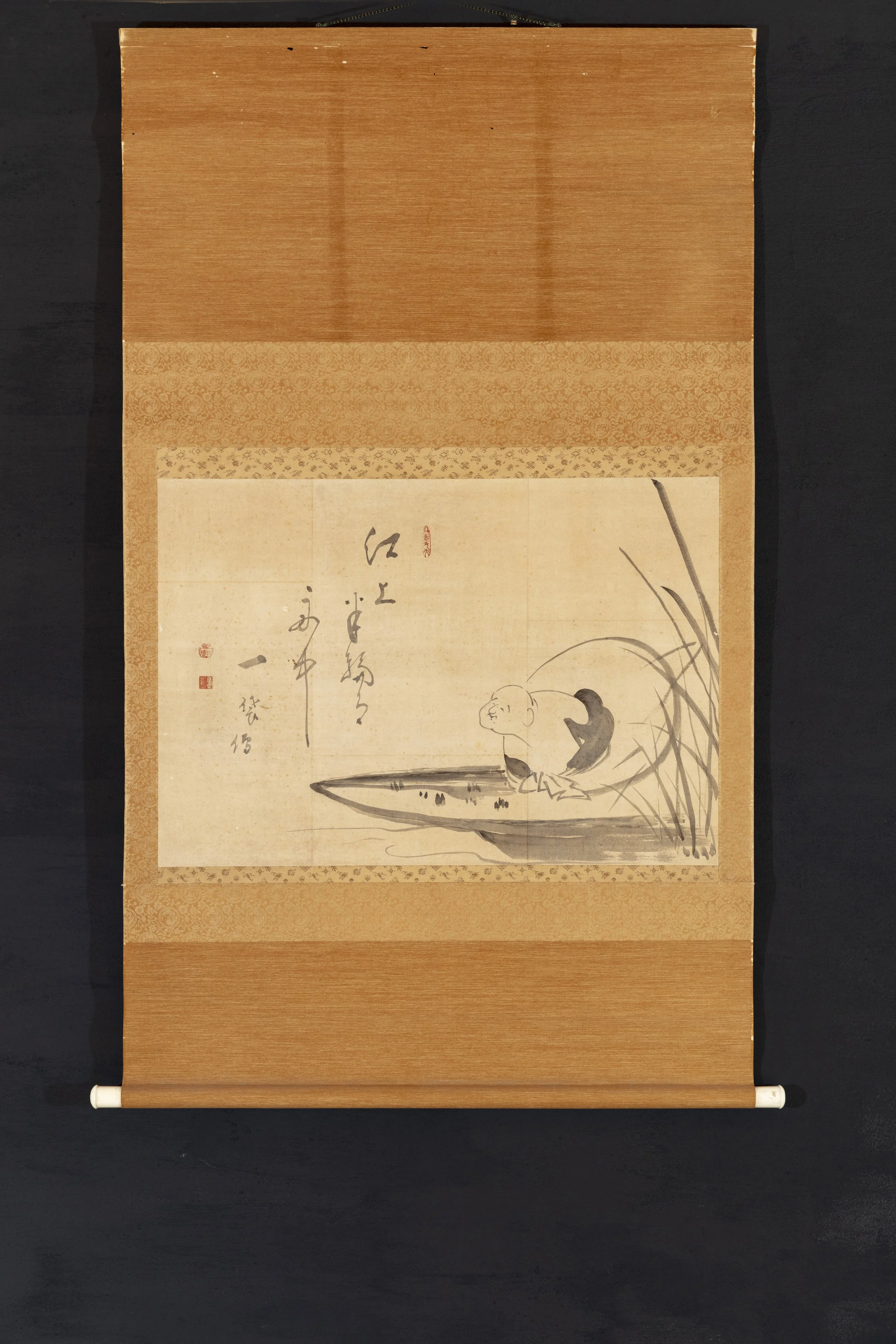
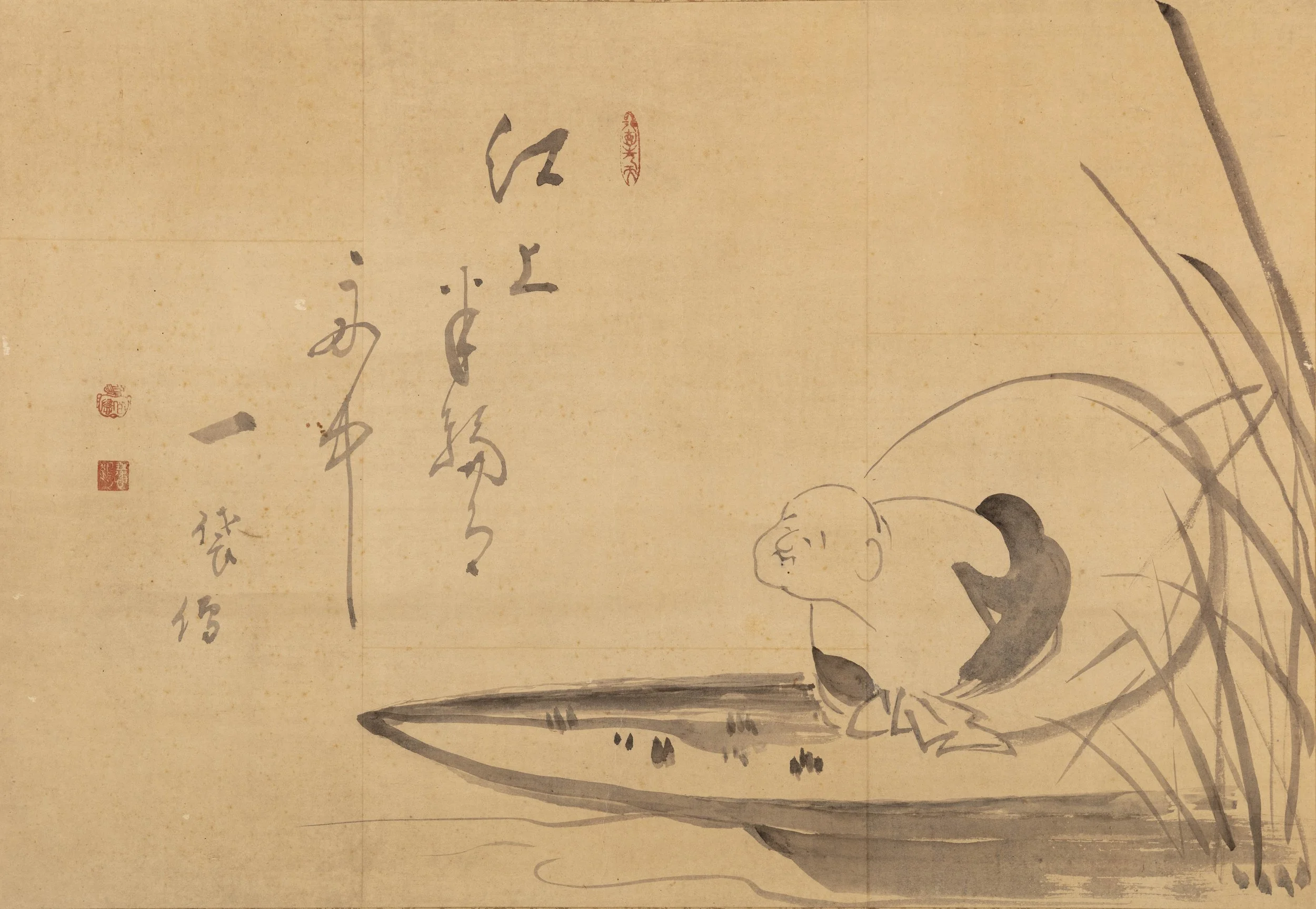
Hotei in a Boat, Viewing the Moon
Ink on paper; Edo period.
137 × 81 cm (overall); 49 × 71 cm (image)
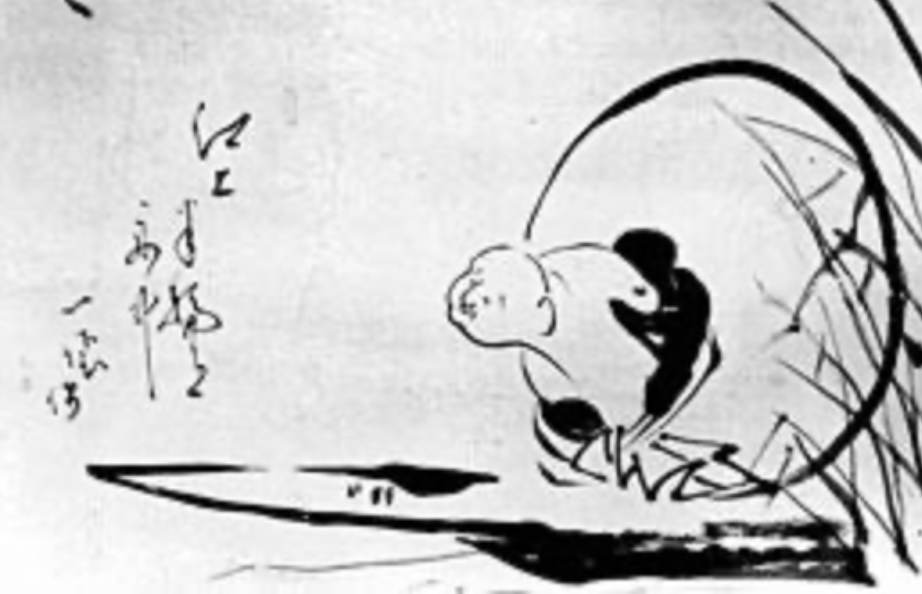
Hakuin Ekaku: Hotei in a Boat, 18th century; hanging scroll: ink on paper; 15 x 22 in.; on extended loan from the Keigensai Collection to the Berkeley Art Museum
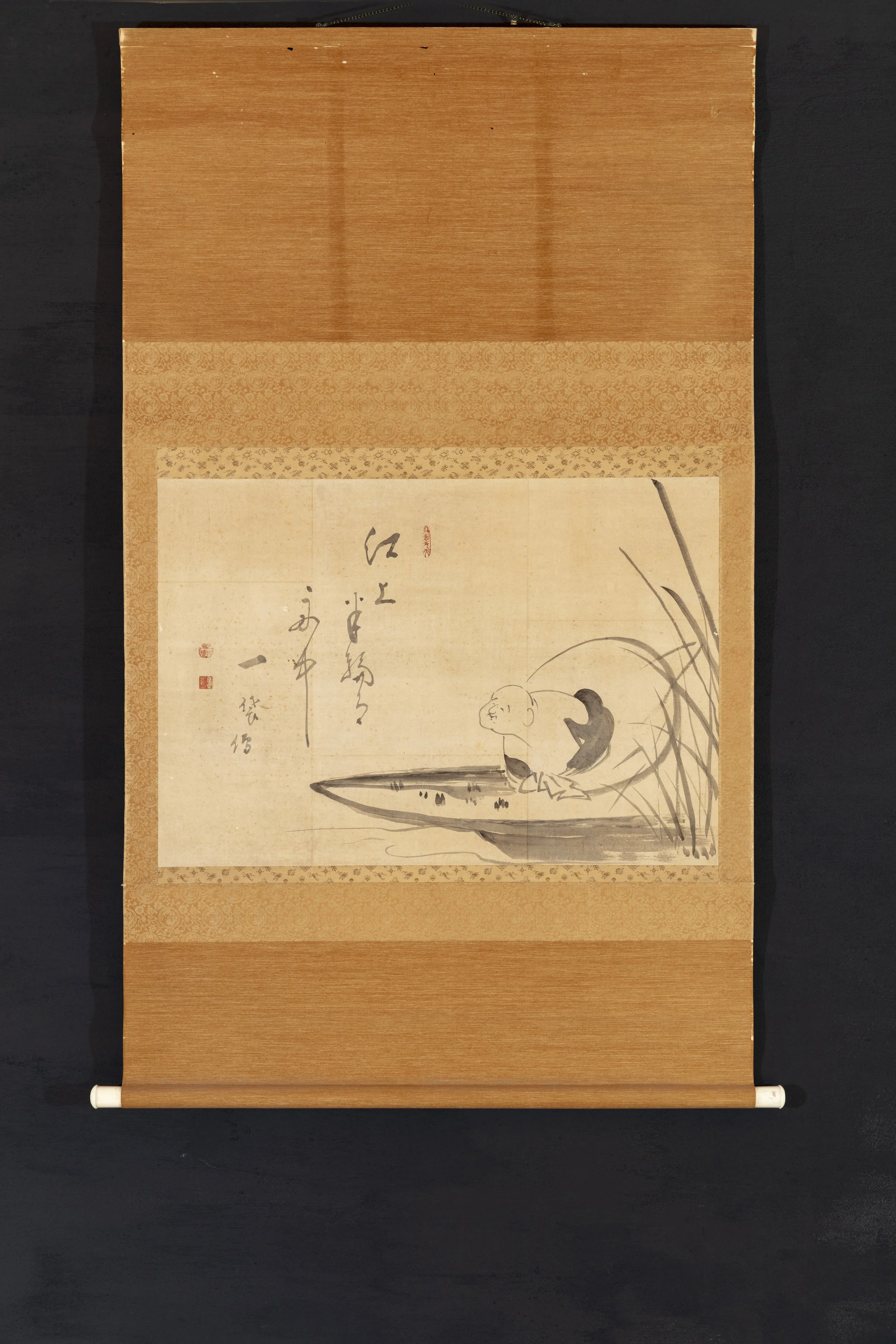
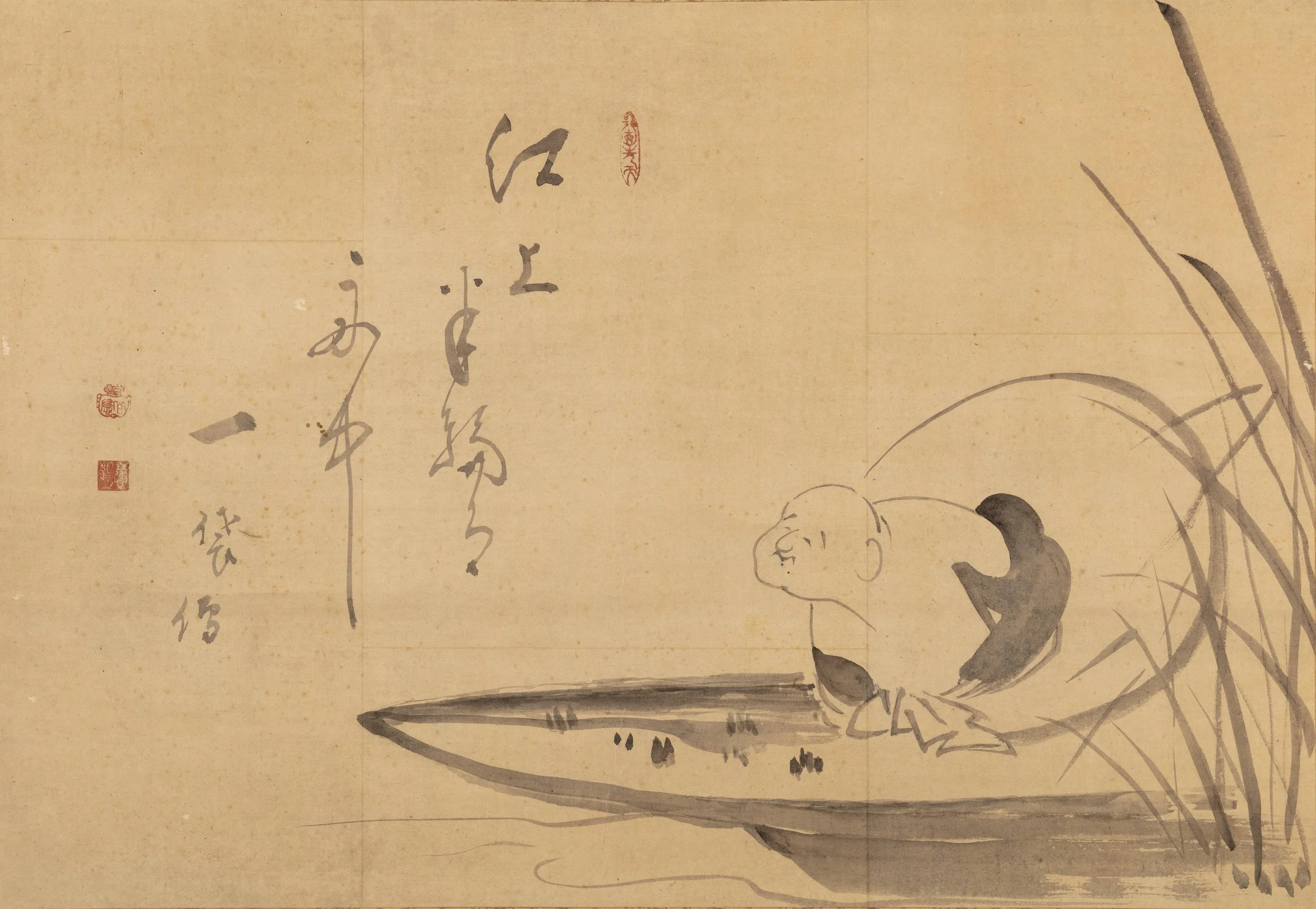
This large-format painting presents Hotei seated alone in a narrow skiff among reeds, gazing into an open expanse where moon, water, and mind quietly converge. The composition is reduced to a small number of essential forms: boat, figure, reeds, inscription, and empty space. Yet within this economy the image sustains a surprisingly rich internal rhythm, balancing stillness with subtle movement through variations in line weight, ink density, and spatial interval.
The figure of Hotei is rendered through supple, abbreviated brushwork alternating between dry abrasion and fuller saturated passages. The contour of the robe shifts continuously between definition and dissolution, allowing the body to appear at moments almost absorbed into the surrounding atmosphere. The handling preserves the directness and speed associated with Zen brush painting traditions, where the energy of execution remains visible rather than concealed beneath finish or correction.
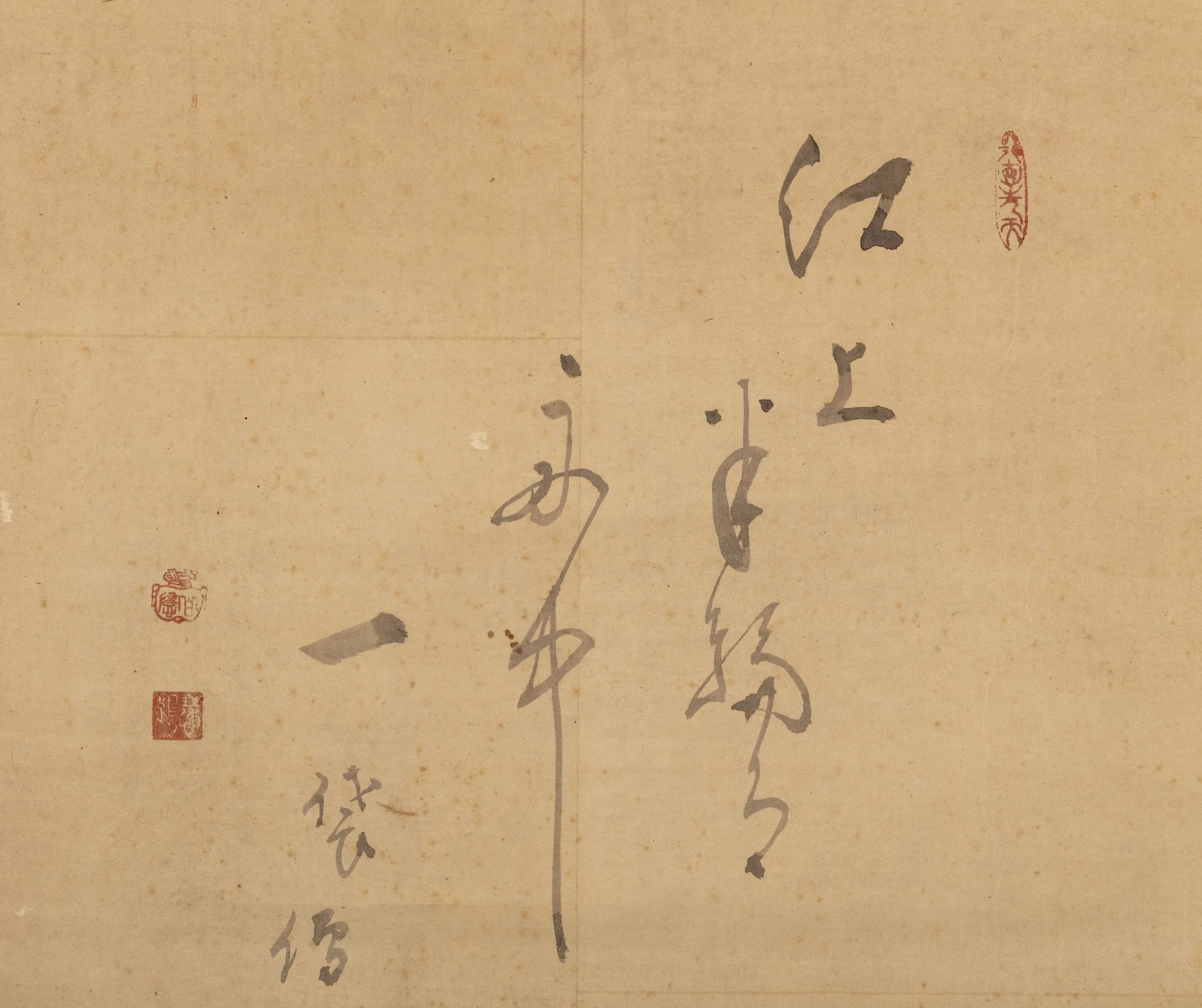
The inscription resolves the image through a gently paradoxical reflection traditionally associated with Hakuin’s Hotei paintings: Is that the moon, or is it me, Hotei? The phrase collapses distinctions between observer and observed, turning the scene away from narrative description and toward a more inward condition of awareness. The moon itself is not directly depicted. Instead, it is implied through water, emptiness, and the orientation of the figure’s attention. The painting does not present the object so much as the conditions under which it becomes perceptible.
This inversion lies close to the heart of the image. Hotei, often shown burdened by his sack of worldly possessions, appears here unusually emptied of theatrical excess. The sack remains, but almost incidentally. What matters is not what he carries, but the quality of his attention. The painting repeatedly redirects perception away from accumulation and toward reflection, stillness, and mental clarity.
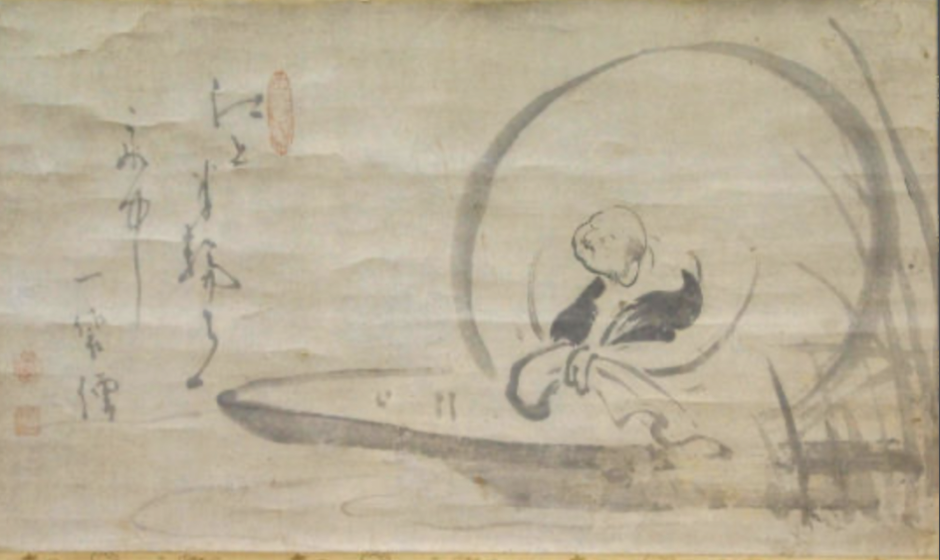
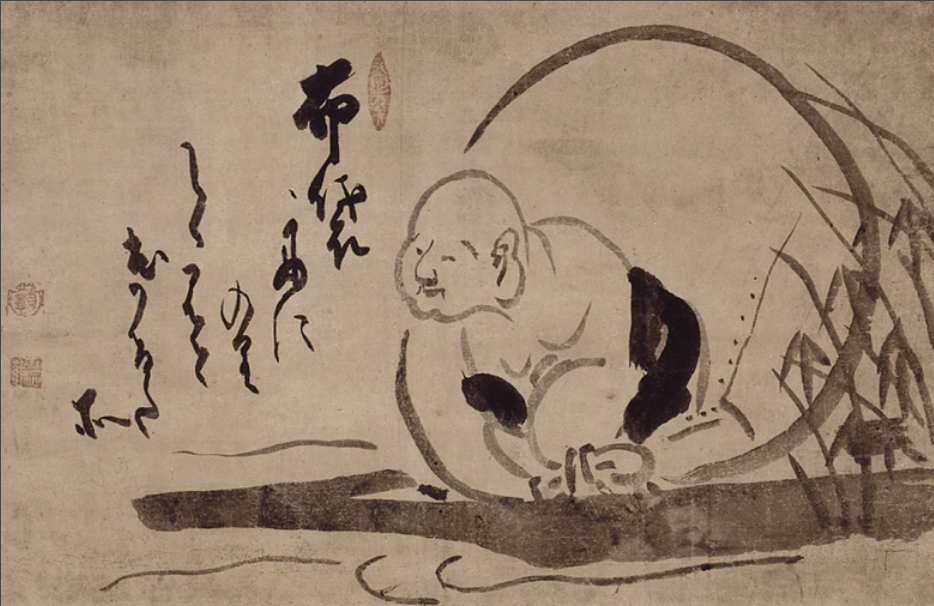
Themes of moon-viewing recur frequently within paintings associated with Hakuin and the wider Zen painting tradition. Numerous related examples survive in temple, museum, and private collections, often repeating similar compositional structures: the narrow boat, the seated Hotei figure, expanses of open paper, and inscriptions concerning reflection or awakening. Close comparison reveals recurring solutions in line construction, robe articulation, facial treatment, and spatial arrangement, suggesting the persistence of inherited visual formulae and repeated reinterpretation across multiple works associated with the theme.
Particularly revealing are certain passages within the inscription itself. As noted by a Tokyo dealer and collector familiar with Hakuin painting traditions, some sections of the calligraphy appear to preserve slight repetitions or retraced movements within the brush line, visible through small accumulations and pooling of ink where the brush seems momentarily to revisit or reinforce an earlier stroke. In highly spontaneous Zen calligraphy such hesitation is often less pronounced, and these passages may suggest a painter working carefully within an inherited model rather than moving entirely through unpremeditated execution. Such observations do not resolve attribution conclusively, but they contribute to the growing sense that paintings of this type often occupy a more complex territory between direct authorship, workshop transmission, disciplined emulation, and later reinterpretation.
Hotei in a Boat, Collection of Daichū-ji Temple (Rinzai Sect), Numazu City
The seal group corresponds closely with examples found on works traditionally associated with Hakuin’s late production, though seal relationships alone cannot securely resolve questions of authorship. The painting is therefore best approached not as a definitively autograph work, but as part of a broader Hakuin lineage of image-making in which brush method, inscription, subject, and contemplative atmosphere remained active across generations of transmission.
At the same time, the present example remains, in purely pictorial terms, an exceptionally compelling realization of the theme. The composition achieves unusual calm through restraint alone. The spacing remains measured without becoming inert; the figure retains warmth without sentimentality; the brushwork preserves vitality without display. Even if understood within the broader category of highly accomplished historical works produced after Hakuin, the painting sustains a remarkable degree of clarity, atmosphere, and formal beauty.
Indeed, it is precisely this tension between repetition and vitality that gives the work much of its fascination. The image may participate in an inherited compositional lineage, yet it continues to function with extraordinary immediacy as a painting. The monumental emptiness surrounding the boat, the supple rhythm of the robe contours, the poised stillness of the figure, and the luminous simplicity of the inscription together create one of the most persuasive and visually refined expressions of the Hotei moon-viewing theme encountered within this tradition.
Seen in this light, the painting remains a deeply affecting expression of the Zen moon-viewing motif associated with Hakuin and his circle. Its force lies not solely in documentary questions of authorship, but in the enduring power of a visual language transmitted through study, repetition, admiration, and contemplative practice across generations.
HAKUIN Ekaku 1685–1768 Hotei on a Boat
Edo Period (1615-1867 A.D.) Hanging scroll(s), ink on paper 33.5 x 52.2 cm
Zenga 禅画 1998.56 Gitter-Yelen Collection
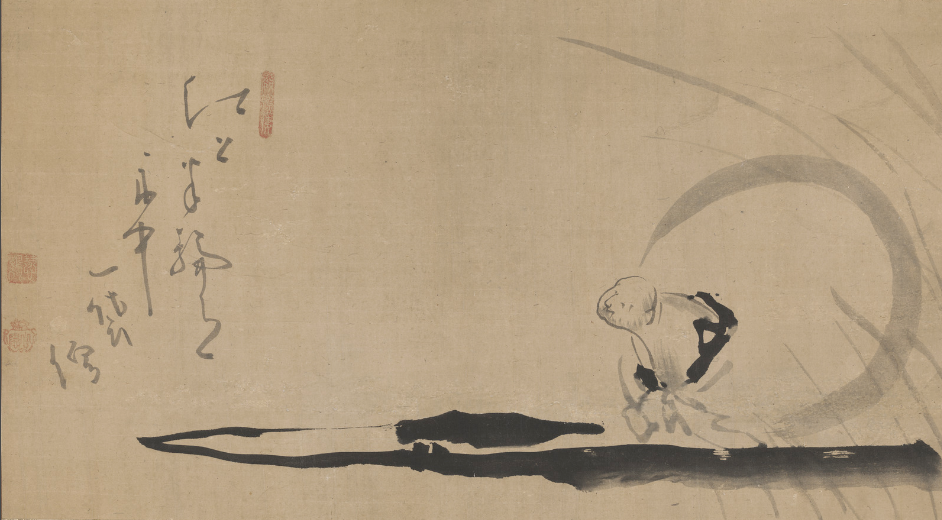
Hotei in a Boat now in the collection of Yale University Art Gallery, 2006.131.1a-b.