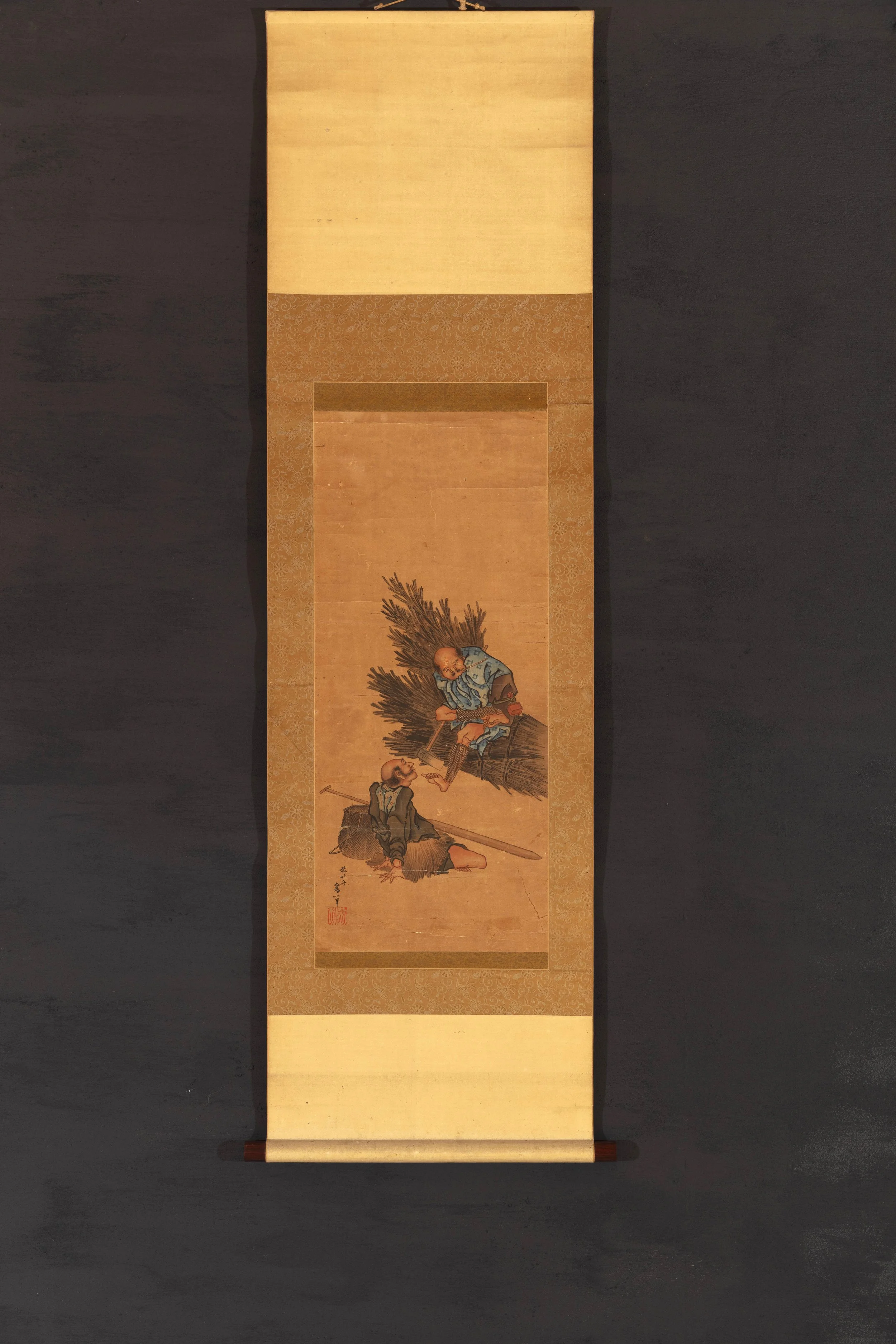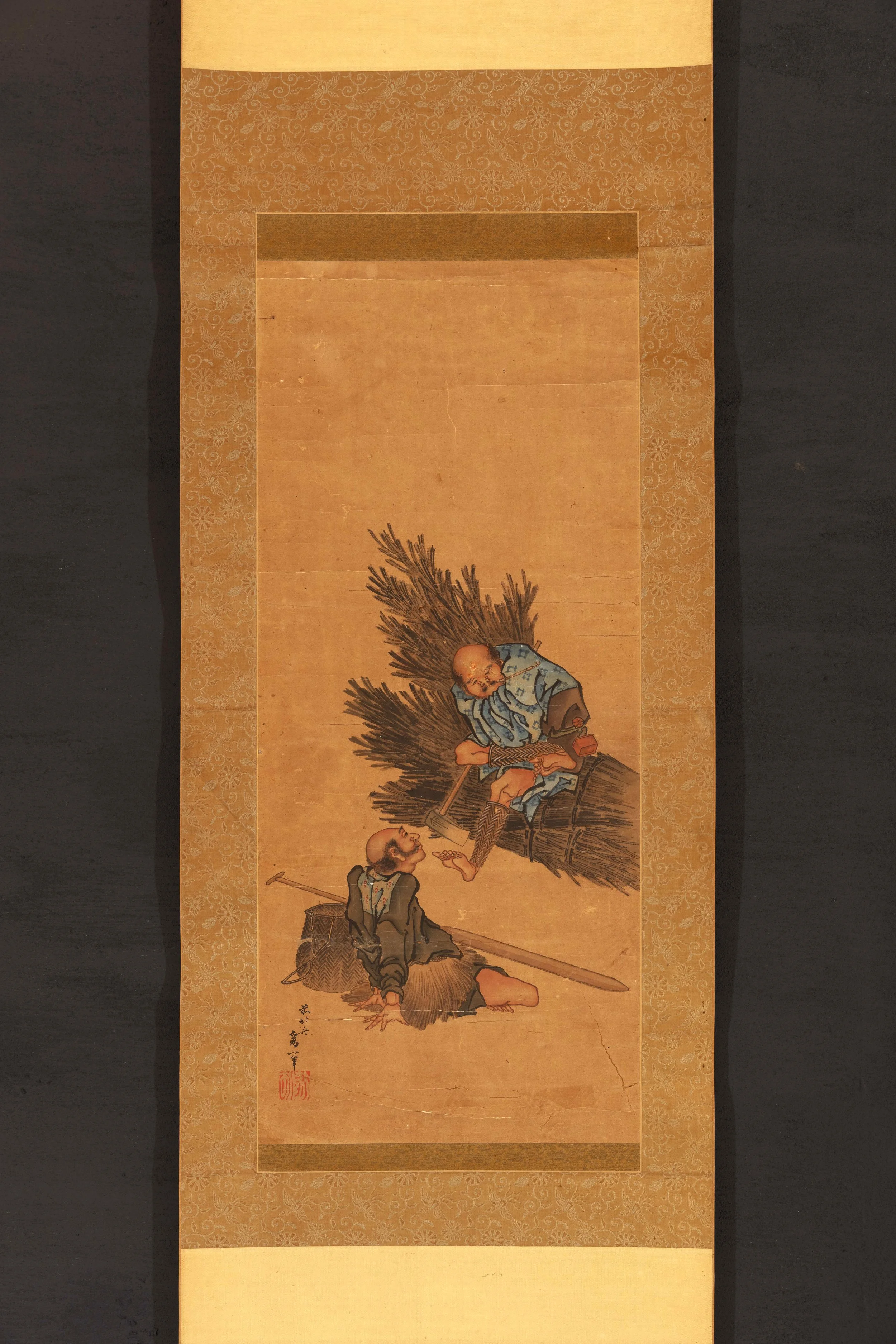
After Katsushika Hokusai (1760–1849)
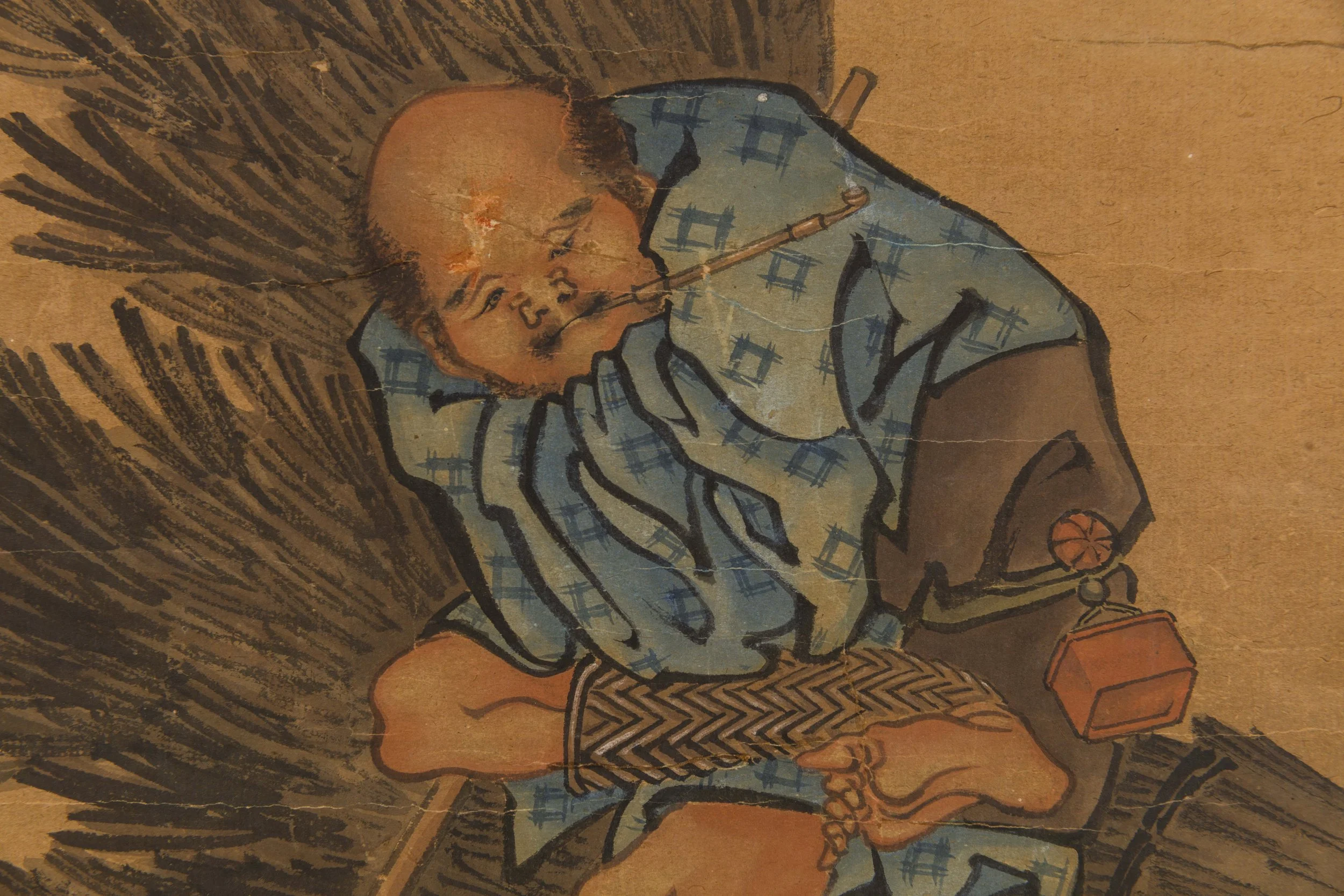
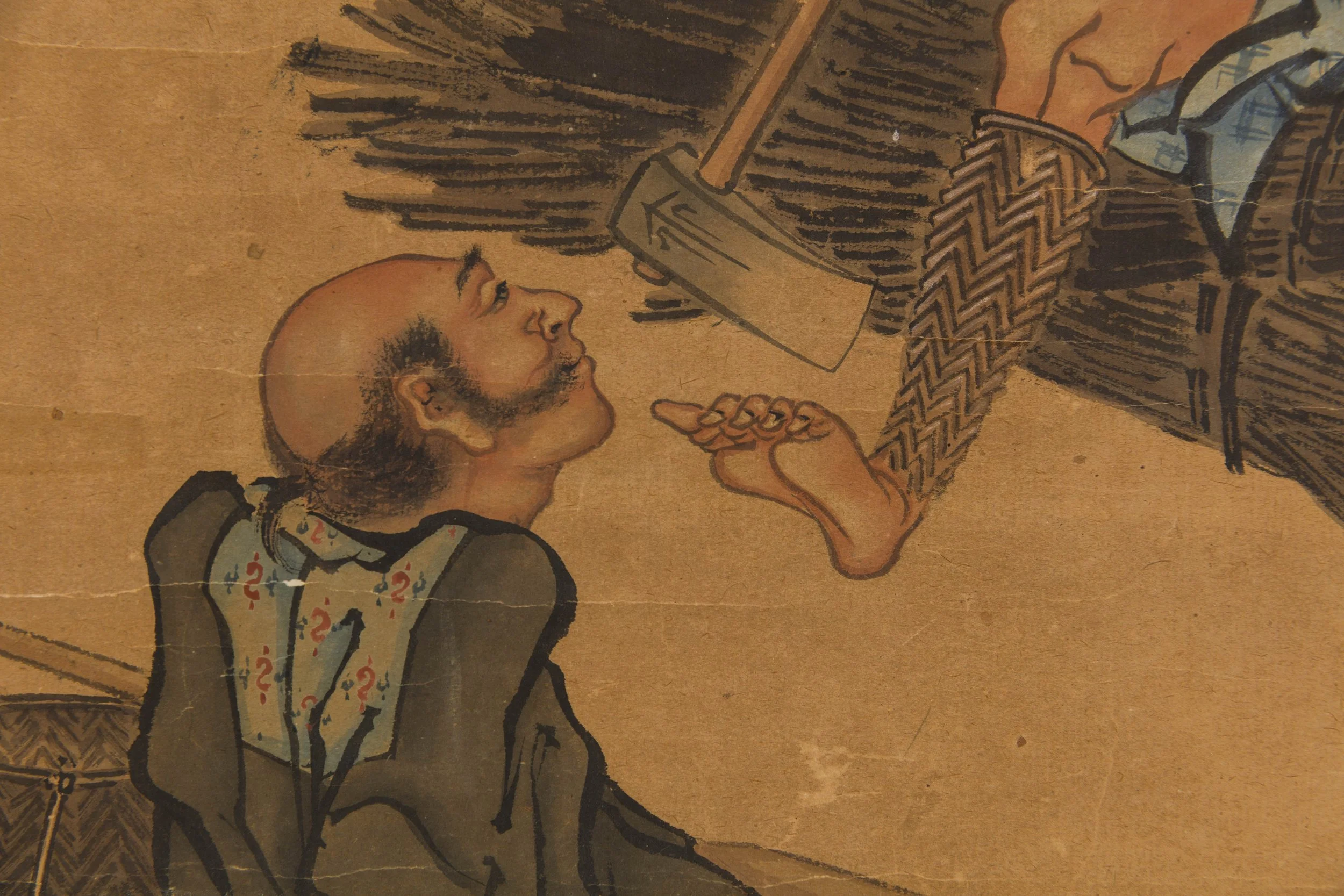
Fisherman and Woodcutter
Ink and colour on paper, Edo period, 19th century
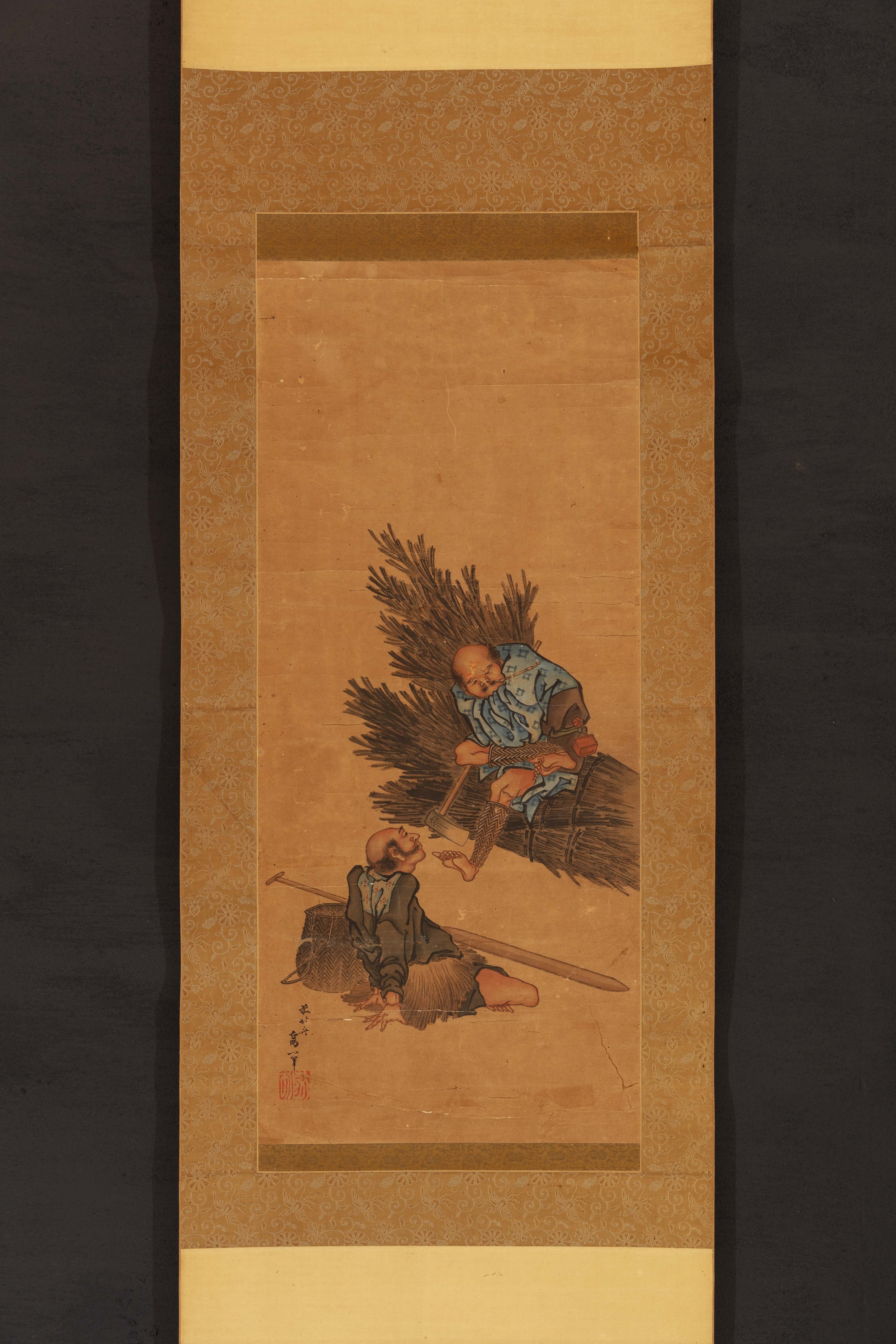
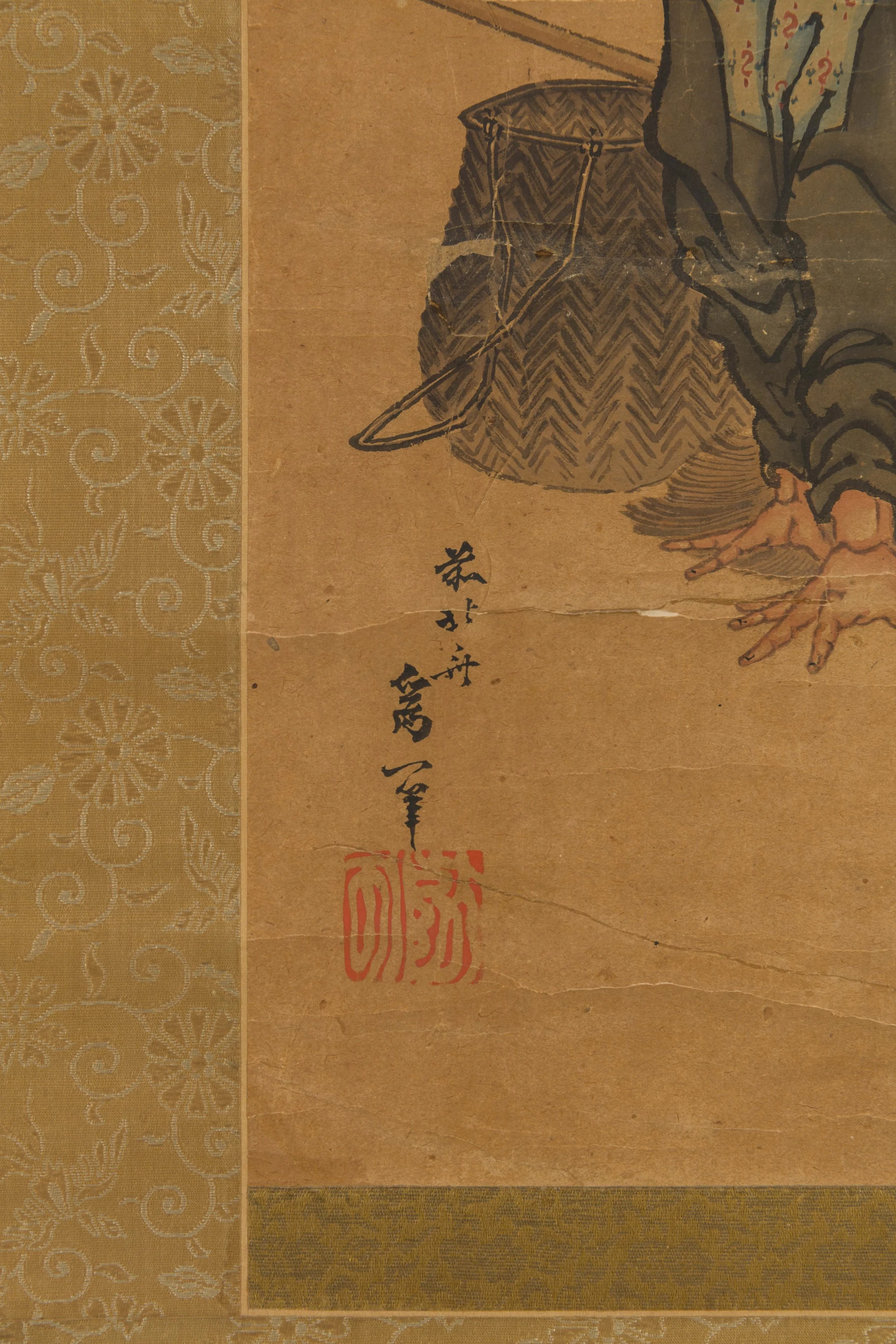
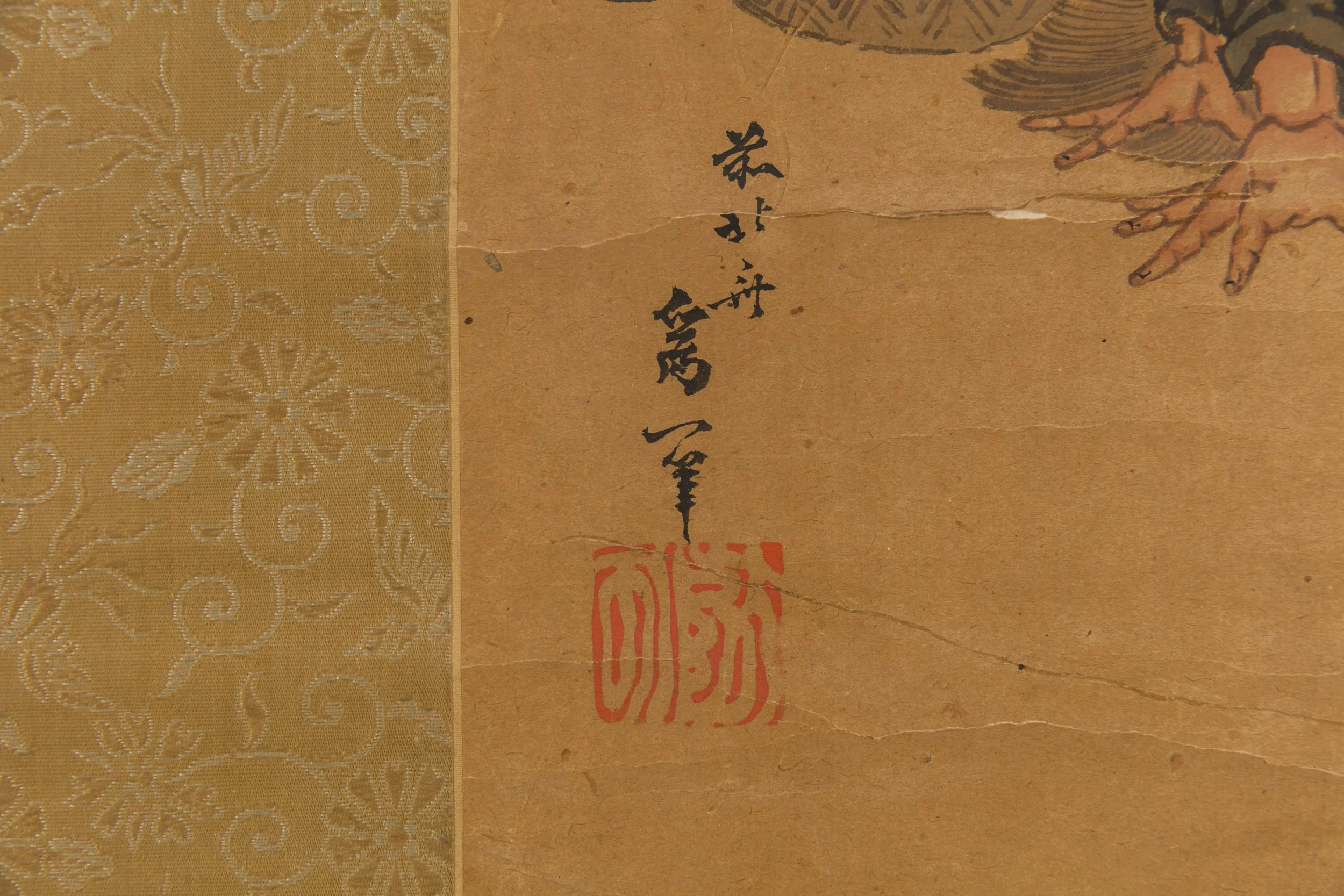
This unsigned work reimagines a brief vignette from the Hokusai Manga, developing the fisherman and woodcutter into a finished composition. It is neither an autograph work nor a literal copy, but an Edo-period interpretation made within Hokusai’s pictorial tradition.
The painter adopts familiar Hokusai conventions: compact figure groups, economical contour, subdued colour, and a strong balance between incident and empty space. Such interpretive following—often described as hōsaku—allowed artists to work through a master’s visual language without reproducing a single established model.
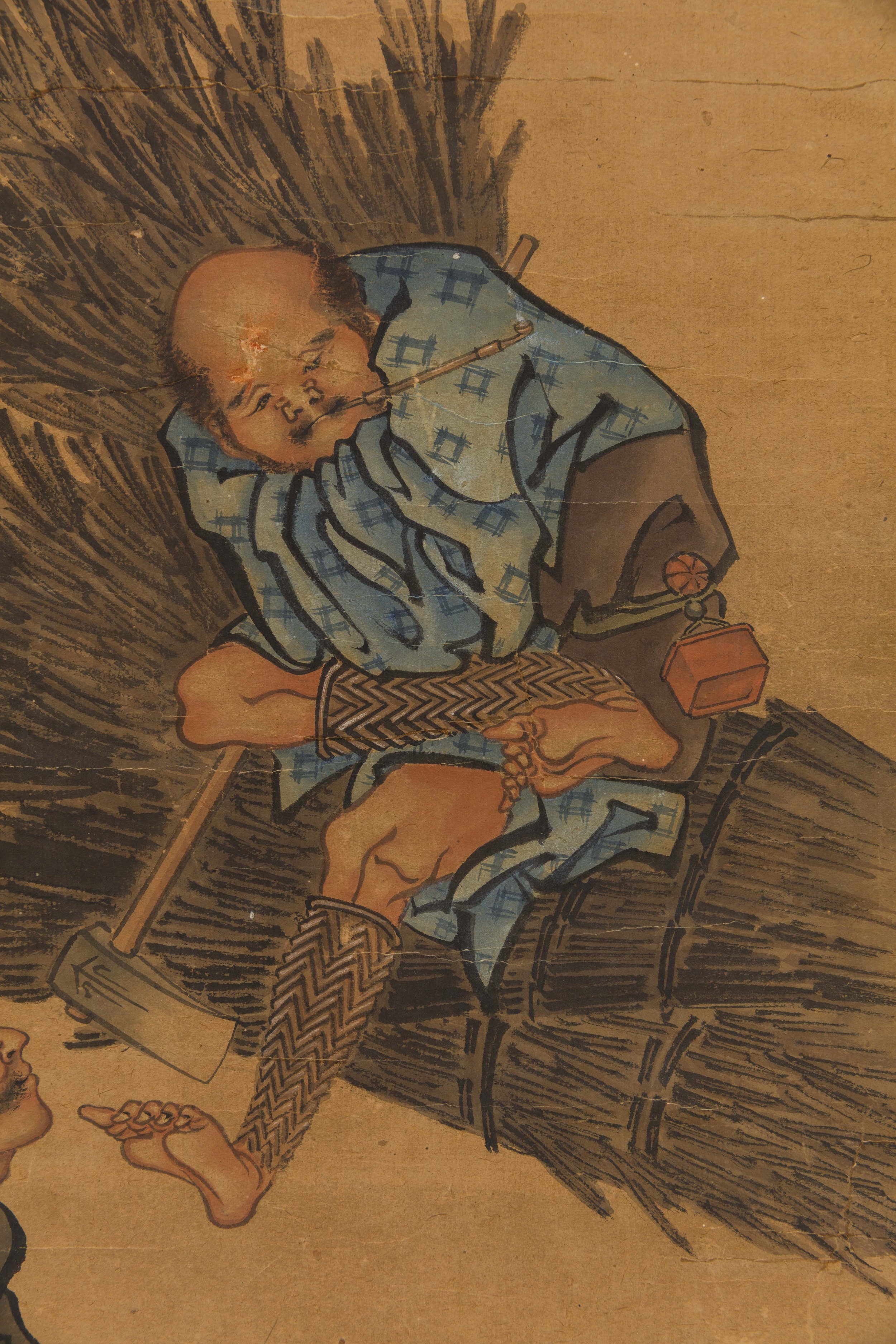
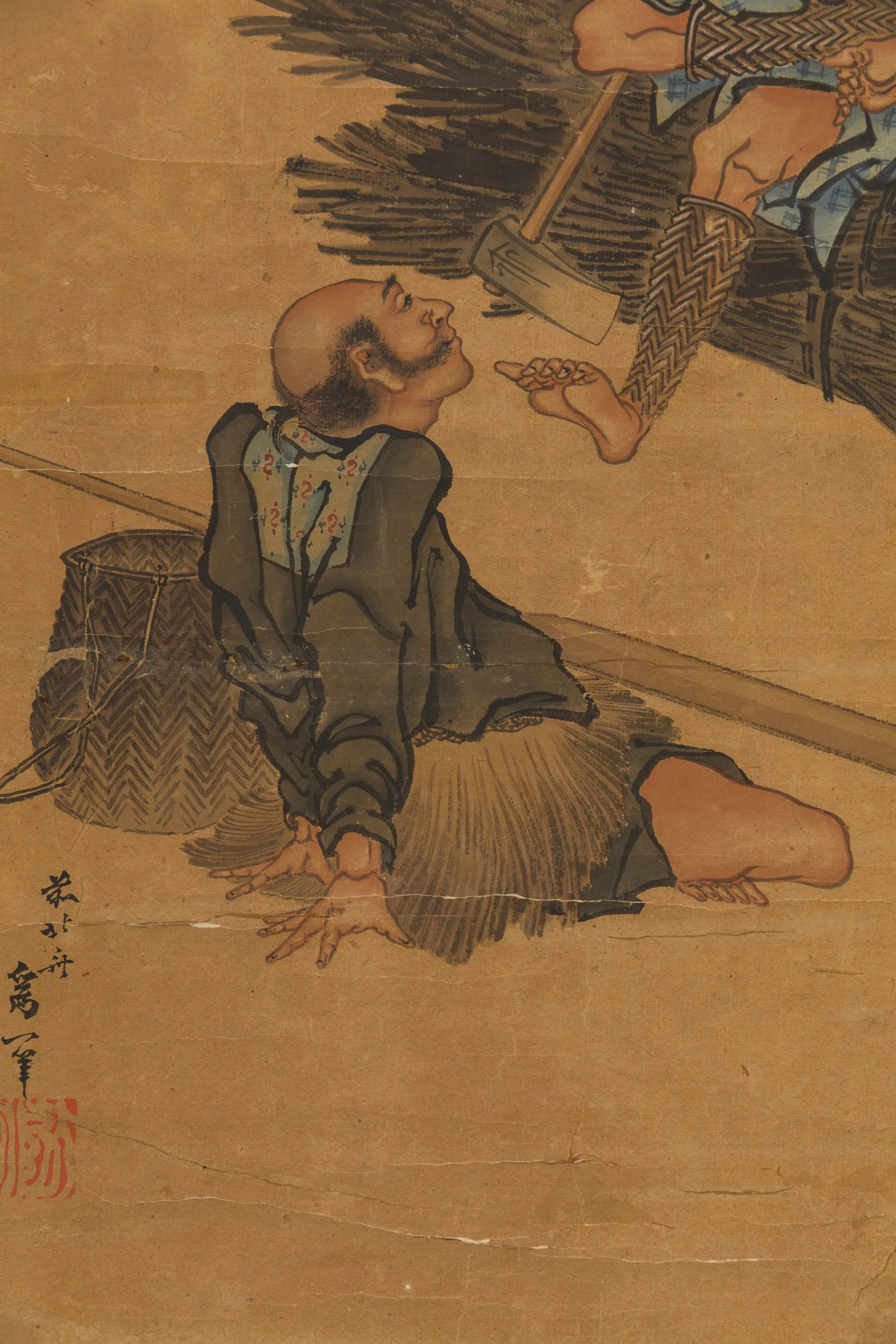
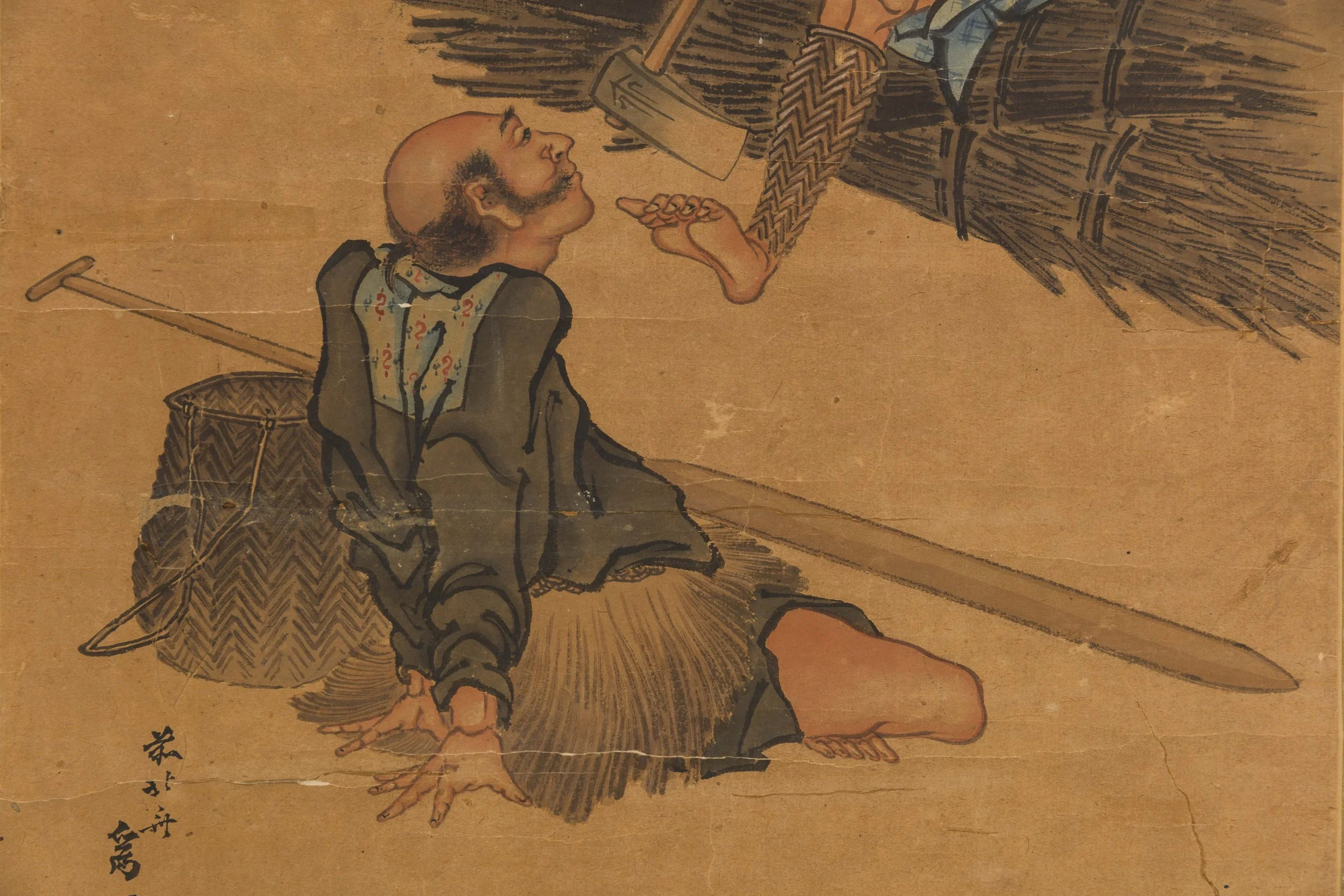
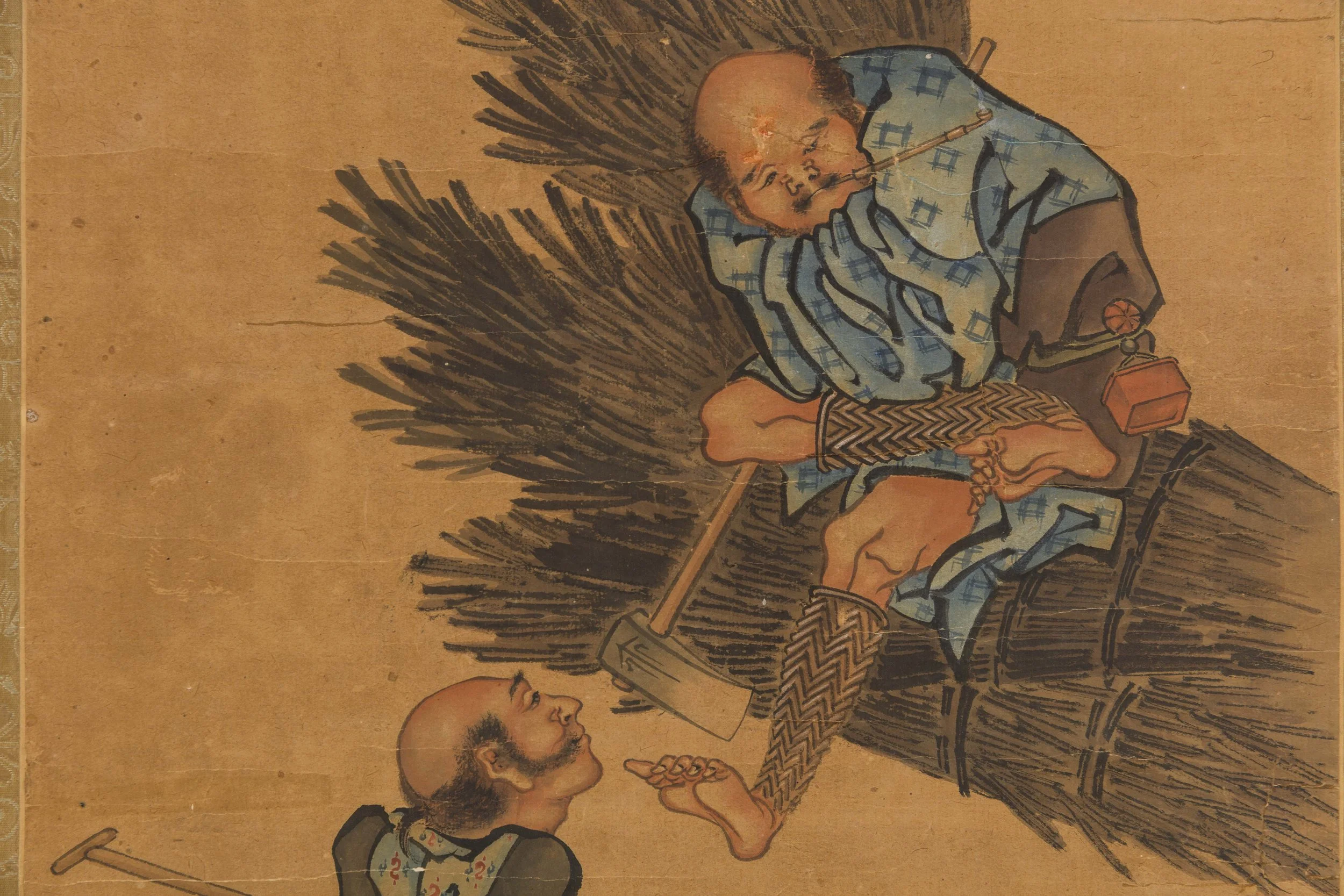
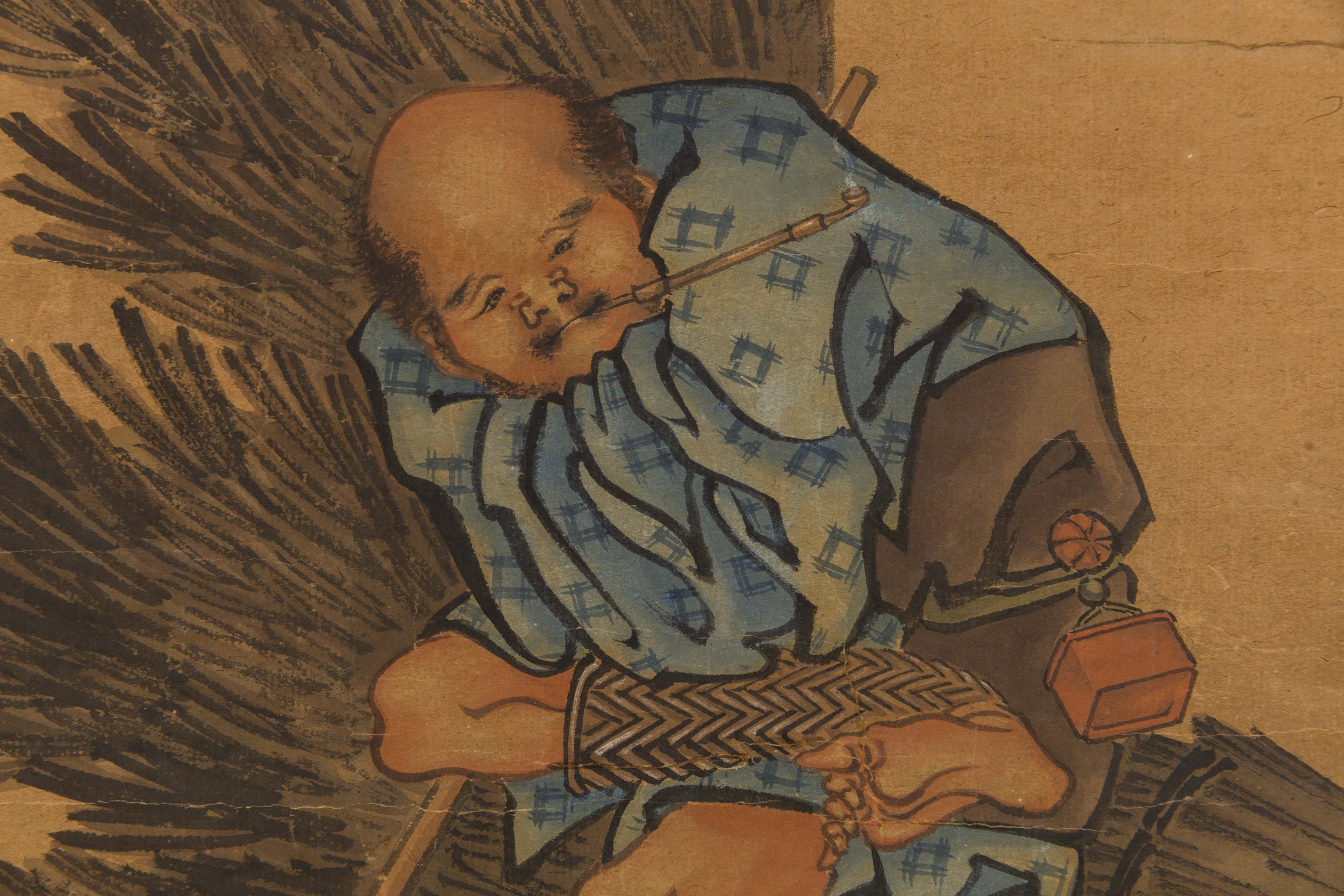
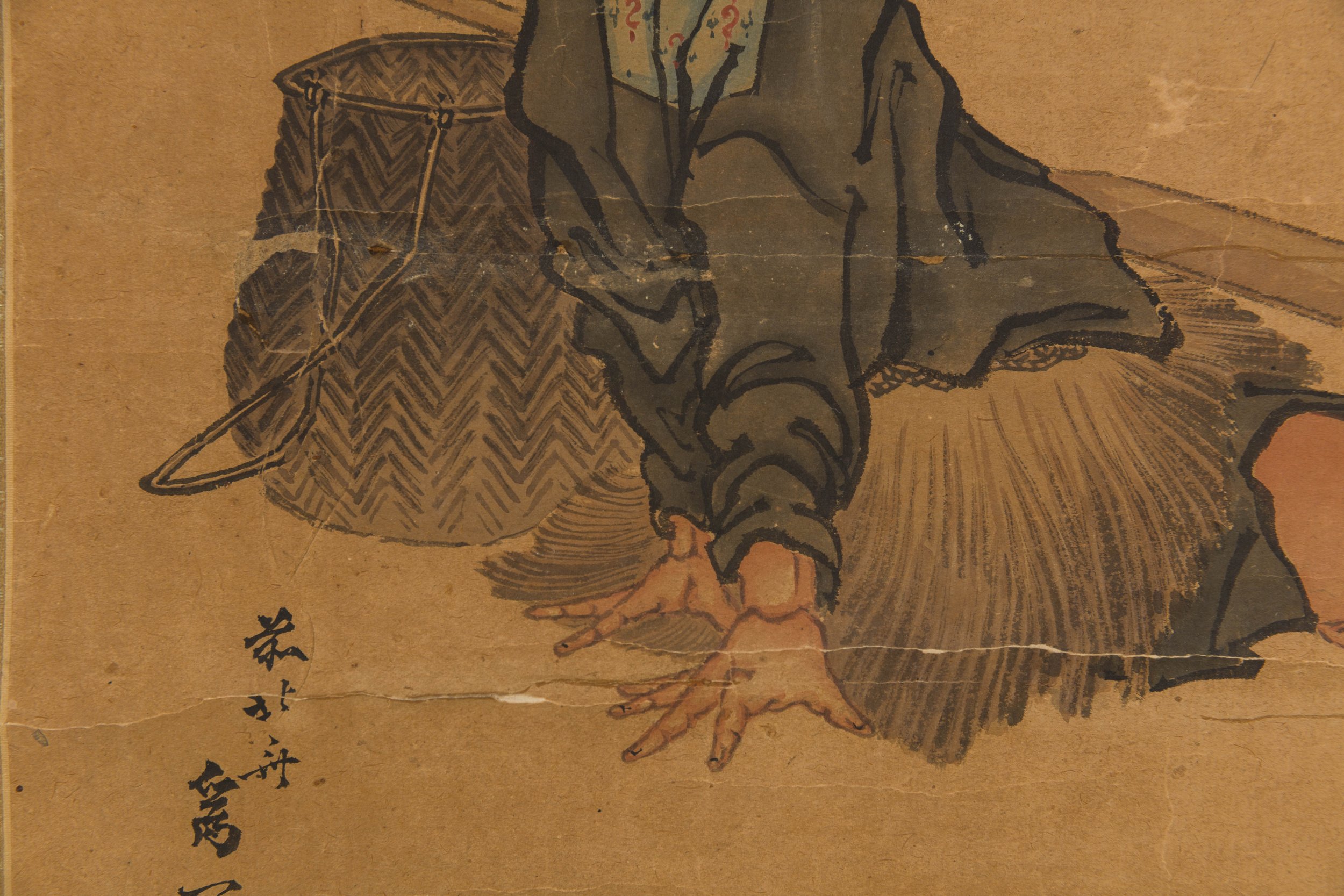
The woodcutter sits on his bundle of brushwood while the fisherman rests beside his oar and basket. Their pairing, common in East Asian art, joins mountain and water, endurance and adaptability. Here the exchange is informal and lightly humorous rather than didactic.
The figures are handled with warmth and restraint. The brushwork is economical, the colour quiet, and the expressions understated. The artist aims for plausibility rather than exaggerated imitation, preserving the observational character associated with Hokusai’s drawings.
The work is best understood as a thoughtful response to Hokusai’s legacy: an unknown painter expanding a familiar sketchbook subject into a complete hanging-scroll composition. Its interest lies precisely at the boundary between copying, interpretation and invention.
Seen within a collection, it is a useful example of how celebrated designs circulated and were reformulated during the Edo period. Influence here is not linear authorship but a process of study and imaginative reuse.