Anonymous Court Studio (Tosa-influenced school)
Okina Performance at the Residence of a Cloistered Emperor
Japan, Edo period, late 17th–early 18th century (c. 1680–1720)
Ink, colour, and gold on paper; later mounted as a hanging scroll
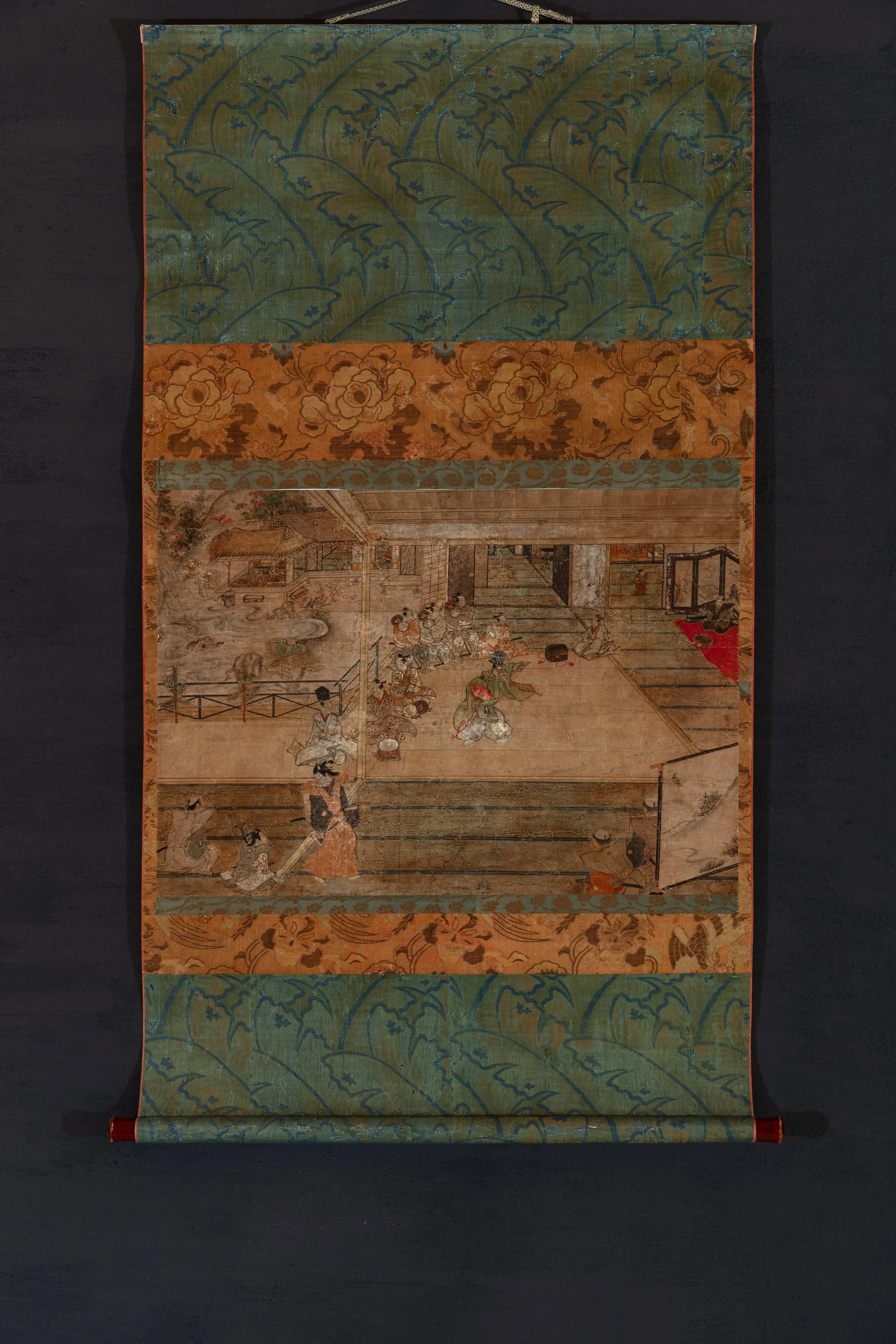
Overall: approx. 118 × 65 cm
Image area: approx. 43 × 61.5 cm
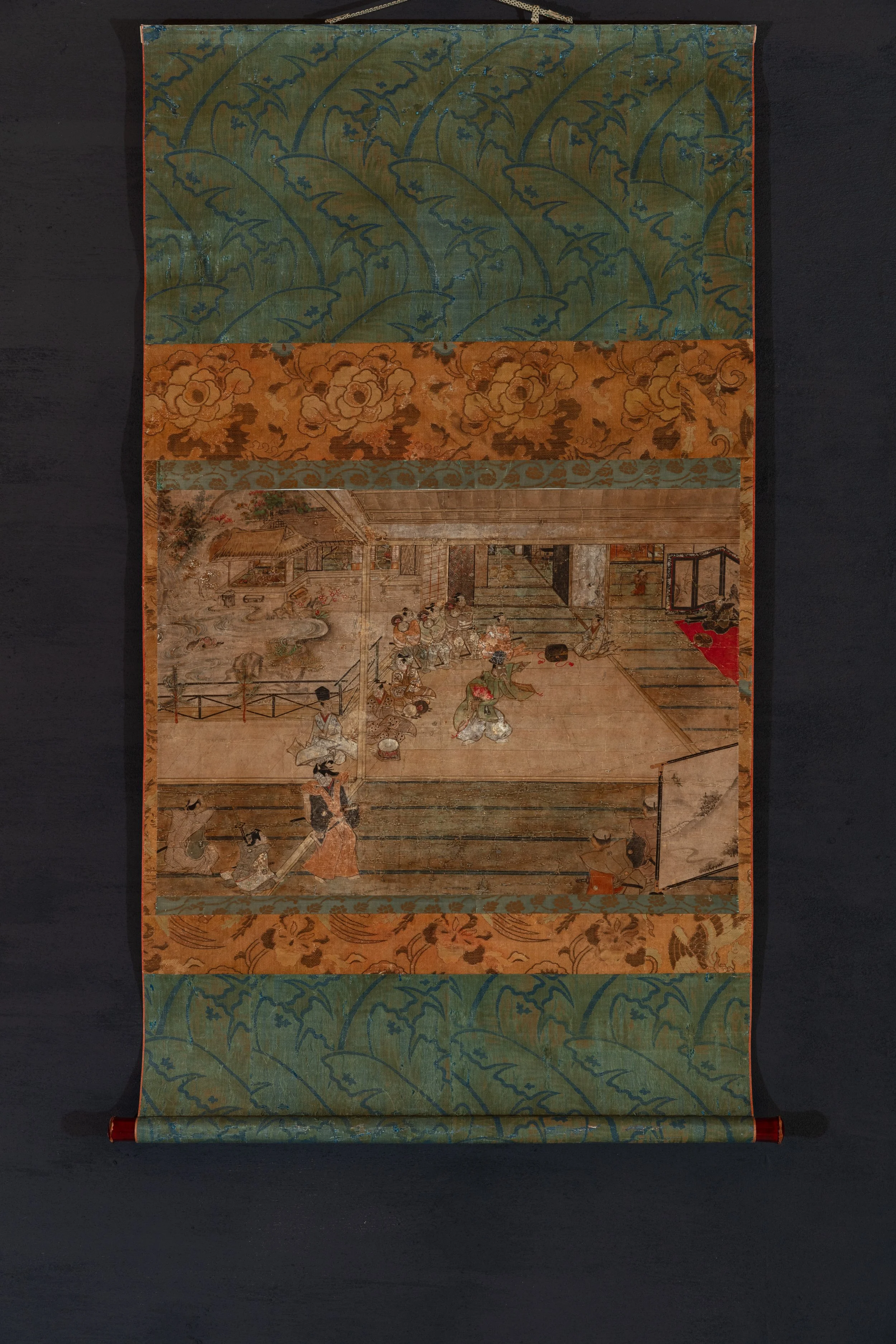
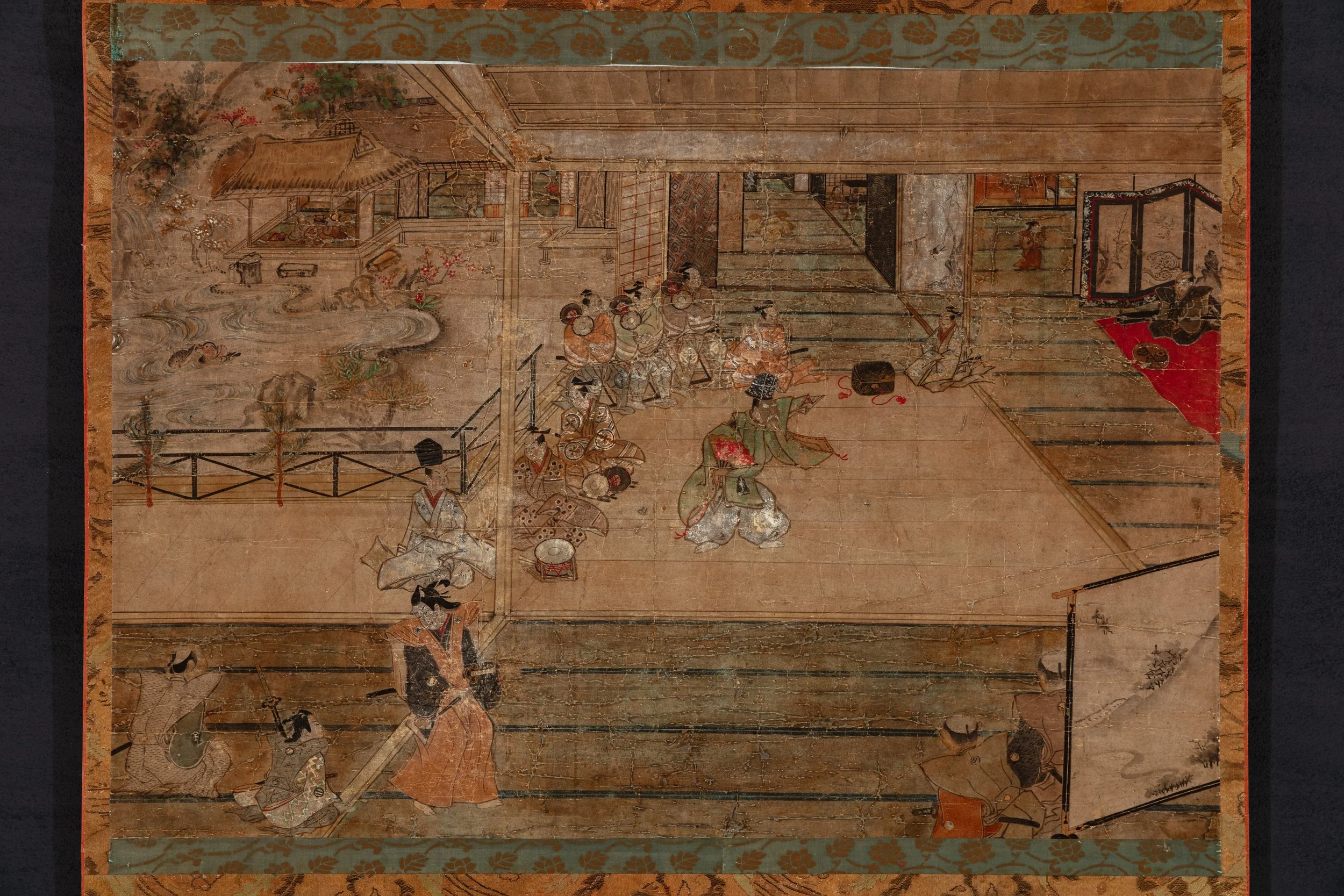
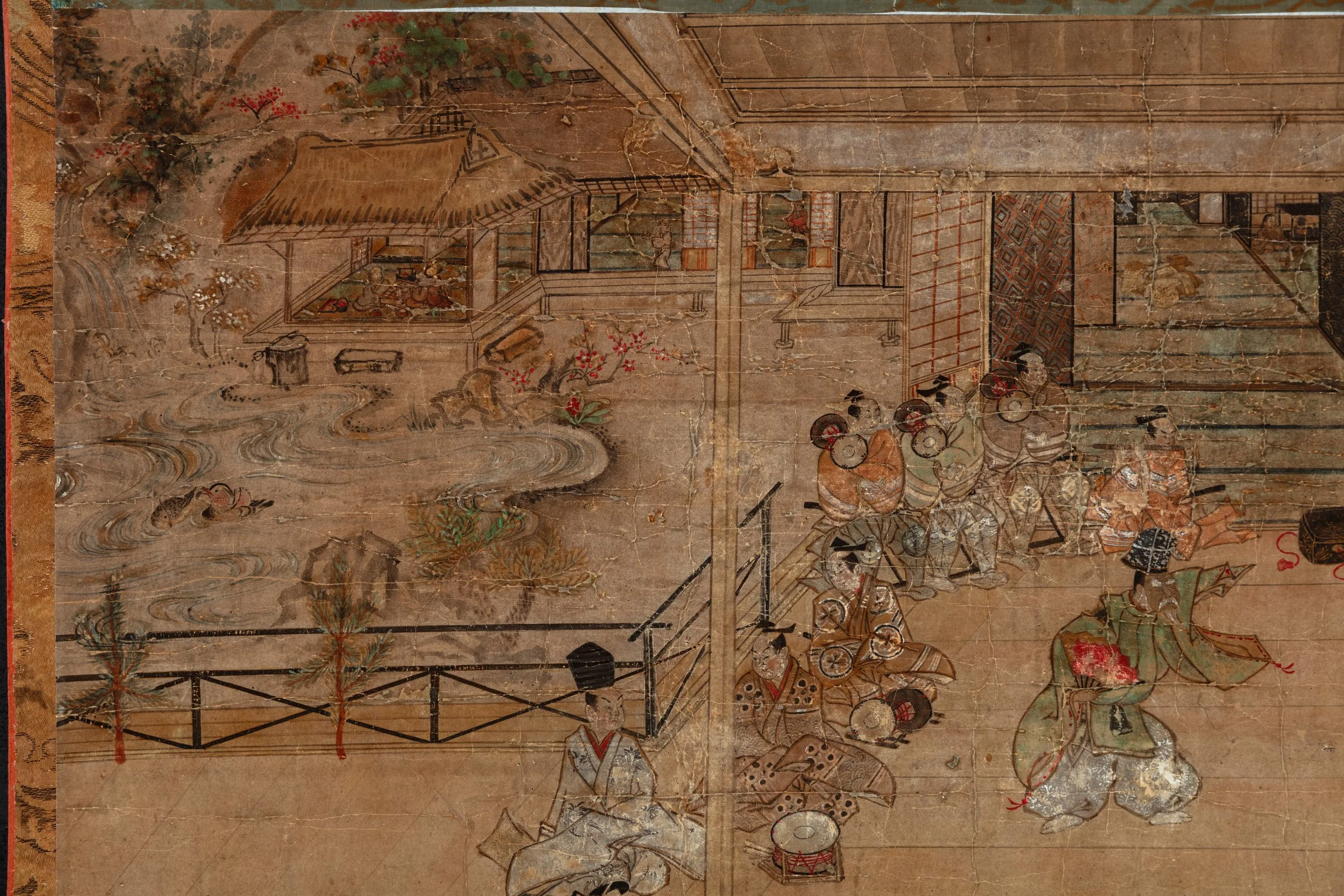
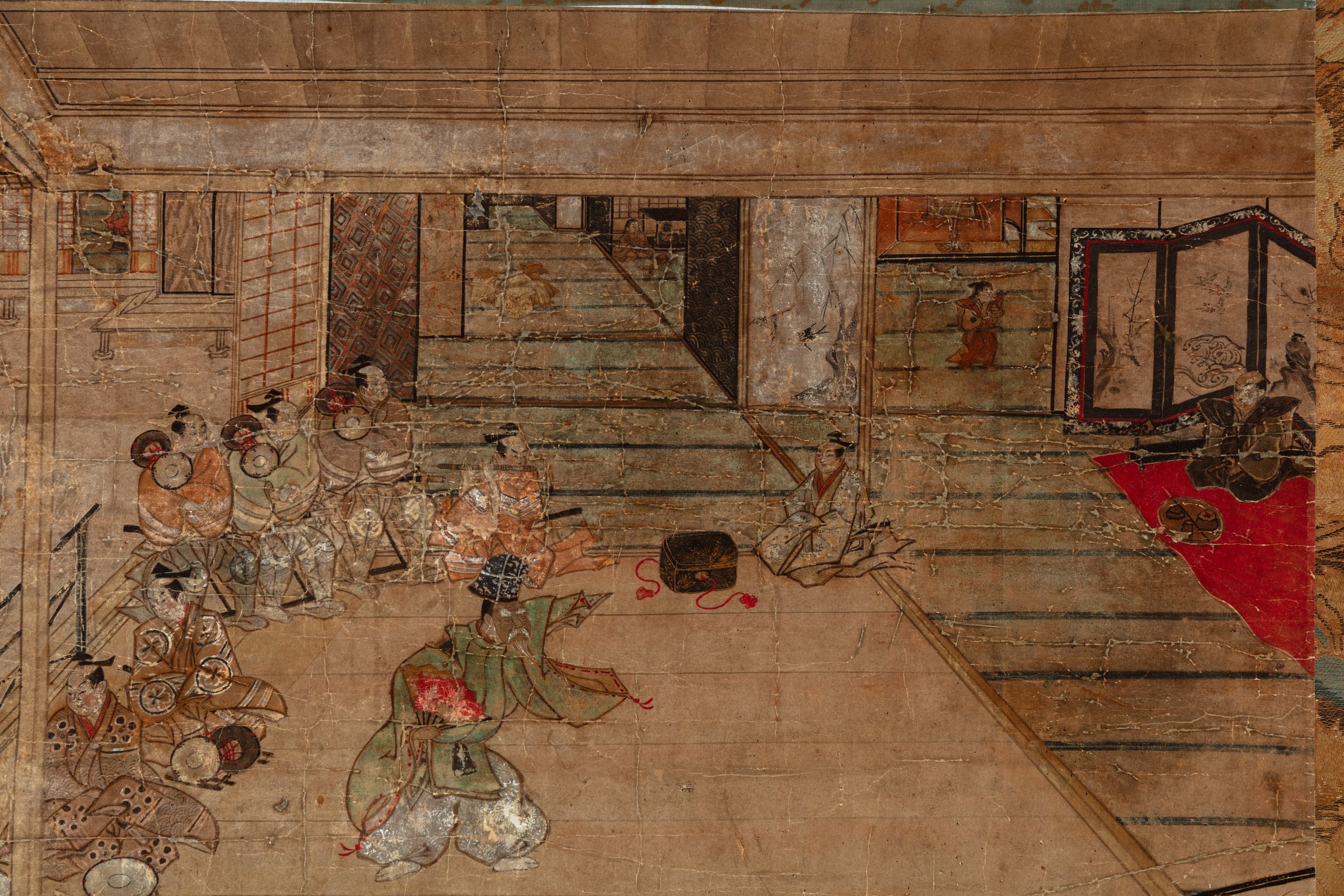
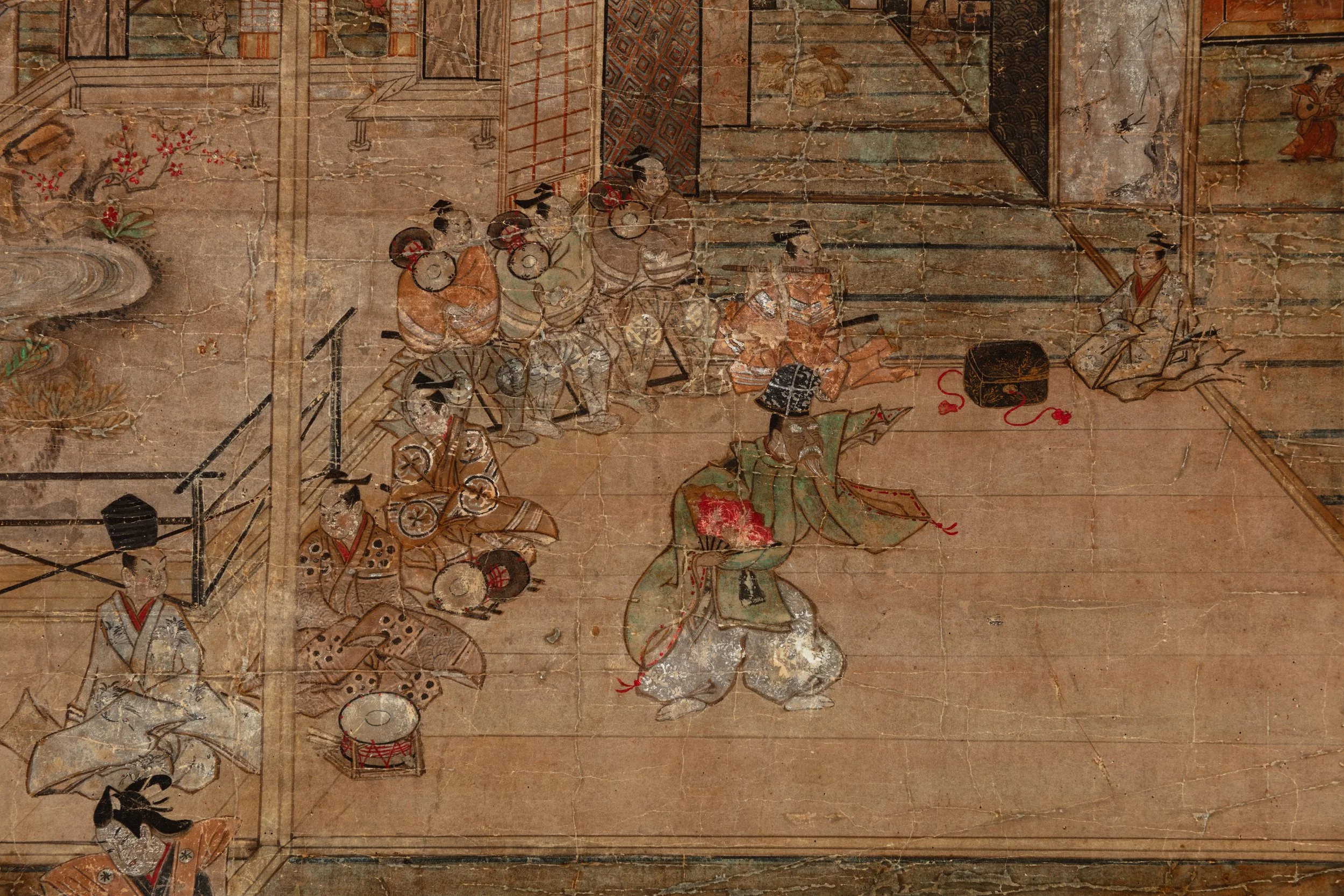
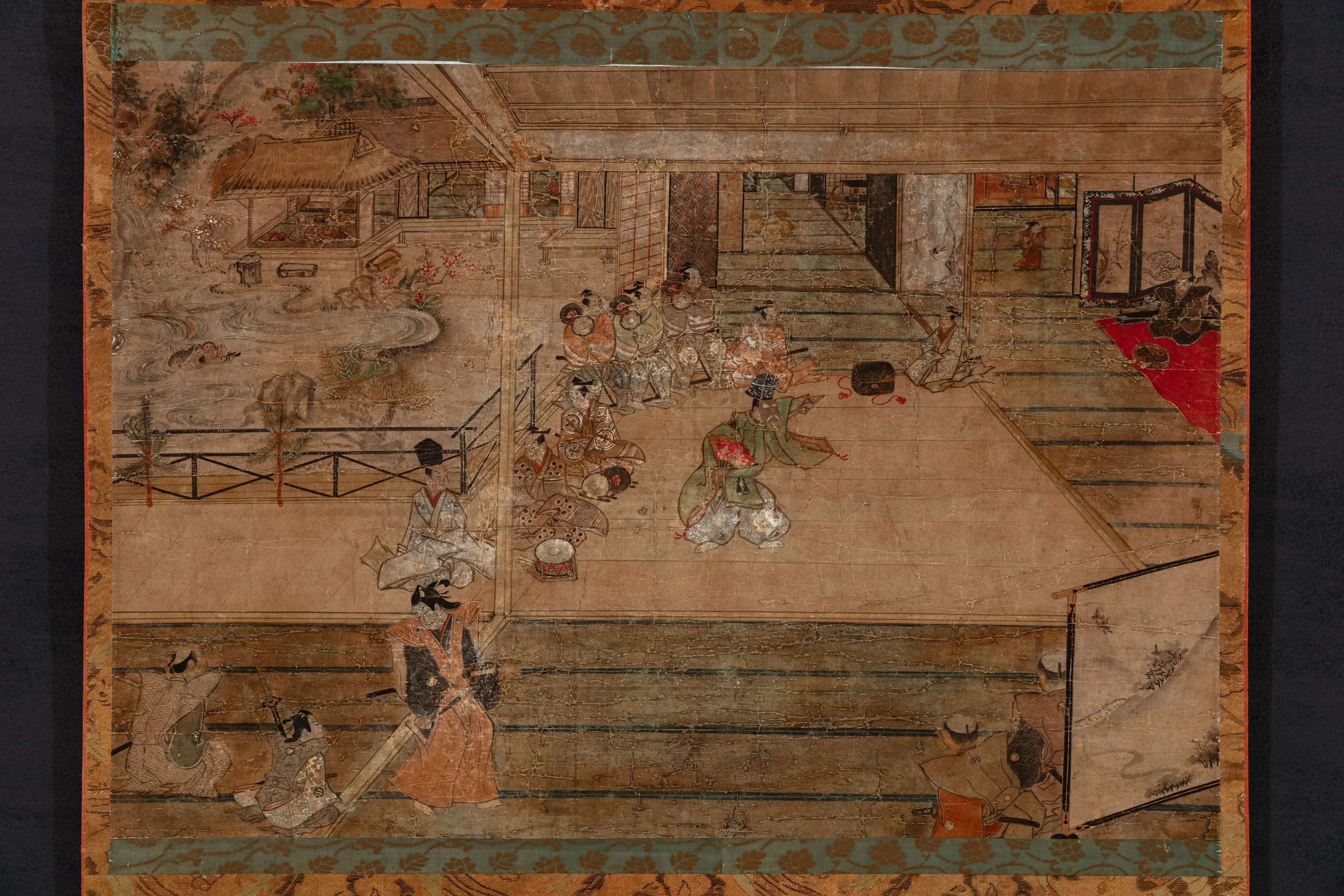
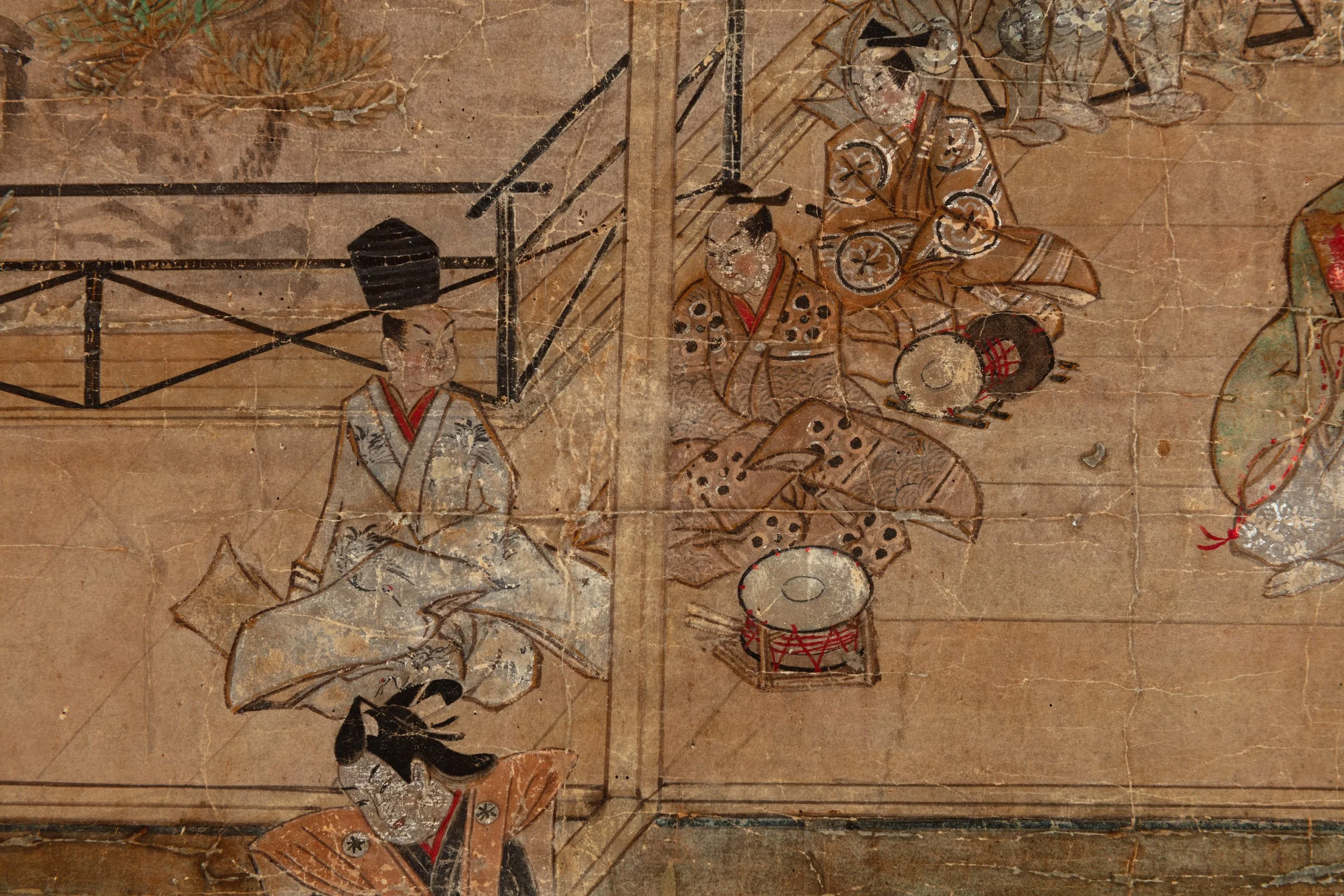
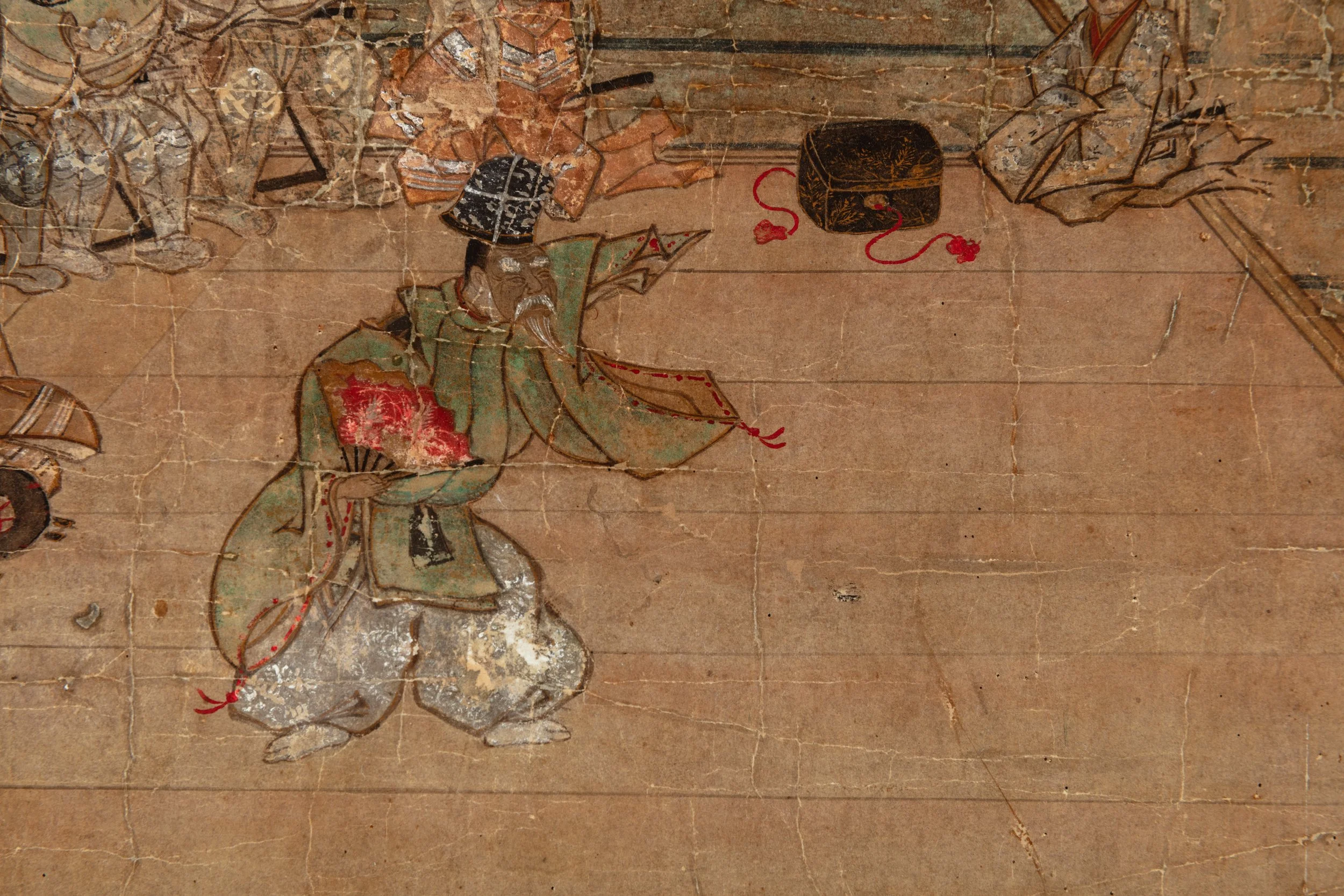
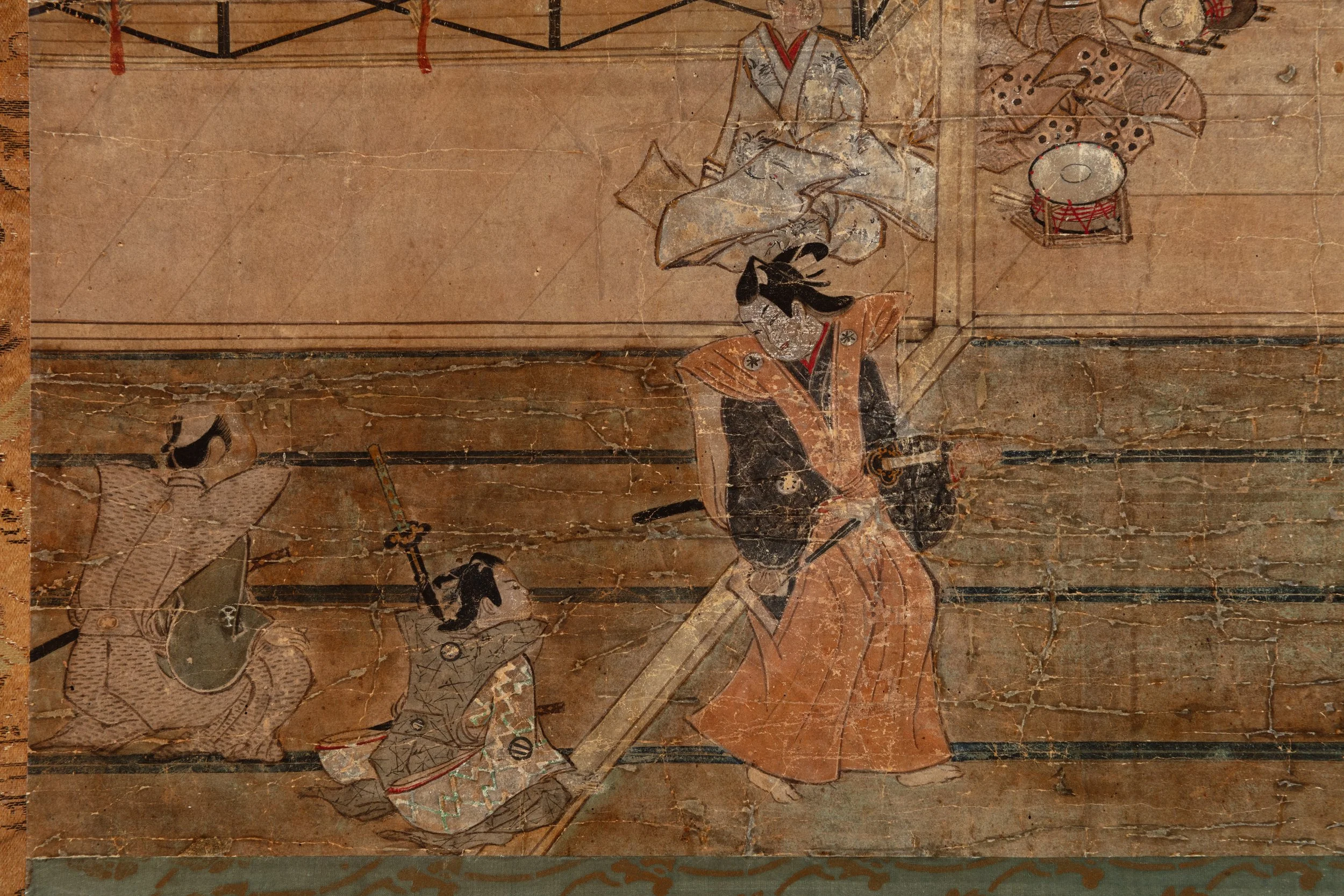
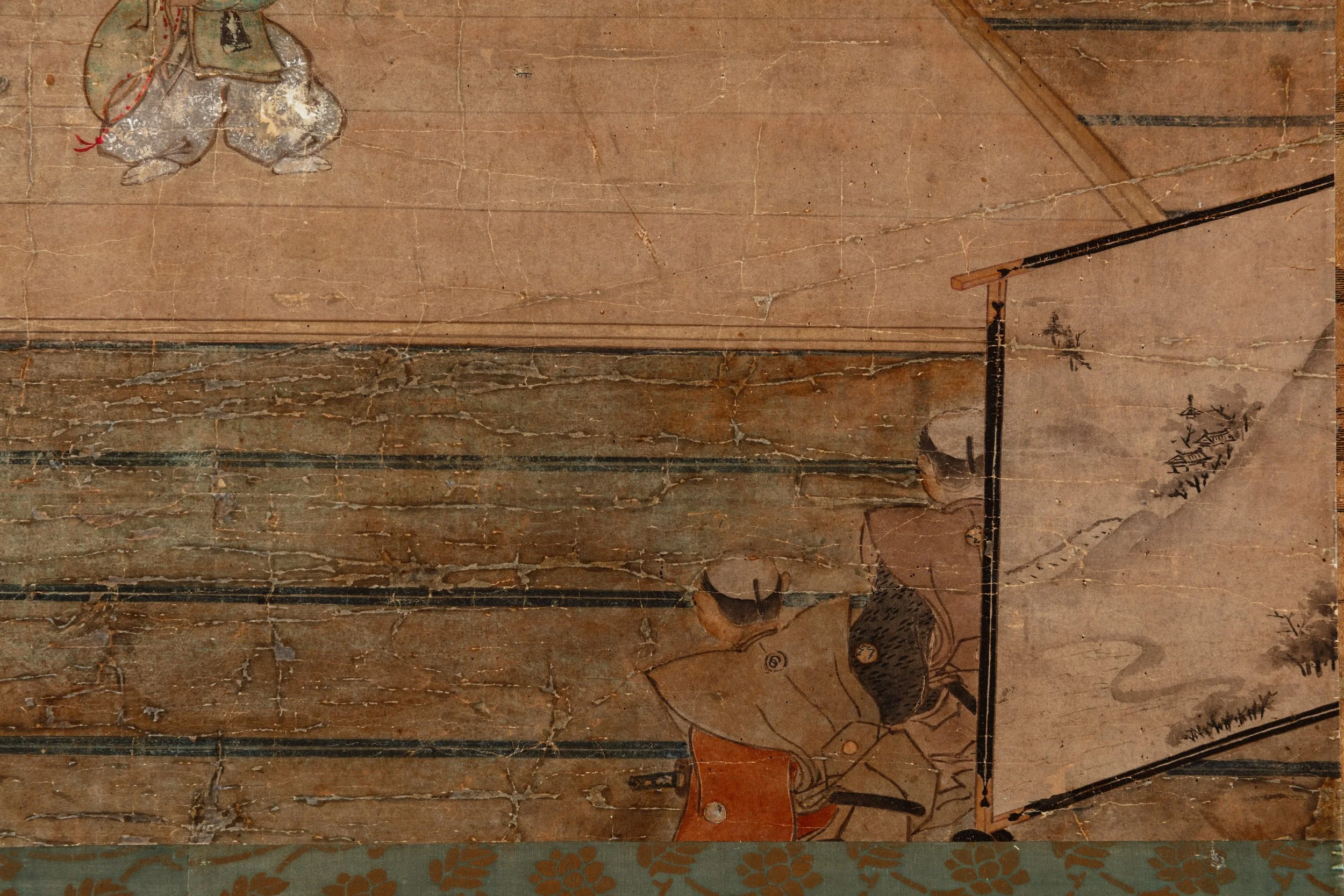
This painting depicts a formal performance of Okina, the most ancient and ritually charged ceremonial prelude within the Nō tradition, presented here in an aristocratic or imperial-adjacent architectural setting. Rather than a dramatic play, Okina functions as an invocation, performed on auspicious occasions to affirm longevity, fertility, and harmonious order. The central figure—the shite wearing the venerable old-man mask—stands upon an elevated veranda, fan raised in a moment of blessing. Behind him sit the hayashi ensemble, while courtiers, attendants, and pages observe from layered architectural thresholds. The emphasis is not theatrical display but ritual presence: a carefully staged act of renewal offered before the world of drama properly begins.
The composition adheres closely to established Tosa-school narrative conventions. Architecture is rendered with linear precision, floorboards receding in measured parallel, interior rooms unfolding through partially opened sliding doors. Figures are small, carefully scaled, and hierarchically arranged. Facial features are reduced to essential marks—eyes as slits, mouths barely tinted—yet posture and costume convey rank with clarity. This restraint, paired with fine gold detailing in garments and interiors, situates the work firmly within court-oriented Kyoto painting traditions rather than popular or provincial genres.
Iconographically, the choice of Okina is decisive. The old man figure represents longevity, cosmic harmony, and the renewal of order at the turning of the year. His presence is traditionally reserved for auspicious occasions—New Year observances, imperial rites, or high-ranking household ceremonies. The surrounding imagery reinforces this function: early spring blossoms at the garden’s edge, ducks gliding across a pond rendered in calligraphic currents, and a small thatched pavilion suggesting cultivated leisure. These are not incidental details but visual cues of renewal, balance, and continuity.
The painting’s stylistic language supports a dating in the late 17th to early 18th century, aligning with the Genroku era’s flourishing of private Nō performances among Kyoto aristocratic circles. The handling of architectural perspective, the form of the costumes—particularly the layered robes and silver-toned hakama of the shite—and the controlled use of gold all correspond to this period. While unsigned, the work displays a consistency and assurance characteristic of a well-trained Tosa atelier rather than later revivalist or purely decorative production.
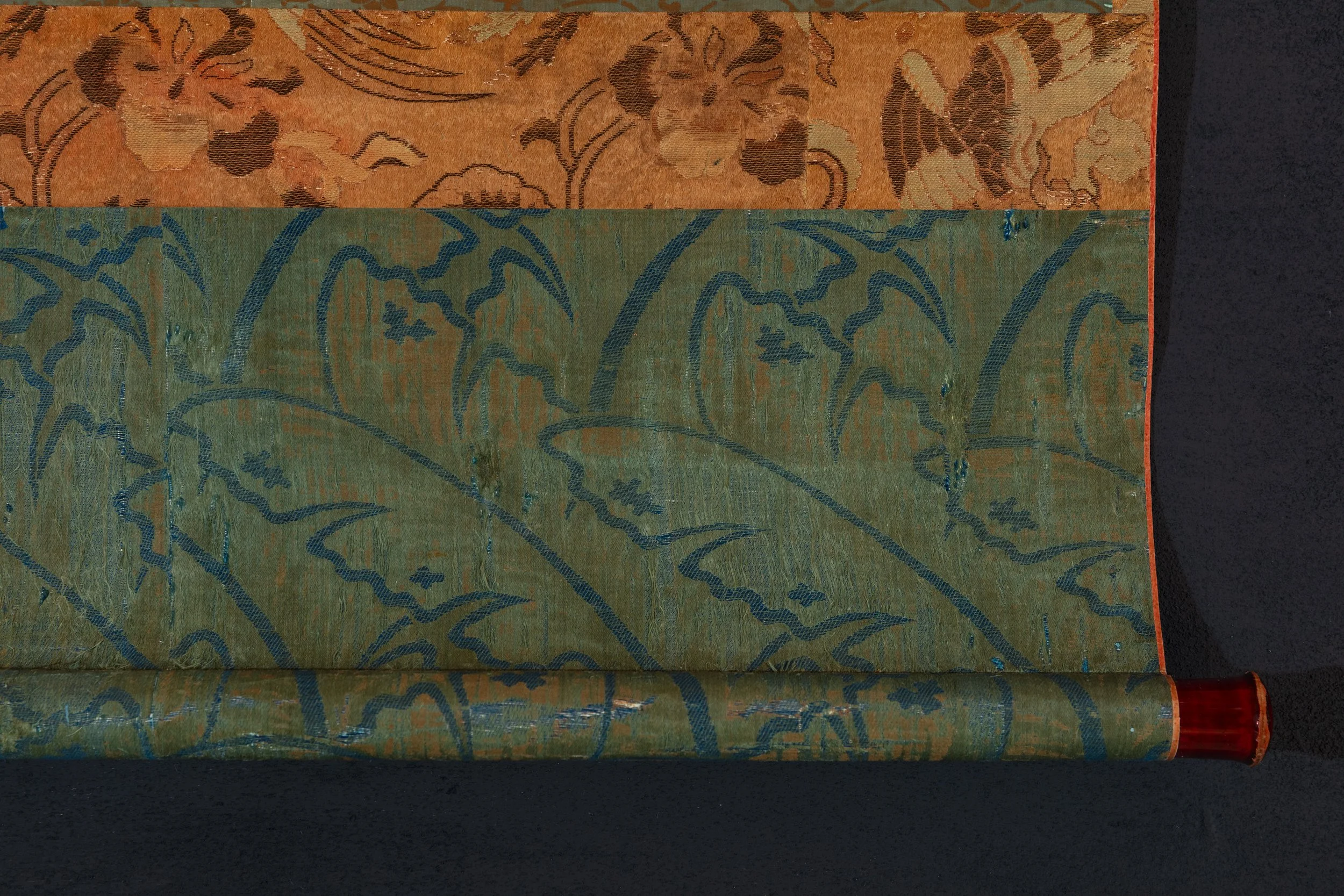
The current mounting tells a complementary story. The green seigaiha brocade and central gold floral band are of later manufacture, likely mid-19th century, suggesting a careful remount undertaken to preserve an already-aged painting. The lacquered roller ends, with their worn crimson underlayer, further support a late Edo to early Meiji intervention. This separation between painted surface and mounting is typical of valued household scrolls that remained in use across generations, receiving conservation attention as tastes and materials evolved.
Taken together, this scroll should be understood as an authentic Edo-period courtly painting, most plausibly produced by a Kyoto-based Tosa-school workshop between circa 1680 and 1720, and later remounted for continued ceremonial or contemplative display. Its creases, pigment loss, and patina do not diminish its authority; rather, they record a lived history of viewing, handling, and preservation. As an image of Okina, the work embodies its subject’s core message: that harmony is not static perfection, but something renewed through ritual, attention, and time.