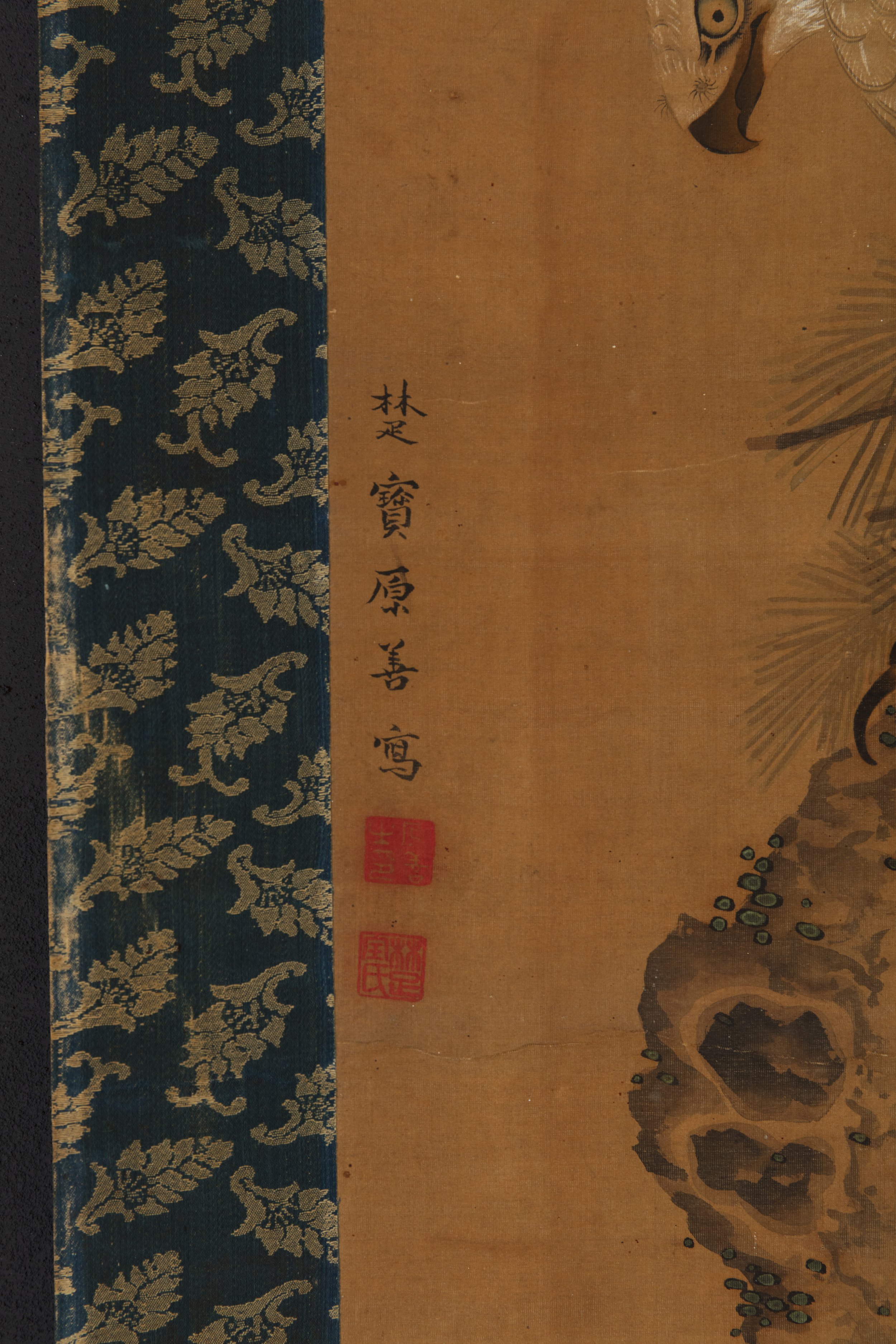
Sasaki Harazen (1750?–1795?)
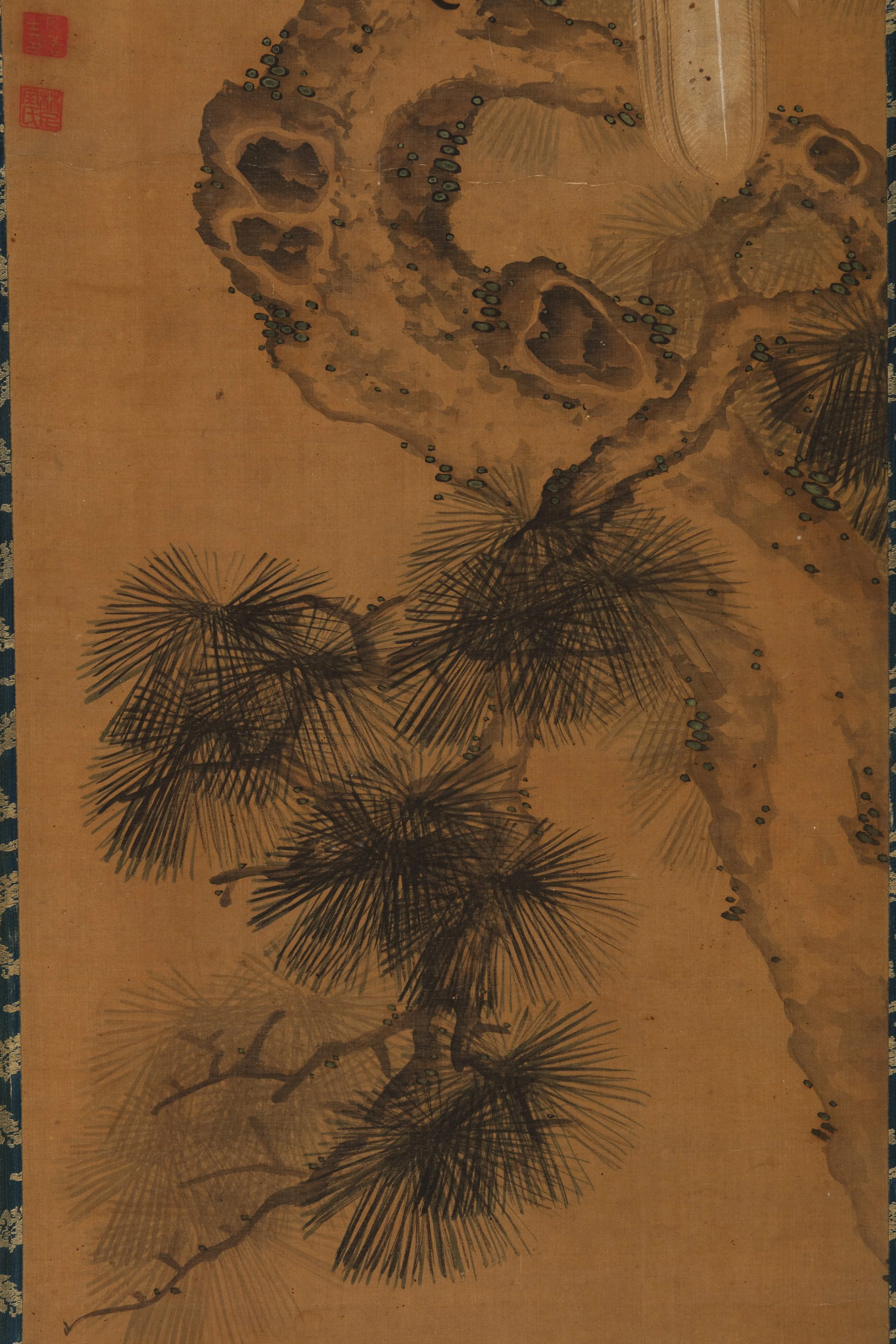
White Eagle Perched on a Pine Branch
Japan, Edo period, 1790s
Ink and colour on silk; hanging scroll
Overall: 178 × 42.5 cm | Image: 39 × 30 cm
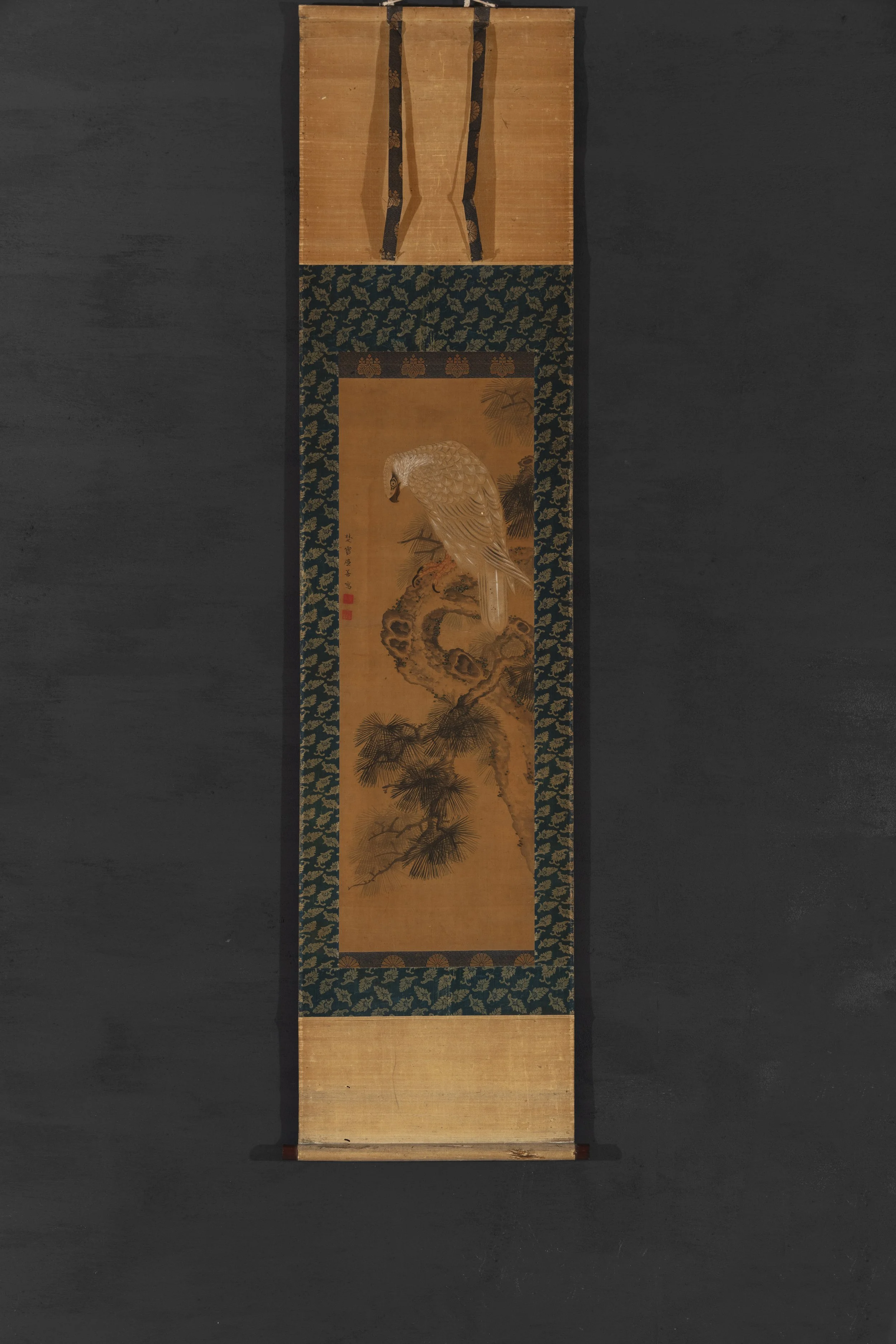
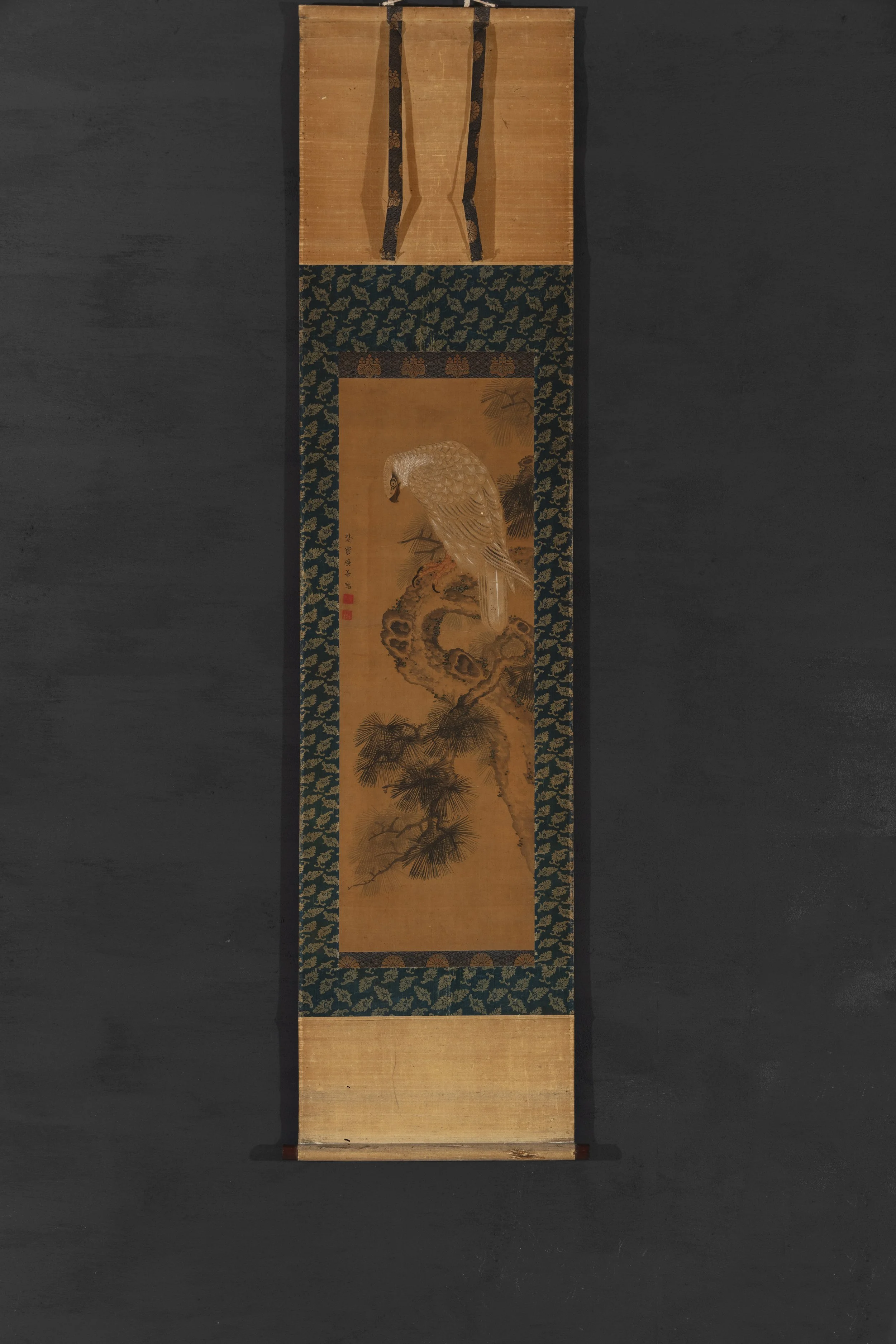
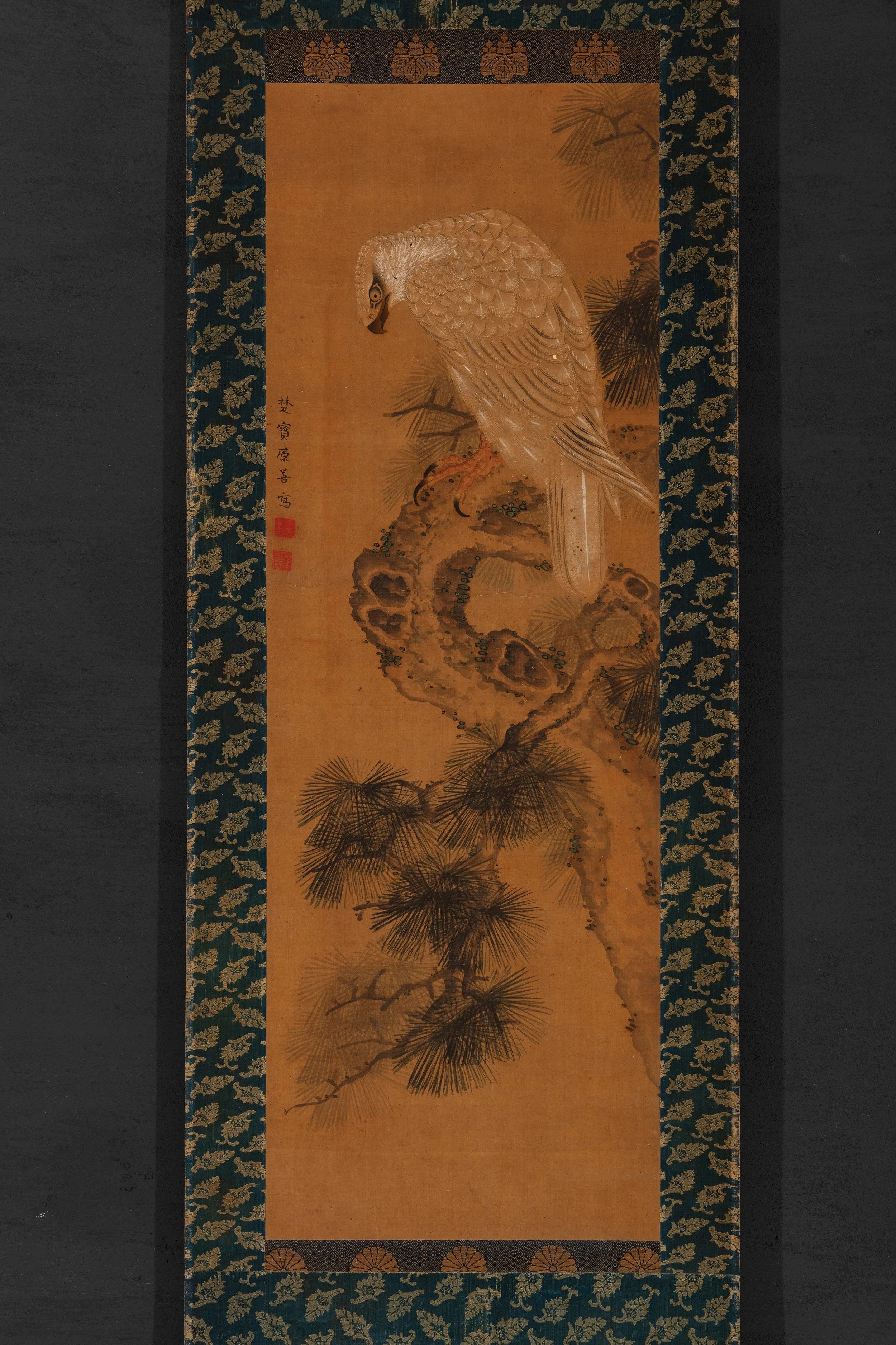
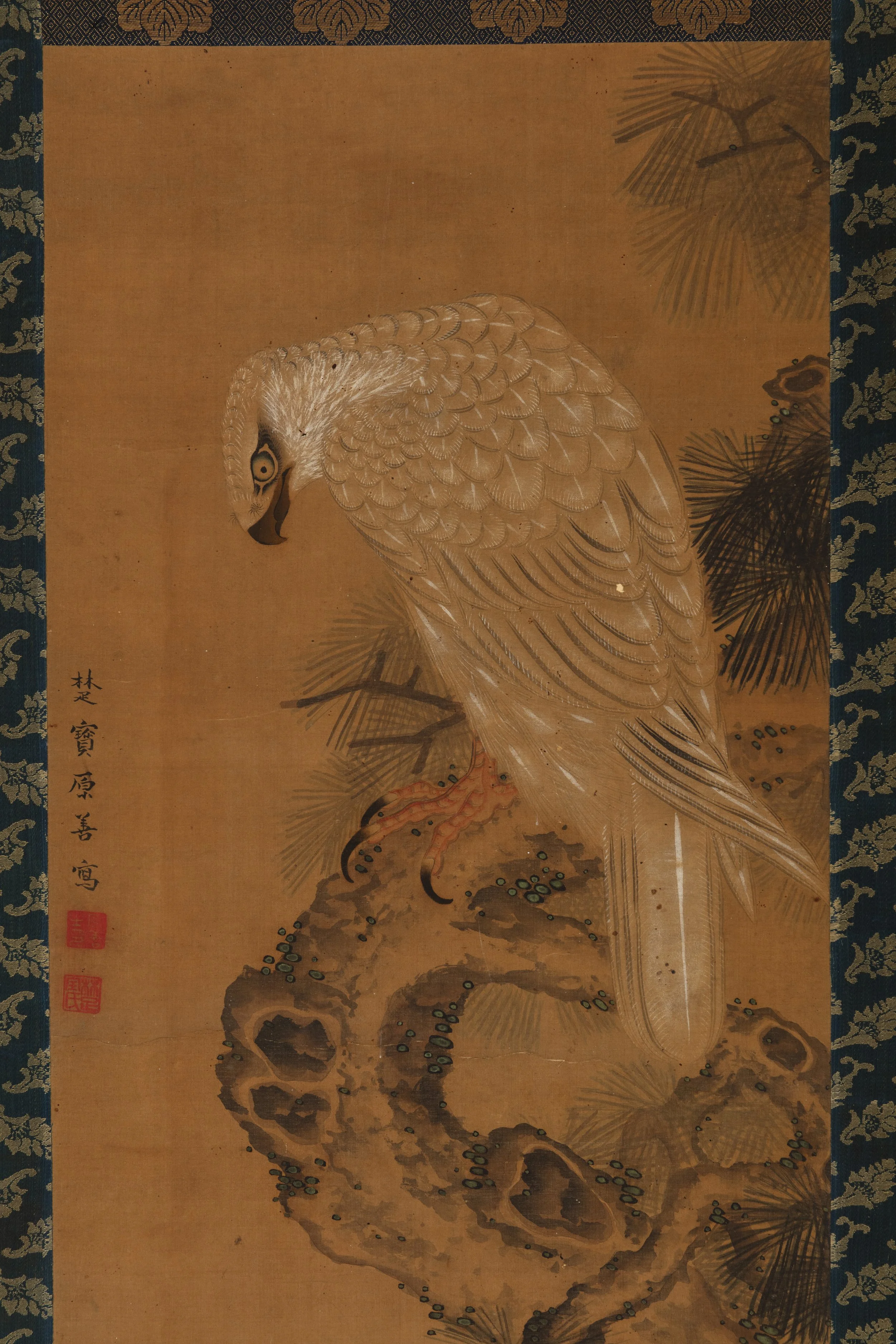
This hanging scroll presents a white eagle poised on a weathered pine branch, its body turned inward in a subtle spiral of watchfulness. The pose is calm yet charged: the head inclines slightly, the eye fixes with unwavering focus, and the entire form reads as held breath. Against the warm silk ground, the bird’s pale body asserts itself not as ornament, but as presence—an image built to reward slow, attentive looking.
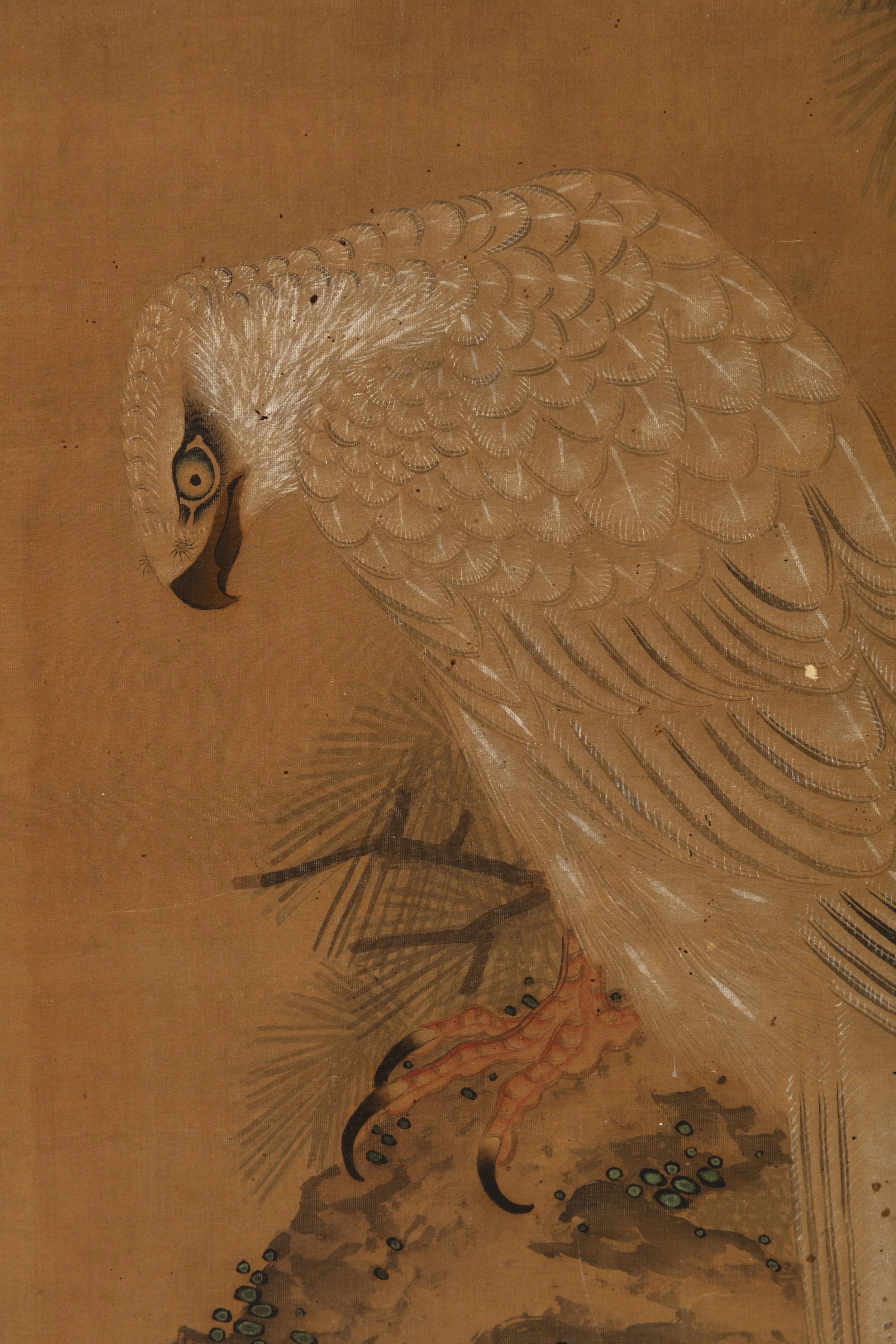
The eagle’s commanding authority is expressed most clearly through its oversized talons, which grip the pine with emphatic force. Rendered disproportionately large, these talons are not a literal anatomical study but a symbolic amplification, long associated in Japanese painting with martial power, vigilance, and latent strength. Even in stillness, they signal readiness. Power here is not displayed through motion, but through the capacity for decisive action held in reserve.
Harazen’s handling of plumage is quietly virtuosic. Feathers are organised through disciplined, rhythmic strokes and restrained highlights, creating a sense of mass and layered structure without slipping into decorative excess. The eagle’s eye—sharp, alert, and slightly enlarged—becomes the psychological centre of the composition. It transforms the bird from emblem into sentient presence, embodying intelligence and restraint rather than aggression.
The pine branch is executed in a brush idiom closely aligned with Chinese-influenced kachōga traditions: a gnarled trunk punctuated by mineral-like knots, with pine needles articulated through crisp, repeated strokes. Pine and eagle form a classical pairing—endurance and vigilance, longevity and martial clarity—but here the symbolism is handled with notable restraint. Nothing is theatrical. Everything is measured, deliberate, and composed.
Harazen emerges from recent biographical research as a painter firmly situated within the late-Edo Nanpin lineage. Born in Matsubara, Yokote, with the personal name Zenzō, he came from a farming family and received patronage from the Yokote castle lord Tomura Yoshitaka and his son Yoshimichi. Toward the end of the An’ei period he relocated to Edo, later travelling to Nagasaki around 1790 to study under Kumashiro Yūhi. After returning home and teaching, his career was abruptly curtailed; he is thought to have died around the age of forty, circa 1795, while travelling back toward Edo.
Seen in this light, White Eagle Perched on a Pine Branch reads as an ambitious and mature statement from a life cut short. The painting combines technical control, symbolic intelligence, and psychological depth in a way that suggests a painter fully aware of tradition yet confident in his own visual voice. Within the Ki no An Collection, it stands as a quietly commanding work—martial without bravado, vigilant without violence, and emblematic of strength held in perfect restraint.