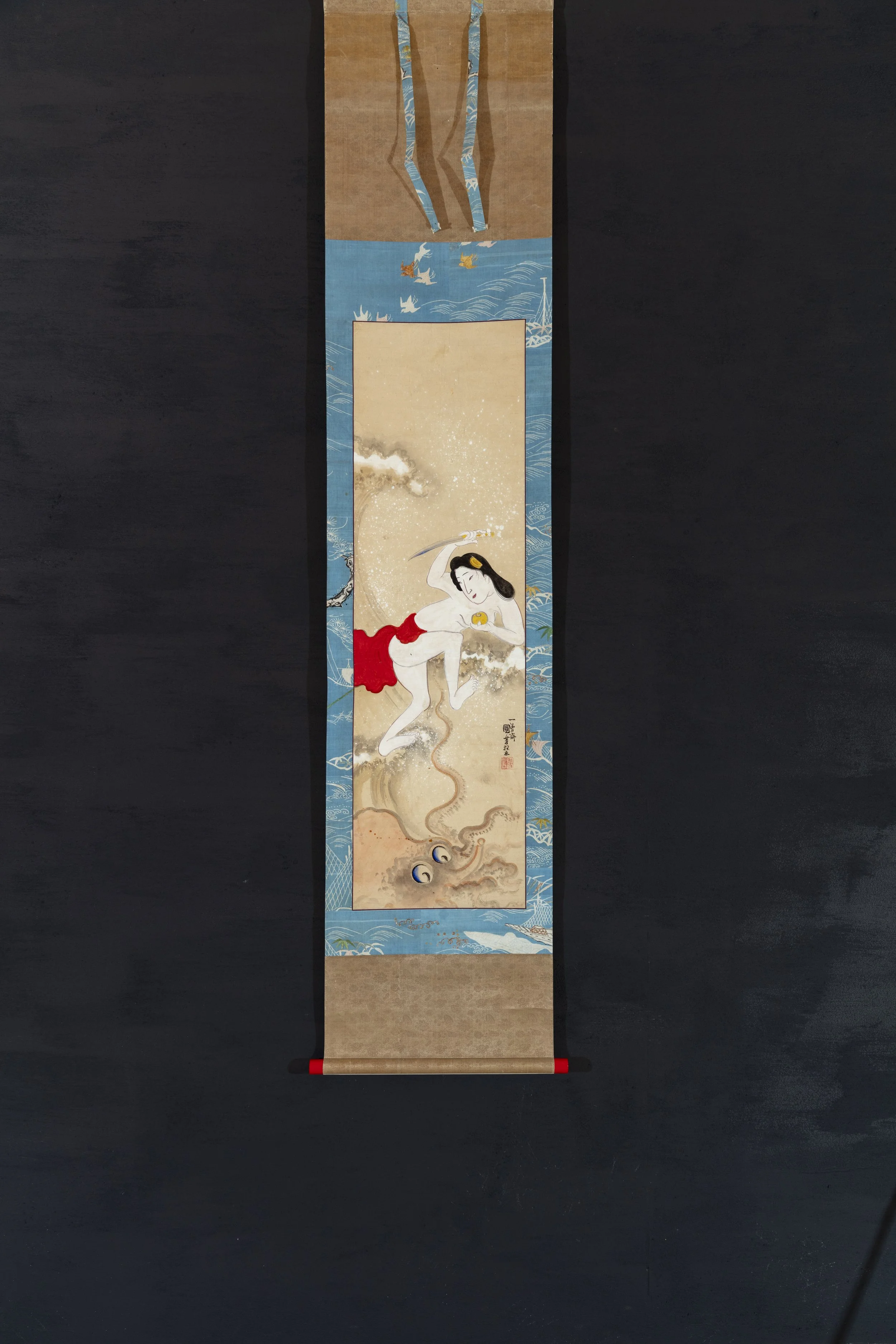
Tamatori Stealing the Jewel from the Dragon Palace
After Utagawa Kuniyoshi (1797–1861), probably painted 1880–1930
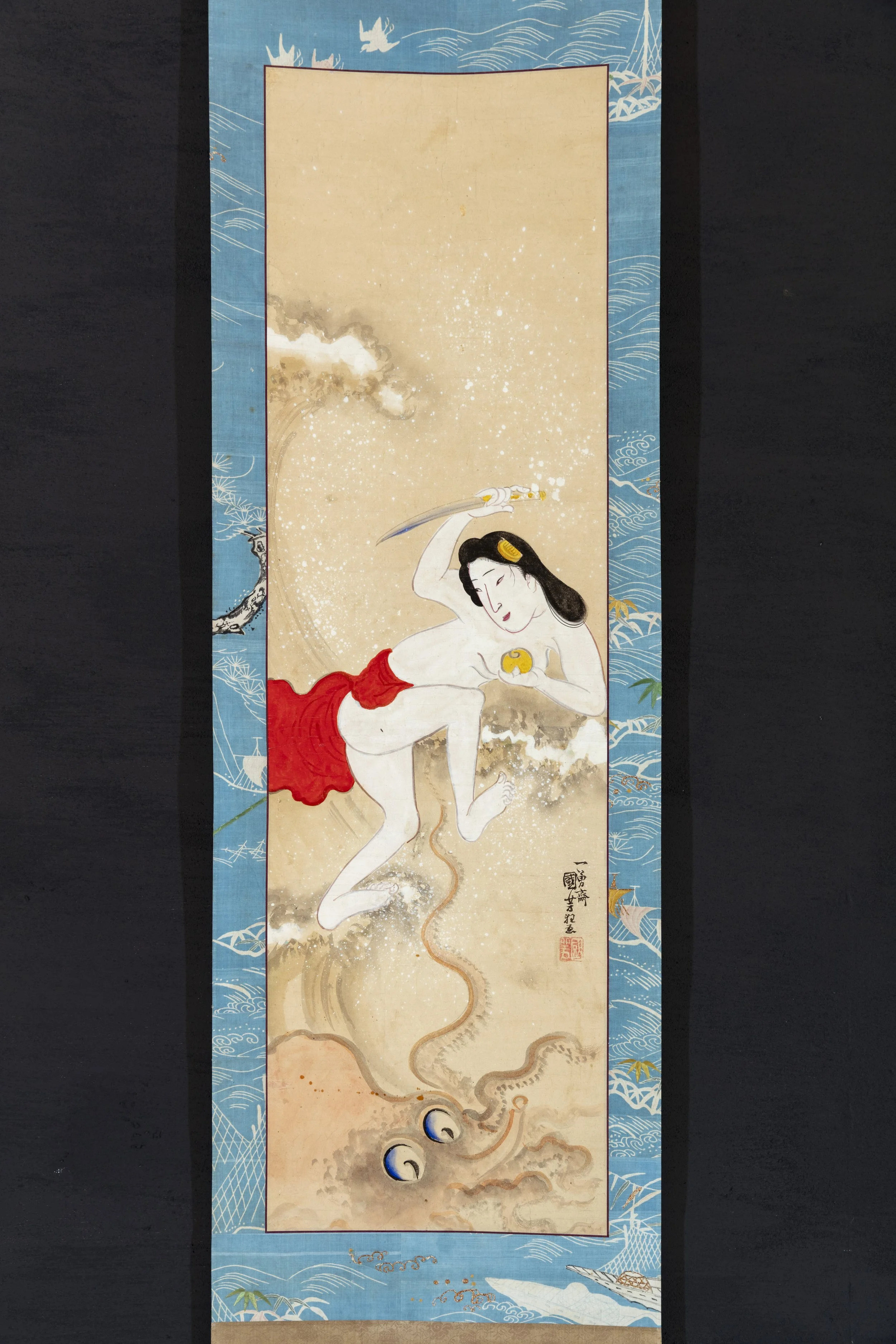
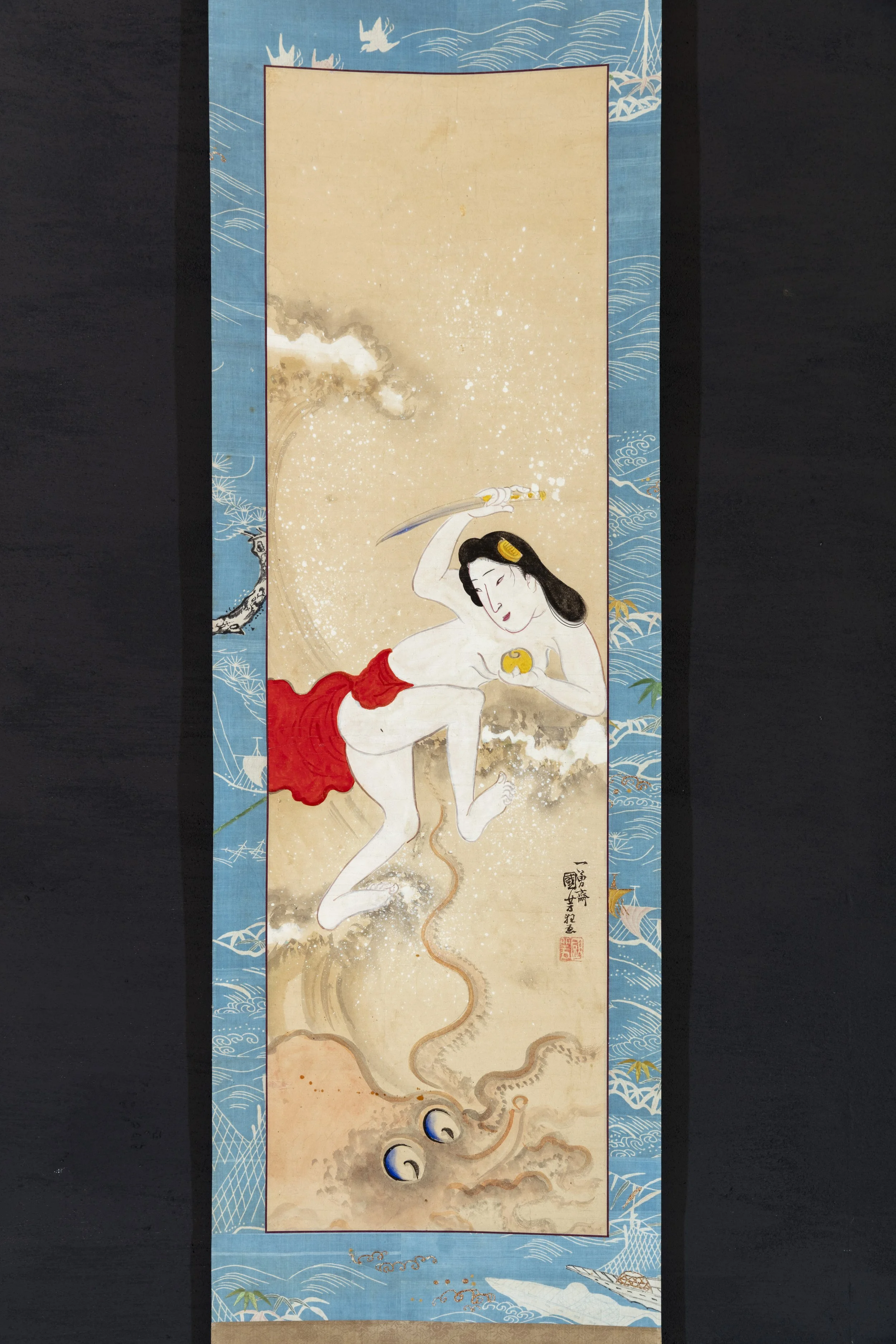
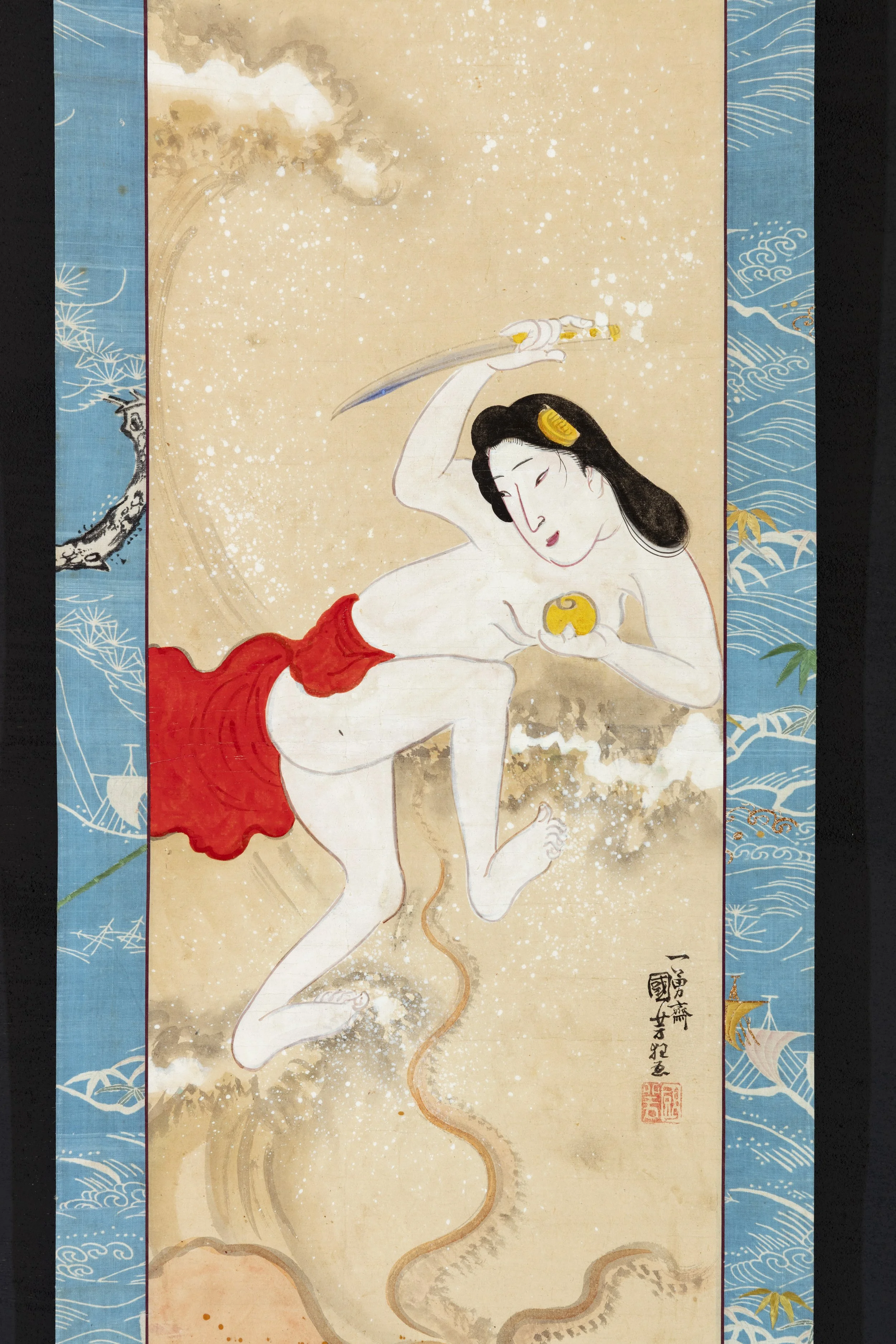
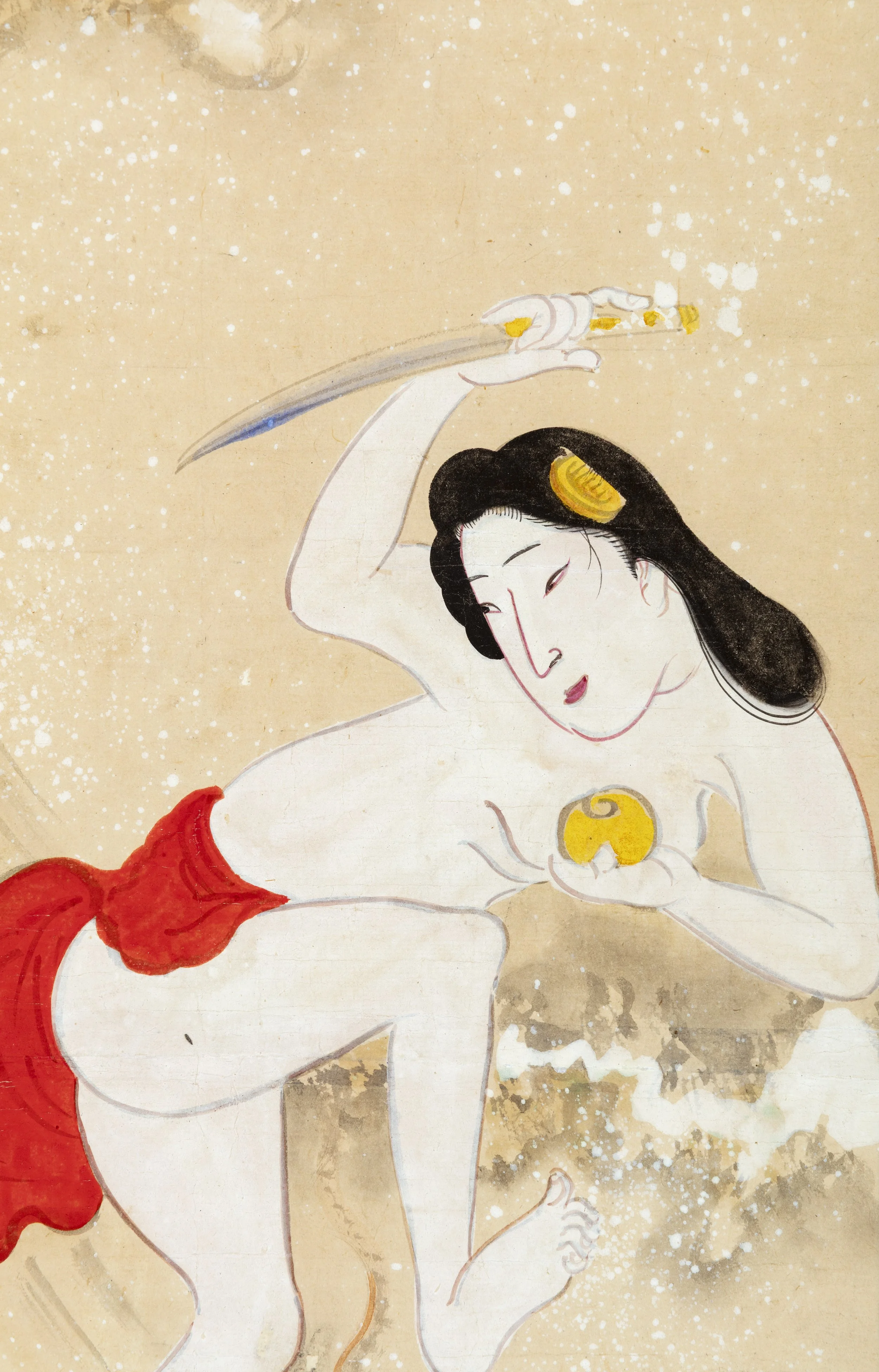
This hanging scroll interprets the legend of Tamatori-hime, a dramatic underwater episode closely associated with Utagawa Kuniyoshi and his circle. It shows the diver emerging from the sea with the stolen jewel, blade raised, caught between ascent and pursuit. By isolating a single charged moment, the painter allows gesture and atmosphere to carry the story.
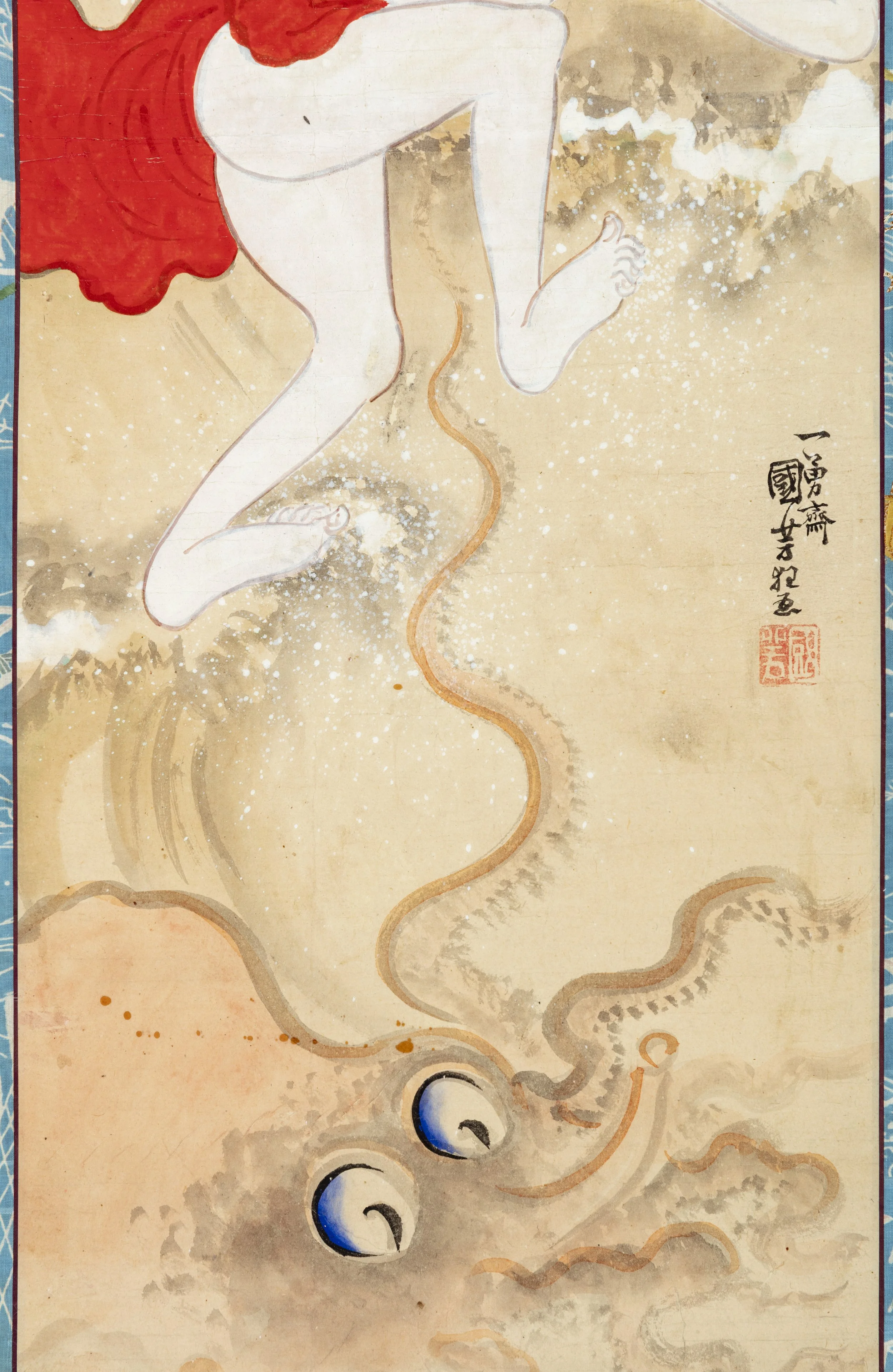
The figure combines theatrical movement with idealised beauty, drawing on ukiyo-e conventions of warrior imagery and bijinga. Her pale body is sharply outlined against a softly modulated ground. Below, sinuous forms and watchful eyes suggest the pursuing creatures without illustrating the full spectacle.
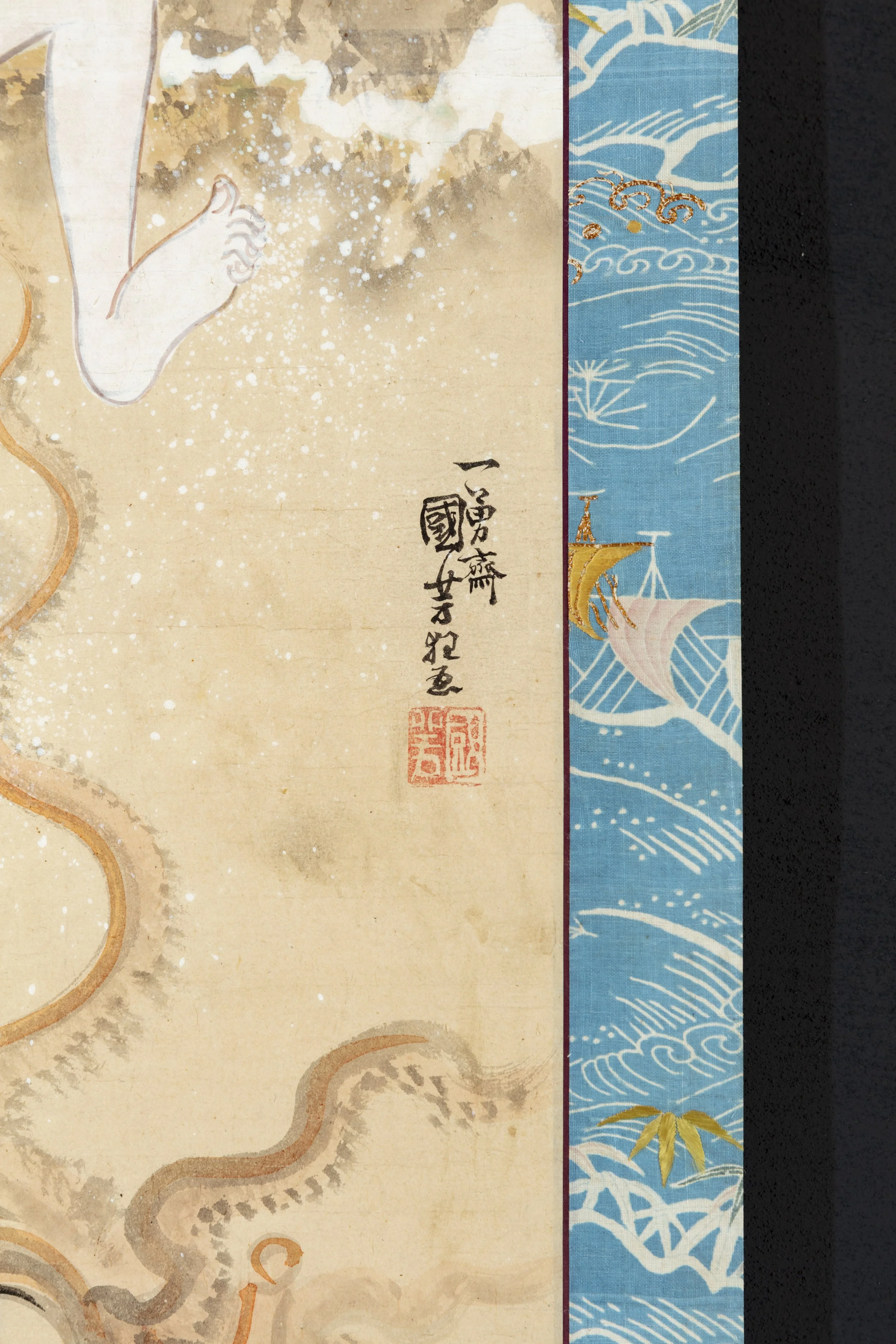
Although the scroll bears a signature and seal associated with Kuniyoshi, its format, materials and presentation indicate a later painting made after his style, probably between 1880 and 1930. Works of this kind carried recognisable ukiyo-e imagery beyond prints and into the market for decorative hanging scrolls.
The richly patterned mounting supports this context. It presents the painting as a finished object for display and reflects Meiji–Taishō taste for translating popular Edo imagery into decorative form. The mounting shapes how the work is encountered and is integral to its visual effect.
Within the Myōan Collection, the scroll is a useful example of how a famous narrative circulated and changed over time. It is neither a canonical Kuniyoshi work nor a simple reproduction, but a later interpretation with its own material and pictorial character.
The painting remains effective because it balances narrative drama with restraint. Its value lies not in a claim to direct authorship, but in showing how Kuniyoshi’s imagery continued to generate new works long after the original designs entered wider circulation.