After Itō Jakuchū (1716–1800)
Rooster Beneath Orchid
Ink on assembled paper (patched kōzo sheet),
Edo period.
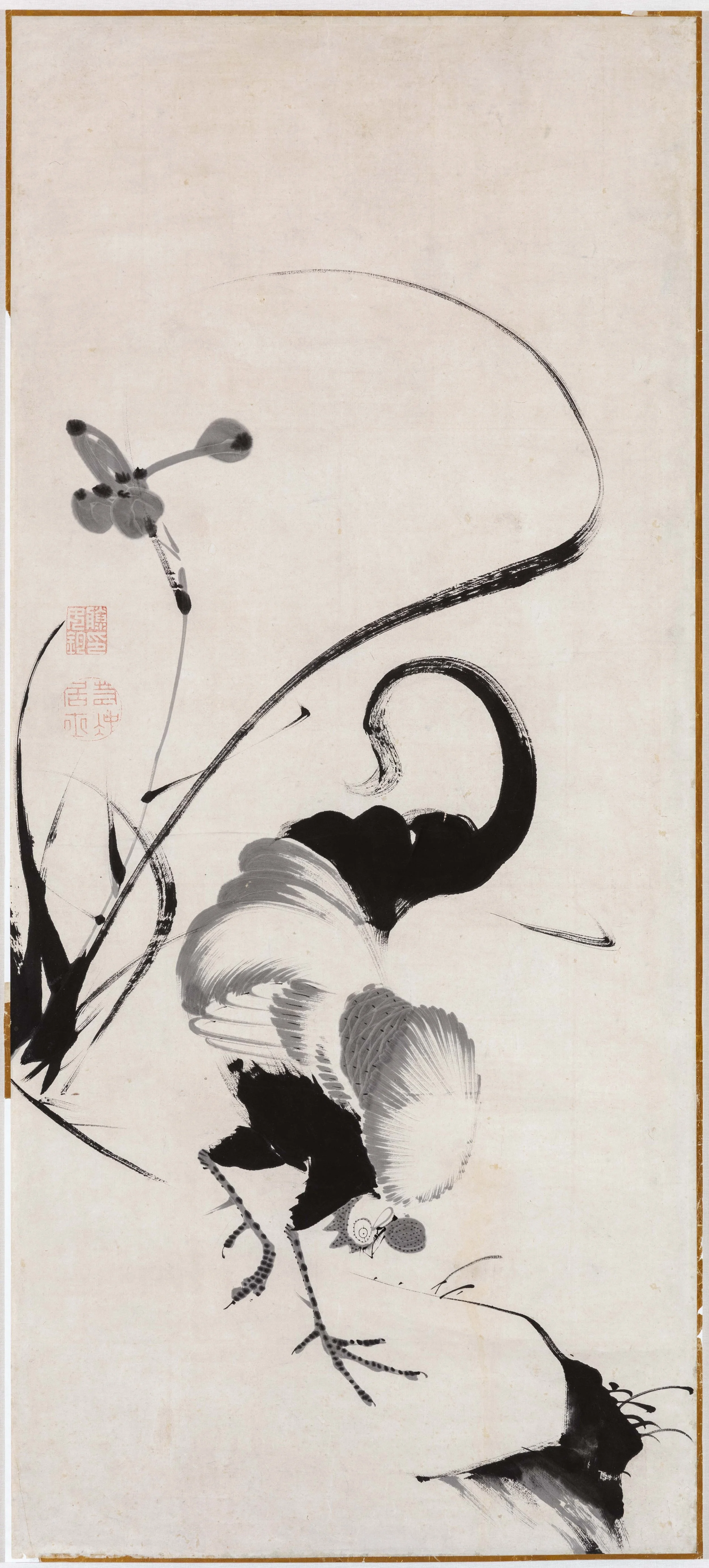
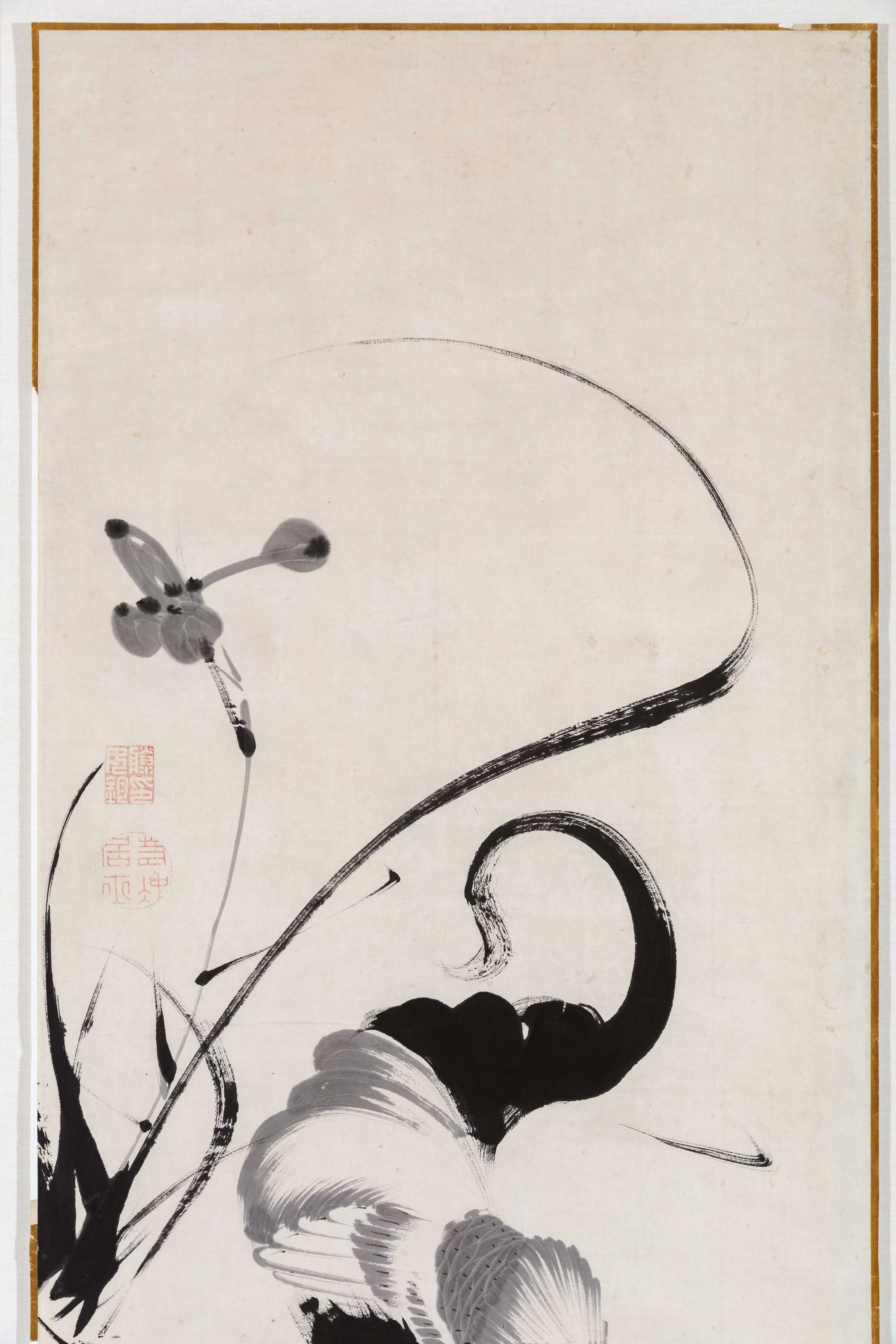
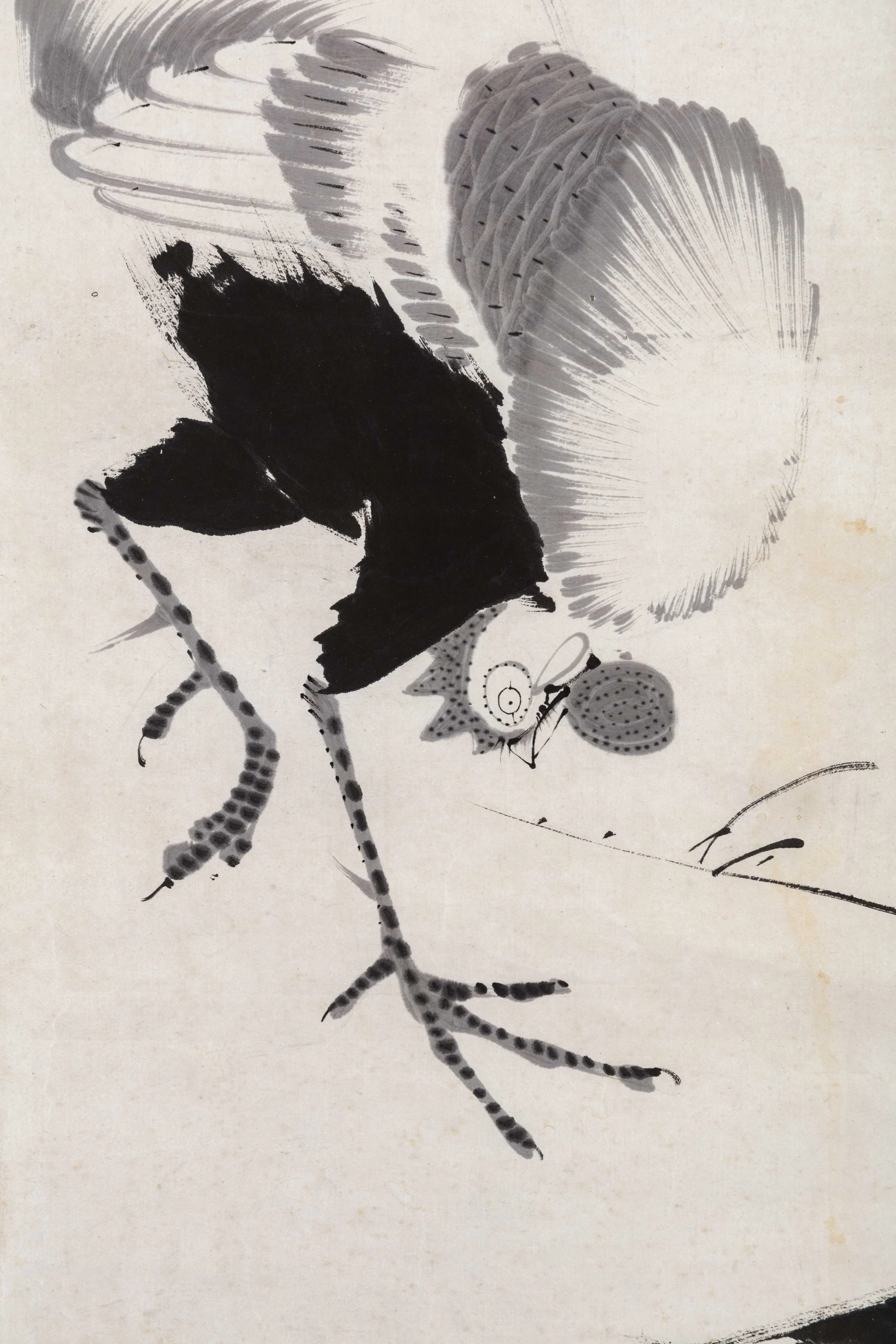
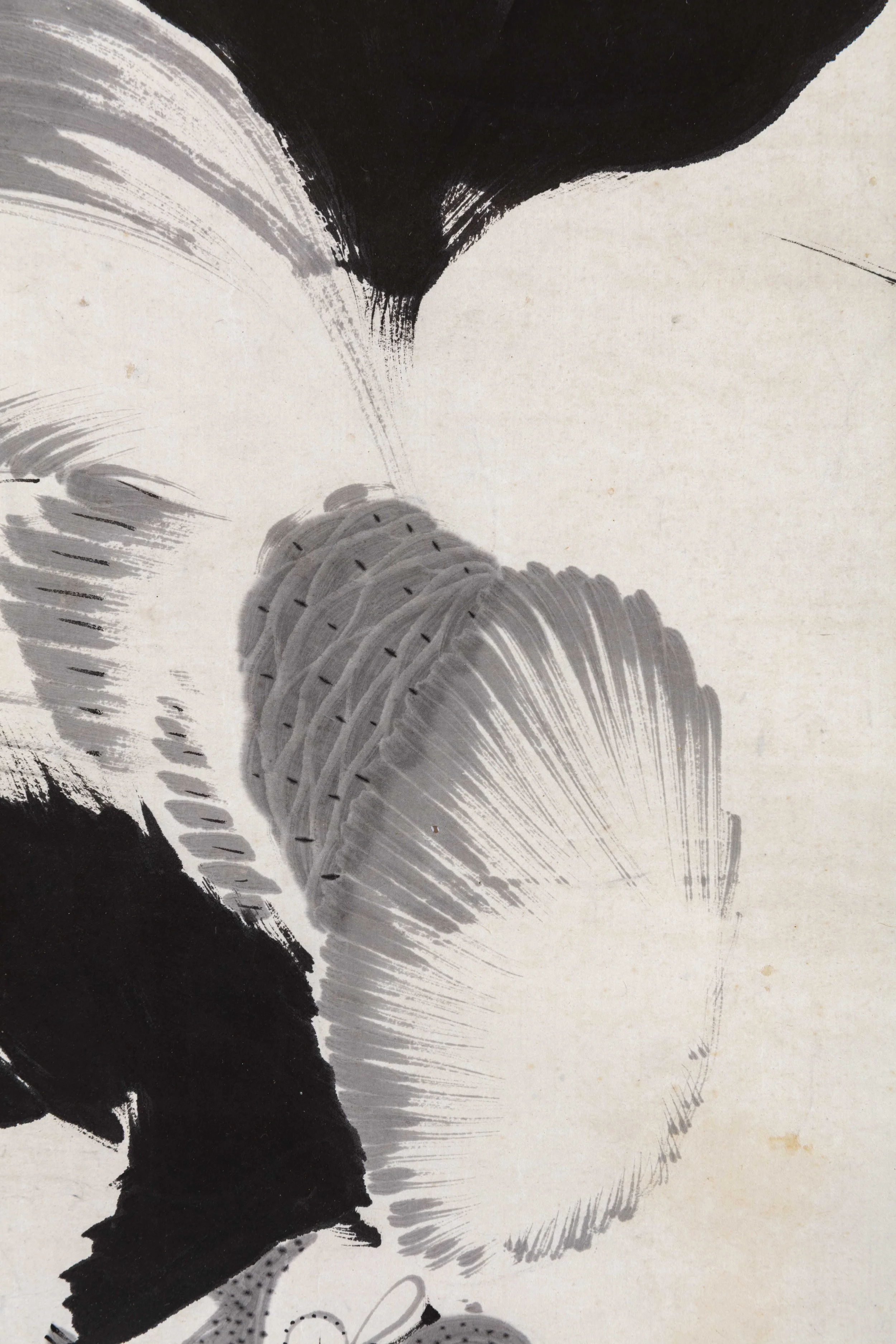
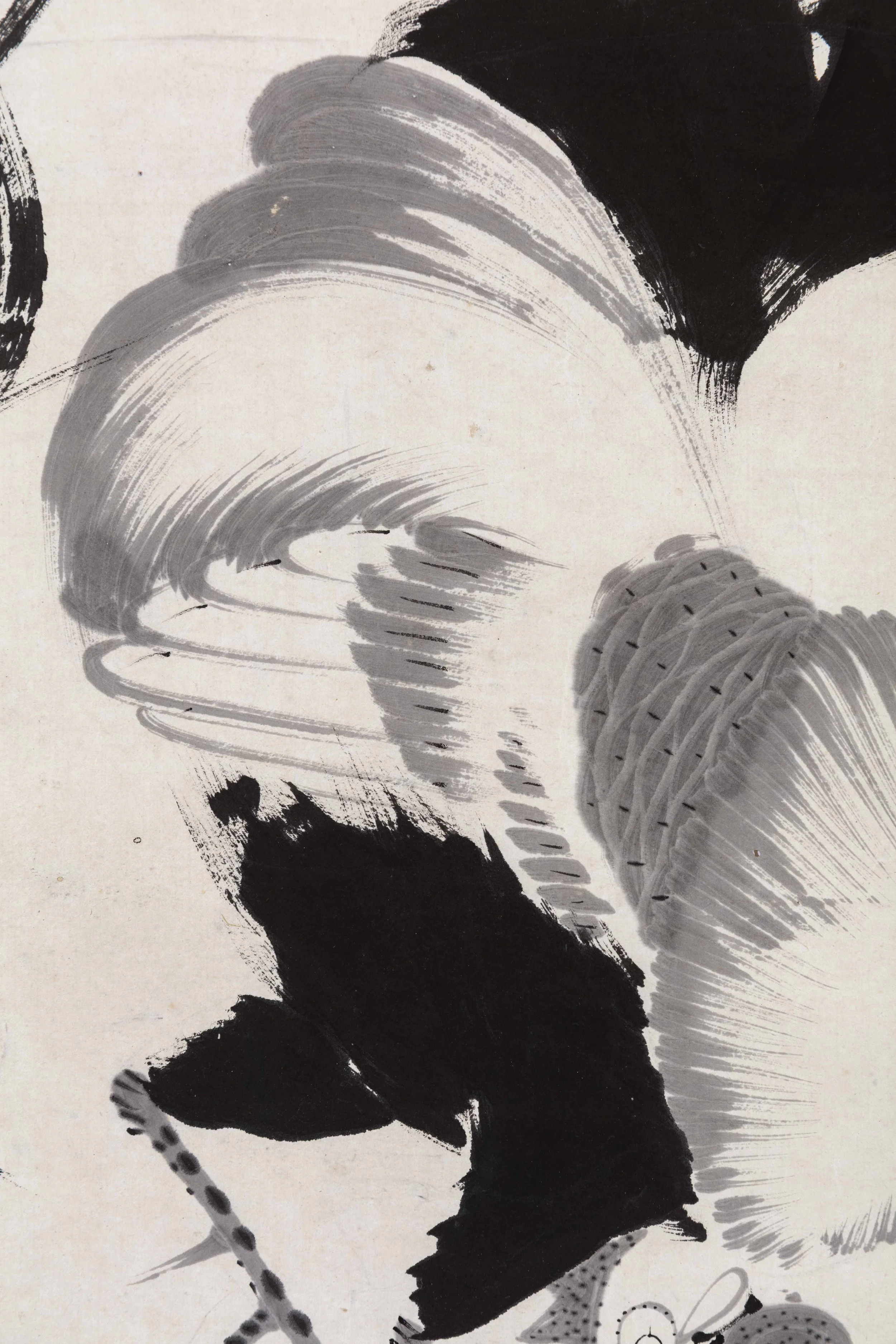
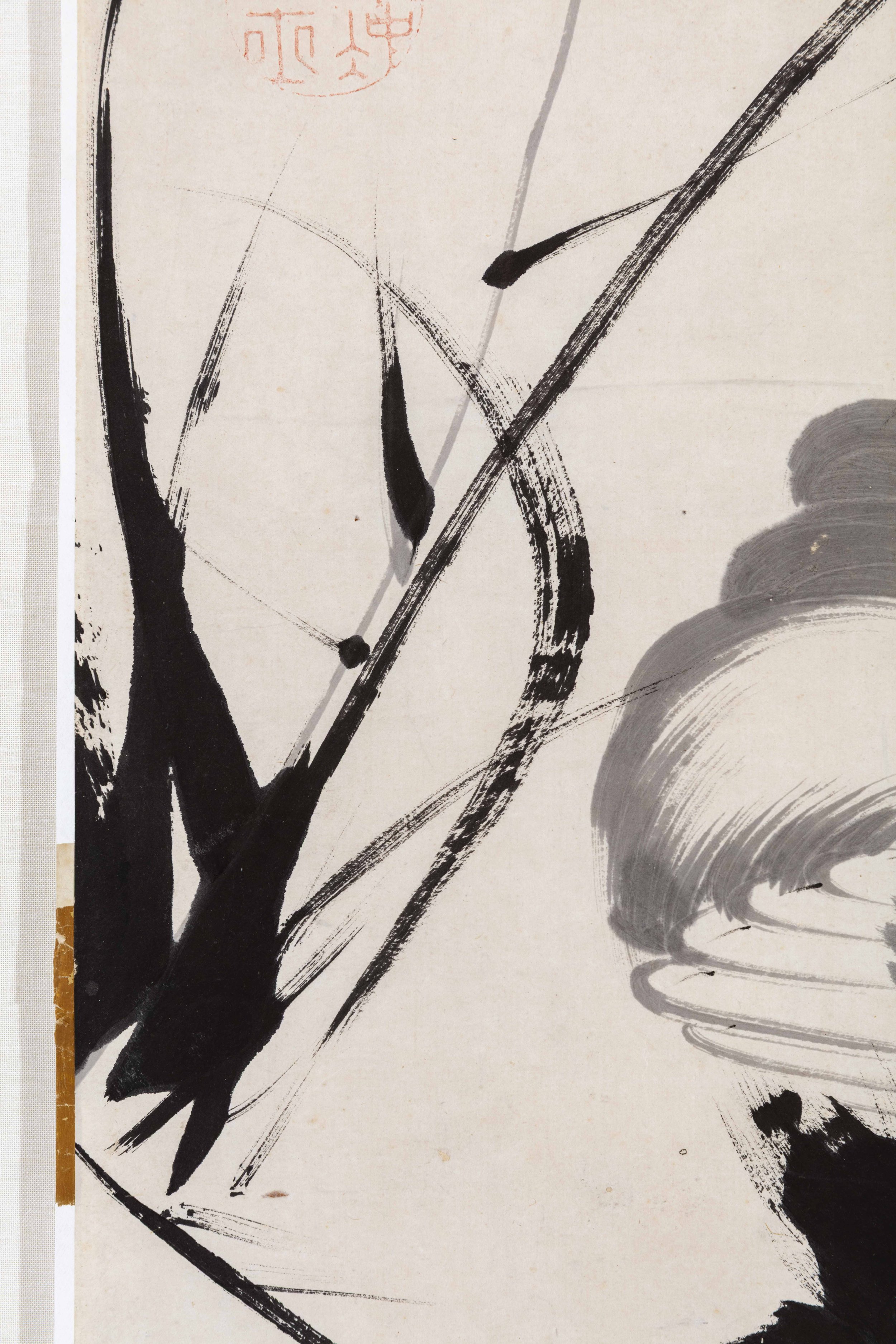
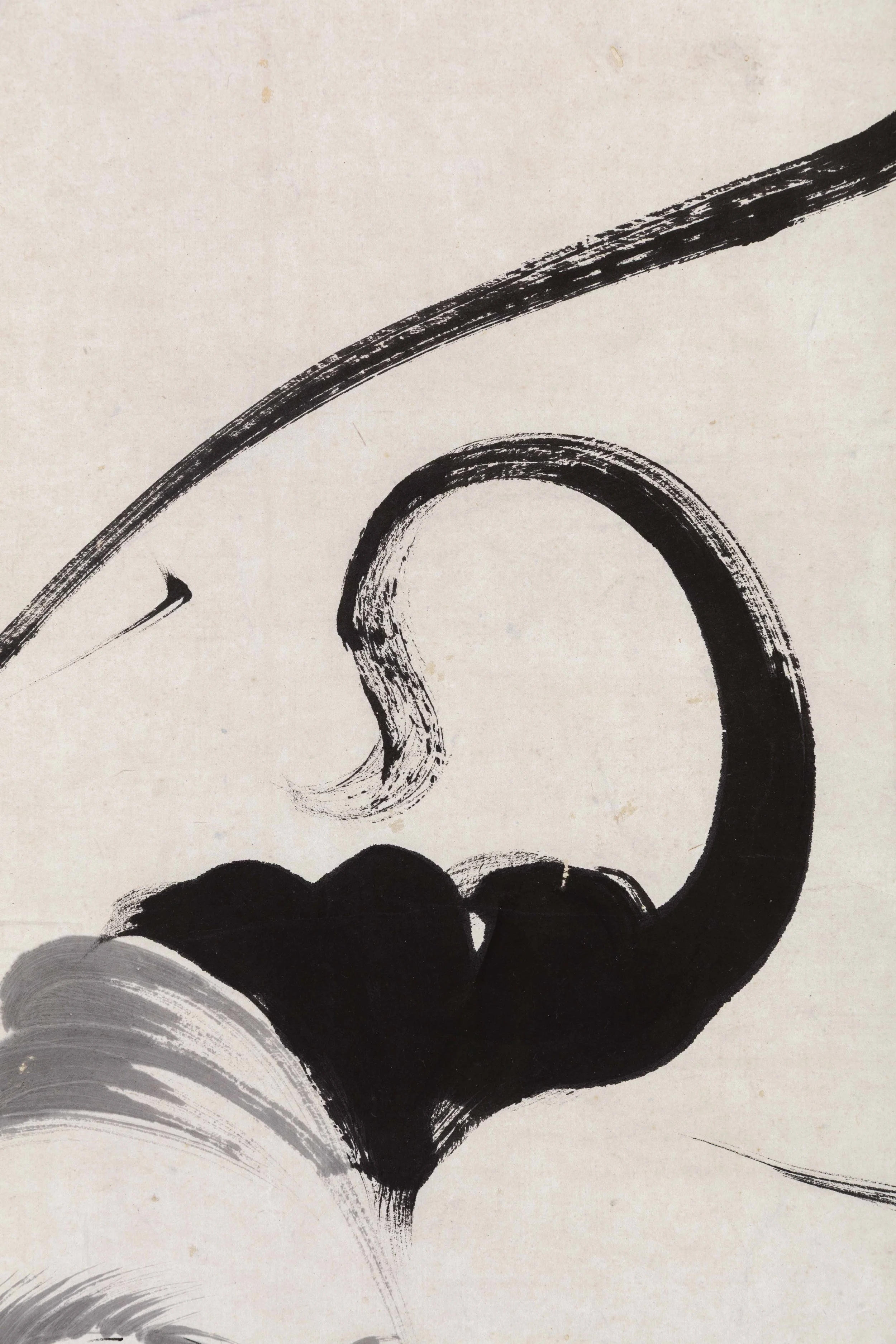
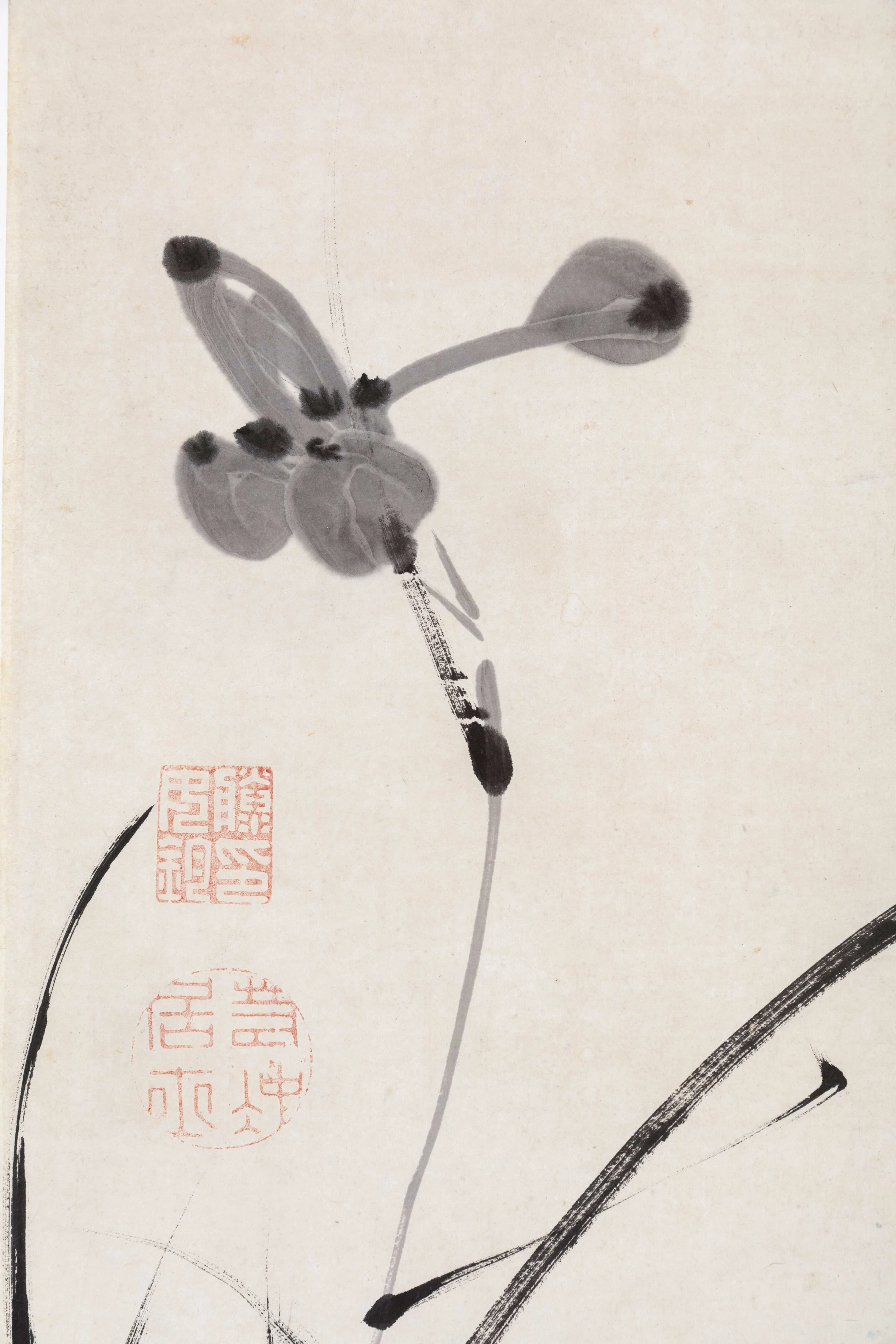
This monochrome painting depicts a rooster in an unstable, animated pose beneath arching orchid leaves. One leg is raised and the head turns sharply downward. The effect is playful, but the composition is tightly controlled through pressure, timing and balance.
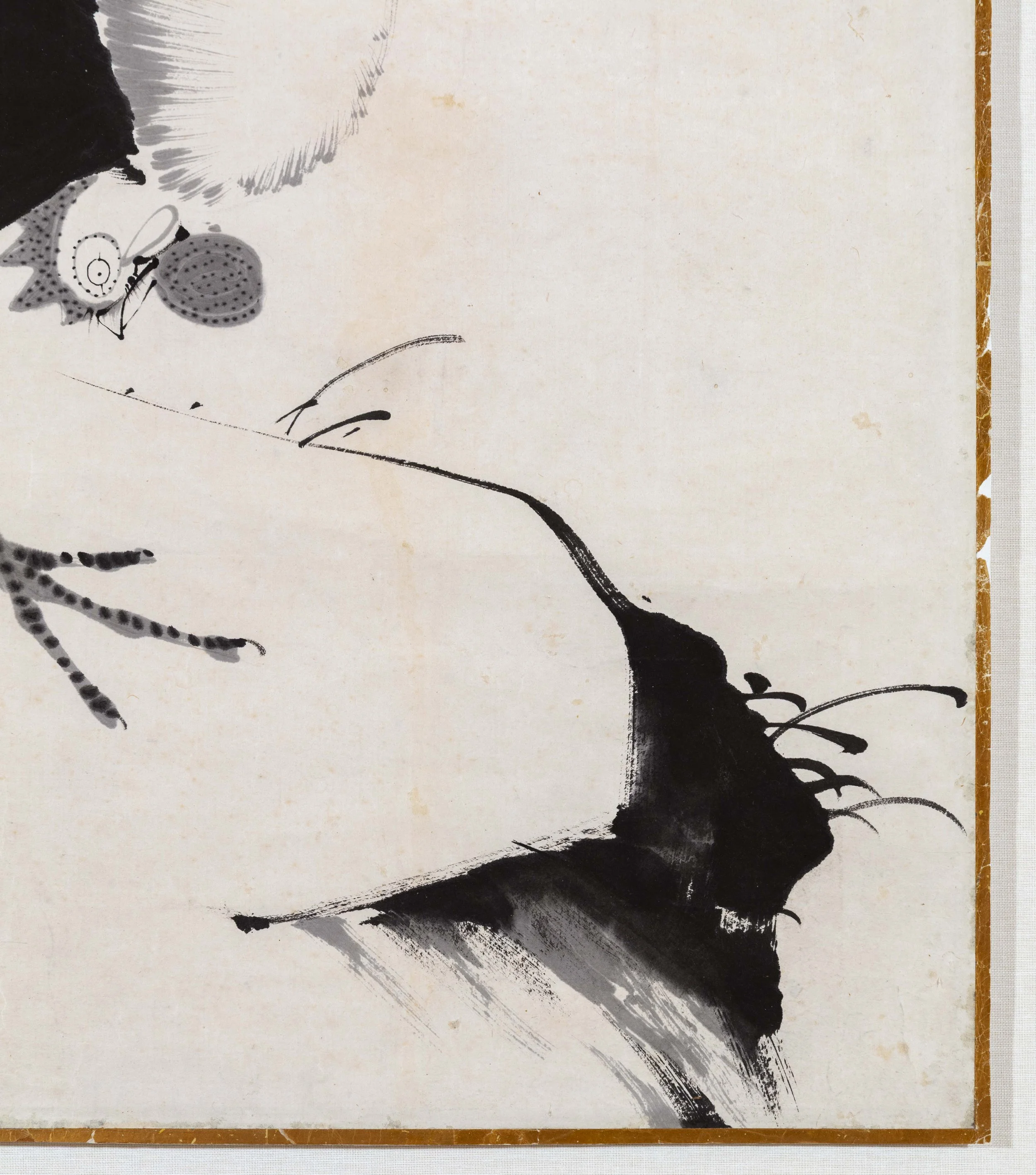
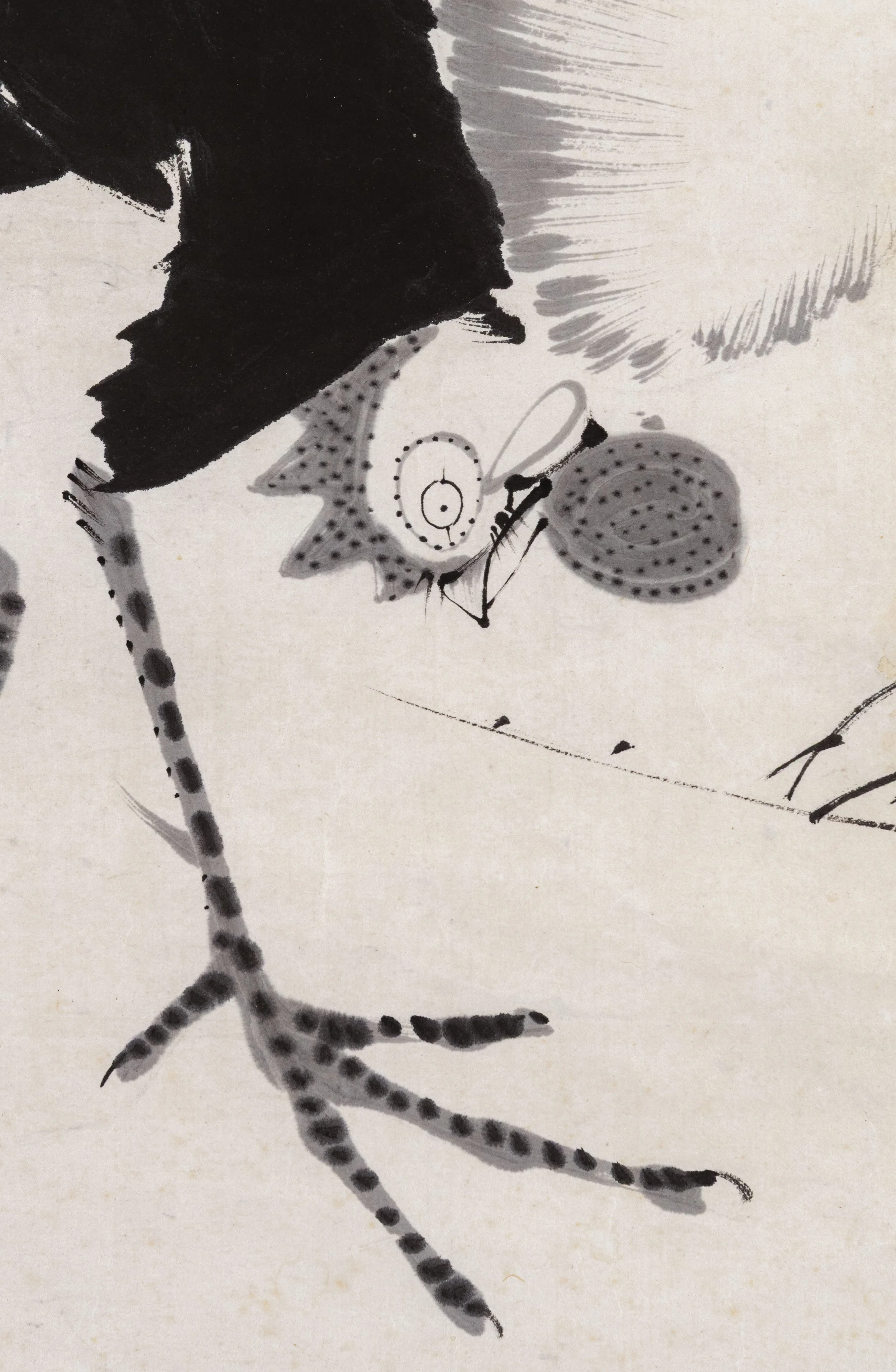
The body is built from layered washes and dry-brush striations rather than continuous contour. A saturated sweep defines the tail, while the orchid leaves cut across the bird’s flank. The tiny dark pupil, comb and beak are handled with particular precision, giving the rooster an alert presence that shifts between observation and caricature.
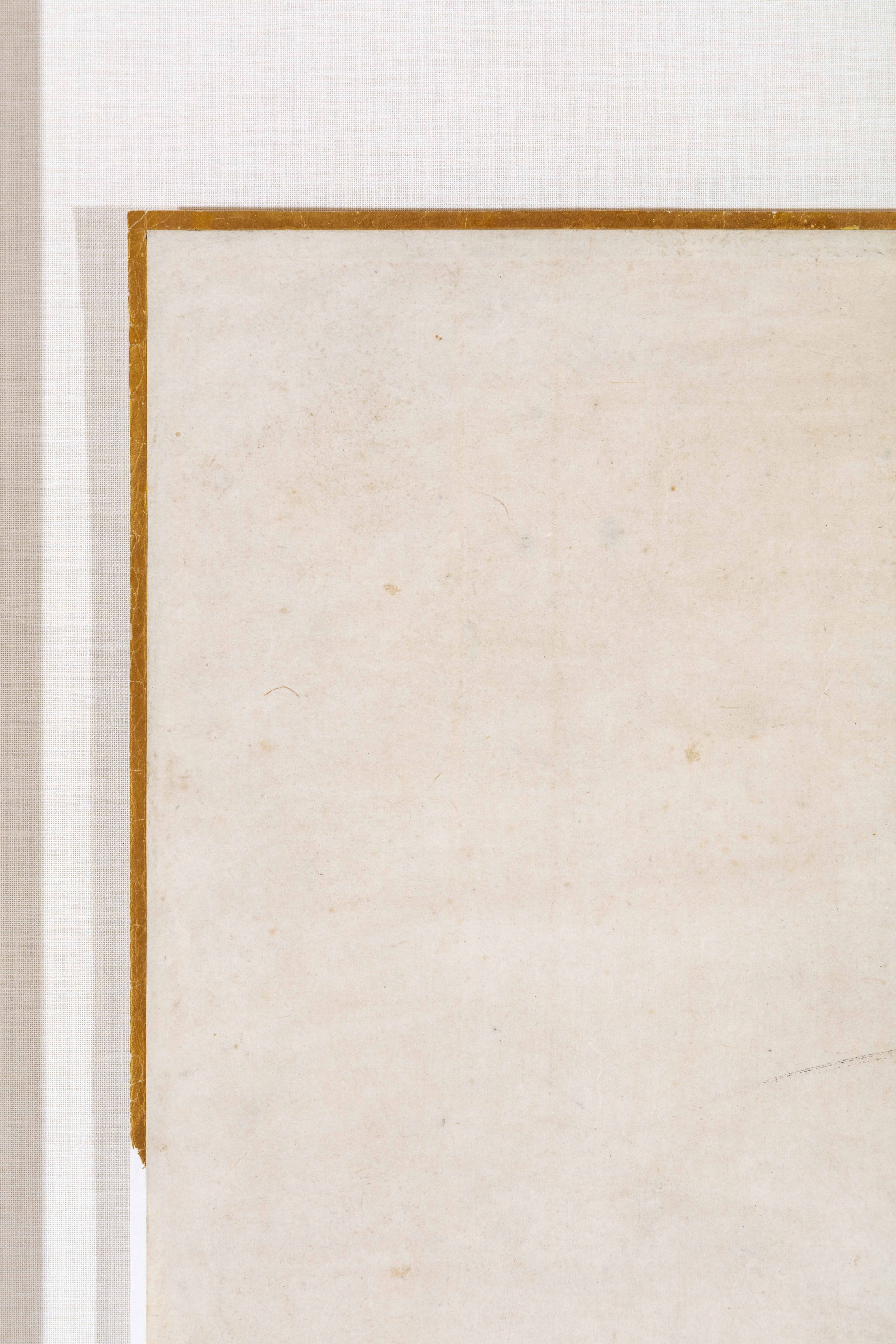
The ink rests on a thick support assembled from joined sheets of kōzo paper, a construction known as tsugigami. The integrated seams remain visible beneath the painting and preserve subtle changes in absorbency and brush pressure.
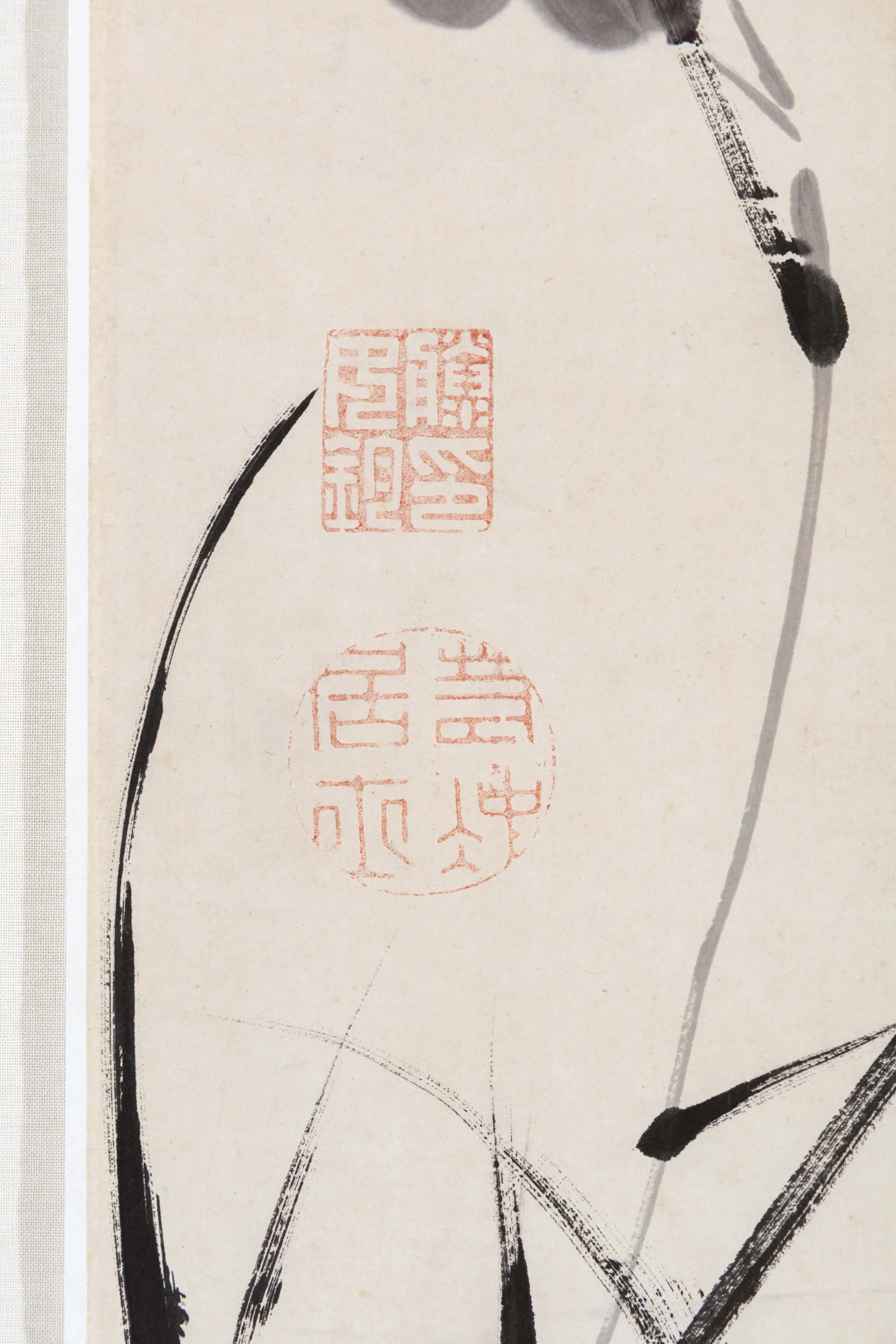
Two seals at lower left read Tō Jokin no in and Jakuchū koji. They correspond closely with impressions associated with Jakuchū, but seals alone cannot establish authorship. Given the range of studio works, later copies and historically close interpretations in the Jakuchū corpus, the painting is best described as an accomplished work after Jakuchū rather than securely autograph.
The rooster carried several associations in East Asian painting: it heralded dawn and awakening, but could also suggest vanity and theatrical self-display. This work sustains both aspects. Its interest lies in the vitality of its brushwork and in the persistence of Jakuchū’s visual language beyond the master’s lifetime.
Comparable Works in Museum and Notable Collections
Several closely related works help situate this painting within the broader visual world associated with Jakuchū’s monochrome bird paintings and their later transmission:
The Metropolitan Museum of Art
Hanshan and Shide (late 18th century, Mary Griggs Burke Collection). The seal pairing and highly controlled calligraphic handling associated with this work provide an important comparative point for understanding the circulation of Jakuchū-related seal types and monochrome brush languages within later Edo painting culture.
Kawasaki City Museum
Rooster Beneath a Pine Tree (Juka keikei zu). A more elaborate treatment of the same animated rooster motif, demonstrating how this distinctive compositional type persisted within works associated with Jakuchū and his circle.
Museum of Fine Arts, Boston
Monochrome bird-and-flower paintings associated with Jakuchū that display comparable use of dry-brush feather construction, abbreviated ink articulation, and spatial compression.
Price Collection, Corona del Mar, California
Flower-Bird-and-Figure Pasted-Picture Screen (catalogue plate 146). This screen remains especially significant because scholarship has suggested that works of this type may have been assembled from independently circulating bird-and-flower paintings. The comparison reinforces the possibility that compositions such as Rooster Beneath Orchid originally functioned either as autonomous works or as components within larger composite ensembles.
Taken together, these comparisons point less toward straightforward questions of authorship than toward the persistence and transmission of an extraordinarily influential visual language. Whether autograph, studio-associated, or later interpretive work, paintings of this type reveal how deeply Jakuchū’s monochrome vocabulary continued to resonate within Japanese painting culture well beyond the artist’s lifetime.