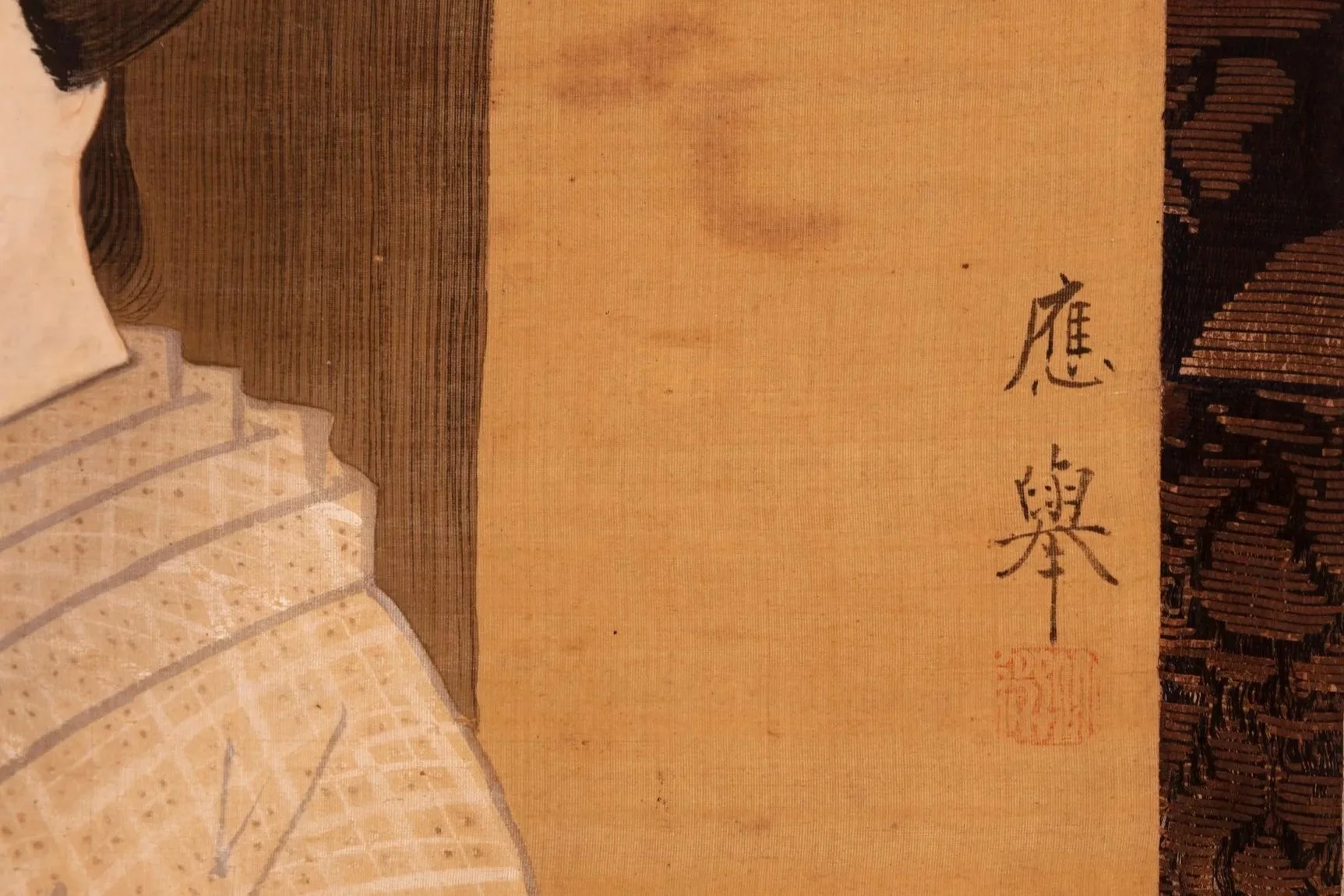
After Maruyama Ōkyo (1733–1795)
With apocryphal calligraphy after Ryōkan (1758–1831)
Portrait of a Shrine Maiden (Miko)
Japan, late Edo period, 19th century
Mineral pigments on silk; hanging scroll
178 × 50 cm
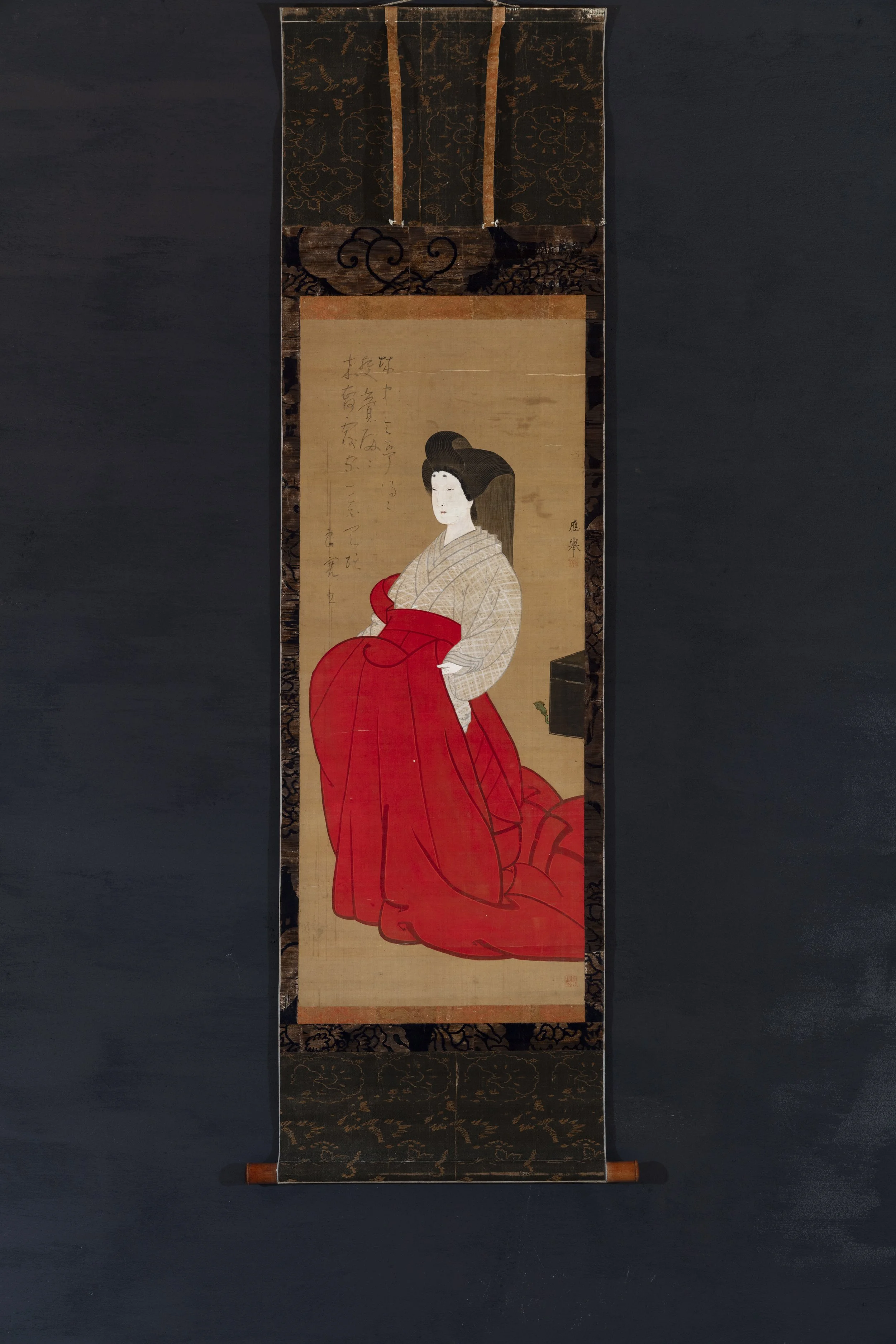
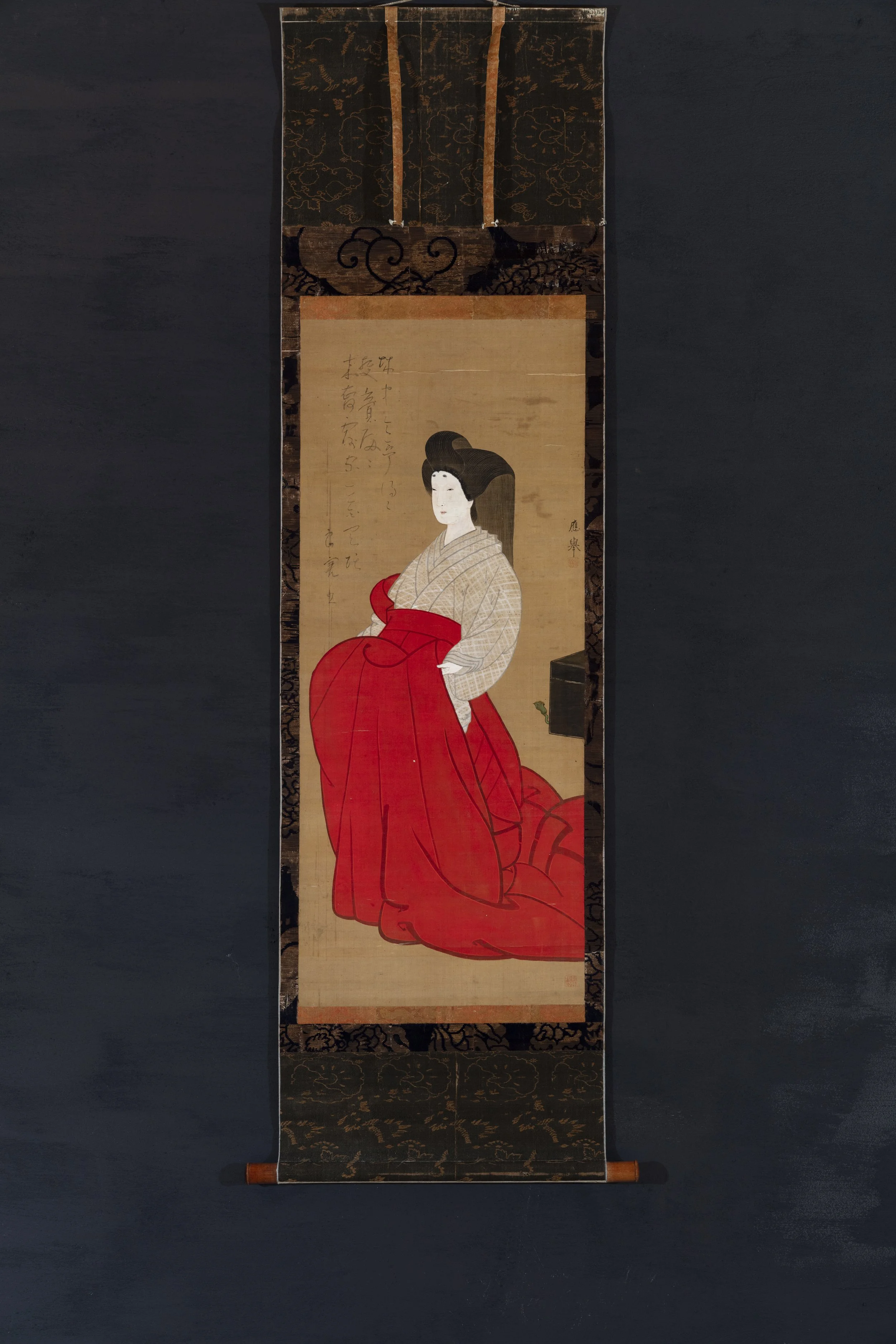
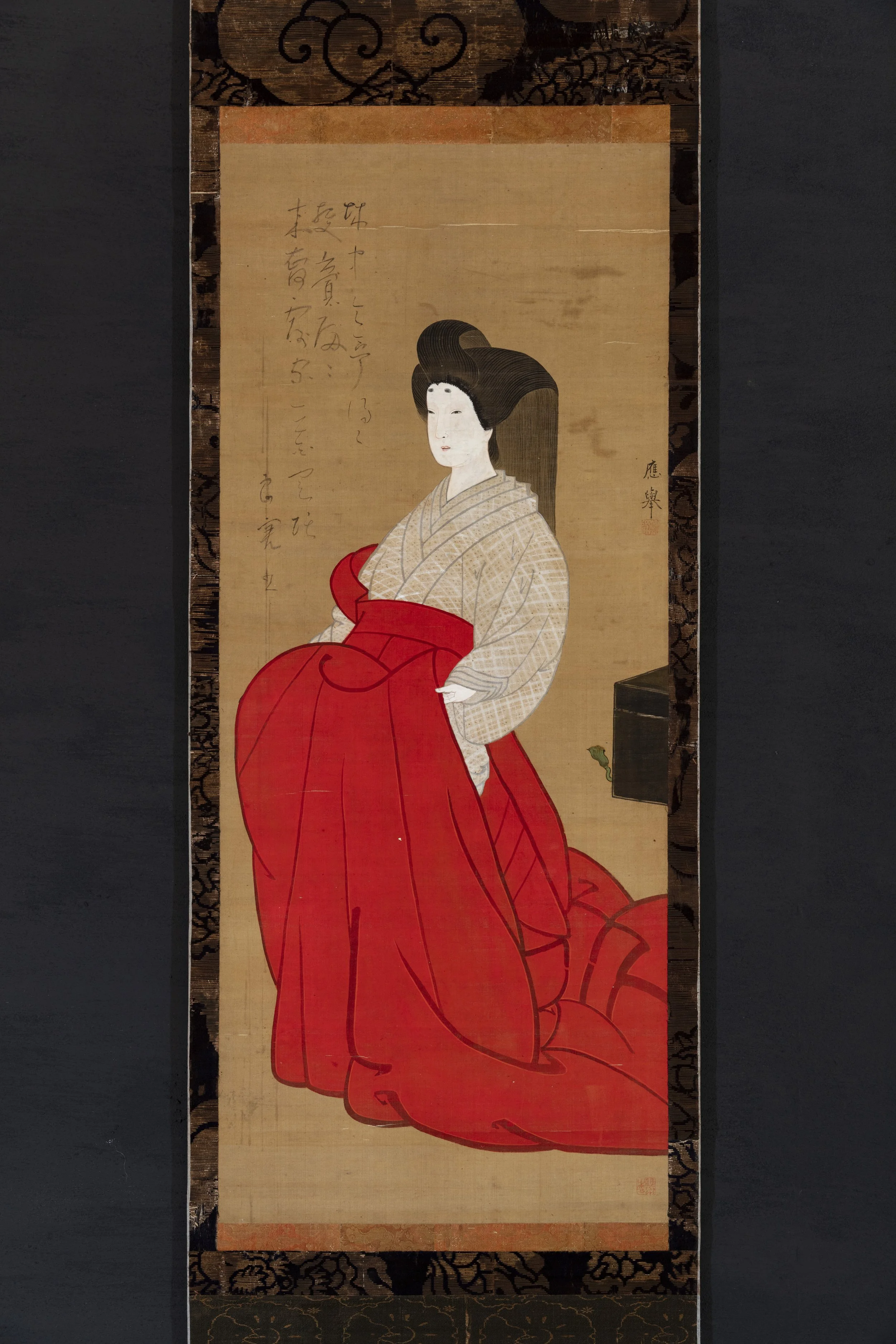
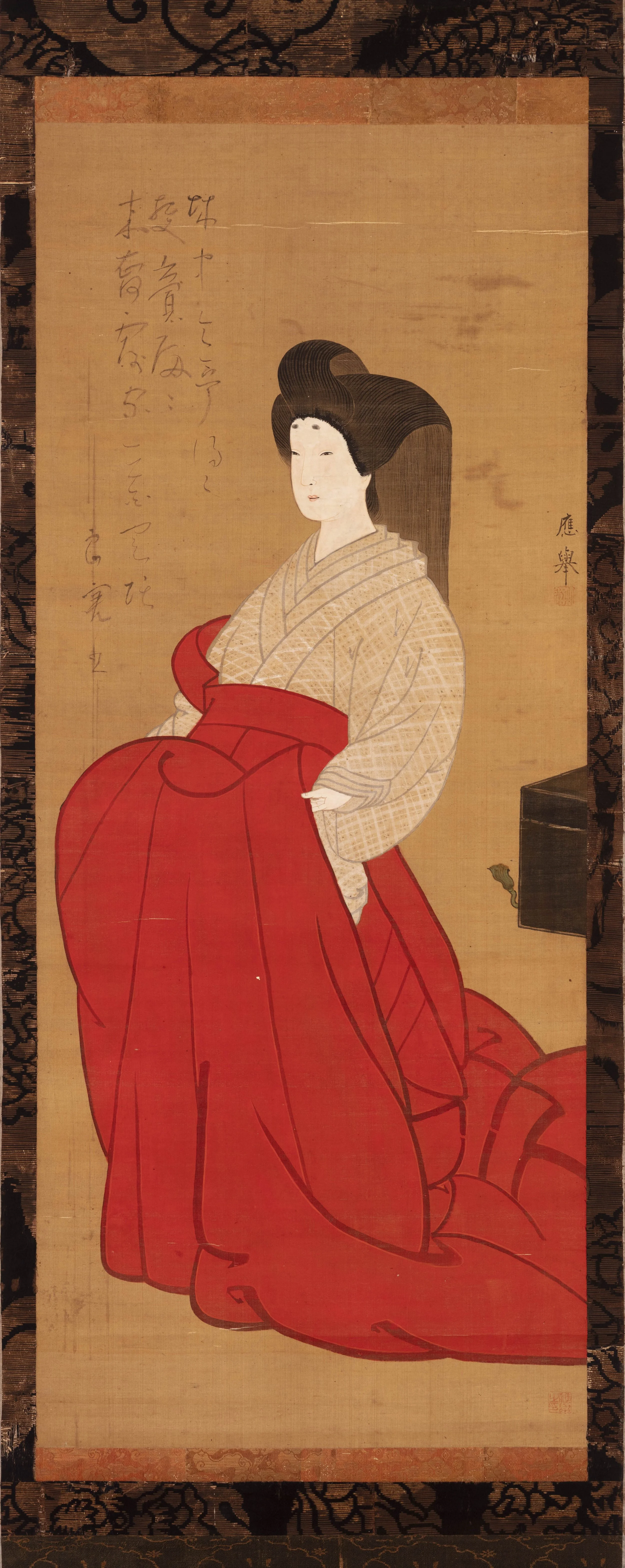
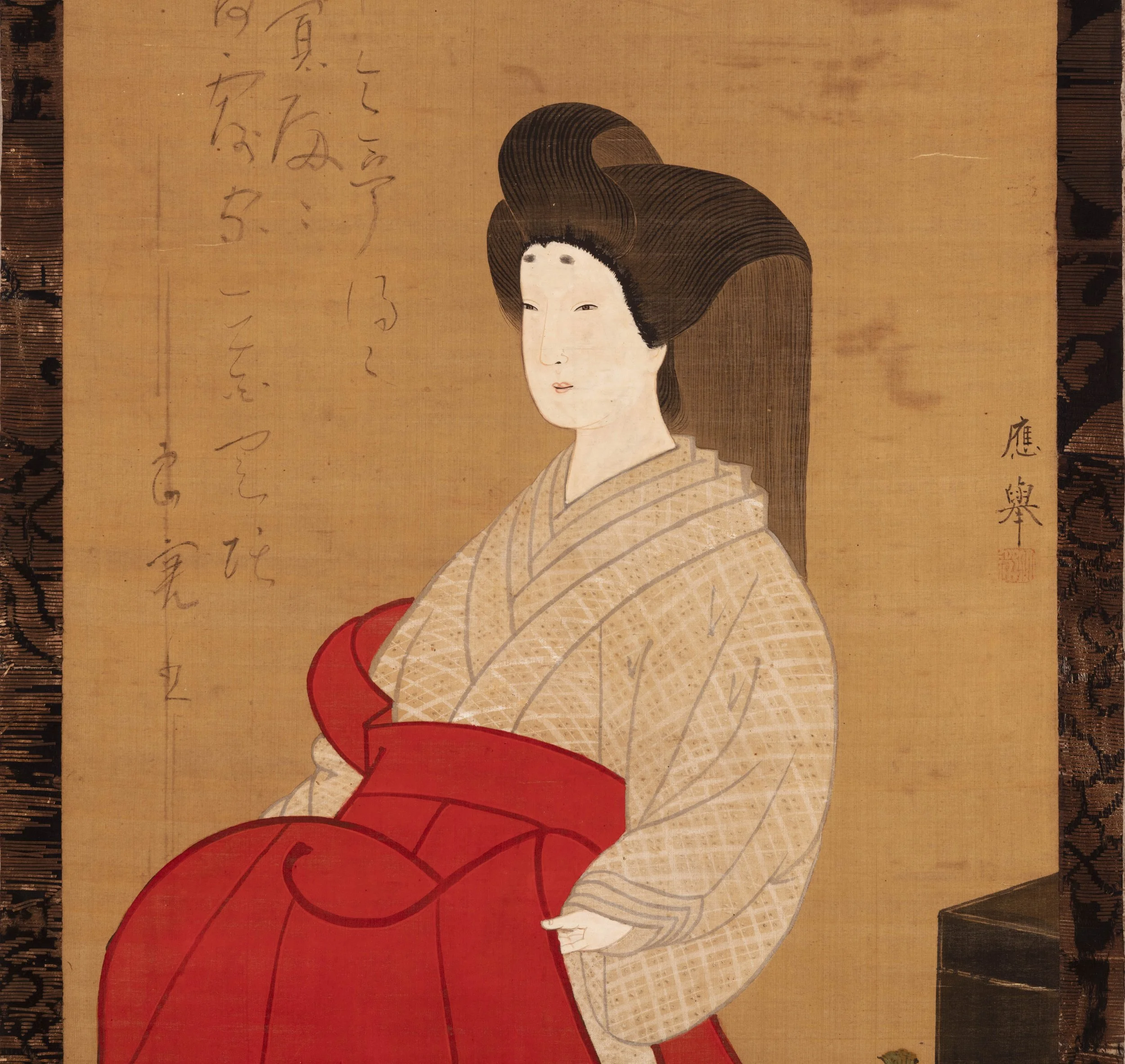
This late Edo-period portrait depicts a shrine maiden (miko) in layered white robes and vivid red hakama. Shown in three-quarter view, she stands quietly without ritual gesture or narrative setting.
The painter works in the naturalistic manner associated with Maruyama Ōkyo and his Kyoto school. The face is softly modelled, while the drapery is treated with measured folds that give the figure weight and presence. The saturated red hakama anchors the composition against the pale robes and subdued ground.
A vertical inscription in cursive script accompanies the image and has traditionally been associated with Ryōkan. The calligraphy is now considered apocryphal, but its reflective tone complements the stillness of the portrait.
The poem may be translated: “To carry such a graceful presence is simply to be.” Rather than describing the shrine maiden, it echoes the painting’s emphasis on composure and inward attention.
The pairing of Kyoto-school naturalism with Zen-inflected verse suggests a later homage to admired artistic and spiritual lineages. Its interest lies less in documentary authorship than in the relationship between image, calligraphy and cultivated reception.
Mineral pigments are applied in controlled passages over silk. The later mounting is restrained and sympathetic to the painting. Together, the materials, colour and quiet staging produce a work of unusual clarity and reserve.