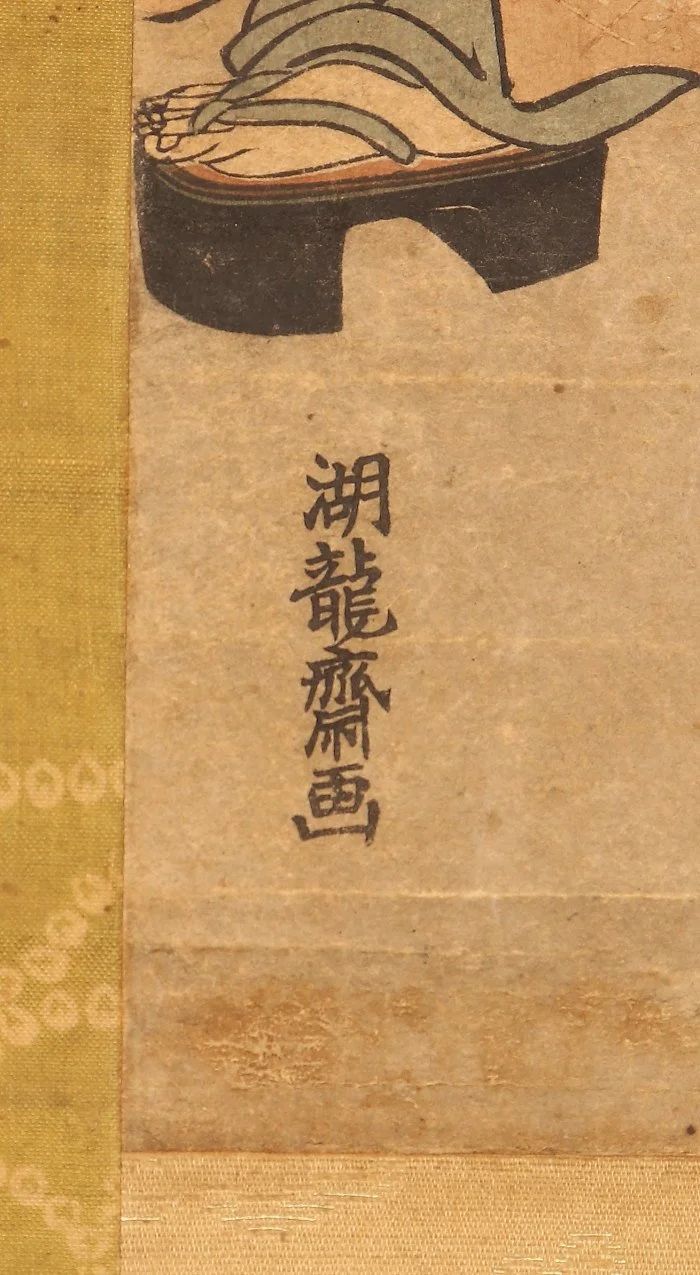
Isoda Koryūsai (act. c. 1764–1788)
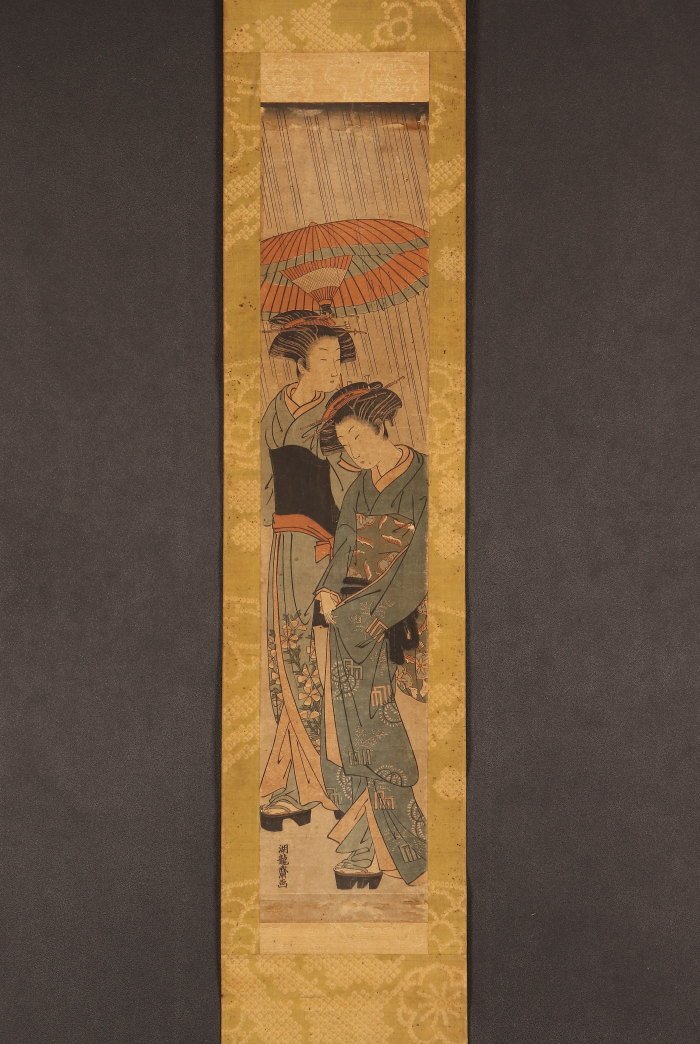
Two Women Sharing an Umbrella in the Rain
(Rain Scene with Beauties Holding an Umbrella)
Edo period, circa 1775
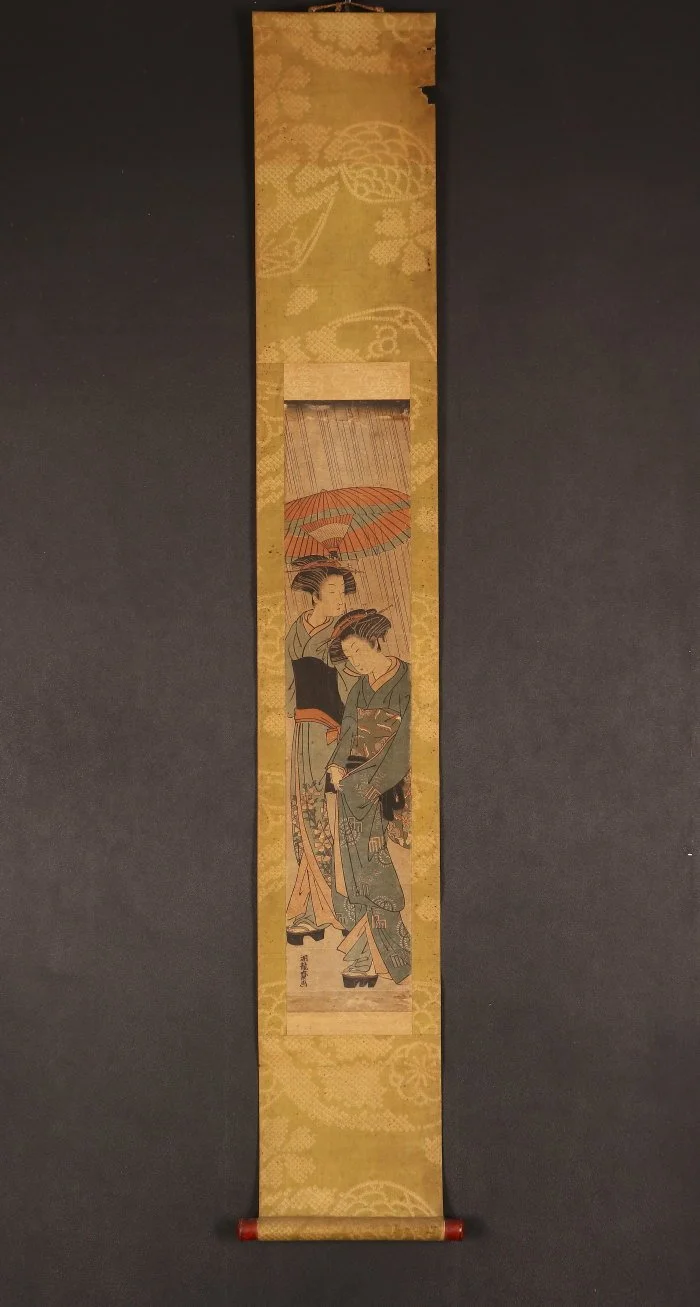
Woodblock print, mounted as a hanging scroll
132 × 20 cm
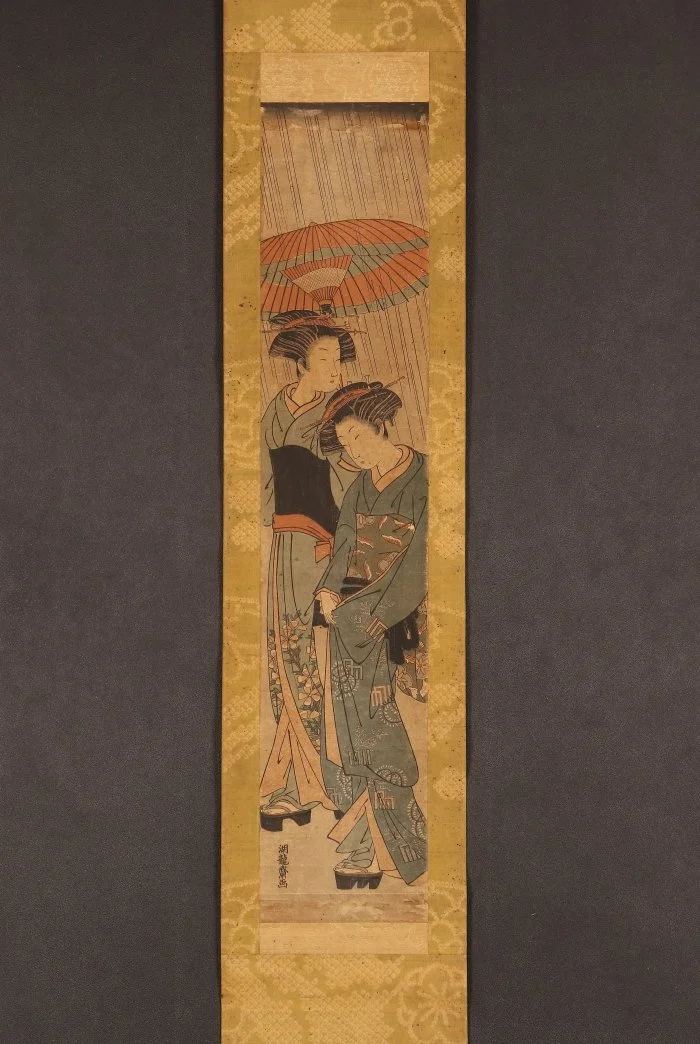
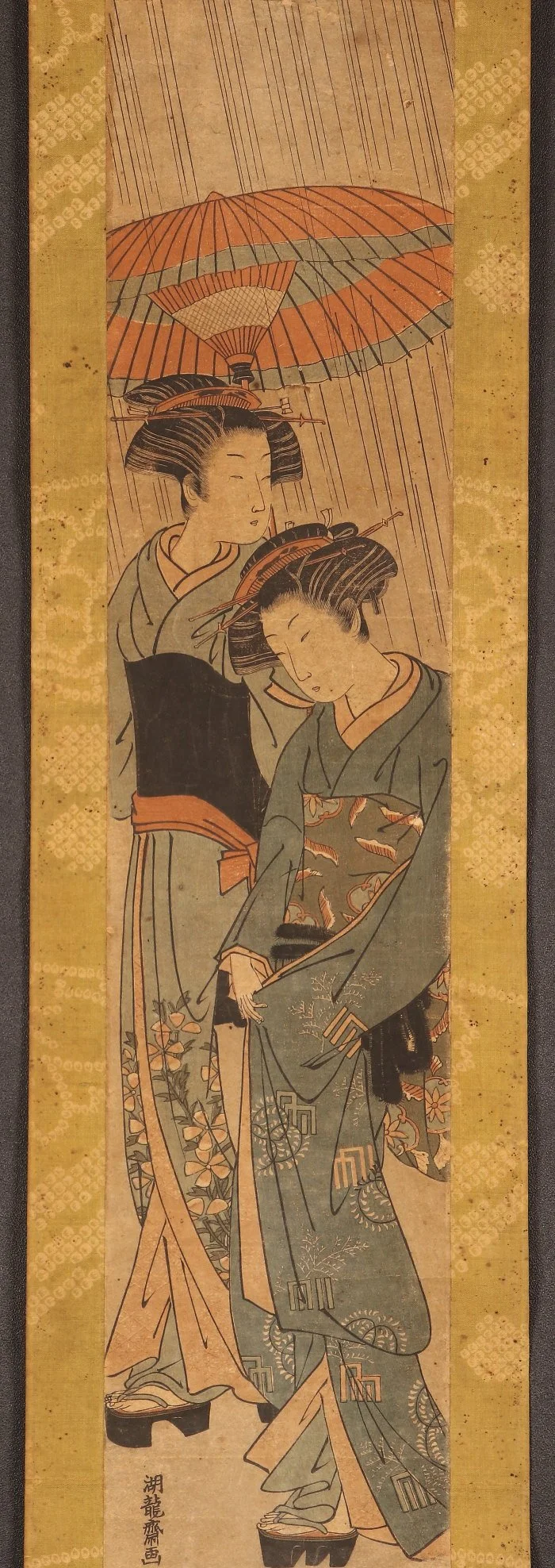
This elegant vertical composition captures two women walking closely beneath a vividly patterned umbrella as rain falls in steady, parallel lines. The figures move in quiet synchrony, their bodies subtly angled toward one another, creating an intimate enclosure beneath the shared shelter. The scene is neither dramatic nor narrative-driven; instead, it offers a fleeting, human moment—two lives briefly aligned by weather, movement, and proximity.
Likely dating from the height of Koryūsai’s popularity in the An’ei era, the print exemplifies his command of the long, narrow pillar-print format (hashira-e). This format demands compositional discipline, and Koryūsai responds by elongating the figures with calm assurance, allowing verticality to shape both posture and mood. The downward rhythm of the rain reinforces the format’s architectural logic, drawing the viewer’s eye slowly from umbrella to feet, from shared shelter to shared ground.
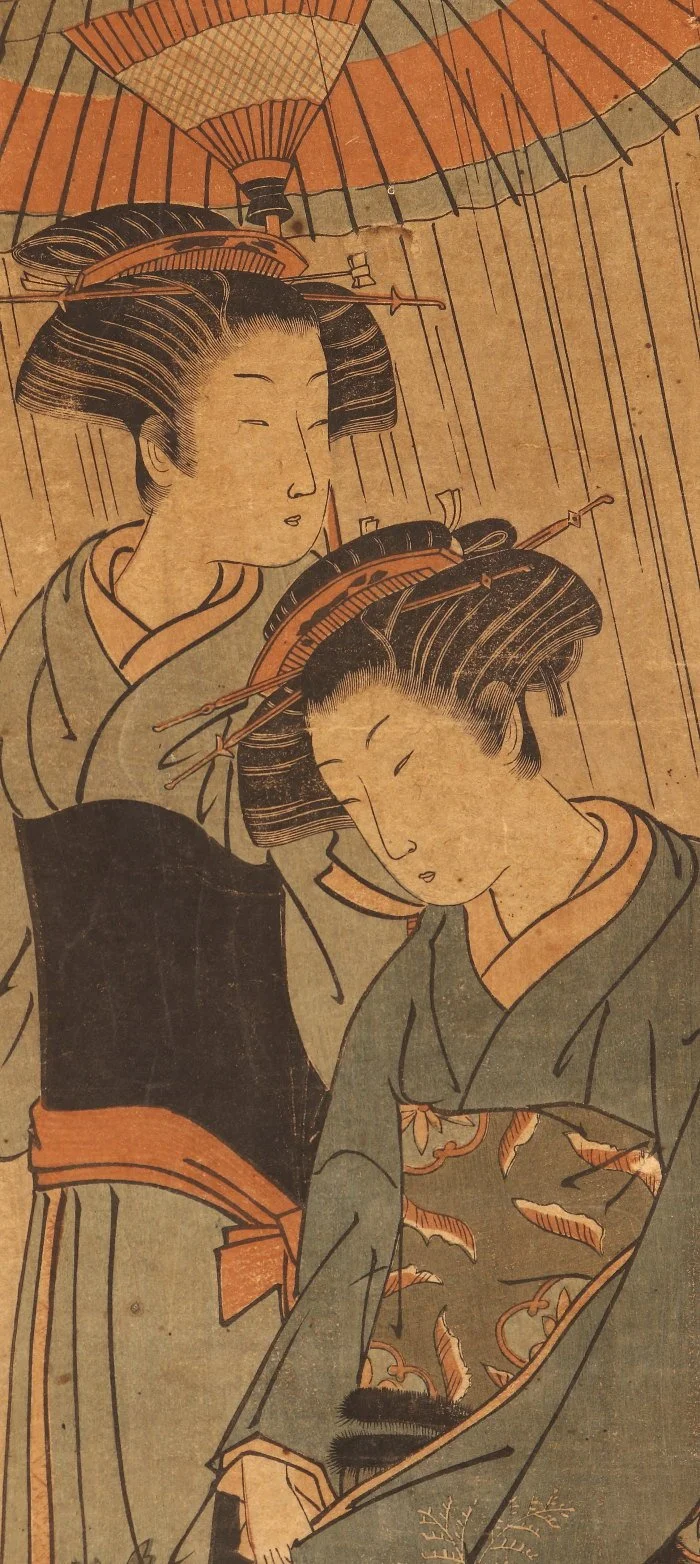
Koryūsai’s sensitivity to surface and pattern is especially evident in the interplay between rain, textile, and form. The umbrella’s radiating structure anchors the composition, echoing the linear cadence of the rainfall while also framing the women beneath it. Muted greens and soft blues dominate the palette, punctuated by restrained accents in the obi and footwear. The effect is harmonious rather than decorative—colour here serves atmosphere, not spectacle.
The figures themselves are rendered with characteristic restraint. Facial expressions are minimal, inward-looking, and quietly absorbed, avoiding overt emotion. Their closeness feels unforced, a natural consequence of circumstance rather than intention. In this way, Koryūsai transforms a mundane act—walking in the rain—into a meditation on companionship, modesty, and the subtle poetry of everyday life in Edo-period urban culture.
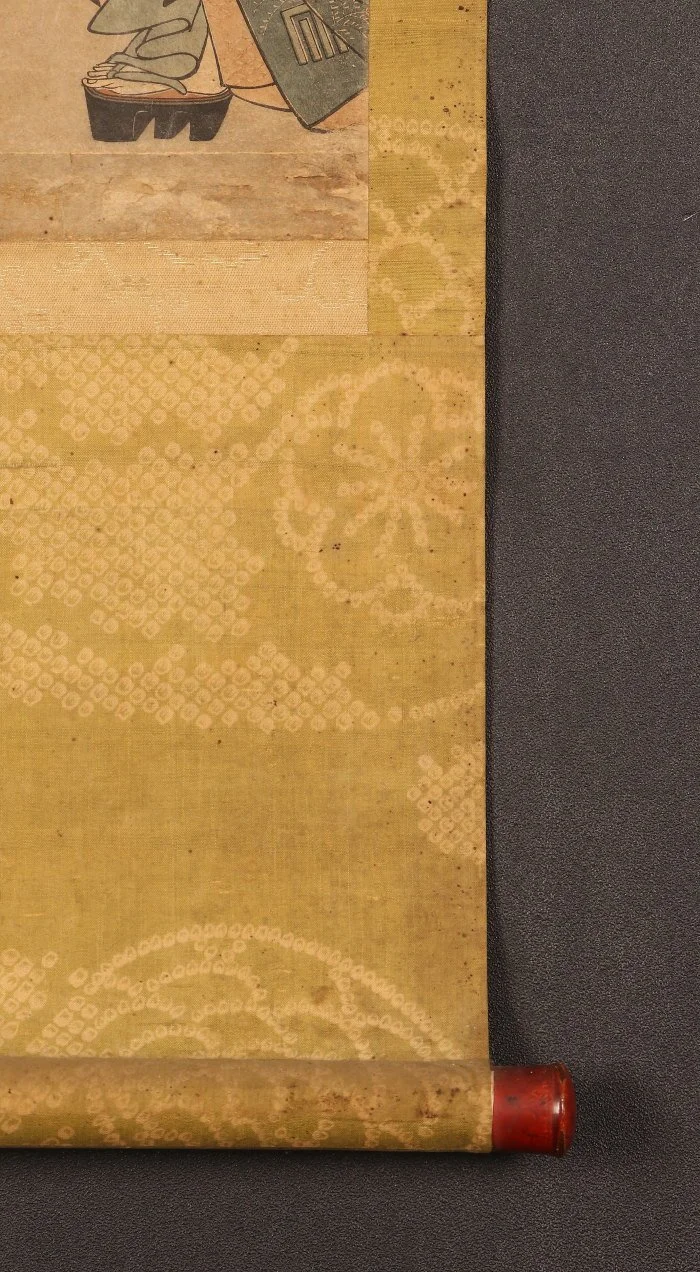
Originally issued in a tall, narrow format, impressions such as this were inherently vulnerable to loss through handling, fashion, and changing tastes. The careful later mounting of this example as a hanging scroll is therefore significant. It reflects an early recognition of the print’s aesthetic autonomy, allowing it to survive beyond its original mode of circulation and to be appreciated as a complete pictorial statement rather than as a disposable or fragmentary object.
Within the collection, this work stands as a quietly confident example of Koryūsai’s mature bijin-ga style. It reflects an Edo sensibility attuned to transience, elegance, and restraint—where beauty emerges not from display, but from shared moments, measured design, and the gentle discipline of form. In its narrow frame and hushed mood, the print offers a distilled vision of intimacy shaped by rain, rhythm, and time.