Yokoi Yayū (1702–1783)
Portrait of Sen Sōtan
Japan, mid-18th century; remounted 1848 (Kaei 1)
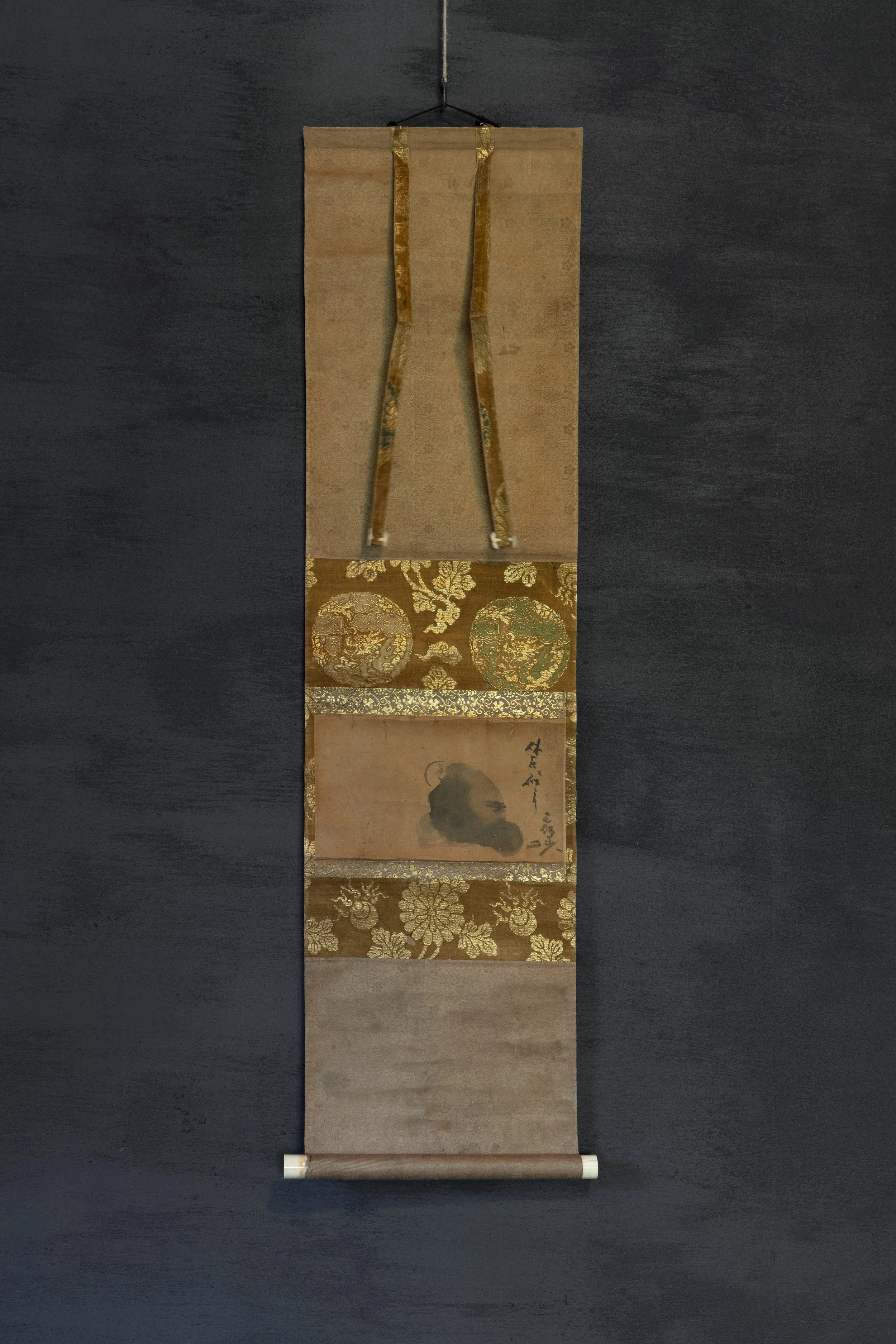
Ink on paper, mounted as a hanging scroll, with tomobako (inscribed box)
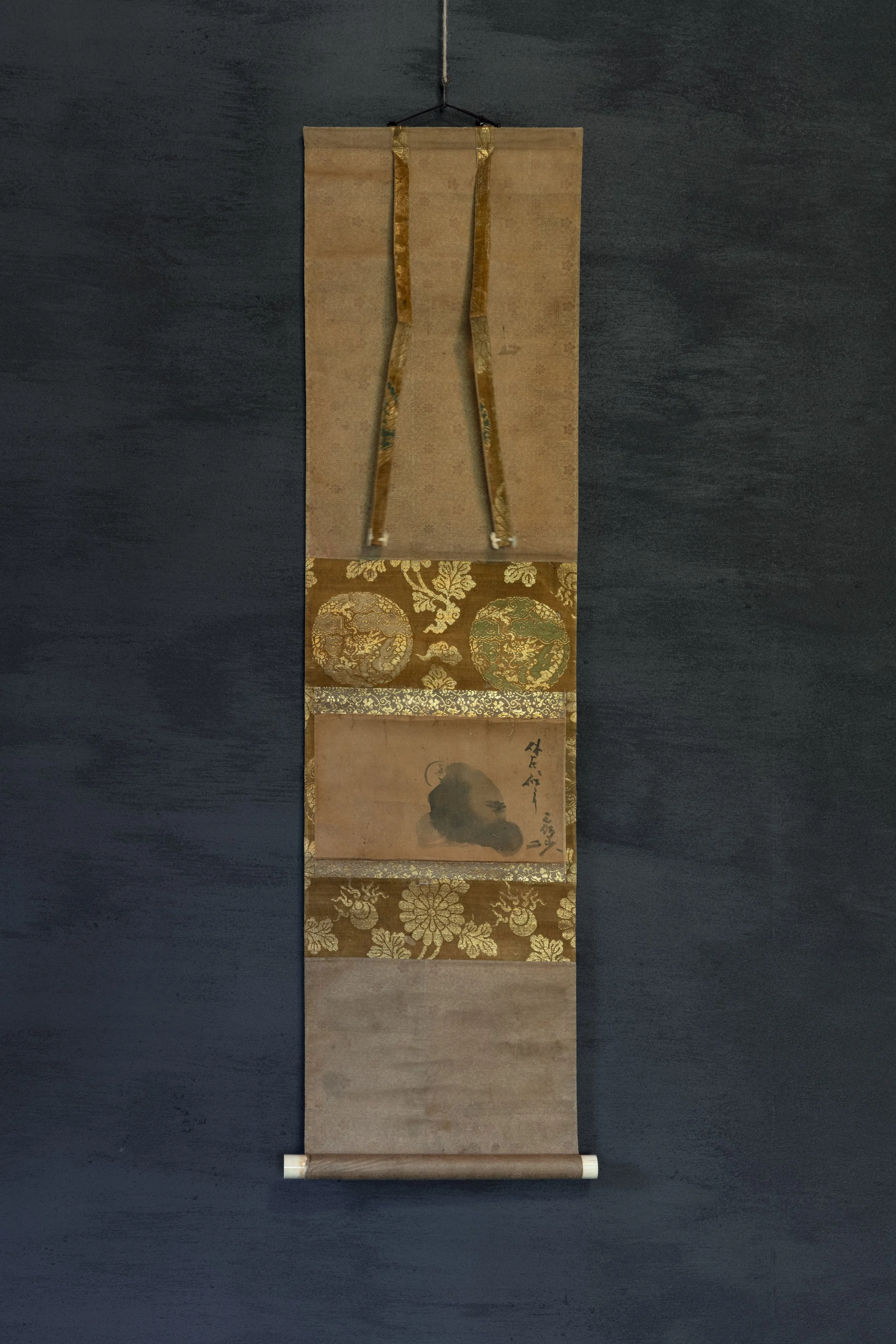
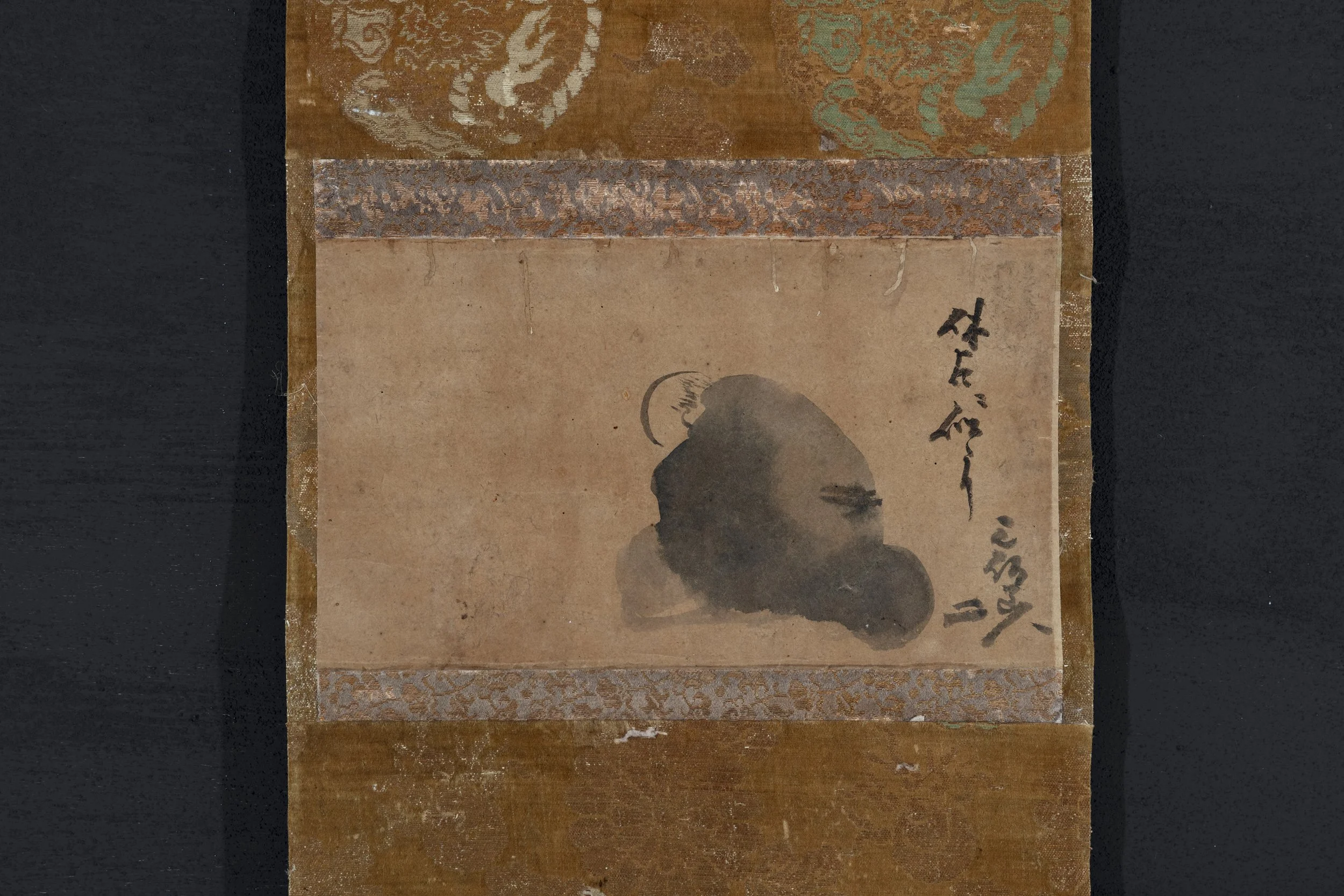
A cloud of ink becomes a life remembered. In this ethereal rendering of Sen Sōtan (1578–1658)—grandson of Sen no Rikyū and consolidator of the wabi-cha tradition—Yokoi Yayū reduces the figure to the barest suggestion: a head shaped by emptiness, a robe barely held together by tone. There are no facial features, no attributes, no narrative setting. What remains is presence alone, a distilled transmission of character rather than likeness.
Brushed beside the image is an inscription that reads: “Beautiful beyond measure, those things made by the untrained hand.” The phrase is both tribute and philosophical declaration. It affirms a core tea and Zen ideal: that true beauty arises not from technical display, but from the relinquishing of self-conscious skill. In this context, the “untrained hand” does not signify ignorance, but freedom—action unburdened by striving.
For Yayū, this was not merely poetic sentiment but artistic method. A samurai by birth who became a leading poet and literatus in Kyoto, he worked within the traditions of haikai and haiga, where verse and image merge into a single gesture of thought. His brush here moves with deliberate restraint: wet dissolves into dry, form slips into atmosphere. The portrait appears and vanishes at once, mirroring the inscription’s claim that what is most complete often seems barely made.
The subject itself reinforces this ethos. Sen Sōtan, remembered for his humility and quiet stewardship of the tea tradition, is not individualized or dramatized. Instead, he is rendered as presence without assertion—an image aligned with the ethics of wabi-cha, where refinement is achieved through reduction, and transmission occurs without display.
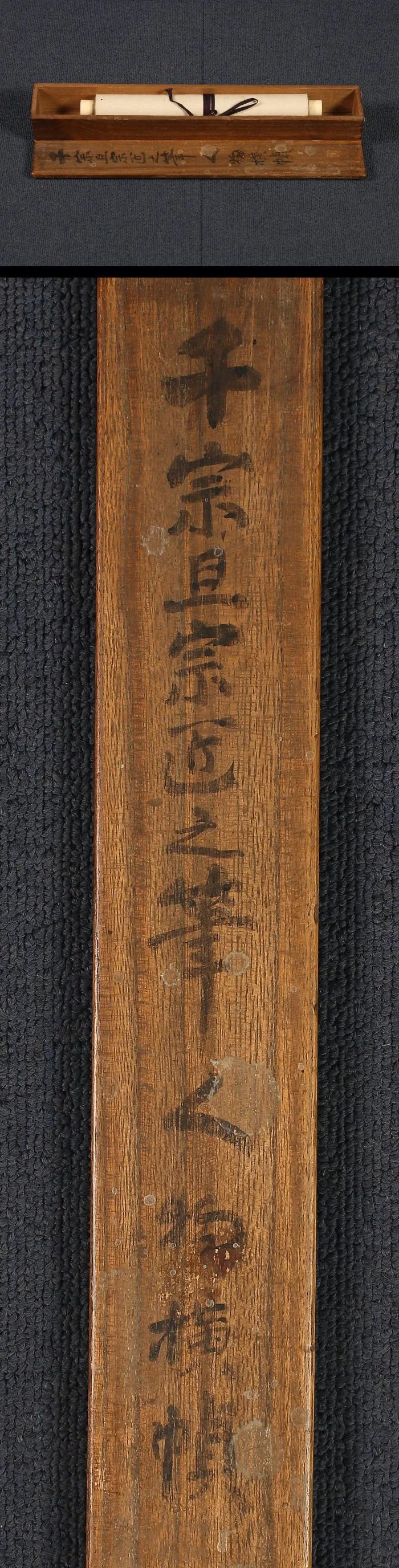
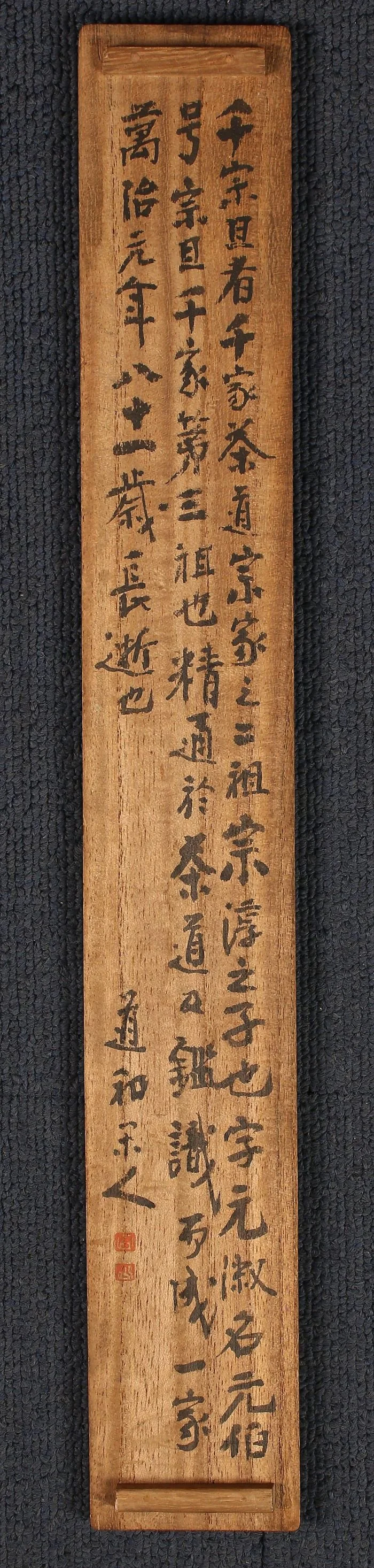
The tomobako secures the work’s historical passage. The outer lid identifies it as a true portrait of Tea Master Sen Sōtan by Yokoi Yayū, while the inner lid bears a biographical colophon written in the spring of Kaei 1 (1848) by the monk Shōgen, recording Sōtan’s lineage and death. This inscription confirms the scroll’s remounting within Kyoto’s tea community in the mid-19th century, two generations after Yayū’s death.
The present brocade mounting—soft brown silk woven with chrysanthemum and peony roundels in gold—accords with that moment of renewal, when portraits of Rikyū and Sōtan were reverently refurbished for alcove display. Subdued rather than ornate, it reinforces the painting’s inward gravity.
Taken together, image, inscription, and box articulate a single philosophy: beauty beyond measure emerges precisely where effort recedes. What the eye barely perceives is exactly what the work offers—an image of emptiness made whole through the untrained hand, and a life remembered by refusing to describe it.