Hakuin Ekaku (1686–1769)
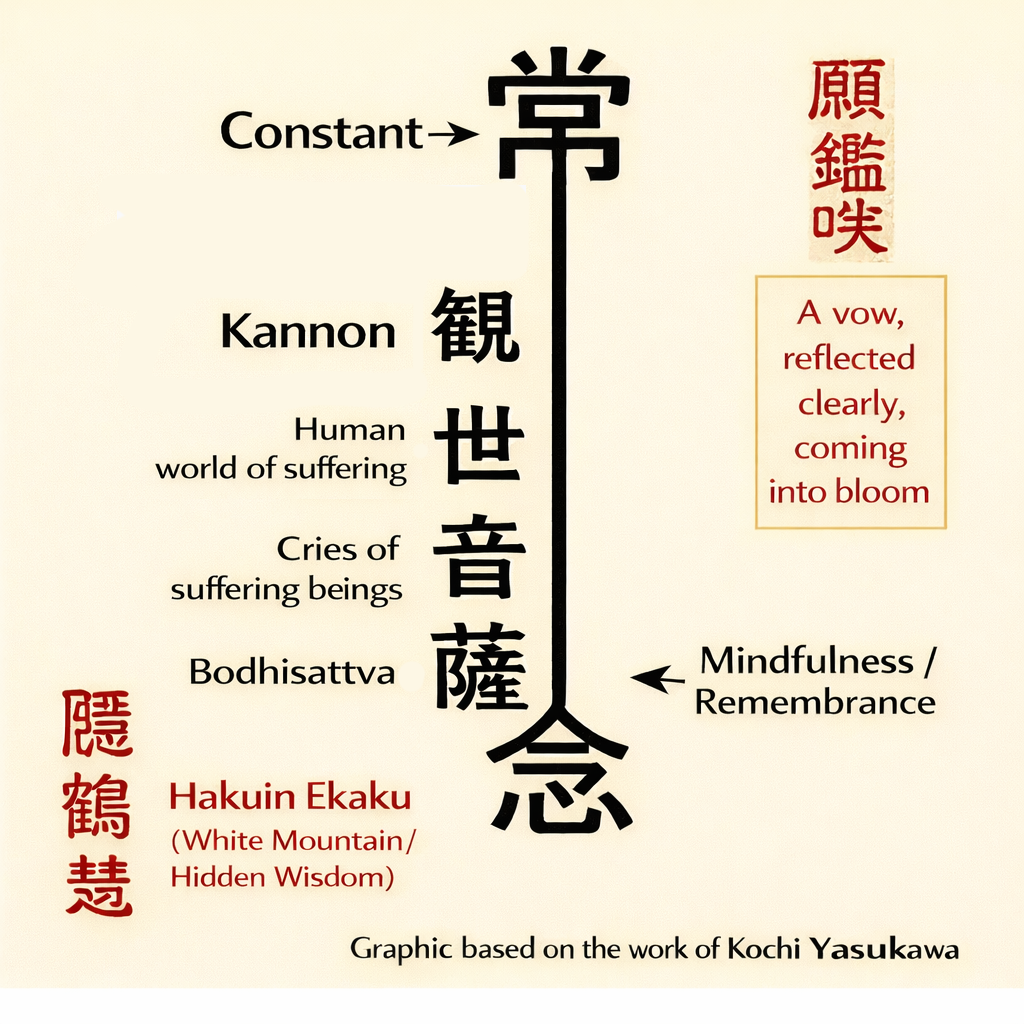
Constant Remembrance of the Bodhisattva Kannon
Japan, mid–Edo period, c. 1760s
Ink on paper, mounted as a hanging scroll
183.5 × 37.5 cm (overall); 117.5 × 25.5 cm (image)
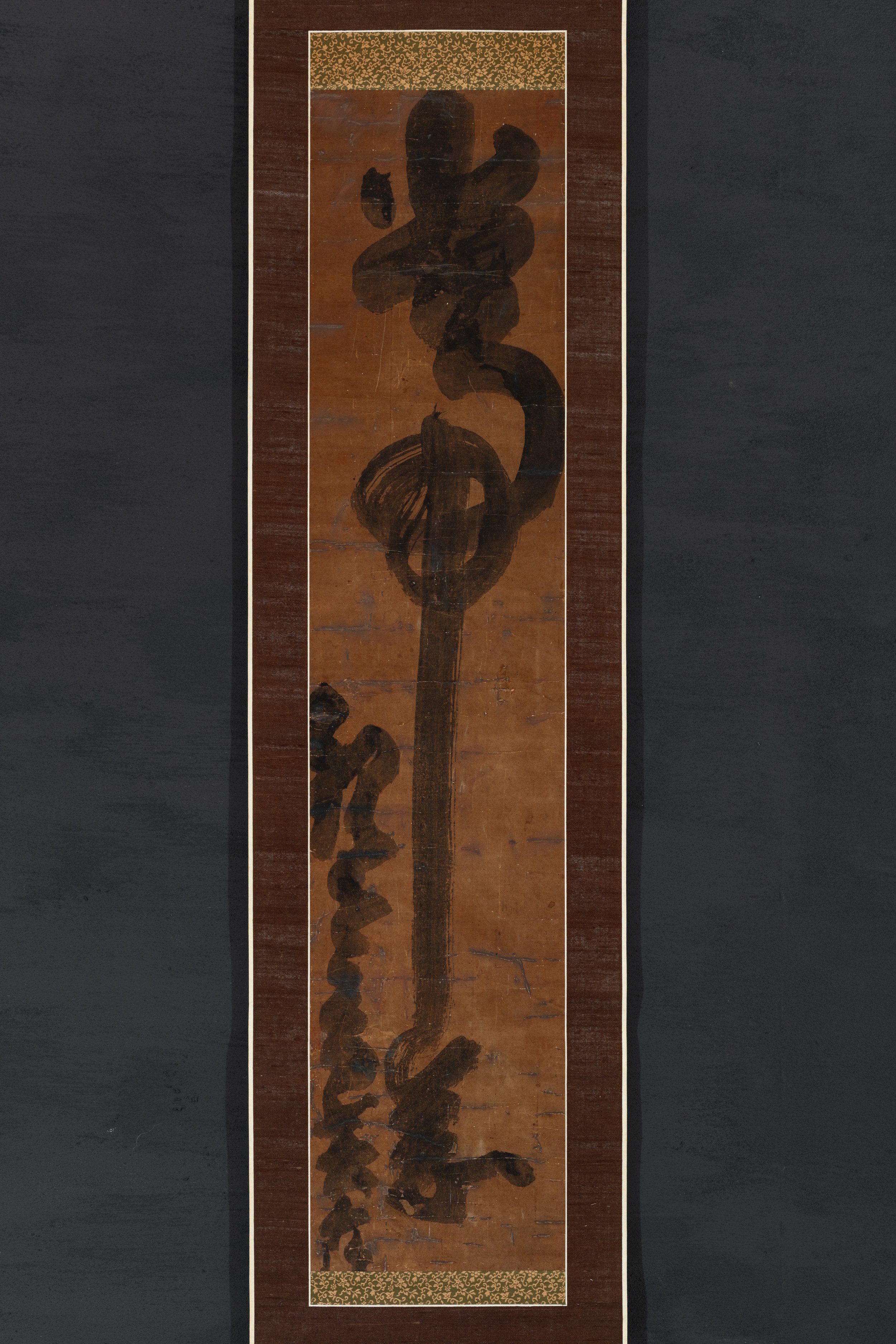
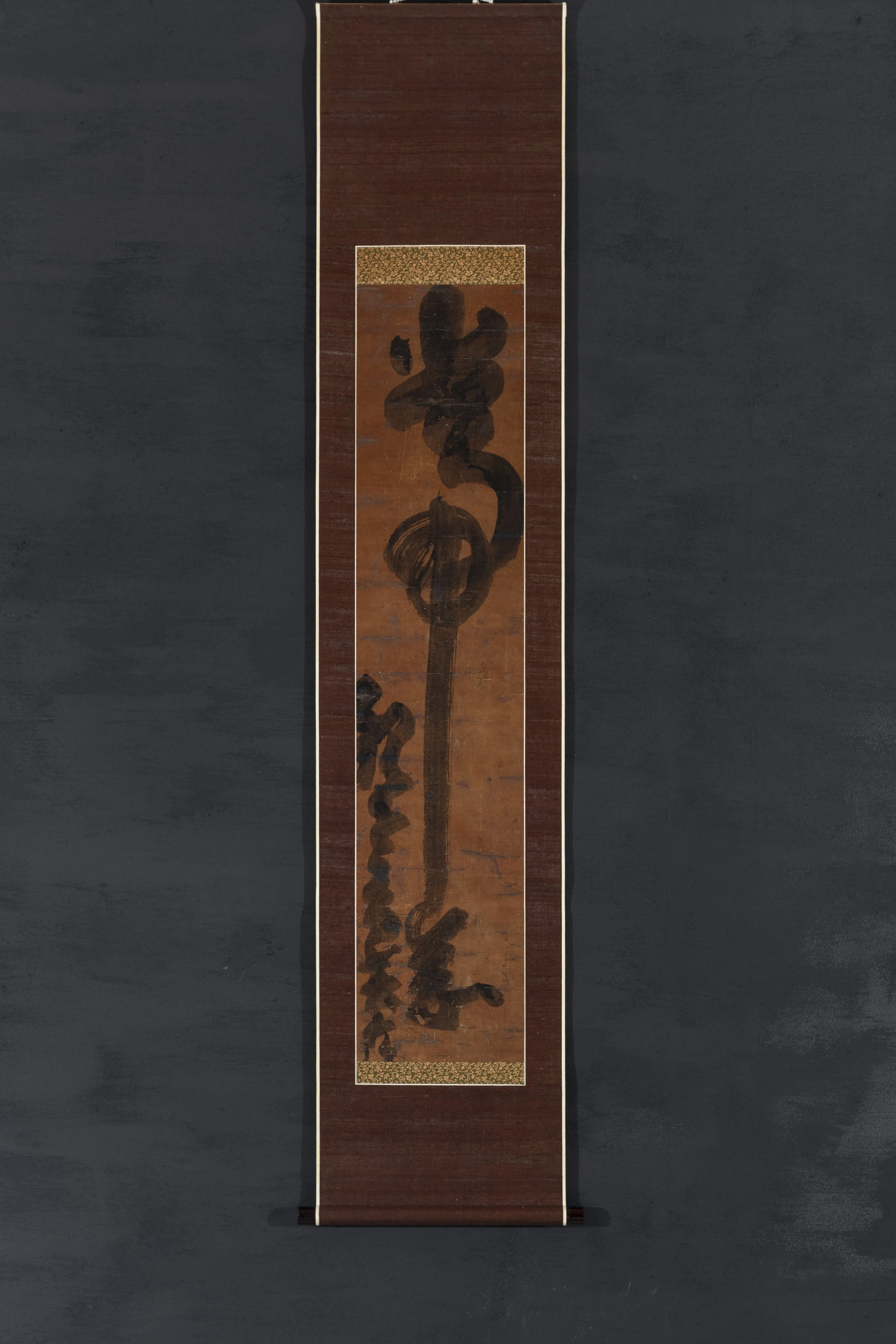
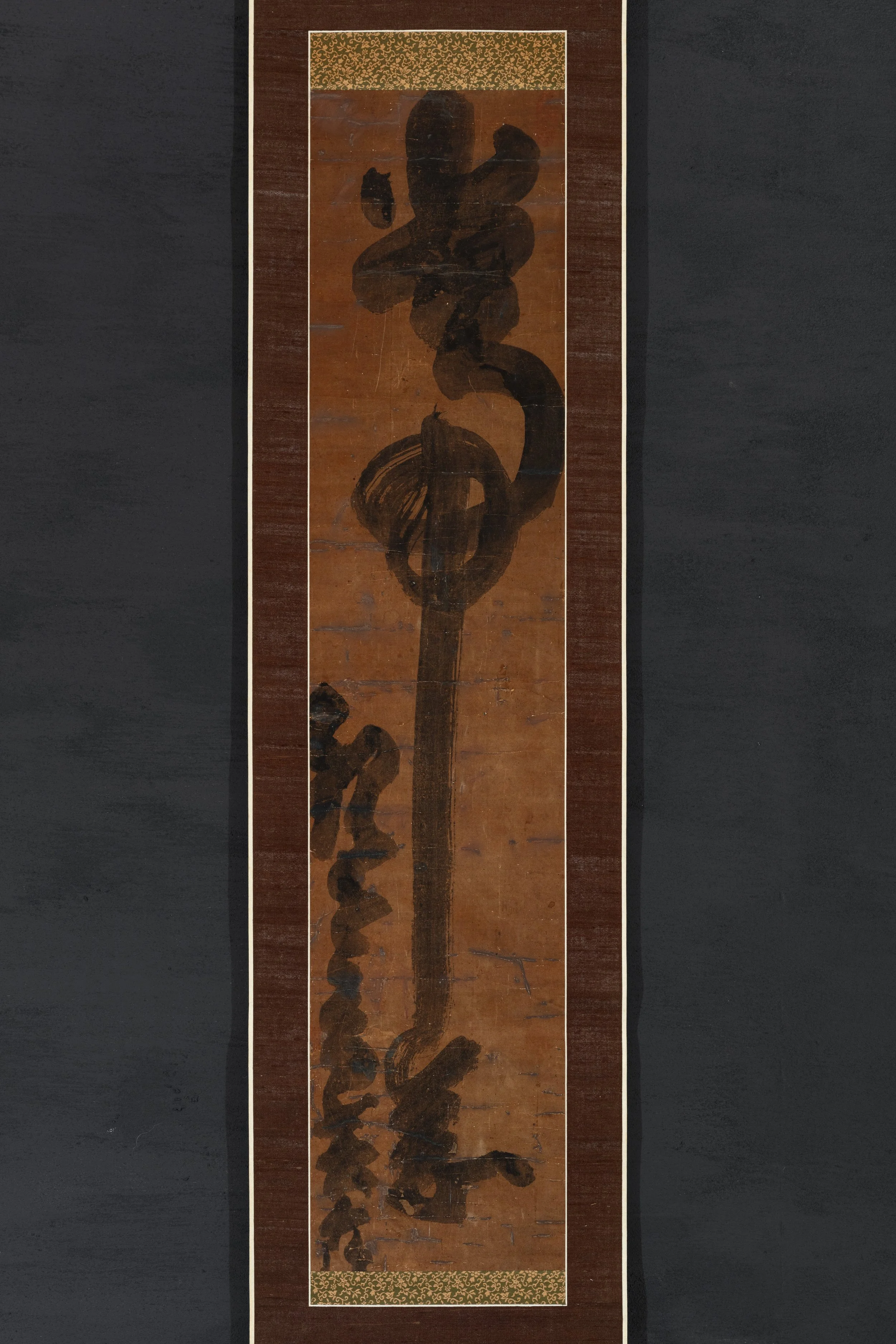
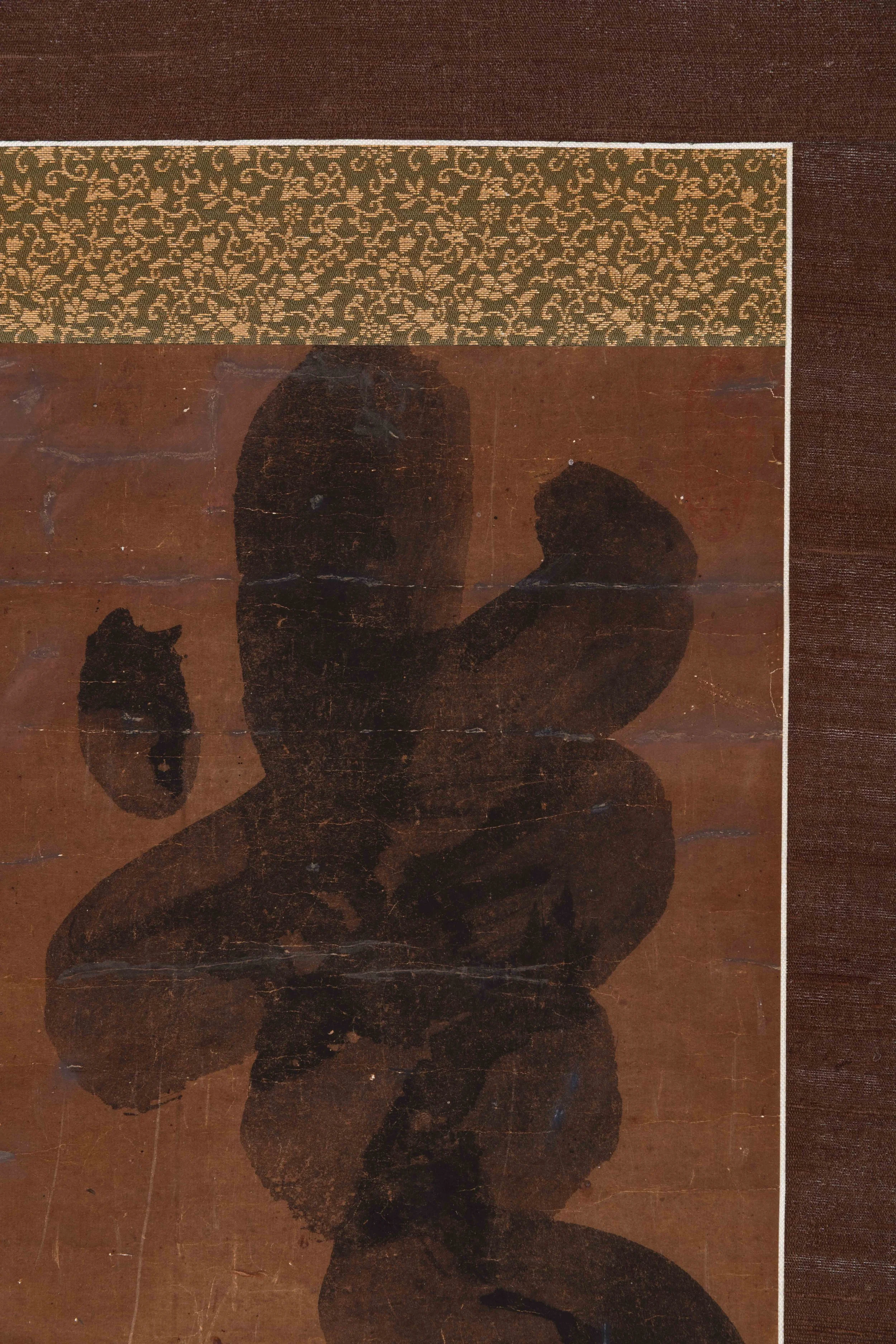
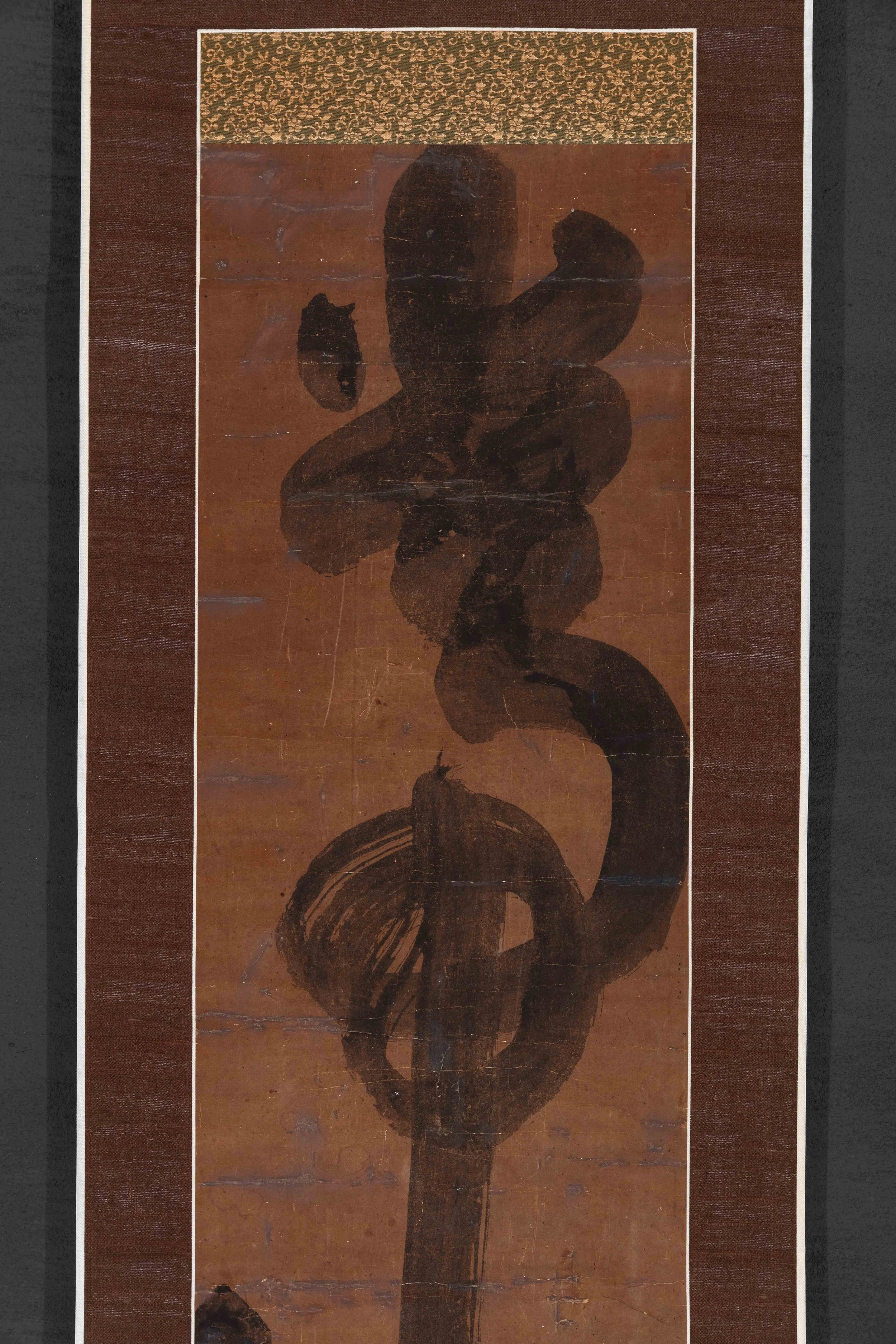
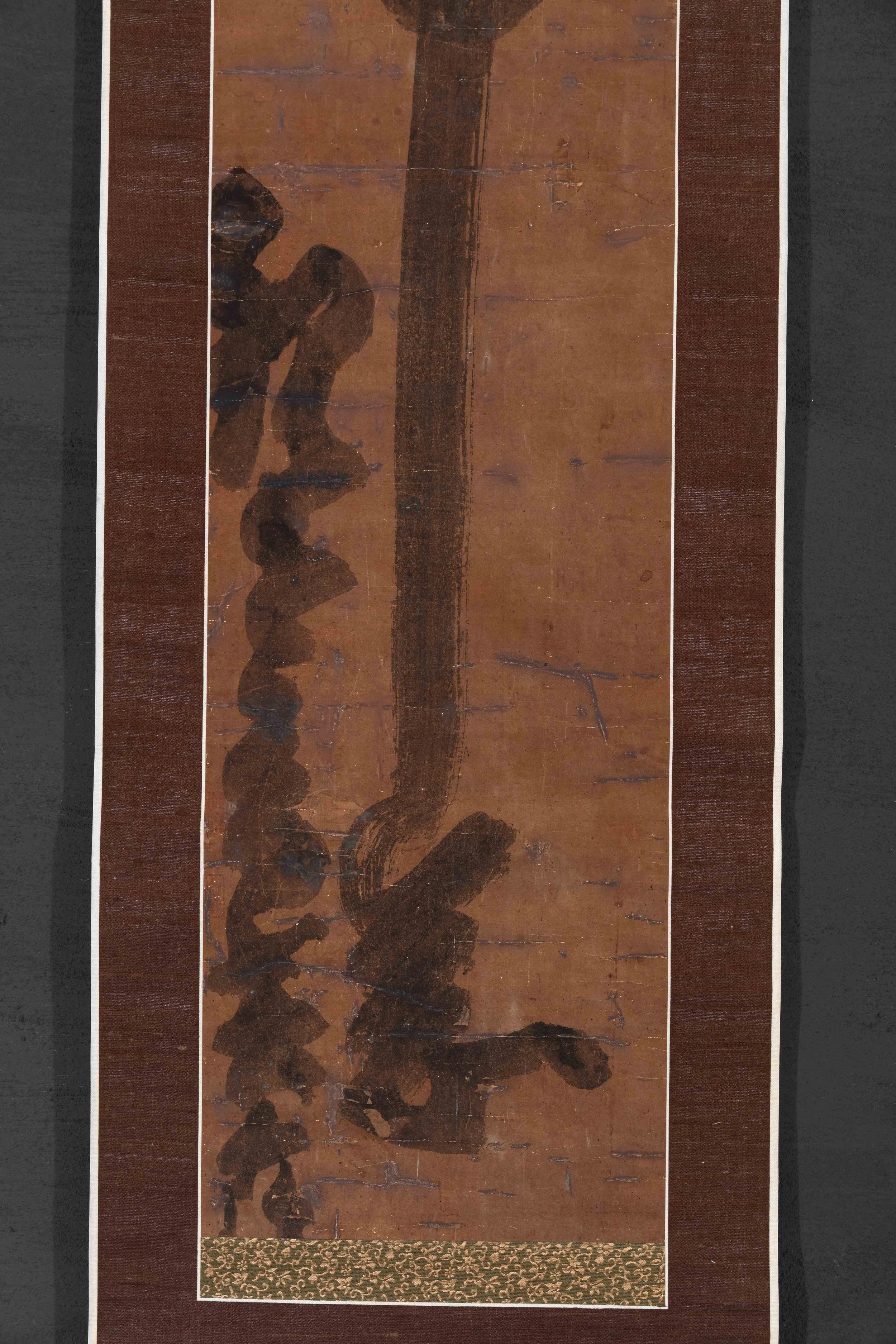
This imposing calligraphic work presents the aphorism Constant Remembrance of the Bodhisattva Kannon brushed in large, emphatic characters that fill the narrow vertical field with unusual physical authority. The brushwork is direct and forceful. Strokes swell and contract under shifting pressure, preserving visible wrist turns, abrupt changes in weight, and a strongly sustained internal rhythm. The writing does not seek ornamental refinement or classical balance; instead, it advances through compression, momentum, and controlled physical energy.
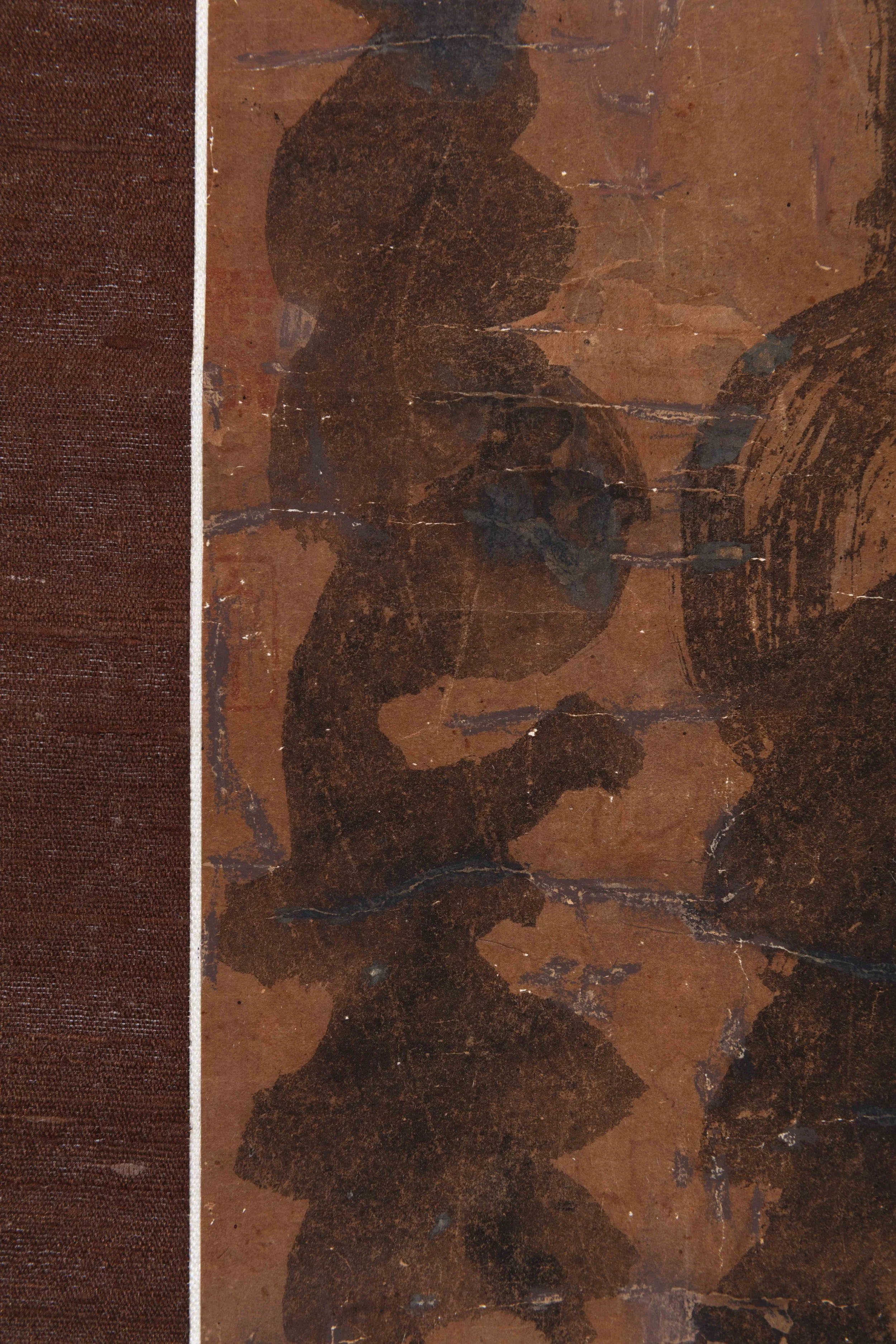
Extensive oxidation now shapes the work’s appearance, muting what would once have been a much sharper contrast between ink and ground. The paper has darkened evenly over time, the ink has softened at its edges, and scattered abrasions, creases, and localized losses interrupt the surface in places. The scroll appears to have undergone careful conservation in the early to mid-twentieth century, stabilizing the paper while preserving its accumulated patina. The result is an unusually deep brown tonality produced through centuries of oxidation, incense exposure, handling, and environmental aging. This dense atmospheric surface lends the work a visual gravity closer in feeling to much earlier medieval calligraphy despite its firmly late-Edo date.
Within Hakuin’s Zen teaching, constant remembrance refers not simply to devotional repetition but to sustained attentiveness carried through ordinary activity. The phrase points toward an unbroken continuity of awareness maintained while sitting, walking, working, or enduring distraction and fatigue. Bodhisattva Kannon functions here less as an external object of worship than as the active embodiment of compassion realized continuously within lived experience. Such phrases occupy an important place within Hakuin’s pedagogical world, grounding spiritual insight within daily practice and counterbalancing abstraction or self-conscious spiritual attainment.
At a structural level, the calligraphy resists strictly linear reading. The long uninterrupted descending stroke may be understood as carrying both constancy through time and mindfulness enacted as continuous activity. Rather than isolating individual concepts, the writing fuses them into a sustained bodily gesture extending from top to bottom without interruption. In this sense, remembrance is not merely described but physically enacted through maintained pressure, unbroken movement, and refusal of fragmentation. The remaining characters condense toward the lower section into increasingly compressed and fused rhythmic passages where semantic clarity gives way to energetic continuity.
Calligraphies of this type were frequently produced as instructional works intended for monks, lay practitioners, and temple supporters rather than formal elite display. Their directness reflects this context. The phrase recurs across Hakuin’s oeuvre with considerable variation in spacing, brush energy, and formal treatment rather than adherence to any fixed compositional model. Each example operates less as a repeated design than as a renewed enactment of practice under changing physical and psychological conditions.
Three seals are present and securely identifiable. The upper seal is the elongated oval Kokan’i seal associated with Hakuin’s mature period, while the two lower square seals read Ekaku and Hakuin respectively. All three correspond closely in carving style, proportion, placement, and impression character with well-documented authenticated examples. Unlike several of the more compositionally repeated paintings associated with Hakuin traditions, the present work carries a particularly convincing sense of immediacy and structural integration between brush movement, inscriptional rhythm, and seal usage. Taken together, the evidence strongly supports the work as an authentic calligraphy by Hakuin himself.
That authenticity matters not simply as documentary confirmation but because the work preserves with unusual clarity the physical intelligence of Hakuin’s mature hand. The brush never appears hesitant or overdetermined. Pressure accumulates and releases naturally across the surface, allowing the writing to sustain both authority and fluidity simultaneously. Even through the heavy oxidation of the paper, the calligraphy retains an unmistakable vitality.
Taken as a whole, the scroll belongs firmly within Hakuin’s practice-oriented calligraphic production. It is neither a declaration of enlightenment nor an image of compassion, but a practical insistence upon continuity itself: compassion maintained through repetition, discipline, attentiveness, and the ordinary actions of daily life. The work remains severe, deeply physical, and quietly luminous — one of the clearest authenticated expressions within the collection of Hakuin’s ability to transform doctrinal instruction into living brush movement.