Nakahara Nantenbo (1839–1925)
Procession of Mendicant Monks
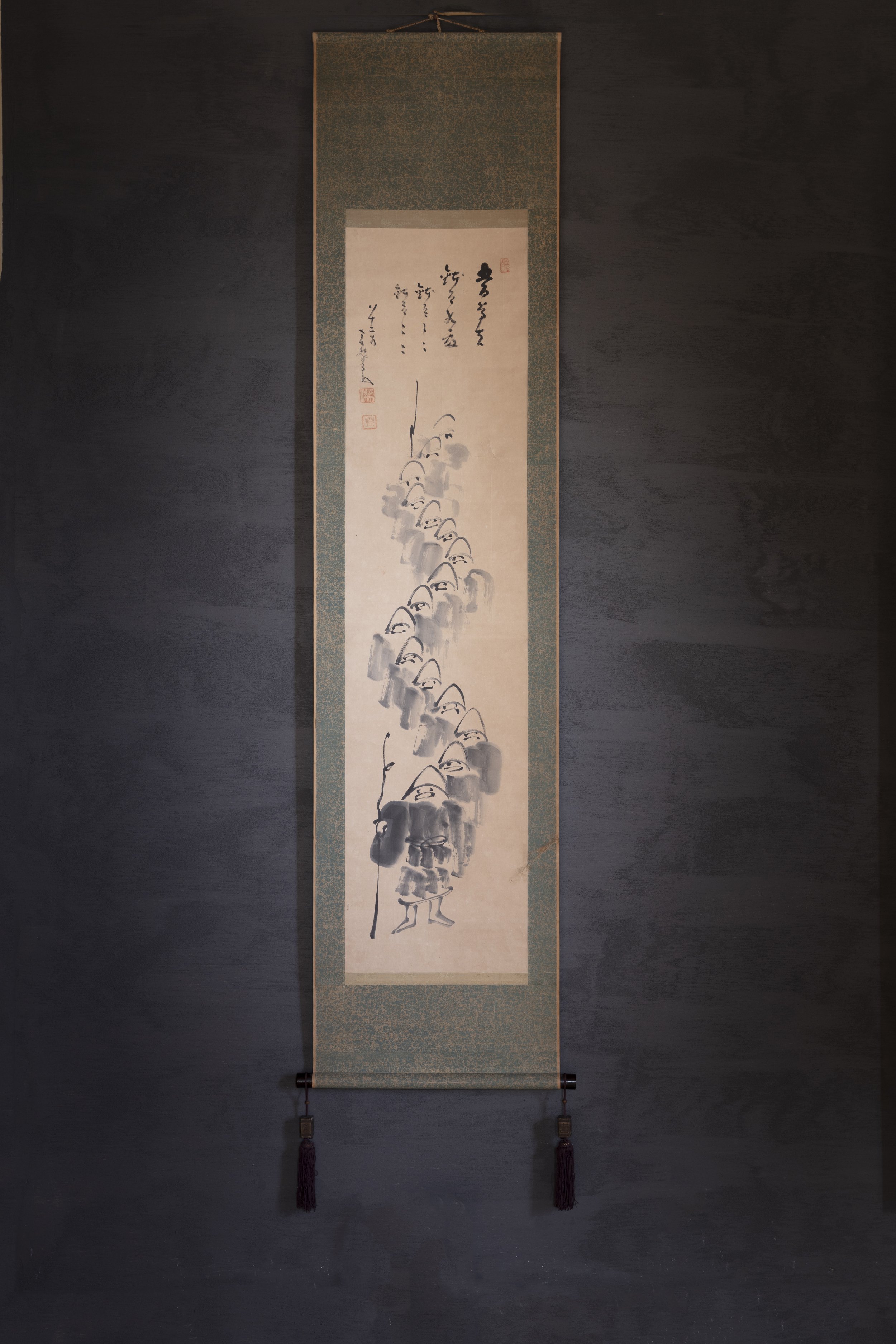
Ink on paper, hanging scroll
Image size: approx. 133 × 32.5 cm
Overall size: approx. 188 × 44 cm
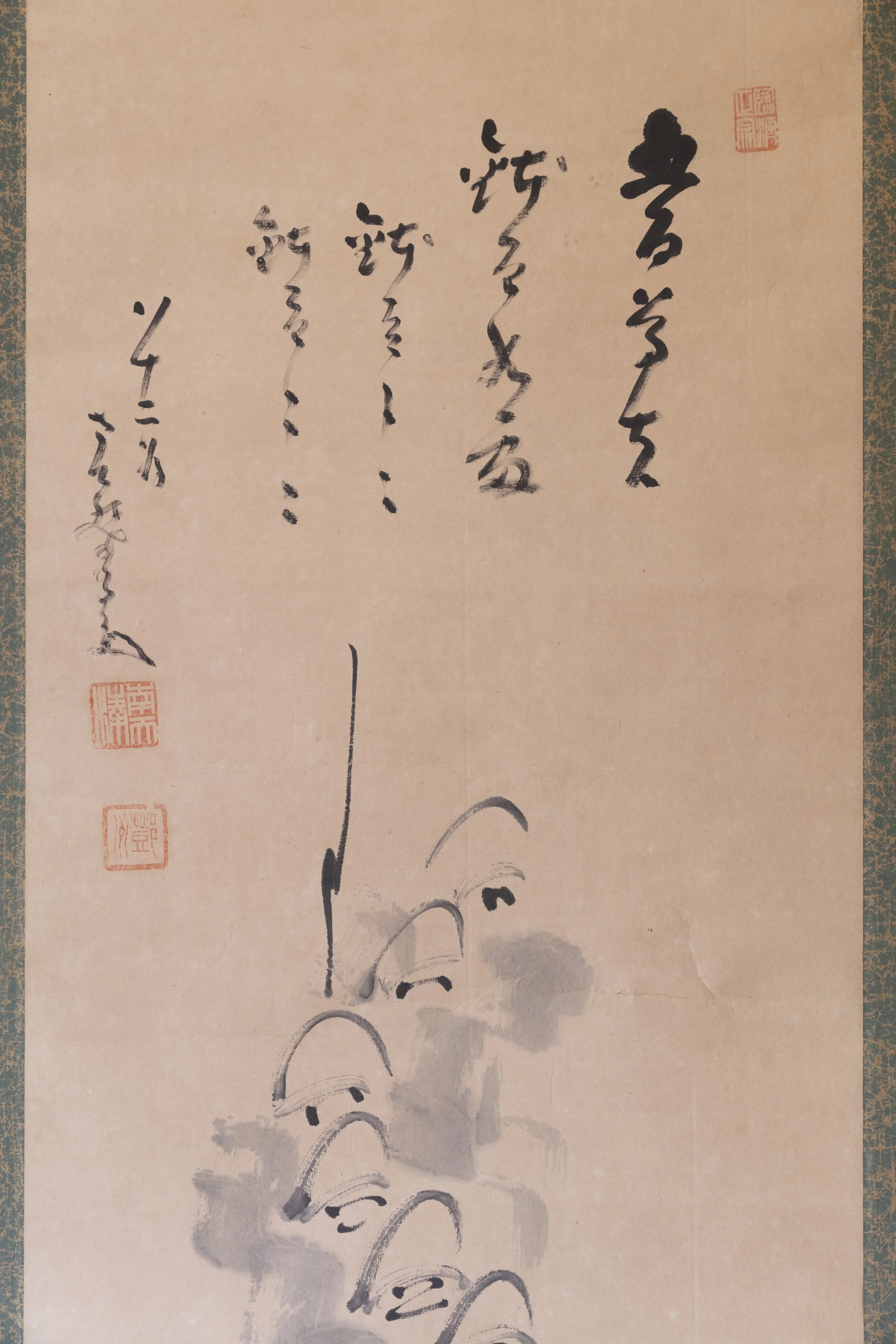
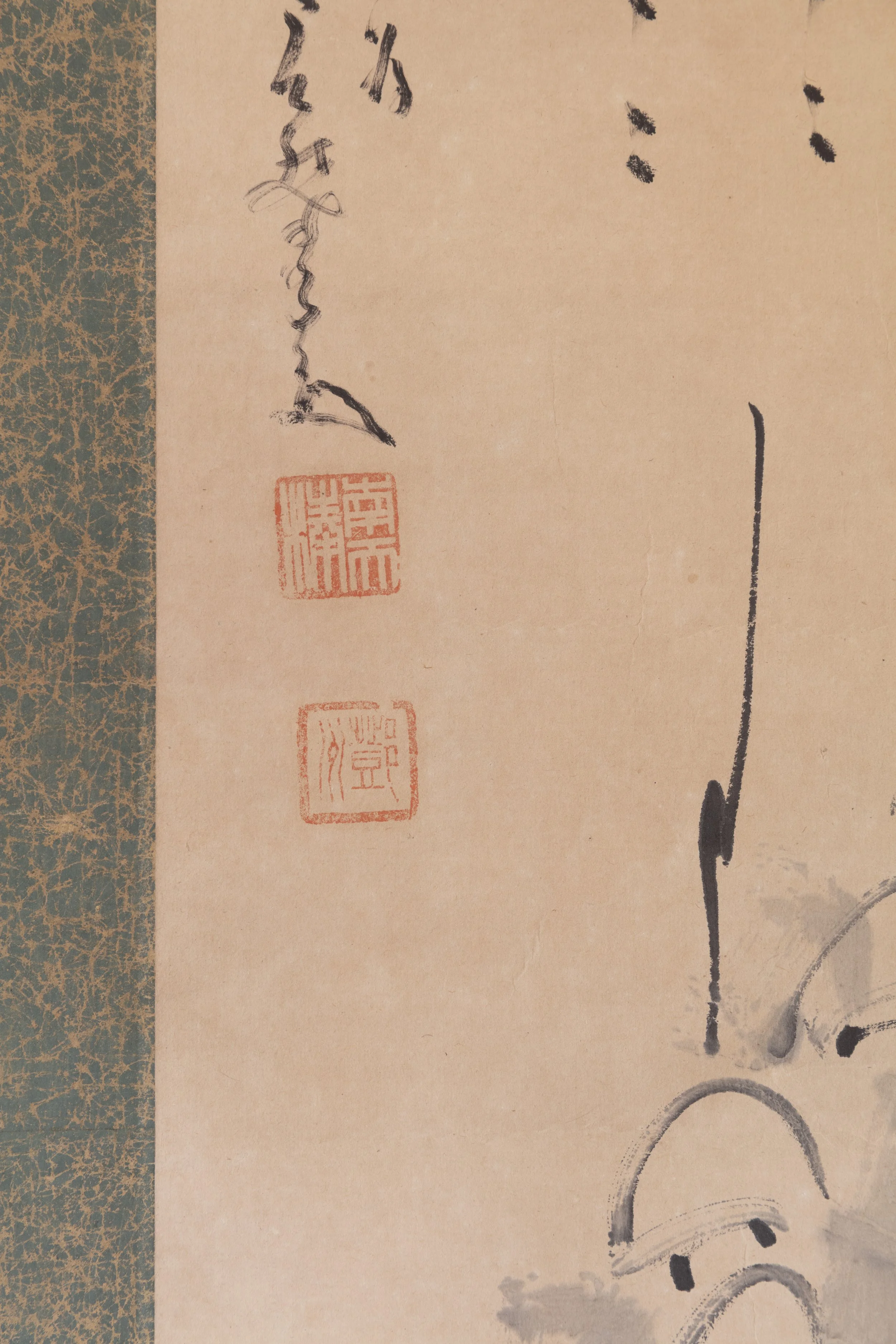
Signed: “The eighty-two-year-old fellow Nantenbo Toju”
Taisho period (1920-21)
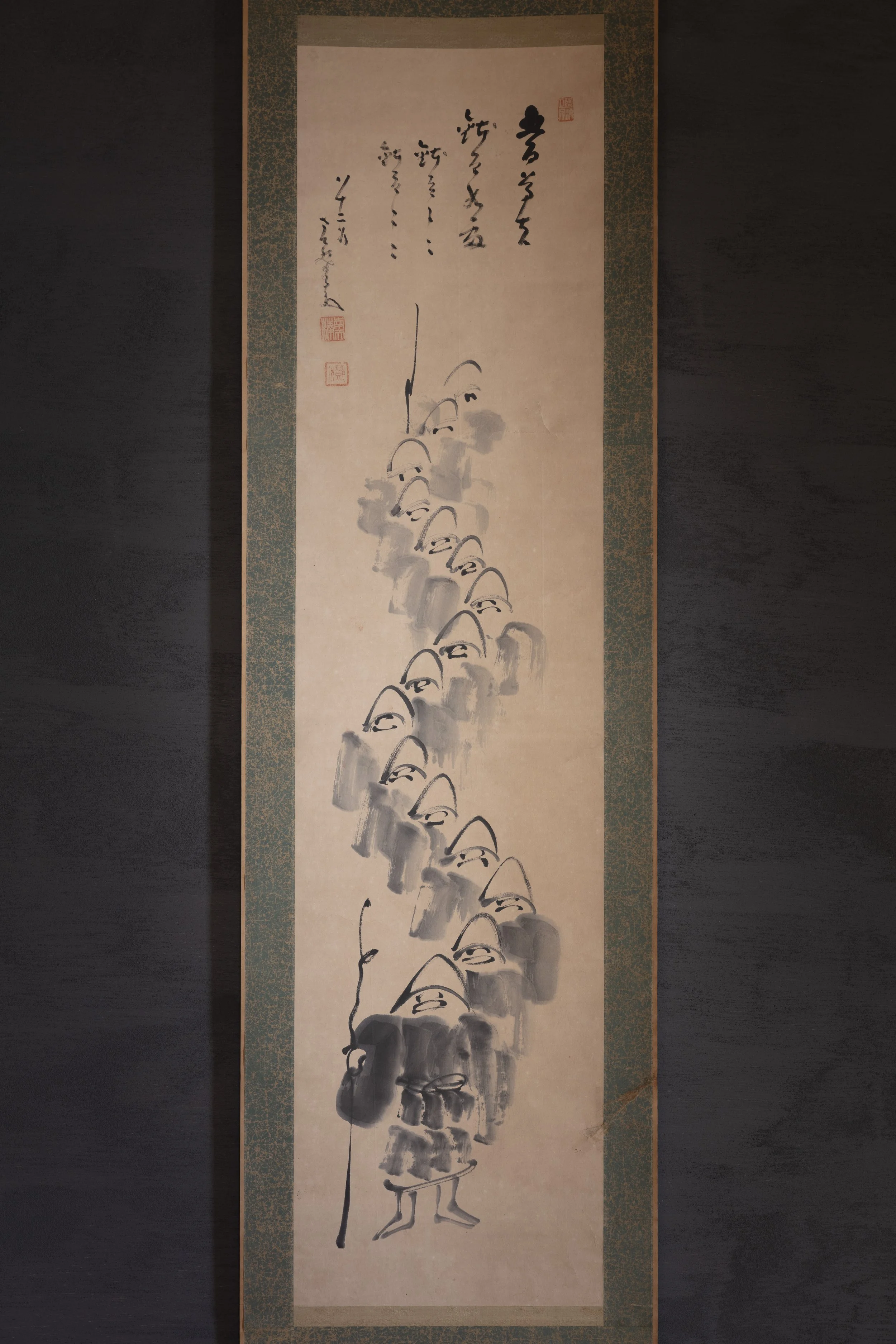
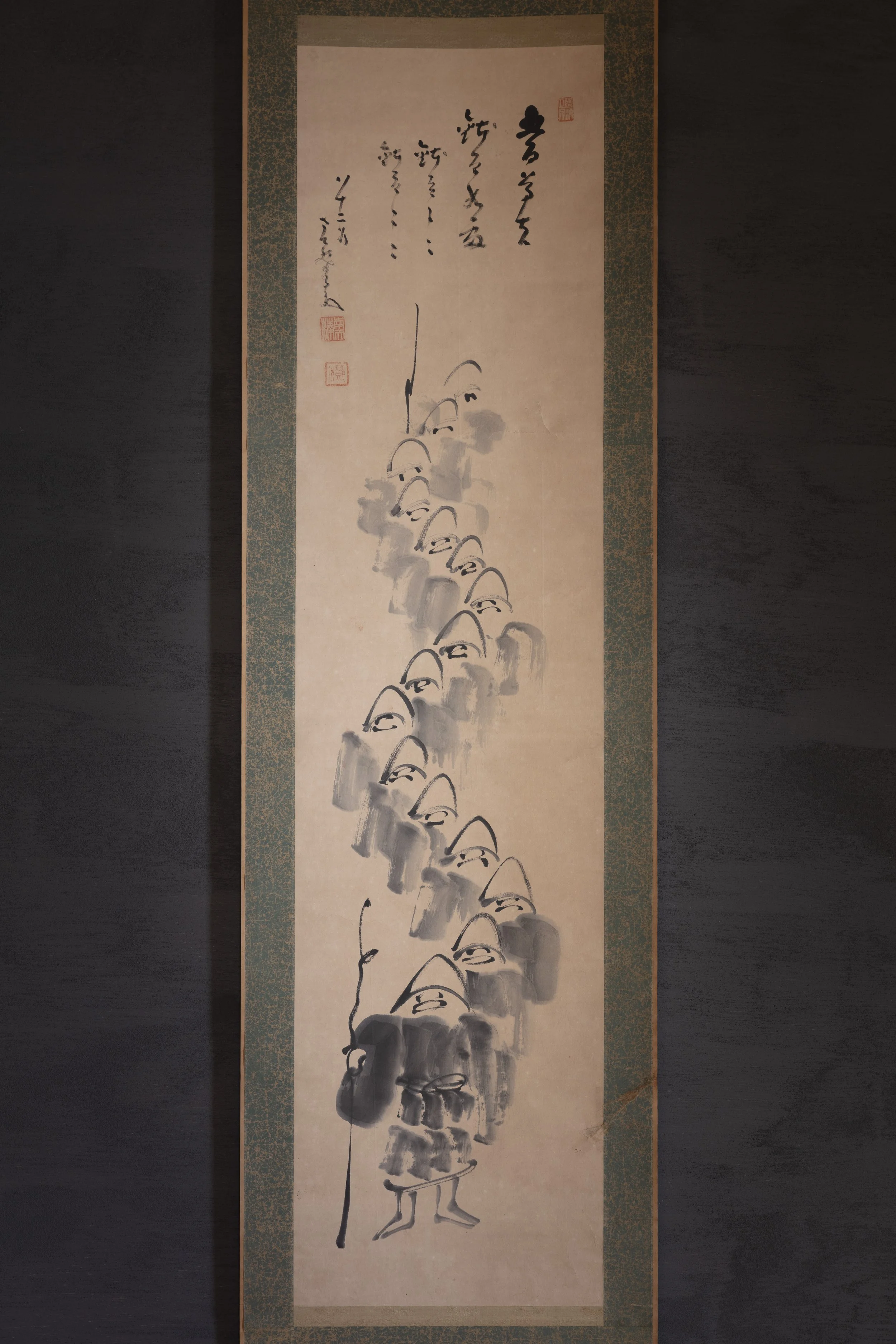
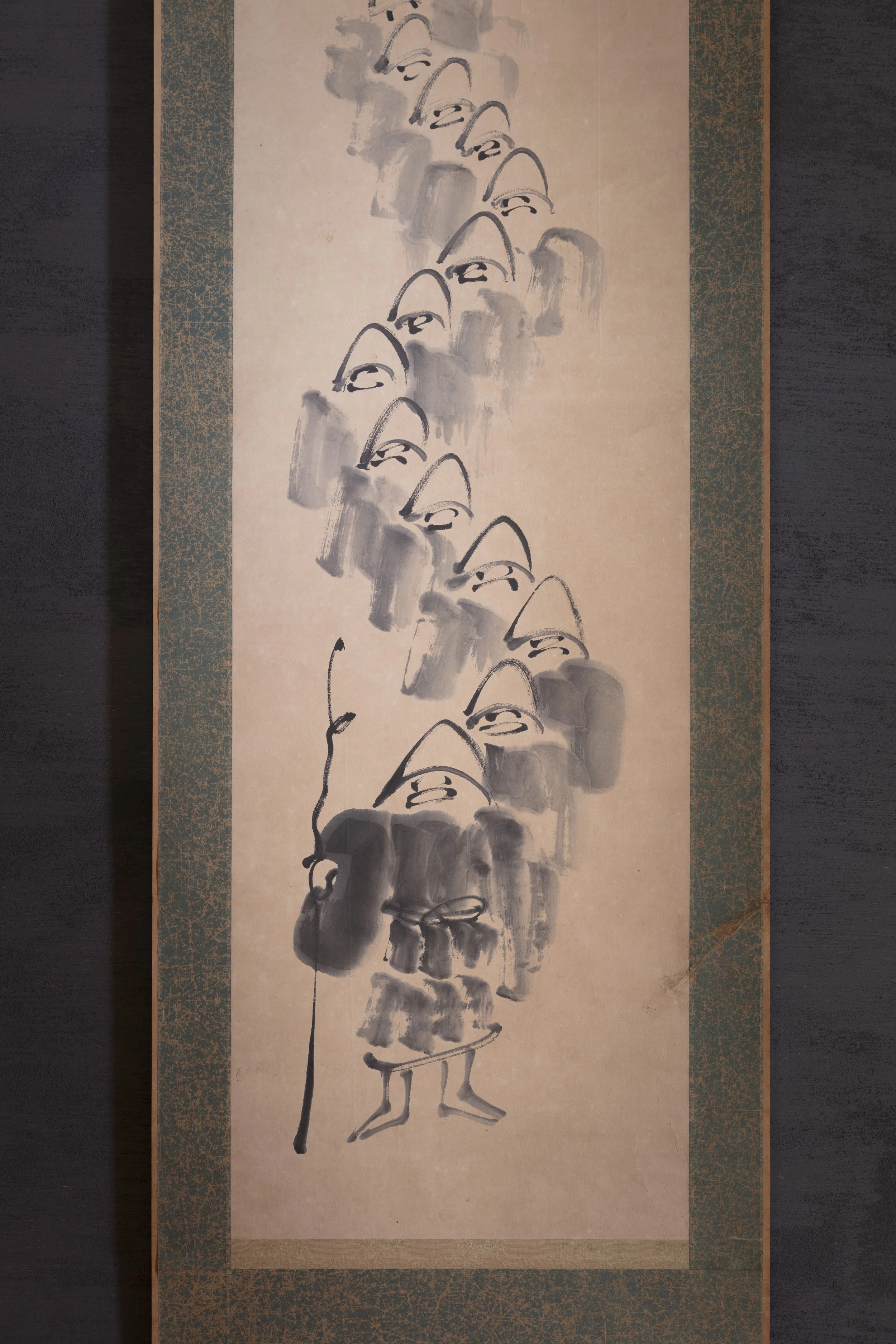
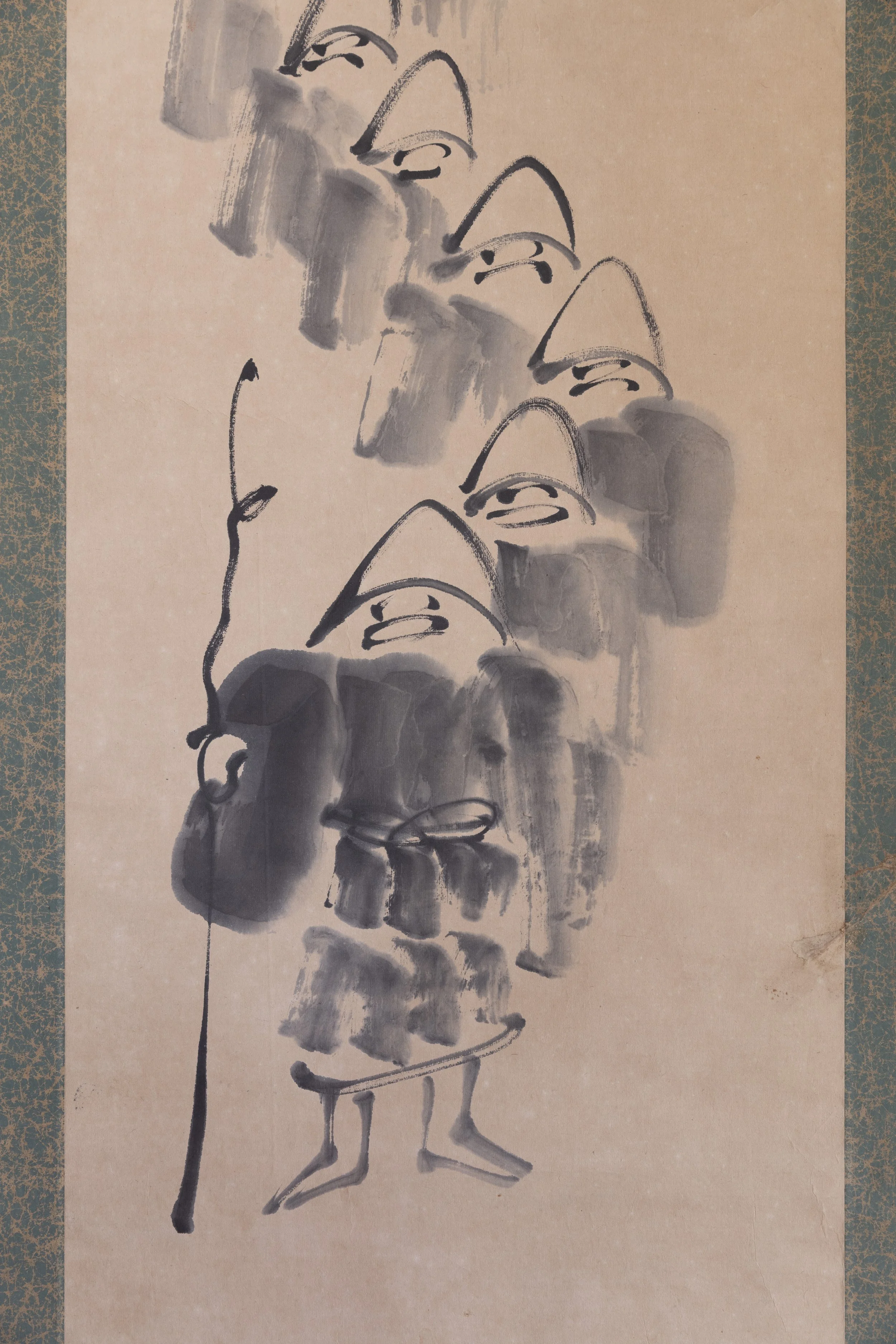
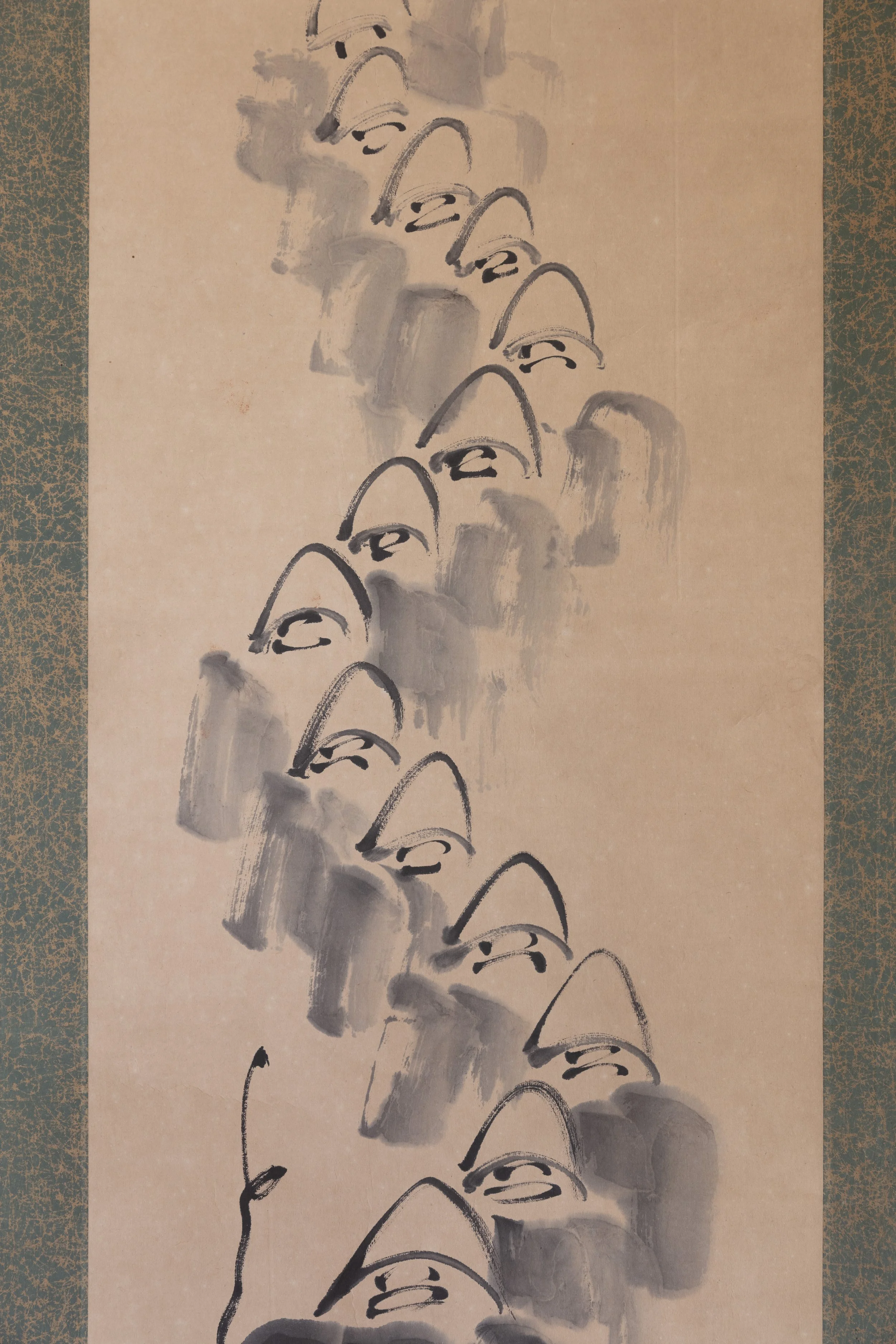
This powerful ink painting depicts a procession of itinerant Zen mendicant monks advancing in disciplined formation, led by a figure carrying a staff. The monks move forward in rhythmic unity, their bowls held before them as they chant while proceeding through the town. The diagonal line of figures climbs upward across the image, creating the sense that the procession is moving directly toward the viewer. The leading monk, staff planted firmly, assumes a posture that is both authoritative and dynamic, suggesting that this act of mendicancy is not passive submission but disciplined resolve.
The subject refers to the Zen practice of takuhatsu, the traditional alms round. In the earliest Buddhist communities in India, monks lived entirely from food offerings given by the surrounding population. When Buddhism spread to China and Japan, however, climate, social organization, and the development of large monasteries made such a system impractical as a daily means of survival. In Japan the practice survived primarily as a formal and periodic discipline rather than an economic necessity. Monks would leave the monastery and walk through the town chanting together, bowls in hand, reminding themselves of the original strict rule of mendicant life while also giving laypeople the opportunity to earn merit through offerings.
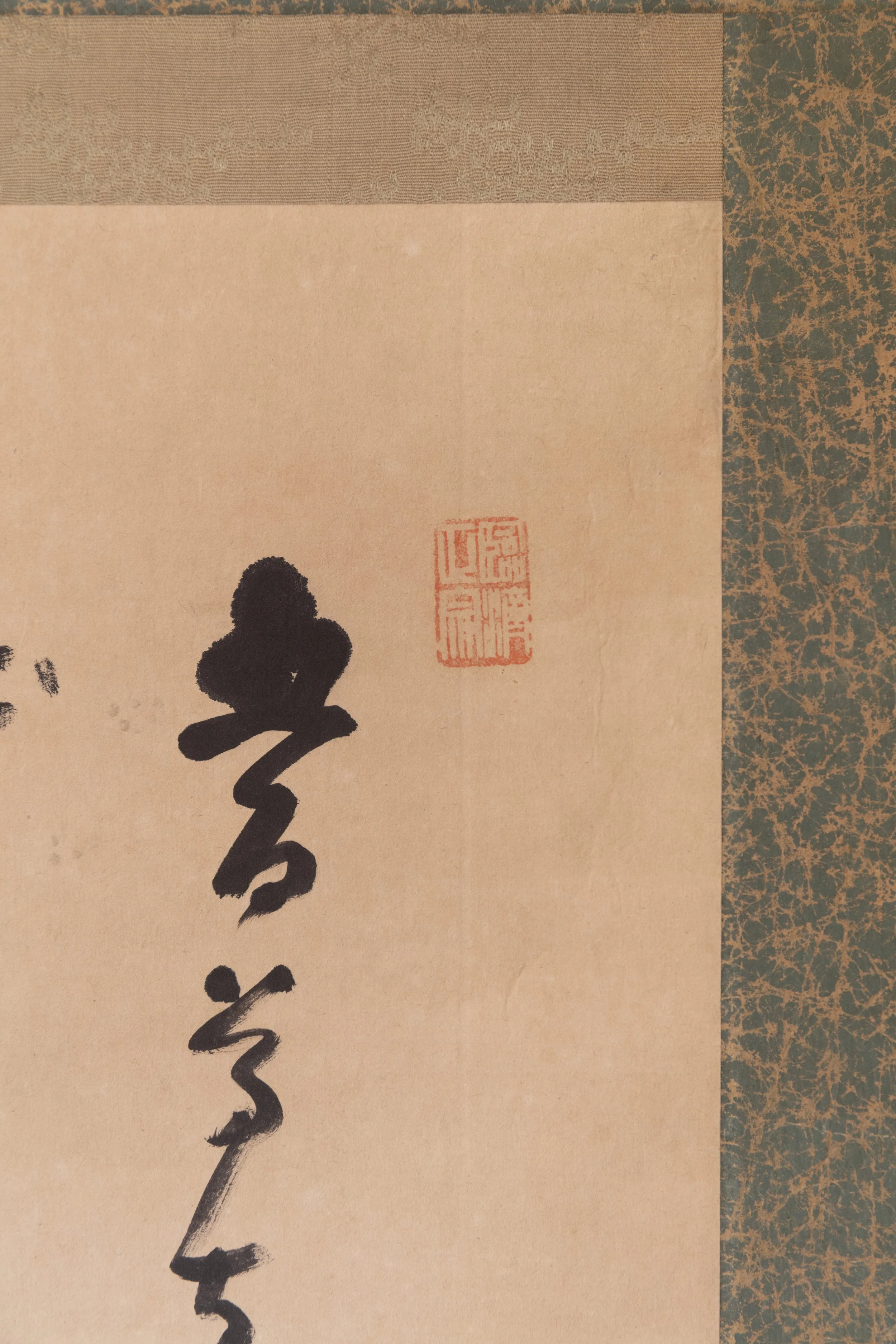
Nantenbo’s inscription refers directly to this older tradition. The opening phrase evokes the earliest generations of Buddhist monks, the text above the painting reading:
A host of venerable ones,
Their begging bowls resounding like thunder—
Alms, alms!
Alms, alms!
The imagery vividly captures the sound of the monks’ bowls striking together as they chant while walking through town. The metaphor of thunder suggests both the physical resonance of the bowls and the collective spiritual force of the procession itself.
The work is signed:
“The eighty-two-year-old fellow Nantenbo Toju.”
This signature dates the painting to the later years of the artist’s life, when his brushwork had reached its most spontaneous and energetic form. Nantenbo often painted such scenes of monastic life with remarkable speed, using only a few decisive strokes to evoke each figure.
Nakahara Nantenbo (1839–1925) was one of the most formidable figures of modern Rinzai Zen. Born into a samurai family in Kyushu, he entered the Buddhist priesthood as a young boy and later underwent extremely rigorous monastic training. His intense personality and uncompromising devotion to Zen discipline became legendary. He carried a heavy staff made from the wood of the nandina plant, which he used to strike the floor — or occasionally inattentive monks — during teaching. This habit earned him the nickname Nantenbo, meaning “the monk with the nandina staff.”
Although he began painting relatively late in life, Nantenbo eventually produced an enormous number of paintings and calligraphies. These works were not intended as refined aesthetic objects but as direct expressions of Zen practice. He is said to have produced tens of thousands of works, often giving them away freely to visitors and followers. The emphasis was never on technical perfection but on the immediacy of the brush and the clarity of mind at the moment of execution.
This spirit is clearly visible in the present painting. The monks are rendered through rapid sweeps of diluted ink punctuated by darker accents for hats, robes, and faces. Individual figures emerge from soft washes and then dissolve again into the movement of the group. With extraordinary economy of means, the artist conveys the momentum and collective energy of the procession.
One striking detail is the posture of the leading monk. Rather than appearing meek or supplicant, he plants his staff and feet in a stance that is almost martial. The image suggests that mendicancy is not weakness but disciplined practice. In this sense the monks resemble a column advancing together with purpose and unity.
Nantenbo often paired this subject with scenes of monks returning to the monastery after completing their rounds, but in this case the painting stands independently as a single dramatic moment: the procession advancing forward in chanting rhythm. The figures seem almost to emerge from the space of the scroll toward the viewer, announcing their presence with the sound of bowls and voices.
A closely comparable example of this subject, with nearly identical inscription and composition, appears in the Nantenbo materials preserved in the Zen archive compiled by Gabor Terebess. That parallel helps clarify the theme as a depiction of the traditional Zen alms procession and its symbolic meaning within monastic practice.
Painted when the artist was eighty-two years old, this scroll belongs to the remarkably productive final decades of Nantenbo’s life. Even in advanced age his brush retained tremendous vitality. Like many Zen paintings, the work functions not merely as an illustration but as a direct record of a moment of concentrated action — brush, ink, and paper meeting in a single unhesitating gesture.