Myōan
a place of quiet
妙庵
A contemplative collection of Japanese art
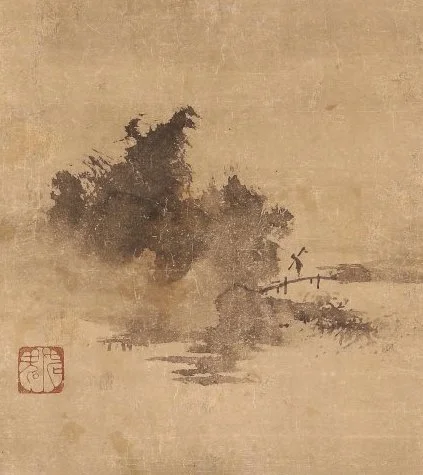
“Painting does not exist independently. It comes into being only through the encounter between the painter and the viewer. Without someone to look at it, a painting has not yet come into existence.
”The painter paints, but it is the act of seeing that completes the work. In this sense, painting is not a fixed object but an event — something that unfolds between people, across time. Standing before a painting, we are not merely receiving an image; we enter into a silent exchange with a presence that remains after the painter has gone.
”To truly look is therefore not a matter of knowledge, but of listening. The more we try to dominate a painting through interpretation, the further we drift from it.
”Only by allowing the work to approach us on its own terms can we begin to perceive its inner rhythm — the breath of the brush, the pauses, the silences — and, in that slowing of time, become quietly present ourselves.”
Yamashita Yūji, Hakuin: Messages Hidden in Paintings (Exhibition catalogue, Bunkamura Museum, Tokyo, 2012)
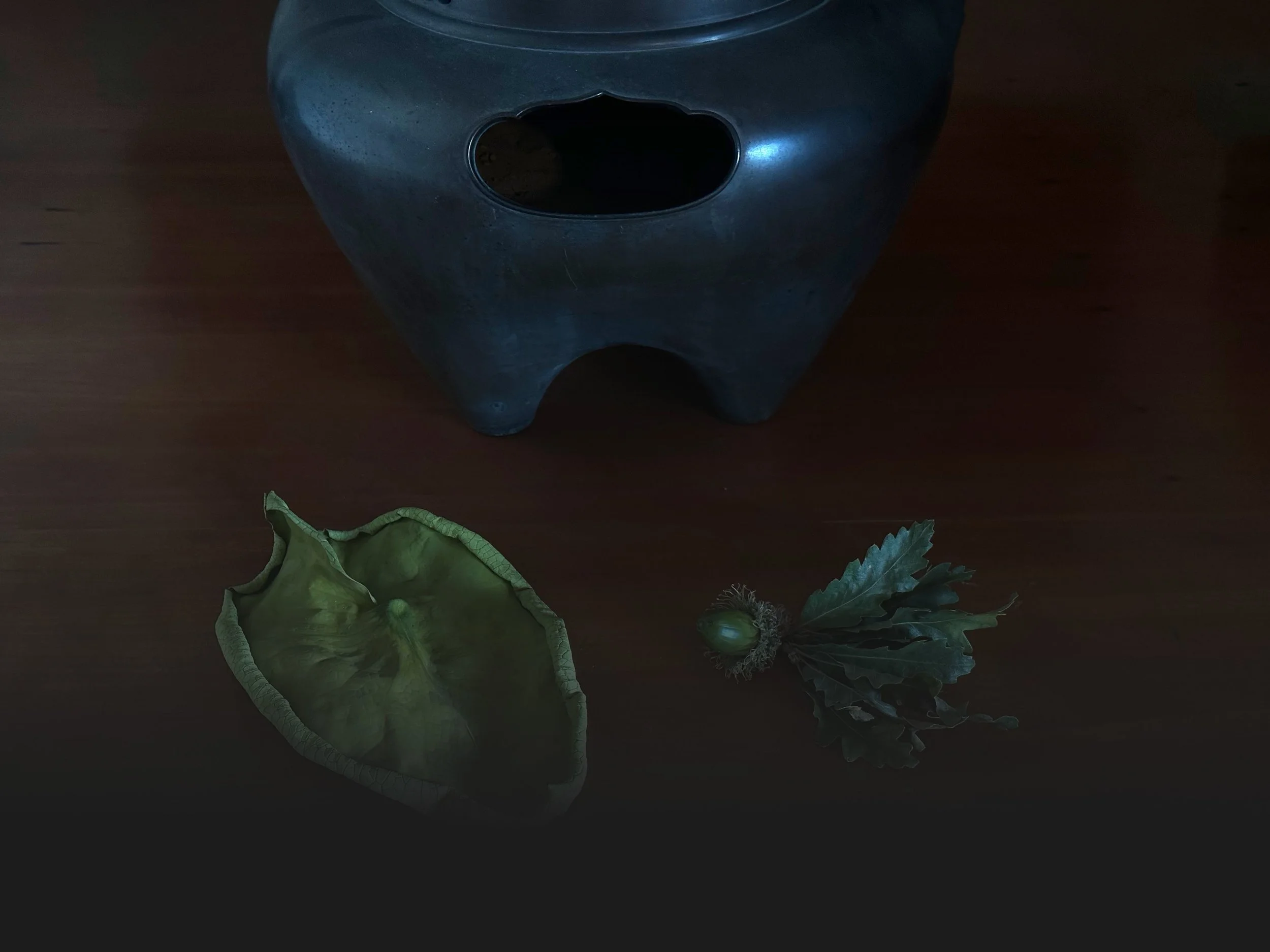
The Myōan Collection is a group of Japanese paintings shaped through looking, study, and lived encounter. It focuses primarily on ink painting from the medieval through Edo periods, with particular attention to Zen works made for quiet, interior settings. The collection is not displayed all at once, but experienced through seasonal rotation, with individual works present for a time before returning to rest. This rhythm reflects the conditions for which such paintings were made: to be met slowly, attentively, and in changing circumstances. The site offers the collection as a place for looking and research, allowing meaning to emerge through repeated, unhurried encounters.
“When one gazes at a hanging scroll, even casually, the benefits gradually accumulate. If the viewer contemplates it carefully and sincerely, blessings increase and life is prolonged; the household prospers; and protection is granted.”
白隠慧鶴 Hakuin Ekaku (1686-1769)
Kameyama, Takurō. Reading the Paintings of Zen Master Hakuin: Symbolism and Authenticity
Kyoto: Zen Culture Research Institute, Hanazono University, 1985, p. 61.
Selected works from the collection
-
![]()
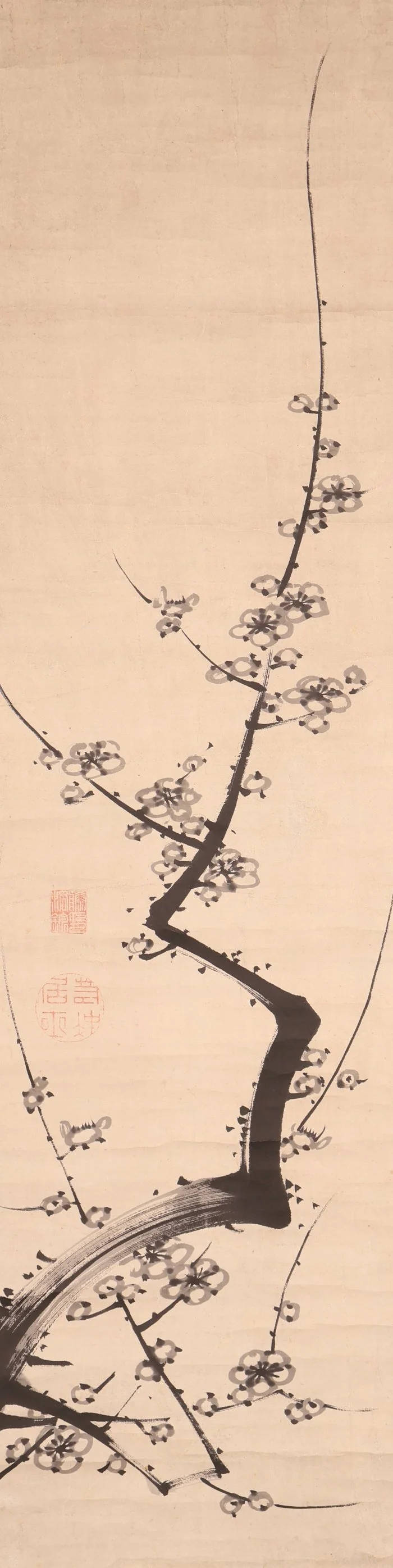
Itō Jakuchū (1716–1800) Plum Blossom Branch
-
![]()
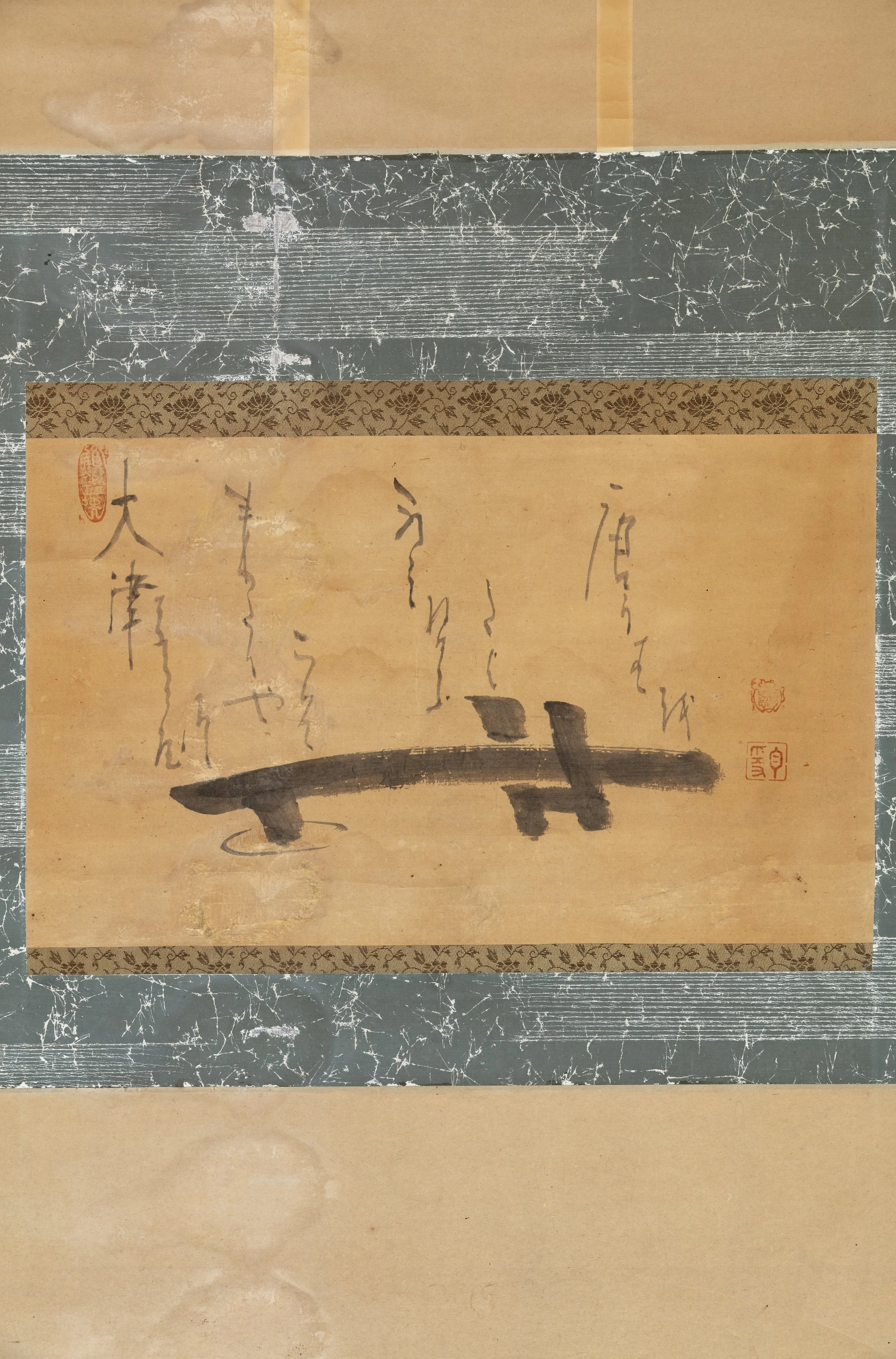
Hakuin Ekaku (1686–1769) The Sixth Patriarch’s Rice Mill, 1760s
-
![]()
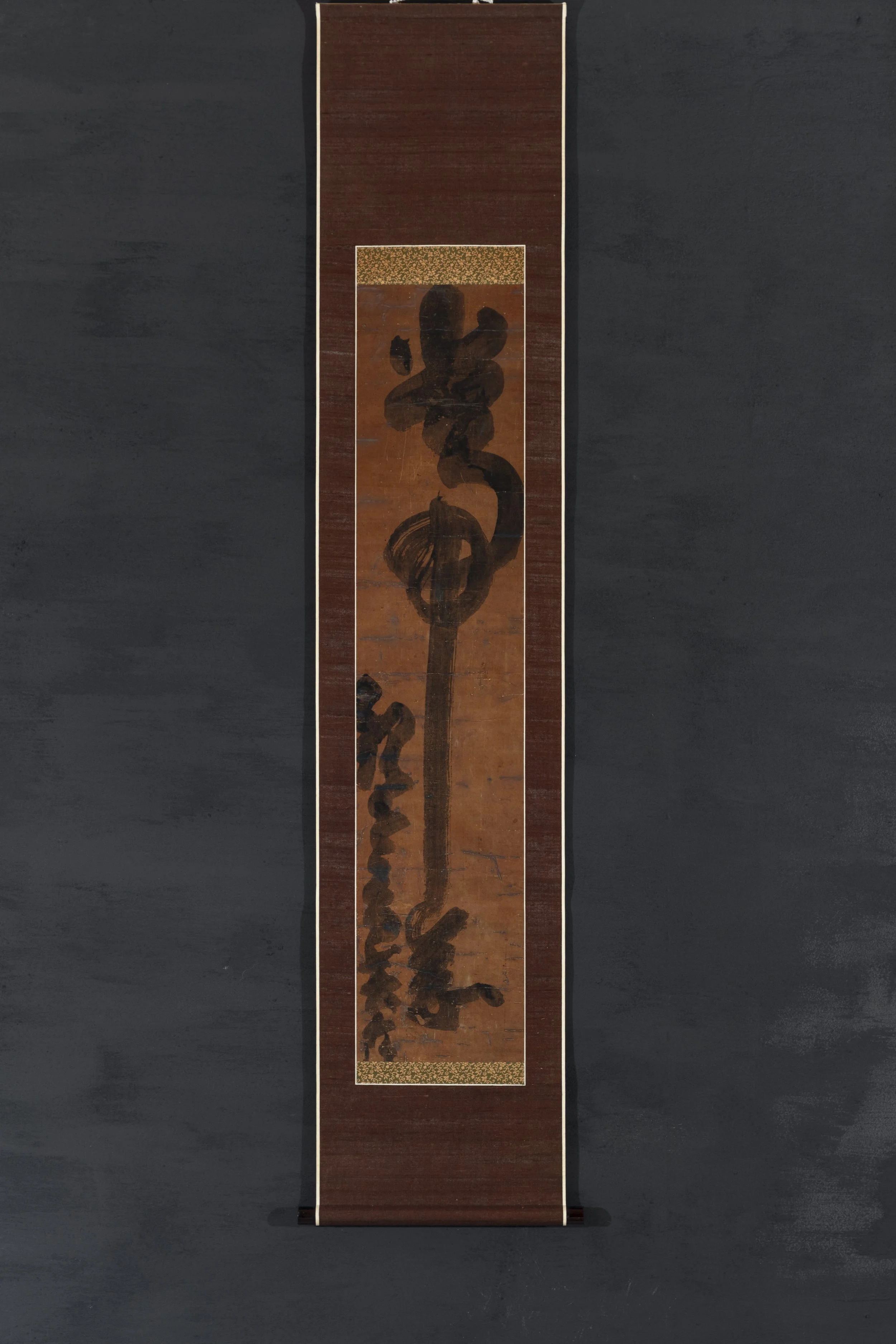
Hakuin Ekaku (1686–1769) Always Remember Bodhisattva Kannon, 1760s
-
![]()
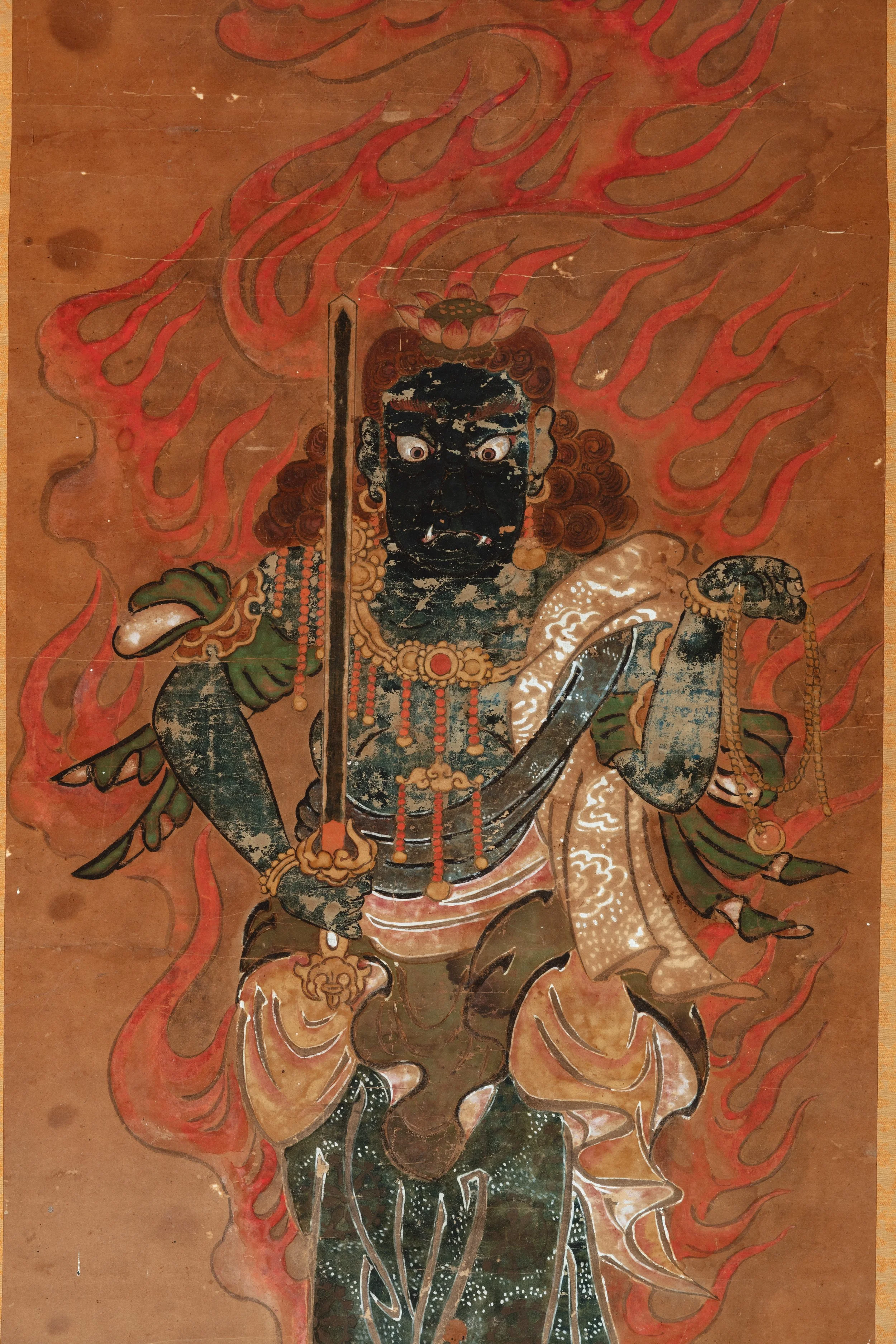
Fudō Myōō, Acala; “The Immovable One", Japan, Shingon sect, Chūgoku region, late 17th–early 18th century
-
![]()
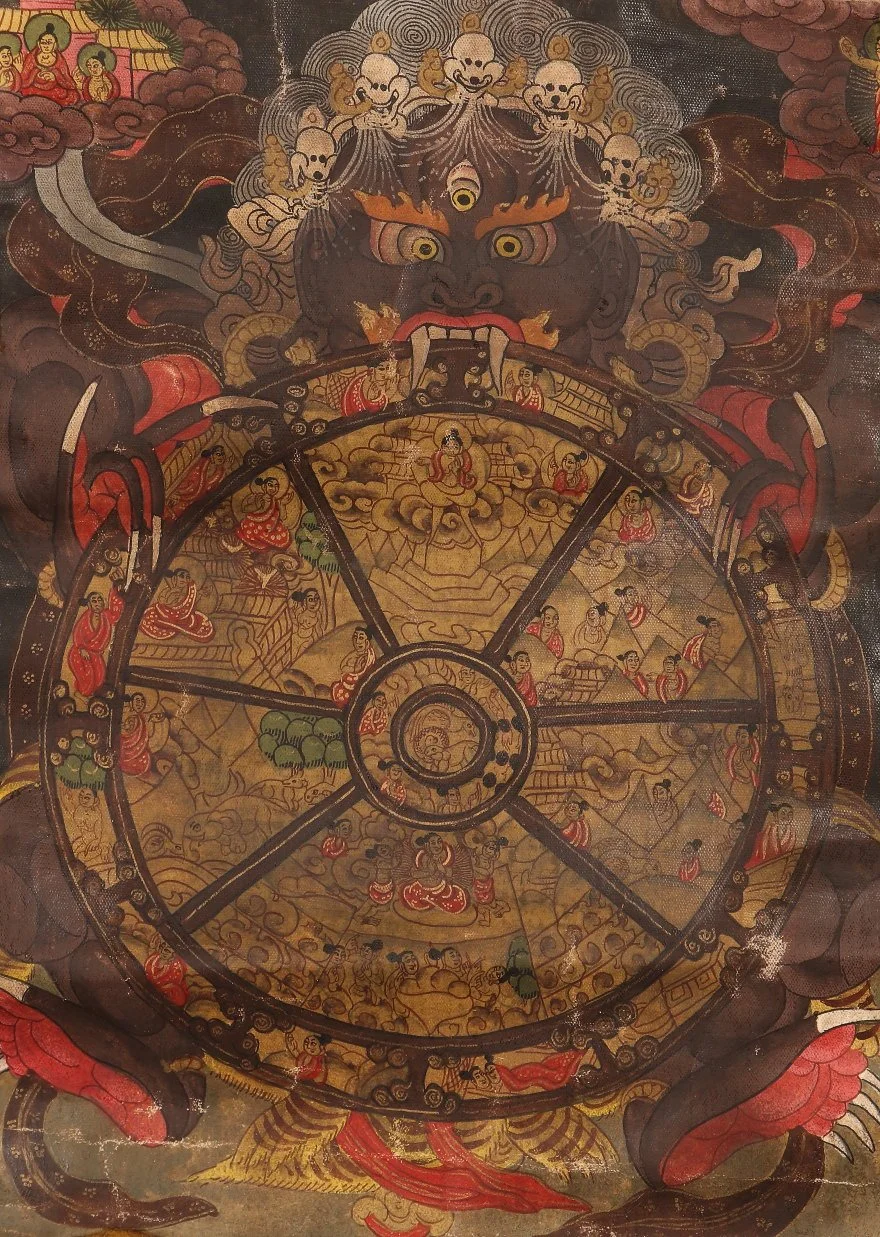
Wheel of Life (Bhavacakra) Sino-Tibetan workshop, Eastern Tibet or Sichuan region c. 1780–1850
-
![]()
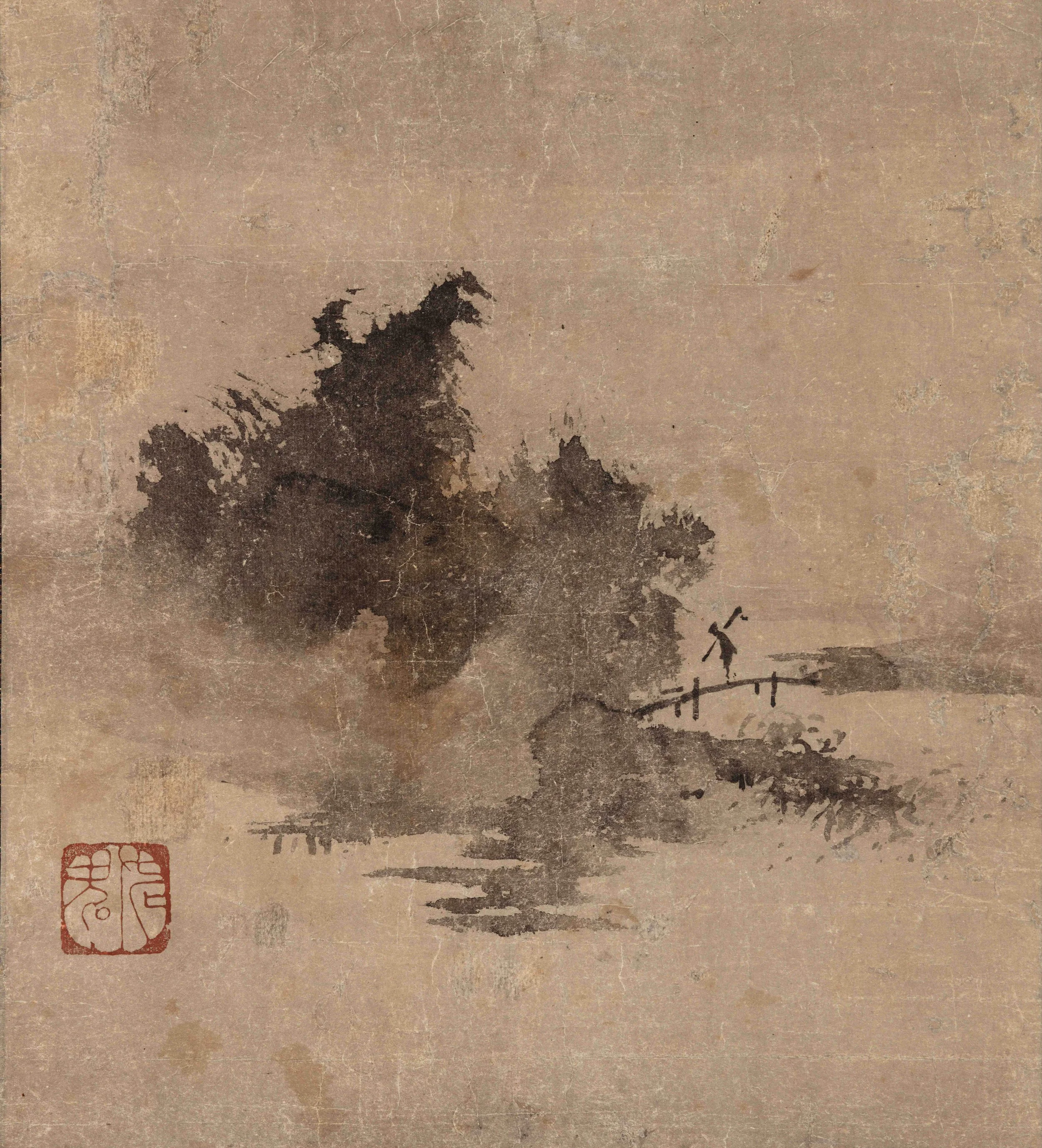
Traveler at a Plank Bridge, Soga Shōhaku (1730–1781)
-
![]()
Beauty by the River Following Utagawa Kunisada (Toyokuni III, 1786–1865) (c. 1910–1940).
-
![]()
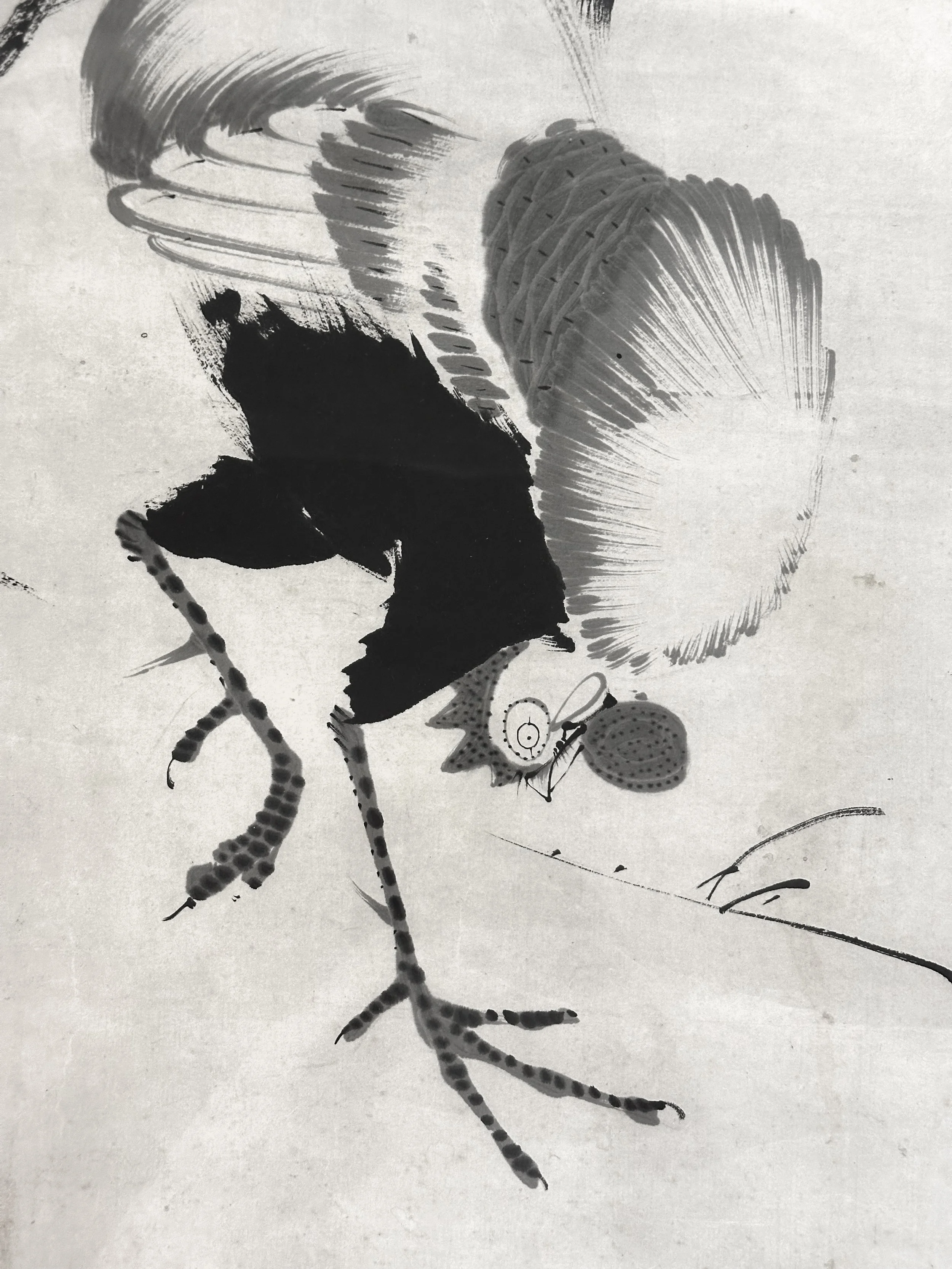
Itō Jakuchū (1716–1800), Rooster beneath Orchid, c. 1770's

Explore
Collection
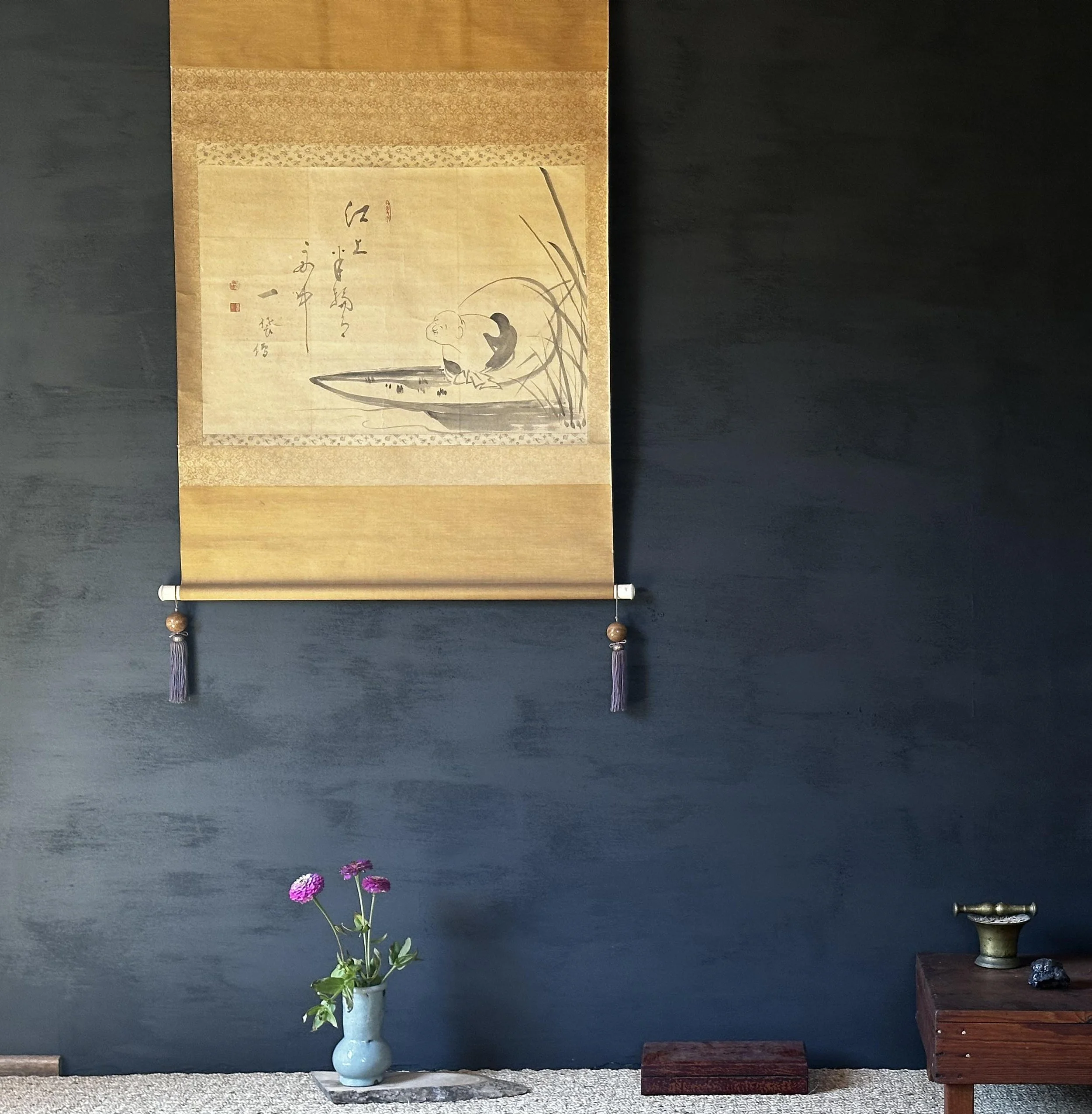
A focused body of Japanese painting formed through close attention, proximity, and the practice of living with art.
The collection centres on ink painting, Zen calligraphy, and devotional imagery from the medieval through Edo periods, with particular regard for works made for temples and private interiors rather than public display.
Paintings are approached as lived objects, shaped over time by handling, light, storage, and use. Rather than seeking completeness or breadth, the collection develops slowly through sustained study, allowing quality, restraint, and clarity to emerge.
Research
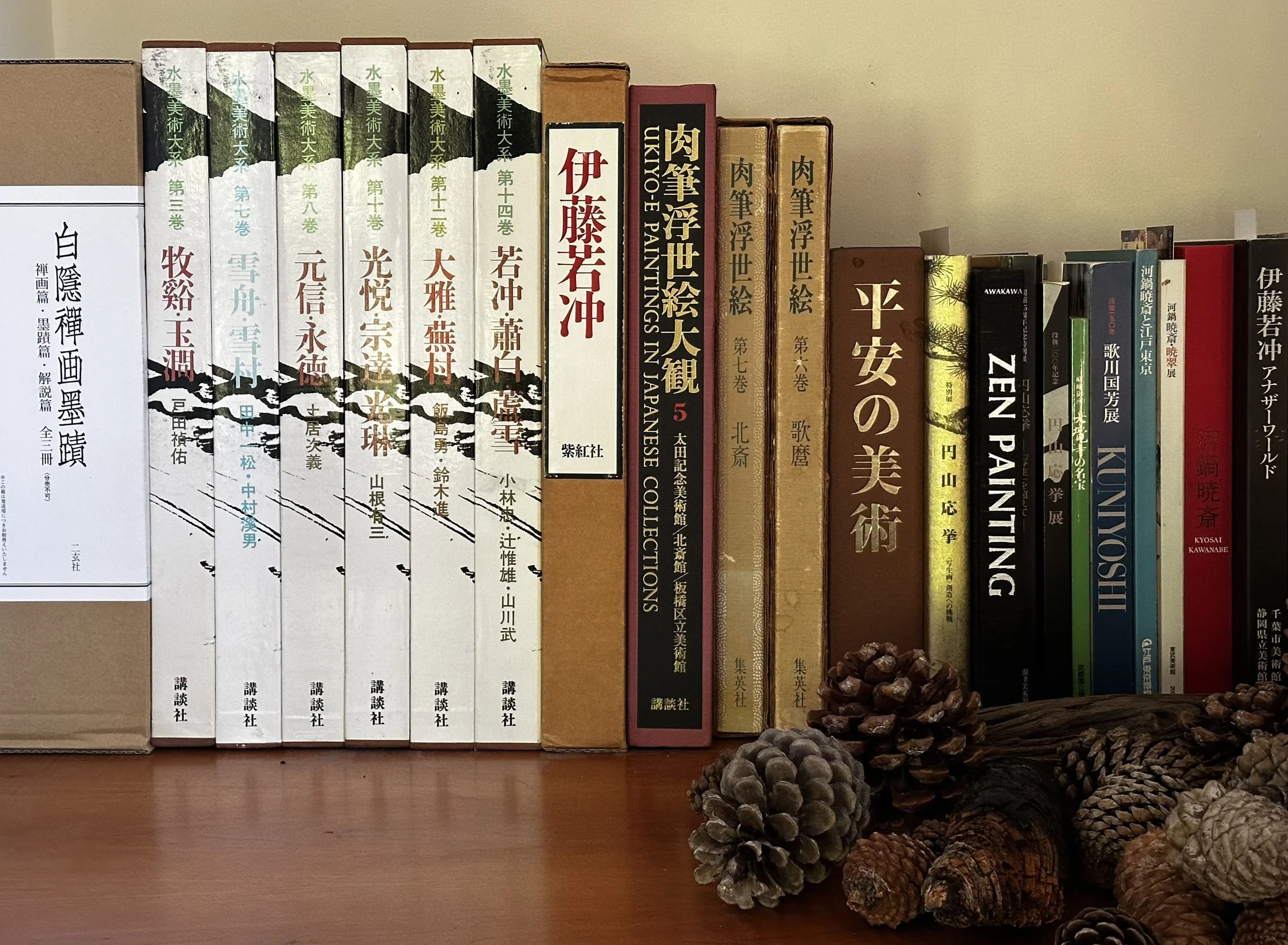
Close observation, historical inquiry, and reflective writing arising directly from sustained engagement with individual works.
Research often begins with fragmentary or uncertain information—partial inscriptions, worn seals, undocumented provenance—and develops through comparison, translation, archival reference, and repeated viewing.
The aim is not rapid attribution or summary, but a careful reconstruction of context: how a work was made, used, understood, and transmitted. Writing grows alongside this process, allowing historical detail, visual structure, and lived presence to inform one another over time.
Available Works
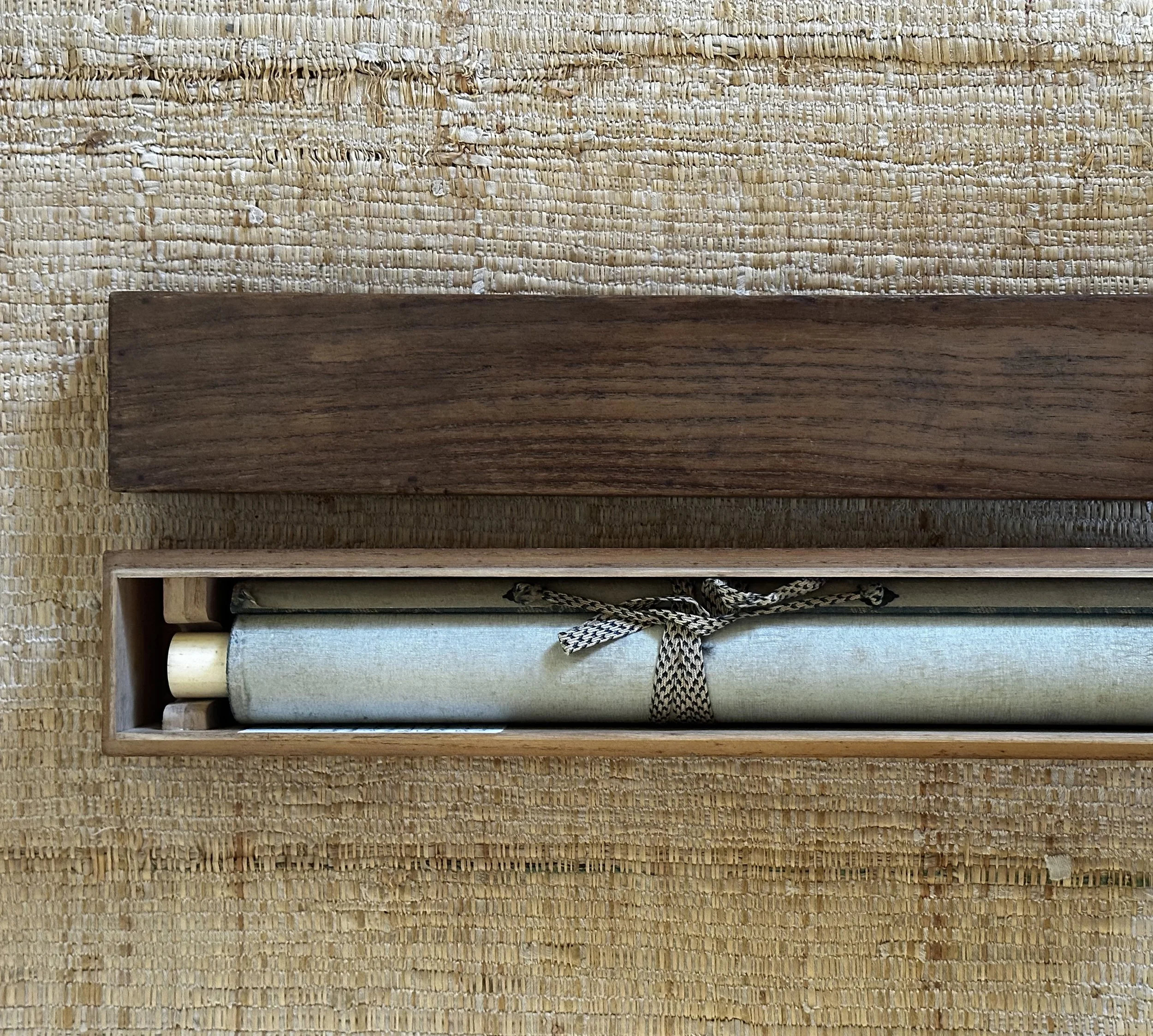
A small number of works are made available.
These are paintings that no longer sit naturally within the developing focus of the collection, or whose presence may be better sustained through another custodian.
Availability is guided by suitability rather than turnover. Each work is offered with attention to condition, context, and continuity, with the hope that it will be lived with carefully and allowed to continue its passage through time.
Journal
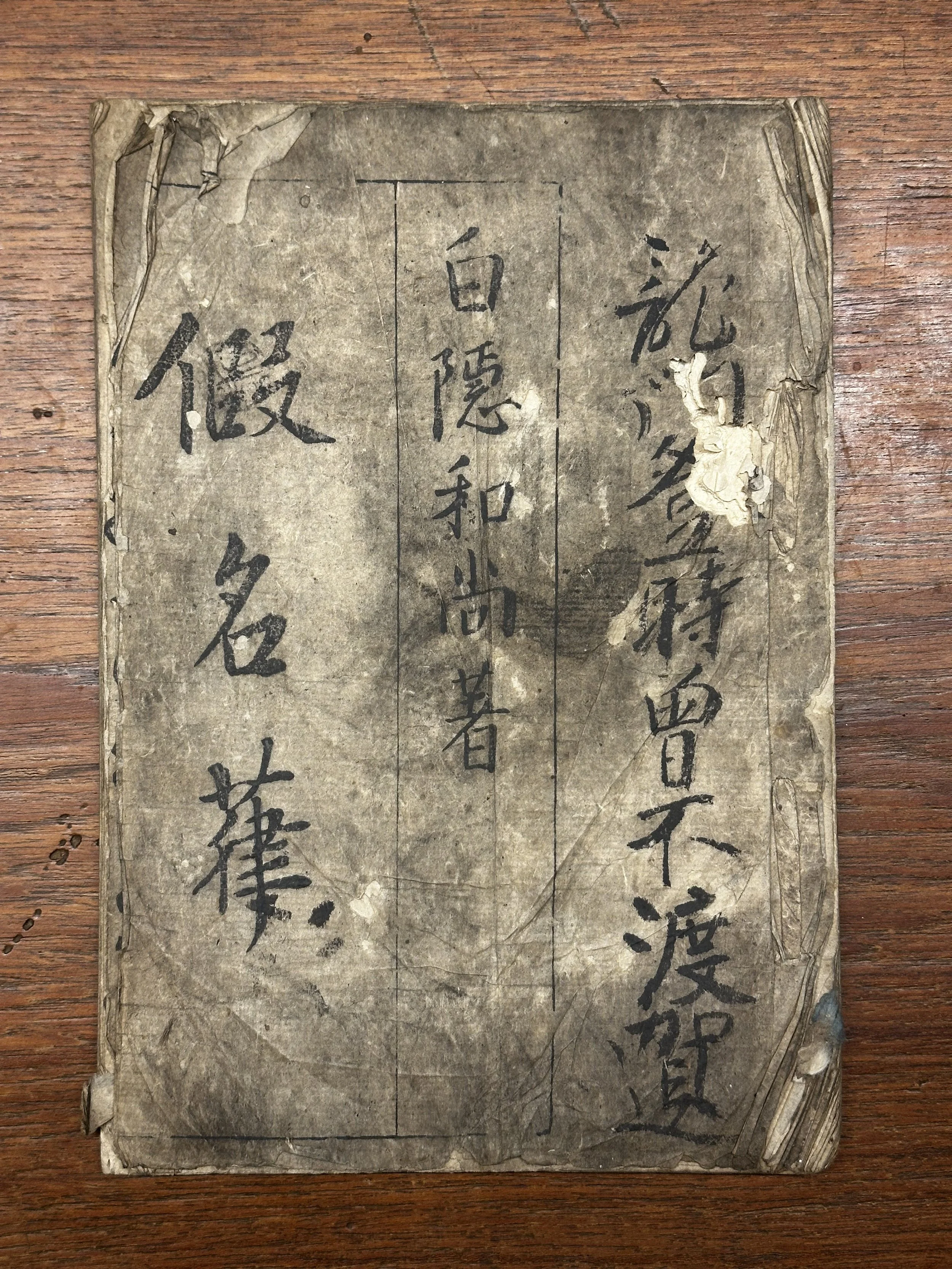
The collection unfolds. Certain works remain, others pass on, but each leaves a trace — a shift in understanding, a refinement of attention.
This journal gathers those moments: encounters with paintings, fragments of research, observations made in front of objects and places. It is not a record of conclusions, but of continuities — a way of following how meaning accumulates over time.
What appears here is part of that ongoing movement: a record of seeing, thinking, and living with these works.
Approach
The collection is shaped through looking over time — not only in front of the works themselves, but through continued engagement with historical material, books, and visual records. Paintings are returned to repeatedly, allowing their structure, intention, and sensibility to unfold gradually.
What emerges through this process is not only an appreciation of form or authorship, but a deeper sense of how these works speak about life — about attention, clarity, and the conditions of seeing. Many of them carry, an underlying philosophy: a way of observing the world with precision, restraint, and acceptance.
The aim is not to assemble a comprehensive survey, but to build a coherent body of work that reflects this ongoing process — a collection formed through attention, continuity, and a shared commitment to clarity in both image and thought.
Get in Touch