
Yamamoto Baitsu (1783–1856) (late 18th–early 19th century)
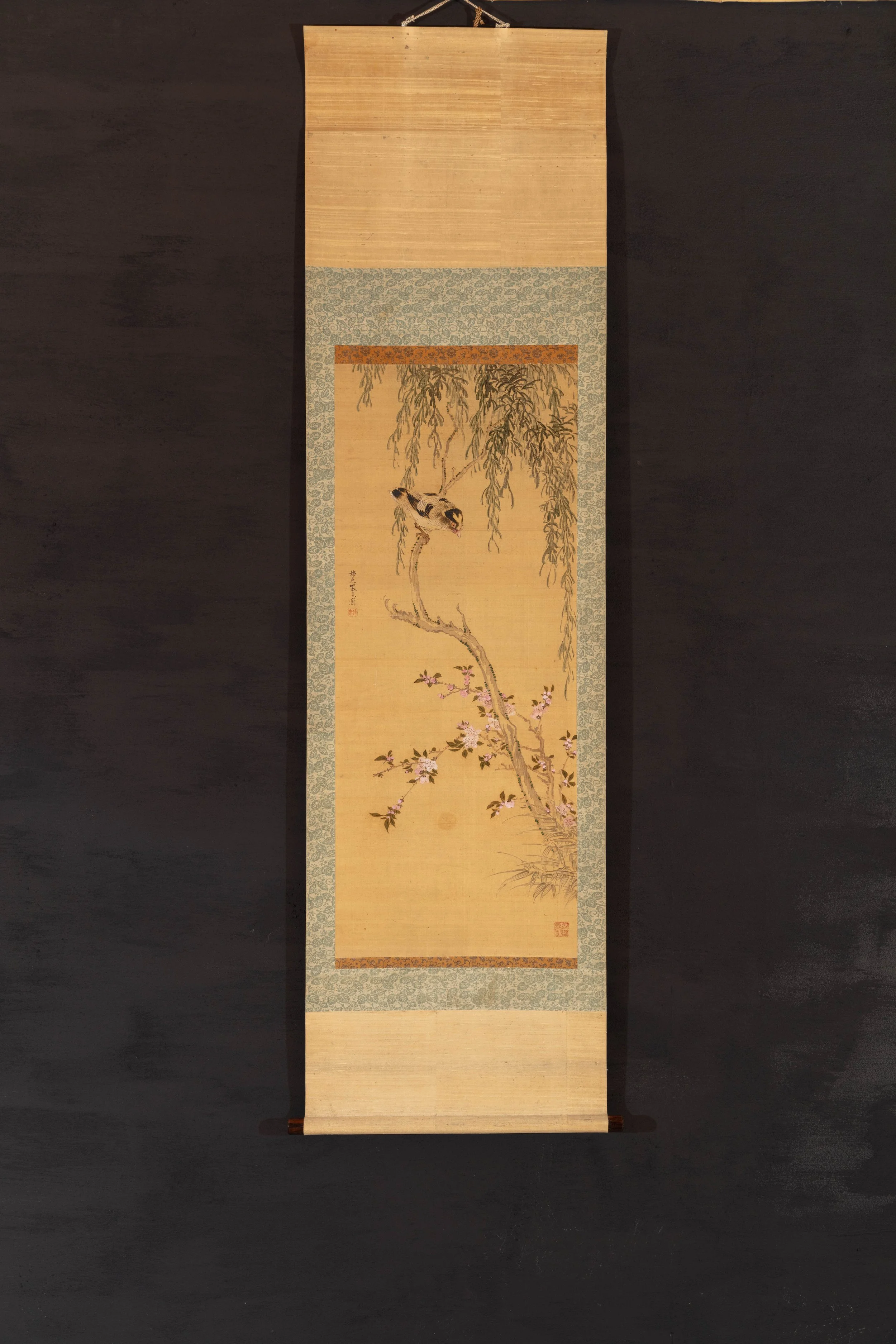
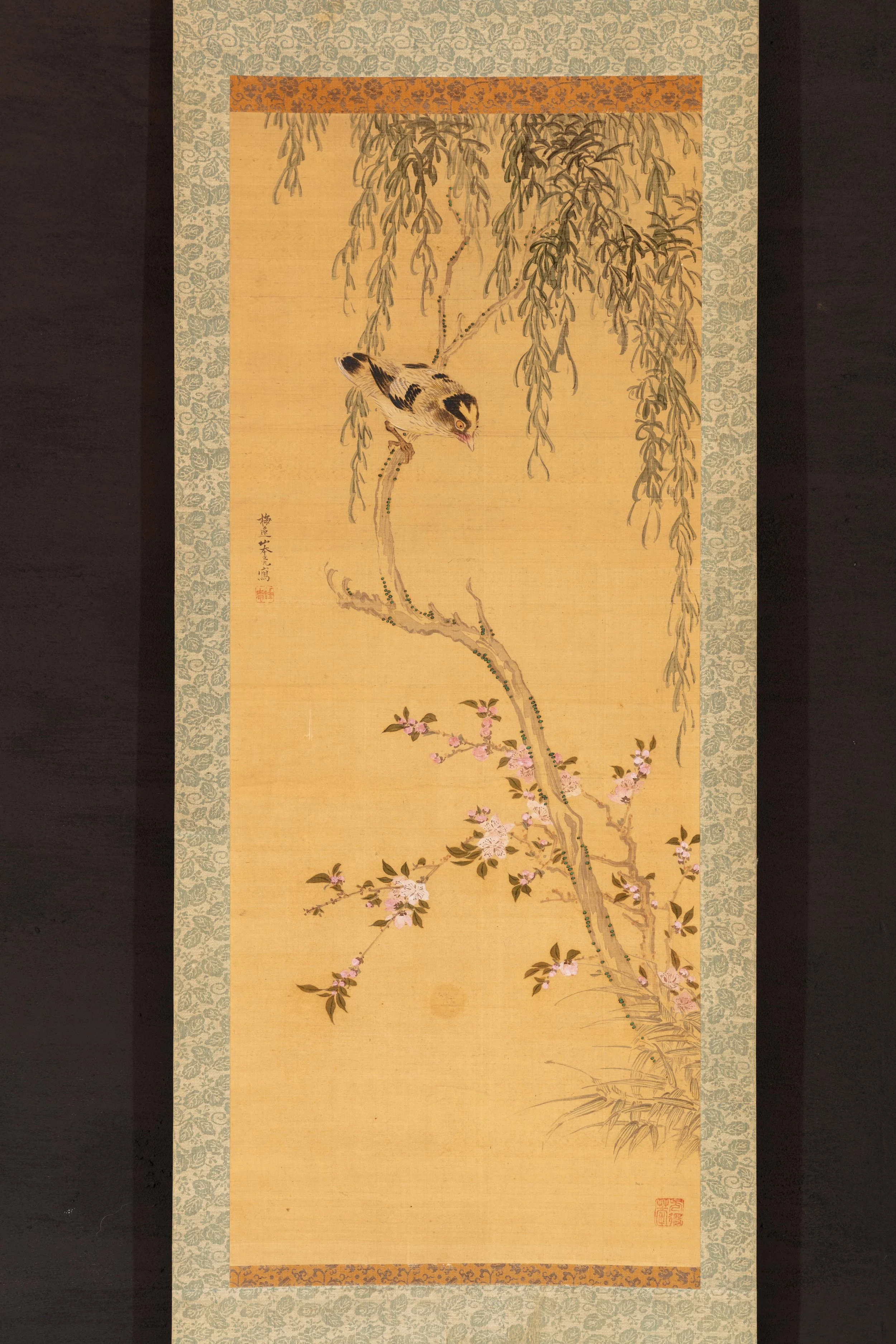
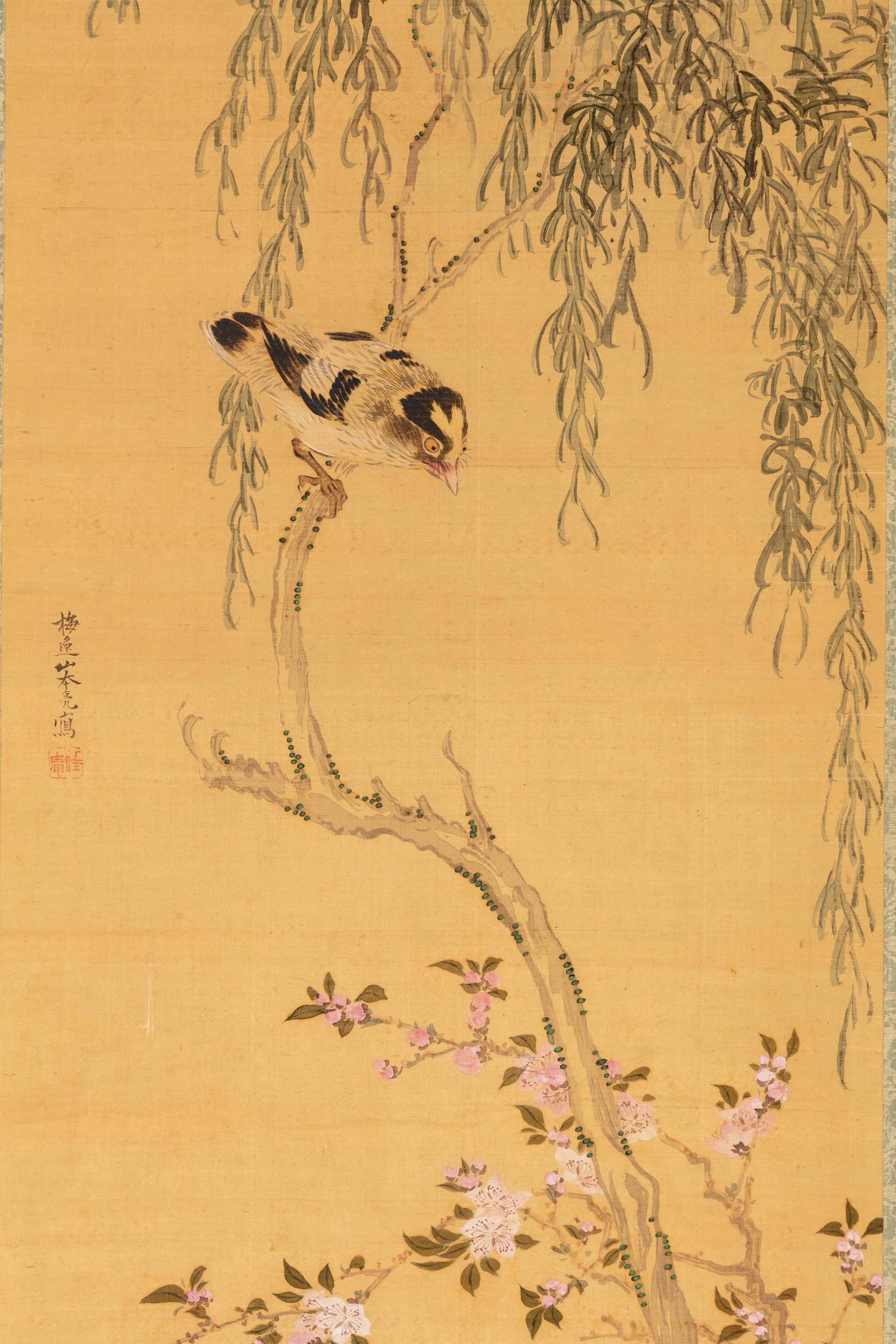
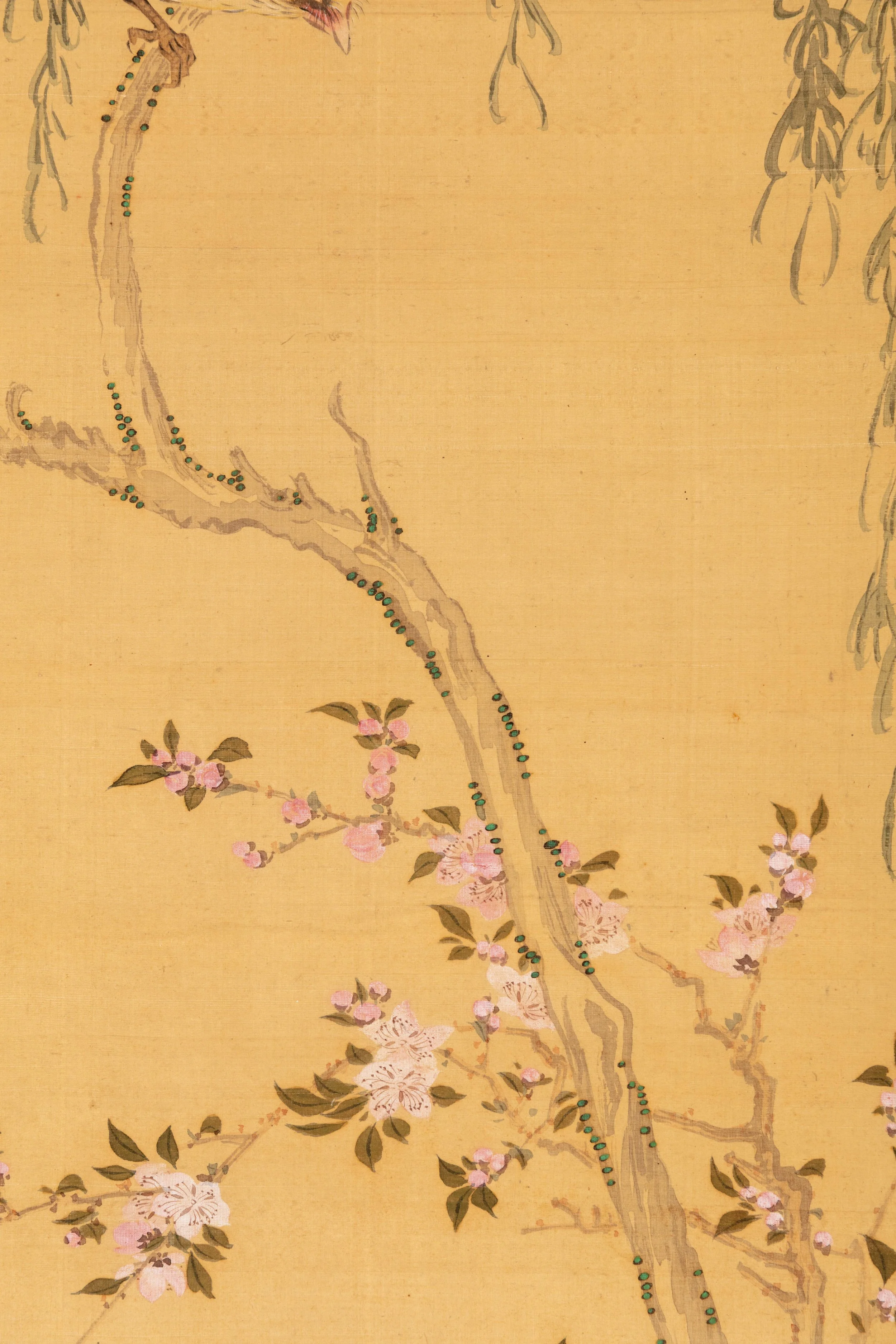
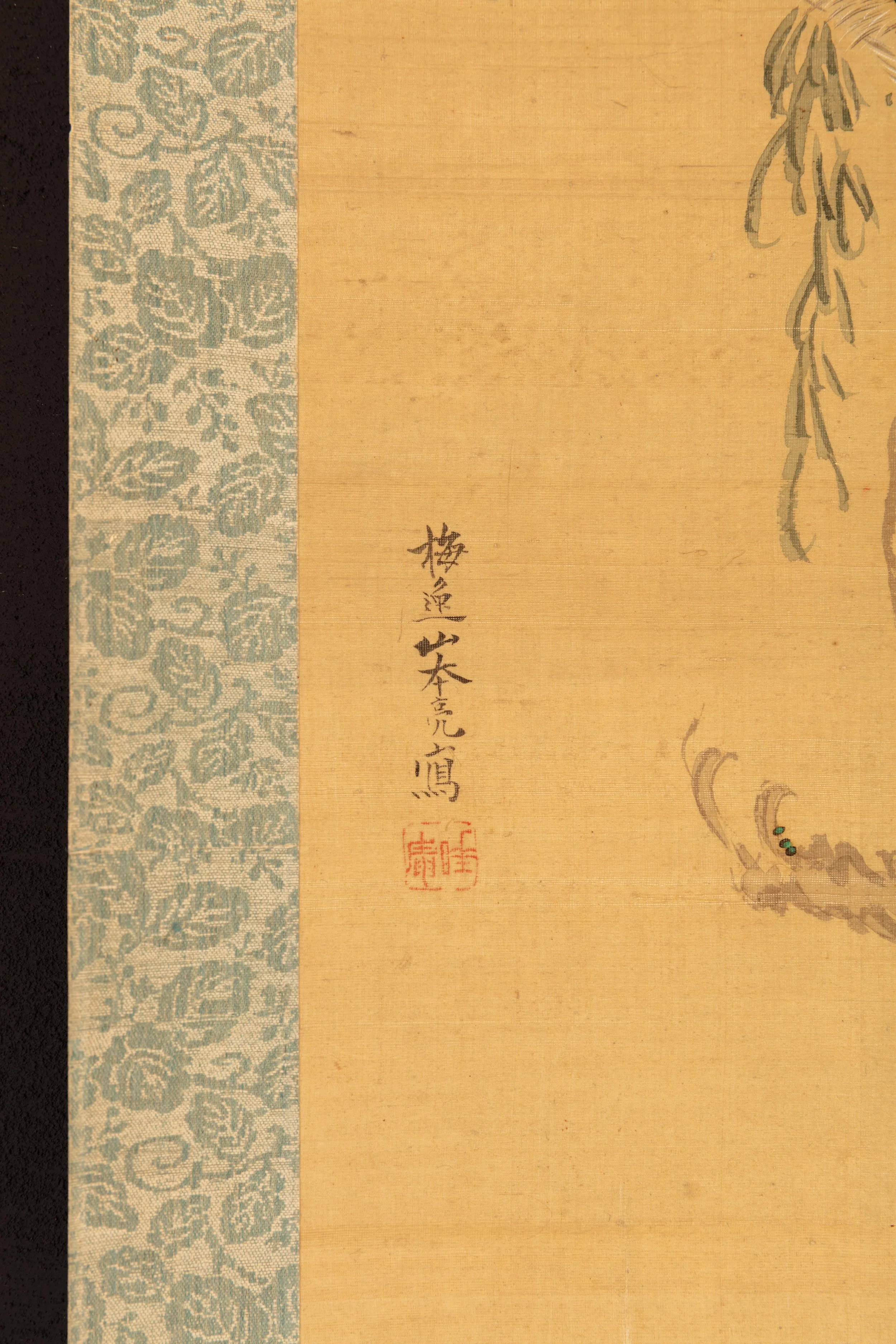
A delicately observed bird perches on a slender branch that arcs diagonally through the composition, framed above by trailing willow and below by soft clusters of cherry blossom. The quiet asymmetry and suspended movement are characteristic of Yamamoto Baitsu’s refined bird-and-flower style.
Baitsu, a literati painter active in Nagoya and Kyoto, is celebrated for combining Chinese-inspired literati sensibility with meticulous natural observation. Here, the restrained palette — muted greens, gentle pinks, and warm silk ground — creates a contemplative atmosphere rather than decorative excess. The fine rendering of plumage and the rhythmic droop of willow leaves demonstrate disciplined brush control and compositional restraint.
The work retains its classical mounting and wooden storage box. Age-appropriate wear is present, consistent with Edo-period silk paintings, and contributes to the quiet authenticity of the piece.
An elegant example of late Edo literati bird-and-flower painting — intimate in scale, lyrical in spirit.
174 × 48 cm (whole)
94 x 38 cm (painting)
Yamamoto Baitsu (1783–1856) was a literati painter active in Nagoya during the late Edo period. Born into a family of sculptors, he pursued painting from an early age and became associated with the bunjin (literati) tradition — a movement that blended Chinese scholarly ideals with Japanese sensibility. He studied under regional masters and later traveled to Kyoto, deepening his engagement with classical models while refining his own expressive clarity.
Baitsu became known for landscapes and especially for bird-and-flower subjects rendered with disciplined brushwork and compositional poise. His works reflect both literati introspection and keen observation of the natural world. In his mature years, he served as an official painter within the Owari domain, securing recognition among contemporary artists and patrons.
Yamamoto Baitsu (1783–1856) (late 18th–early 19th century)
A delicately observed bird perches on a slender branch that arcs diagonally through the composition, framed above by trailing willow and below by soft clusters of cherry blossom. The quiet asymmetry and suspended movement are characteristic of Yamamoto Baitsu’s refined bird-and-flower style.
Baitsu, a literati painter active in Nagoya and Kyoto, is celebrated for combining Chinese-inspired literati sensibility with meticulous natural observation. Here, the restrained palette — muted greens, gentle pinks, and warm silk ground — creates a contemplative atmosphere rather than decorative excess. The fine rendering of plumage and the rhythmic droop of willow leaves demonstrate disciplined brush control and compositional restraint.
The work retains its classical mounting and wooden storage box. Age-appropriate wear is present, consistent with Edo-period silk paintings, and contributes to the quiet authenticity of the piece.
An elegant example of late Edo literati bird-and-flower painting — intimate in scale, lyrical in spirit.
174 × 48 cm (whole)
94 x 38 cm (painting)
Yamamoto Baitsu (1783–1856) was a literati painter active in Nagoya during the late Edo period. Born into a family of sculptors, he pursued painting from an early age and became associated with the bunjin (literati) tradition — a movement that blended Chinese scholarly ideals with Japanese sensibility. He studied under regional masters and later traveled to Kyoto, deepening his engagement with classical models while refining his own expressive clarity.
Baitsu became known for landscapes and especially for bird-and-flower subjects rendered with disciplined brushwork and compositional poise. His works reflect both literati introspection and keen observation of the natural world. In his mature years, he served as an official painter within the Owari domain, securing recognition among contemporary artists and patrons.