
The Lion’s Child Drop
Kano Dōju (d. 1777)
Edo period, early 19th century
Hanging scroll, ink and colour on silk
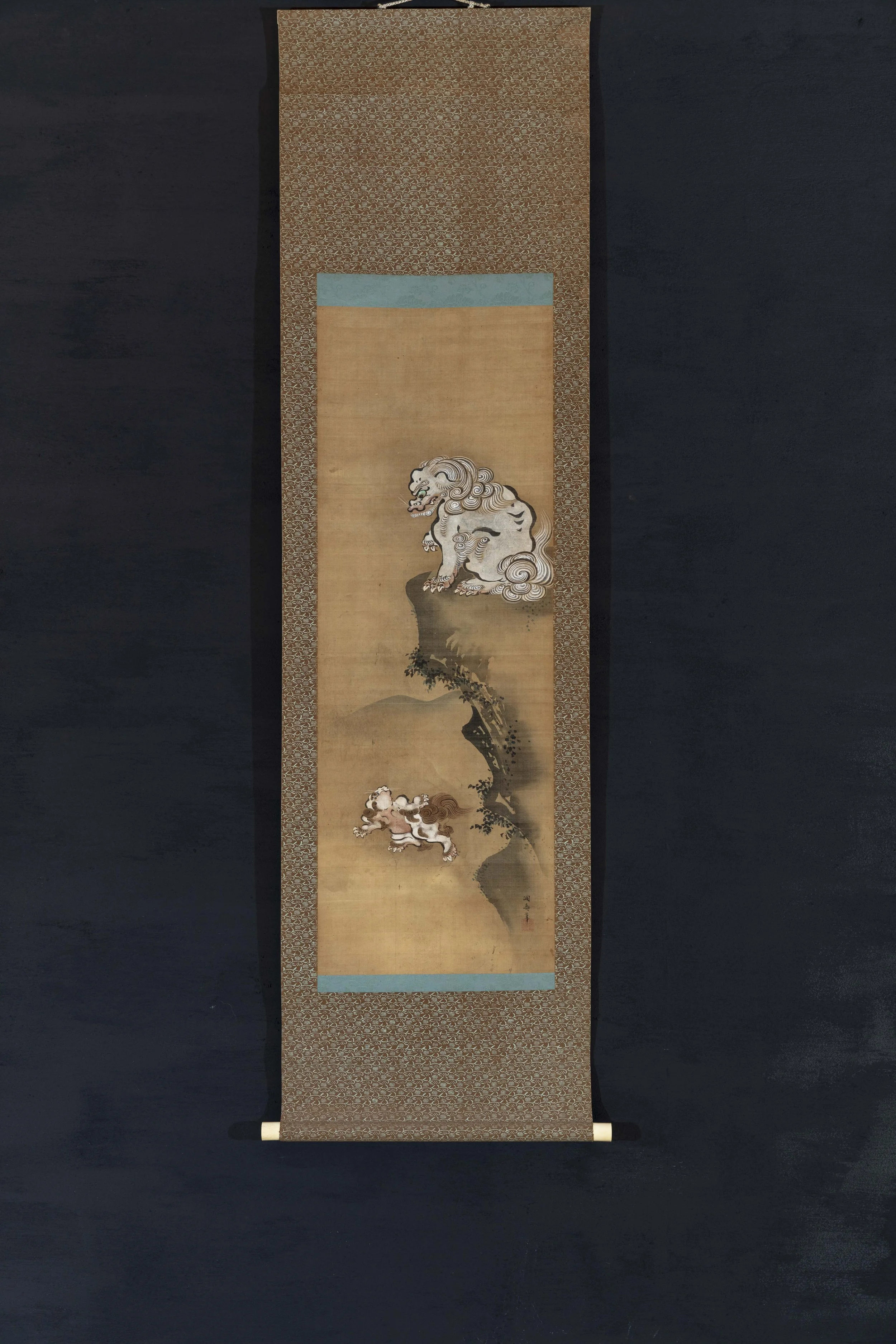
Overall (including mounting): Approximately 165 cm (height) × 45 cm (width)
Main painted area (honshi): Approximately 98 cm × 34 cm
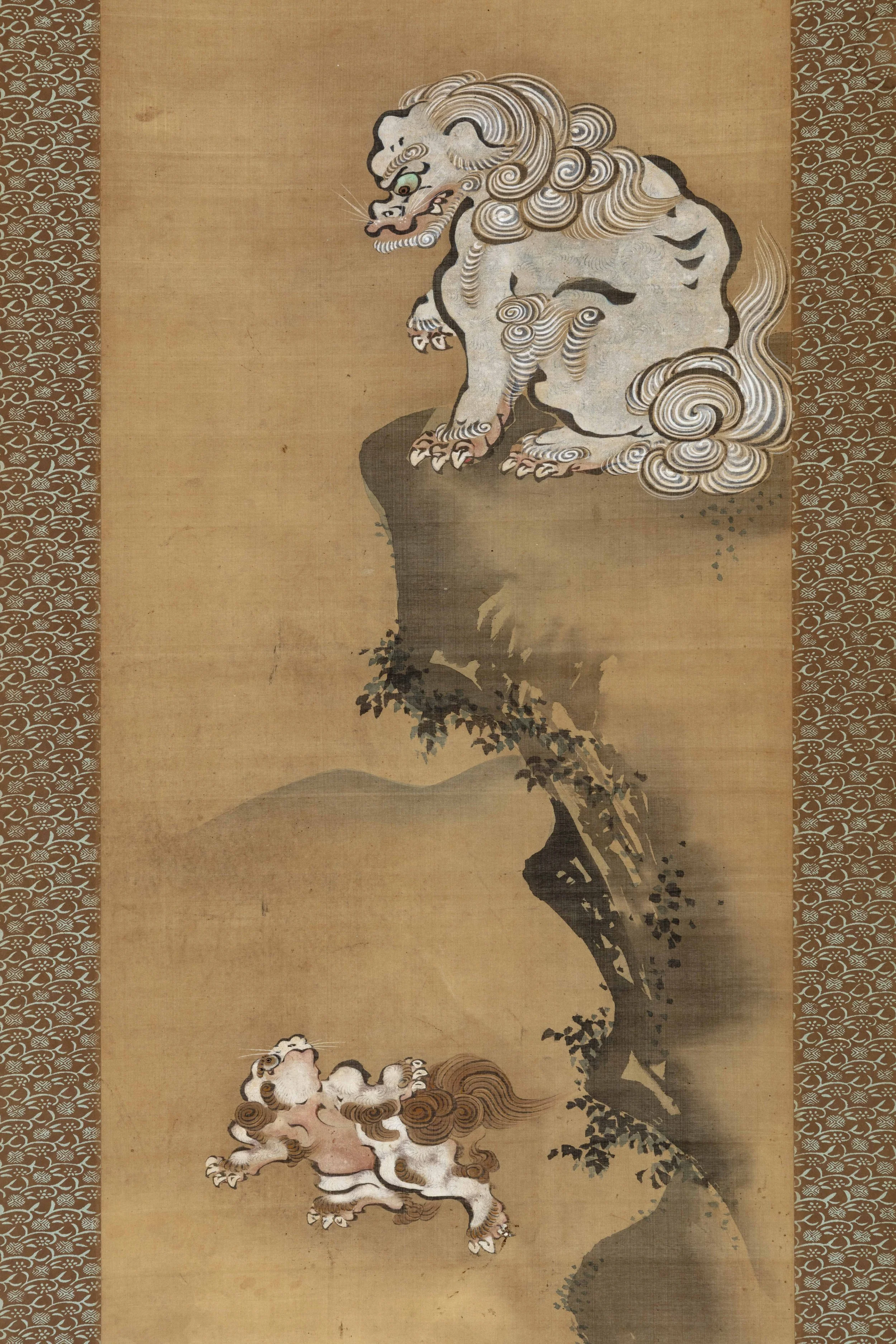
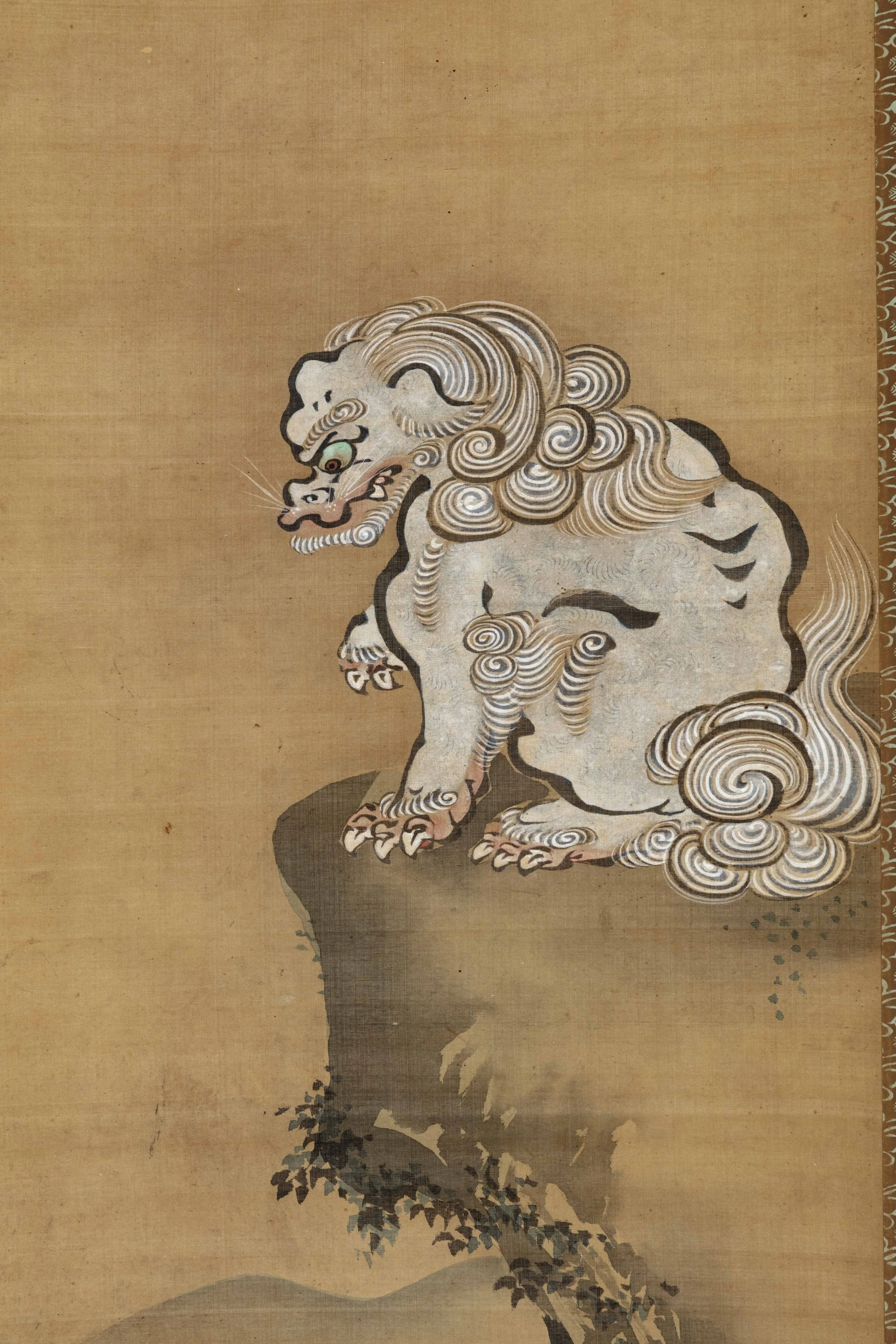
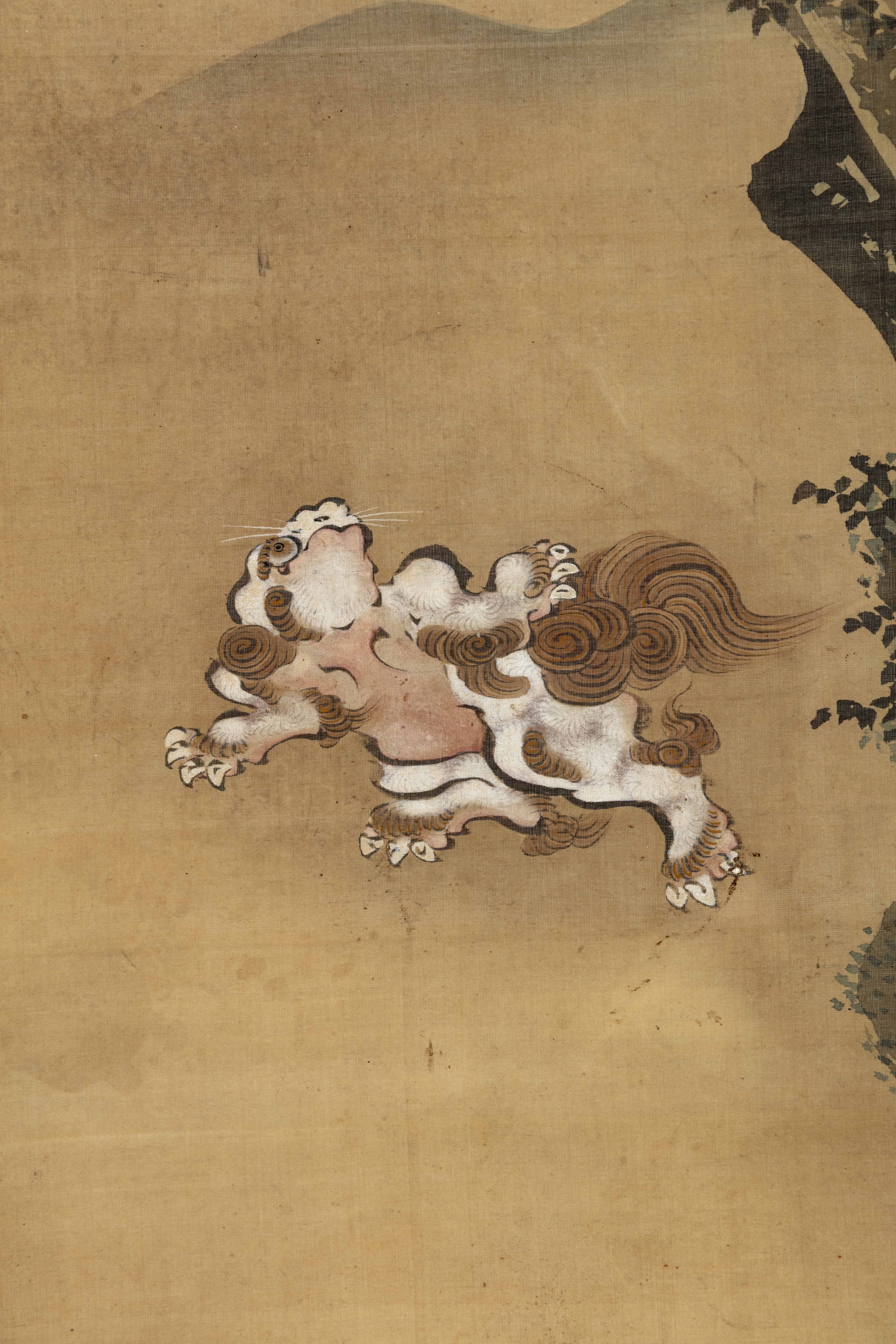
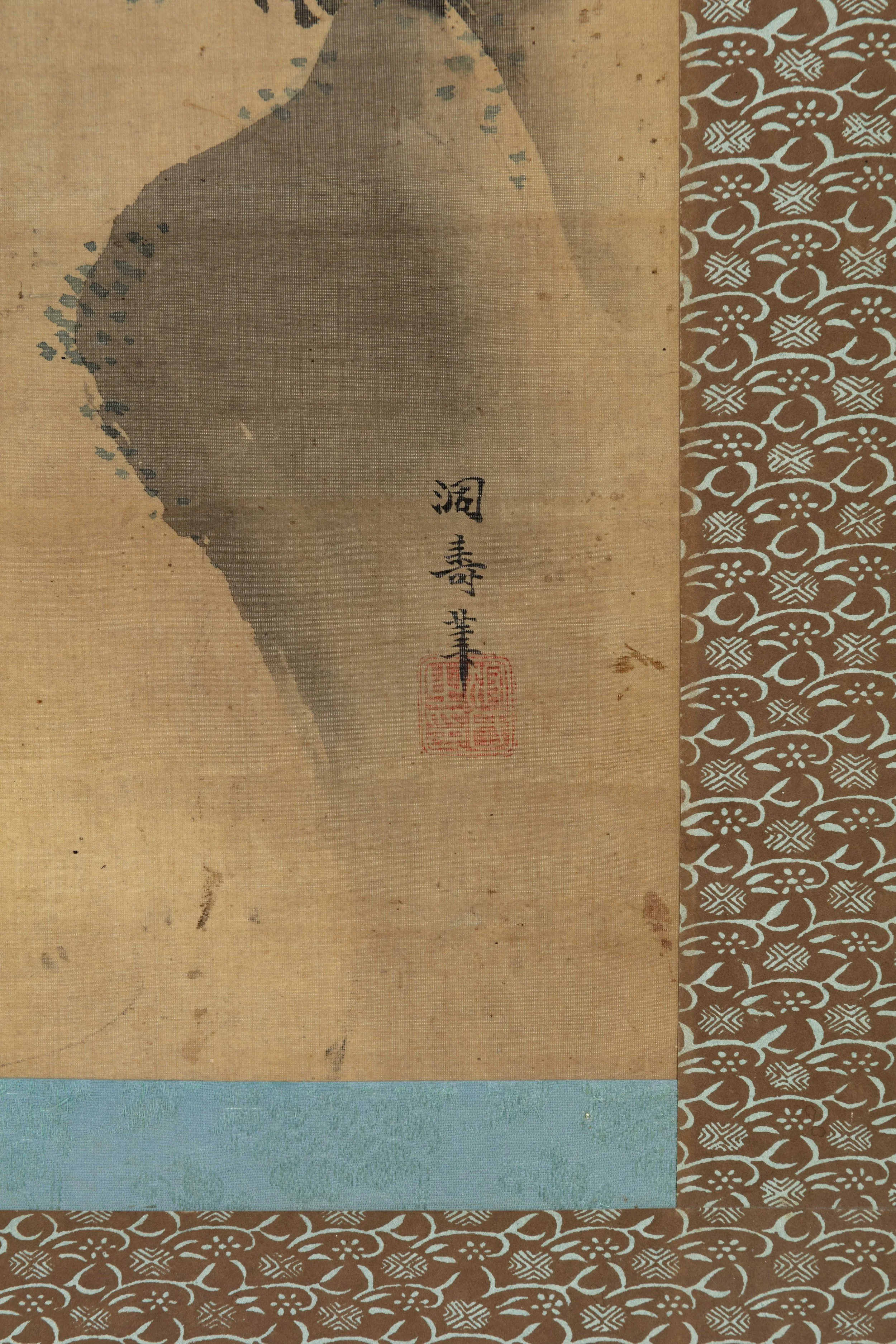
A female shishi, the mythic guardian lion of East Asian Buddhist tradition, stands poised upon a jutting rock ledge. Her body is powerful yet composed, forepaw lifted slightly as she looks downward with controlled intensity. Below her, a cub tumbles through open space, its small body animated mid-fall — not in panic, but in energetic motion. The vertical format elongates the cliff face, turning gravity itself into a narrative force.
The subject depicts the parable known as “The Lion’s Child Drop” (Shishi no Ko Otoshi). According to the story, a mother lion casts her cub into a deep ravine and raises only the one strong enough to climb back. In Zen and broader East Asian moral philosophy, this act is not cruelty but a severe expression of love — a test through which strength, independence, and true character are revealed.
In this painting, the mother shishi is rendered with rhythmic, curling mane lines and stylised musculature characteristic of Kano-school animal painting. Her form is controlled, sculptural, almost architectural. By contrast, the cub is lively and soft — its rounded limbs and warm pinkish tones introducing tenderness into the composition. The diagonal cliff connects them, visually binding mother and child across the void.
The mineral pigments — soft ochres, restrained greens, and subtle cinnabar accents — settle into the silk with quiet dignity. There is authority here, but not aggression; discipline, but also care. The vast negative space above the shishi heightens the vertical drama and gives the work an austere, contemplative atmosphere typical of Edo Kano narrative themes.
The scroll remains in its Edo-period mounting and is accompanied by a wooden storage box. Minor age-related marks are present, consistent with material and age.
Artist
Kano Dōju (Kano Dōju) (d. 1777)
Kano Dōju was a painter of the Edo Kano lineage, active in the 18th century. Born into a branch of the Kano family in Edo (present-day Tokyo), he was the son of Kano Dōrin and part of the Asakusa Saruyamachi atelier line. As a third-generation member of this branch, he inherited both workshop practice and courtly patronage networks.
The Kano school served the Tokugawa shogunate and samurai class for centuries, developing a formal style that balanced Chinese-derived ink traditions with decorative authority and compositional clarity. By Dōju’s time, the school maintained both official commissions and private patronage, producing screens, hanging scrolls, and ceremonial works.
Records note his involvement in the creation of a folding screen presented as a diplomatic gift in 1759, suggesting recognised status within the atelier structure. His work reflects the disciplined brush handling and controlled dynamism typical of mid-Edo Kano production, particularly in mythic and animal subjects.
Kano Dōju (d. 1777)
Edo period, early 19th century
Hanging scroll, ink and colour on silk
Overall (including mounting): Approximately 165 cm (height) × 45 cm (width)
Main painted area (honshi): Approximately 98 cm × 34 cm
A female shishi, the mythic guardian lion of East Asian Buddhist tradition, stands poised upon a jutting rock ledge. Her body is powerful yet composed, forepaw lifted slightly as she looks downward with controlled intensity. Below her, a cub tumbles through open space, its small body animated mid-fall — not in panic, but in energetic motion. The vertical format elongates the cliff face, turning gravity itself into a narrative force.
The subject depicts the parable known as “The Lion’s Child Drop” (Shishi no Ko Otoshi). According to the story, a mother lion casts her cub into a deep ravine and raises only the one strong enough to climb back. In Zen and broader East Asian moral philosophy, this act is not cruelty but a severe expression of love — a test through which strength, independence, and true character are revealed.
In this painting, the mother shishi is rendered with rhythmic, curling mane lines and stylised musculature characteristic of Kano-school animal painting. Her form is controlled, sculptural, almost architectural. By contrast, the cub is lively and soft — its rounded limbs and warm pinkish tones introducing tenderness into the composition. The diagonal cliff connects them, visually binding mother and child across the void.
The mineral pigments — soft ochres, restrained greens, and subtle cinnabar accents — settle into the silk with quiet dignity. There is authority here, but not aggression; discipline, but also care. The vast negative space above the shishi heightens the vertical drama and gives the work an austere, contemplative atmosphere typical of Edo Kano narrative themes.
The scroll remains in its Edo-period mounting and is accompanied by a wooden storage box. Minor age-related marks are present, consistent with material and age.
Artist
Kano Dōju (Kano Dōju) (d. 1777)
Kano Dōju was a painter of the Edo Kano lineage, active in the 18th century. Born into a branch of the Kano family in Edo (present-day Tokyo), he was the son of Kano Dōrin and part of the Asakusa Saruyamachi atelier line. As a third-generation member of this branch, he inherited both workshop practice and courtly patronage networks.
The Kano school served the Tokugawa shogunate and samurai class for centuries, developing a formal style that balanced Chinese-derived ink traditions with decorative authority and compositional clarity. By Dōju’s time, the school maintained both official commissions and private patronage, producing screens, hanging scrolls, and ceremonial works.
Records note his involvement in the creation of a folding screen presented as a diplomatic gift in 1759, suggesting recognised status within the atelier structure. His work reflects the disciplined brush handling and controlled dynamism typical of mid-Edo Kano production, particularly in mythic and animal subjects.