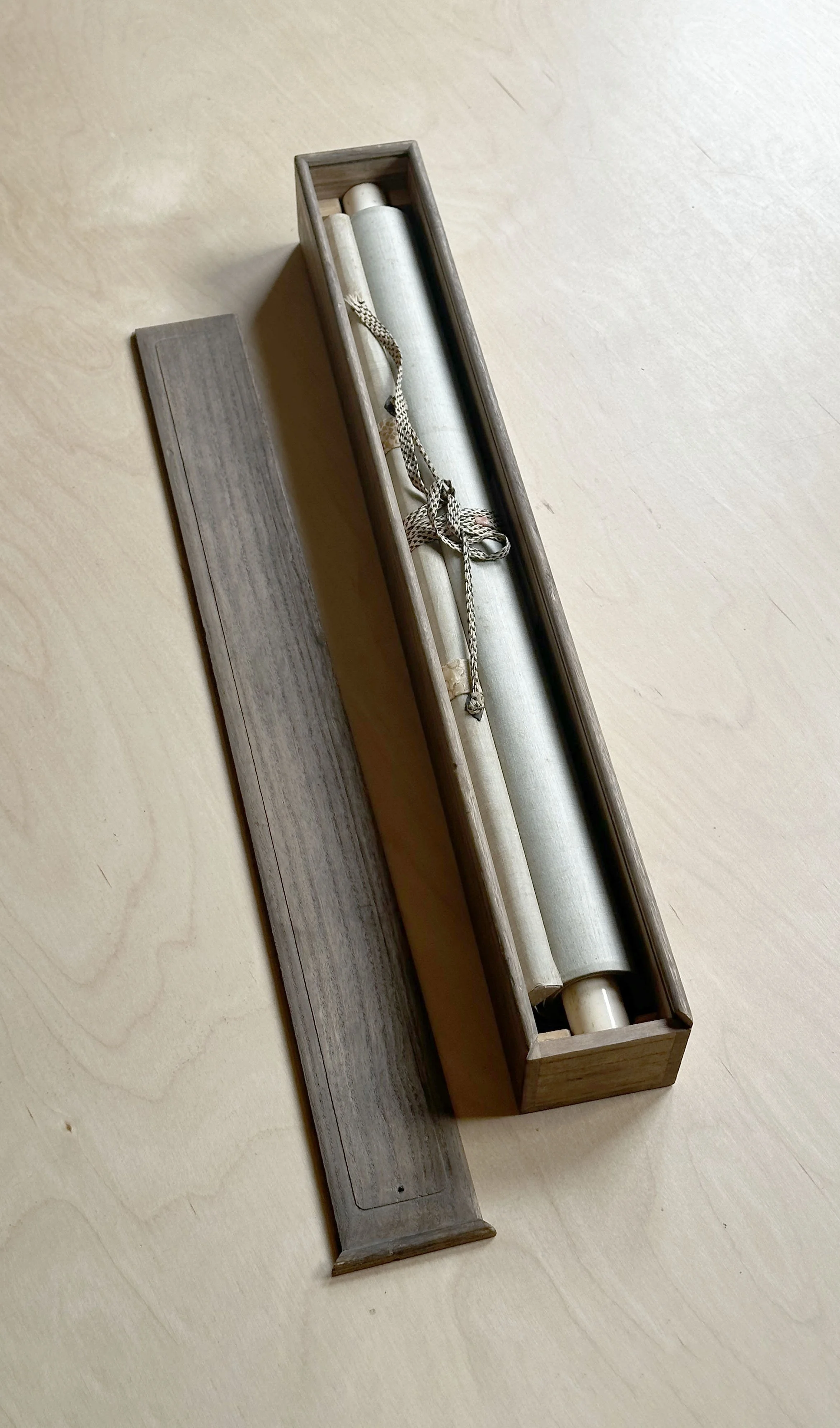
Artist unknown, Japan, early 20th century (Taishō–early Shōwa period)
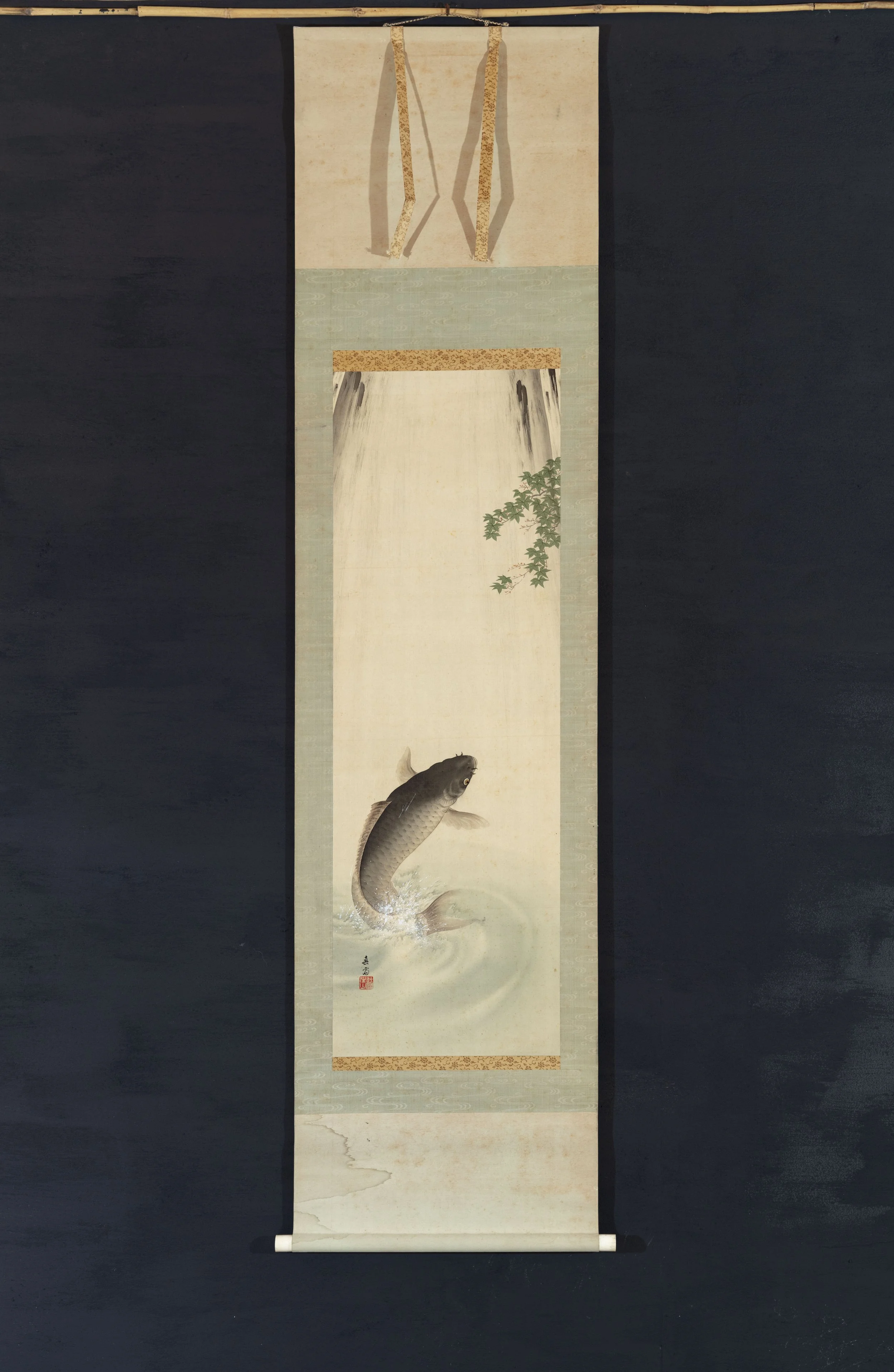
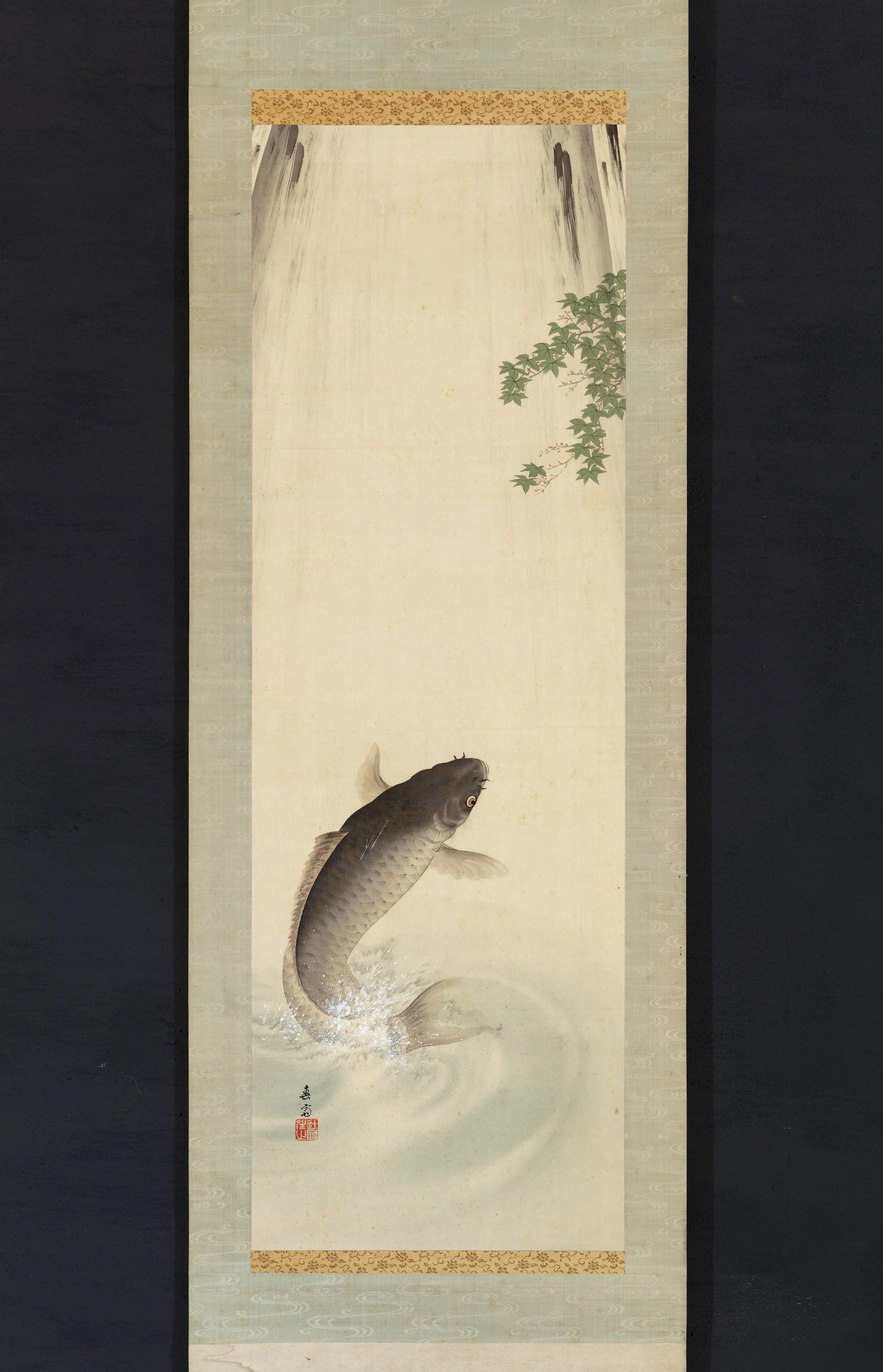
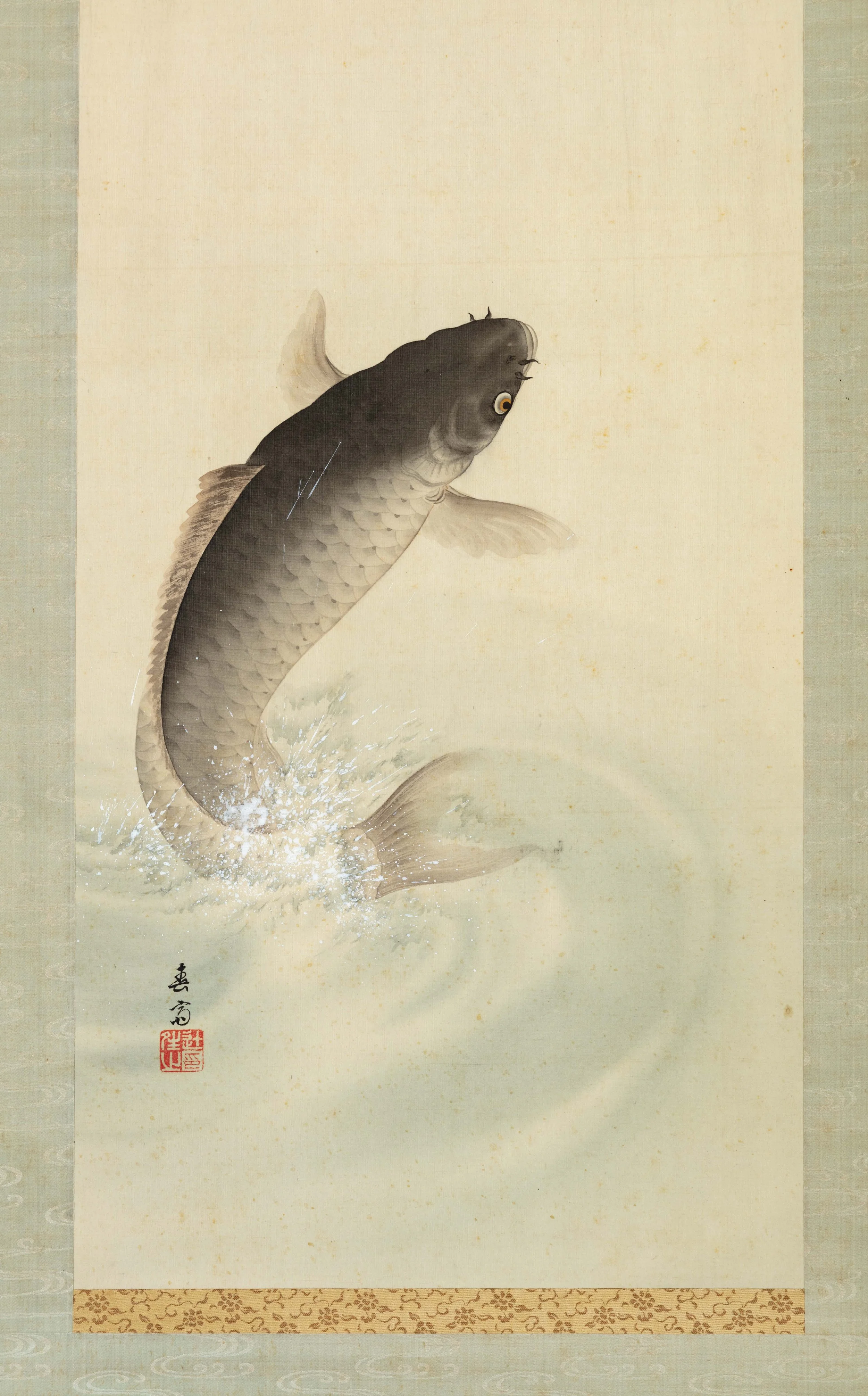
A single carp rises through a soft, dissolving current, its body turning in a gentle arc as it breaks the surface. The composition is remarkably spare: water suggested rather than described, space left open above, and a lightness of touch that allows the subject to breathe within the silk.
The carp, long associated with perseverance and resilient effort in East Asian painting, carries connotations of transformation — the well-known ascent toward the waterfall’s summit. Here, however, the theme is treated with unusual quietness. Rather than dramatic struggle, the movement feels suspended — a moment between effort and release. The pale washes of the water and the controlled modelling of the scales suggest a hand trained in late academic or studio traditions, likely working within a lineage informed by earlier Edo naturalism.
There is a sensitivity in the handling of the silk ground: the pigments sit lightly, allowing the material itself to participate in the image. Minor age toning and spotting are consistent with works of this period. There is also visible water staining to the lower left area of the mount, which should be noted, though it does not materially detract from the overall presence of the painting.
A modest but very pleasing example of a familiar subject, elevated by restraint and balance.
Dimensions:
Overall: 194.5 × 48.5 cm
Image: 109.5 × 36.3 cm
Artist unknown, Japan, early 20th century (Taishō–early Shōwa period)
A single carp rises through a soft, dissolving current, its body turning in a gentle arc as it breaks the surface. The composition is remarkably spare: water suggested rather than described, space left open above, and a lightness of touch that allows the subject to breathe within the silk.
The carp, long associated with perseverance and resilient effort in East Asian painting, carries connotations of transformation — the well-known ascent toward the waterfall’s summit. Here, however, the theme is treated with unusual quietness. Rather than dramatic struggle, the movement feels suspended — a moment between effort and release. The pale washes of the water and the controlled modelling of the scales suggest a hand trained in late academic or studio traditions, likely working within a lineage informed by earlier Edo naturalism.
There is a sensitivity in the handling of the silk ground: the pigments sit lightly, allowing the material itself to participate in the image. Minor age toning and spotting are consistent with works of this period. There is also visible water staining to the lower left area of the mount, which should be noted, though it does not materially detract from the overall presence of the painting.
A modest but very pleasing example of a familiar subject, elevated by restraint and balance.
Dimensions:
Overall: 194.5 × 48.5 cm
Image: 109.5 × 36.3 cm